Duke University, Durham, North Carolina, USA.
Department of Medicine, Duke University School of Medicine, Durham, North Carolina, USA.
Lupus Sci Med. 2021 Apr;8(1). doi: 10.1136/lupus-2021-000491.
Many rheumatologists and women with rheumatic disease worry that the disease or treatment will prevent breast feeding. International guidelines establish, however, that most antirheumatic medications are compatible with breast feeding. We sought to identify the frequency and predictors of desire to and actually breast feeding in women with rheumatic diseases.
Pregnant women with rheumatic disease were enrolled prospectively. Demographics and breastfeeding intention were collected at study entry, while actual breastfeeding decision was recorded postpartum. Maternal diagnosis, demographics and medication use was collected throughout the study. Predictors of breast feeding and intention were identified using stepwise logistic regression.
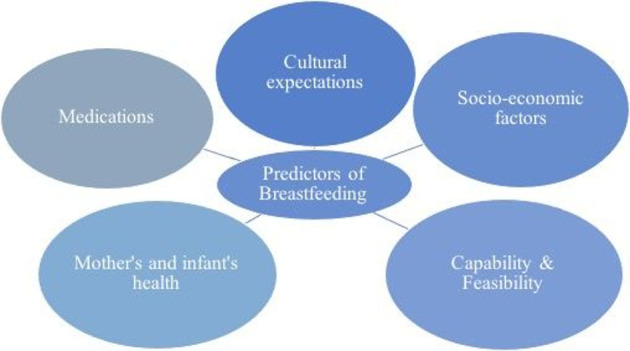
A total of 265 pregnancies were included in the study, 88 with SLE, 33 with undifferentiated connective tissue disease, 100 with arthritis and 44 with other rare rheumatic diagnoses. Of these, 79% intended to breastfeed, 84% of women ever breast fed and 65% were still breast feeding at an average of 7.6 weeks postpartum. Medication concern was the most commonly cited reason not to breastfeed though only 5% of women were taking or planning to start a non-lactation compatible medication at their postpartum visit. In multivariate analysis, women with a college degree were more likely and women with SLE were less likely to intend to breastfeed. Actual breast feeding was most strongly predicted by the woman's intention to breastfeed, but also increased with maternal age, decreased if the baby was born preterm and decreased the further the postpartum appointment occurred from delivery.
This study demonstrates that the majority of women with rheumatic disease want to and can breastfeed successfully. Additionally, very few women required a medication that was not compatible with breast feeding to control their rheumatic disease in the postpartum period. Despite this, an important minority of patients did not continue breast feeding due to their personal concerns about the risks of antirheumatic medications to their infant.
许多风湿病学家和患有风湿病的女性担心疾病或治疗会妨碍母乳喂养。然而,国际指南规定,大多数抗风湿药物与母乳喂养兼容。我们试图确定患有风湿病的女性对母乳喂养的意愿和实际母乳喂养的频率和预测因素。
前瞻性纳入患有风湿病的孕妇。在研究开始时收集人口统计学资料和母乳喂养意愿,产后记录实际母乳喂养决定。在整个研究过程中收集母亲的诊断、人口统计学资料和药物使用情况。使用逐步逻辑回归识别母乳喂养和意愿的预测因素。
共有 265 例妊娠纳入研究,88 例为系统性红斑狼疮,33 例为未分化结缔组织病,100 例为关节炎,44 例为其他罕见风湿病诊断。其中,79%的人打算母乳喂养,84%的人曾经母乳喂养过,65%的人在平均 7.6 周的产后仍在母乳喂养。药物顾虑是最常被引用的不母乳喂养的原因,但只有 5%的女性在产后就诊时正在服用或计划开始使用不适合母乳喂养的药物。多变量分析显示,具有大学学历的女性更有可能,患有系统性红斑狼疮的女性更不可能打算母乳喂养。实际母乳喂养最强烈地预测了女性母乳喂养的意愿,但也随着产妇年龄的增加而增加,如果婴儿早产则减少,如果产后预约距离分娩时间越远则减少。
本研究表明,大多数患有风湿病的女性都希望并能够成功地母乳喂养。此外,很少有女性需要使用不适合母乳喂养的药物来控制产后的风湿病。尽管如此,由于担心抗风湿药物对婴儿的风险,仍有相当一部分患者没有继续母乳喂养。