Eye Institute, Eye & ENT Hospital, Fudan University, Shanghai, China.
NHC Key Laboratory of Myopia (Fudan University); Key Laboratory of Myopia, Chinese Academy of Medical Sciences, Shanghai, China.
Nat Commun. 2021 Apr 8;12(1):2102. doi: 10.1038/s41467-021-22041-2.
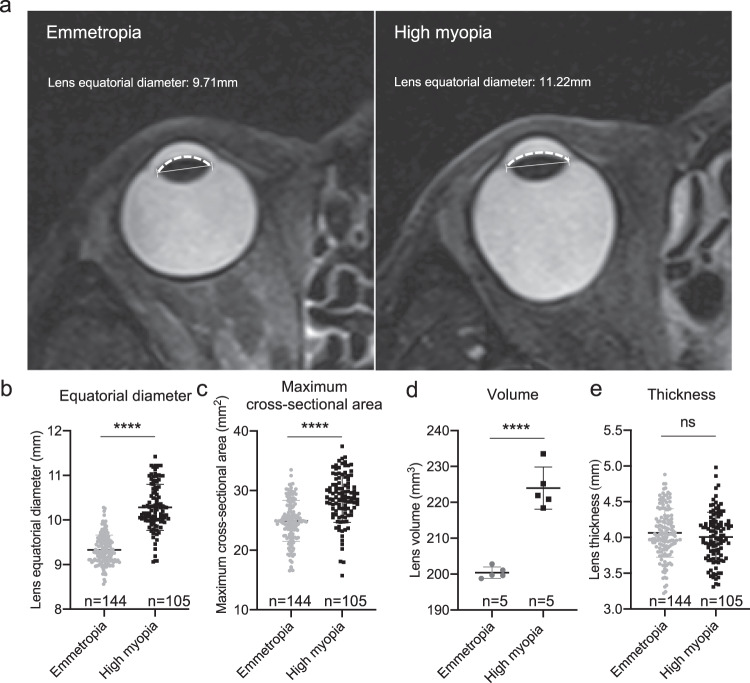
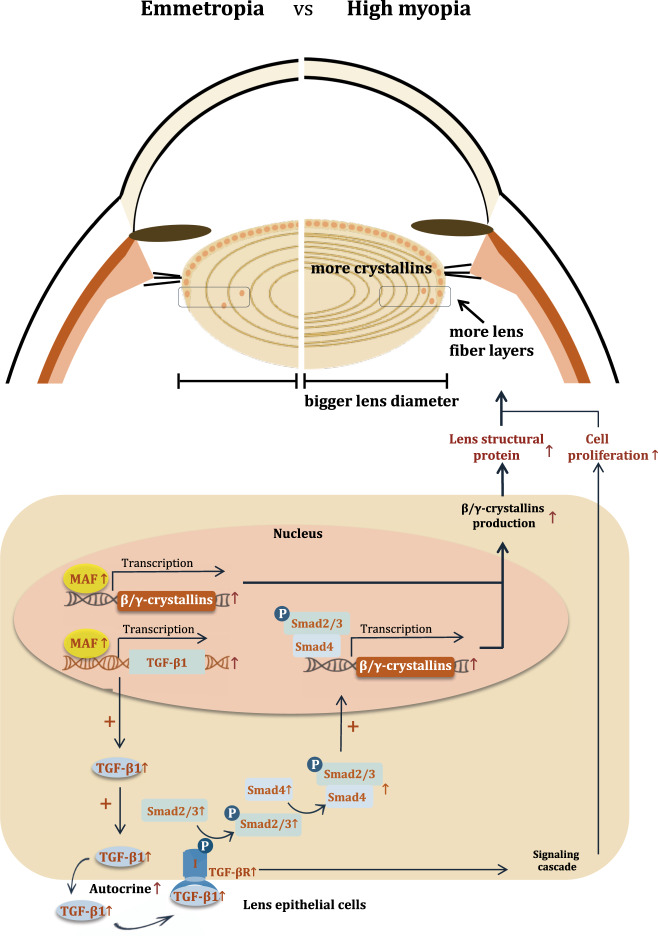
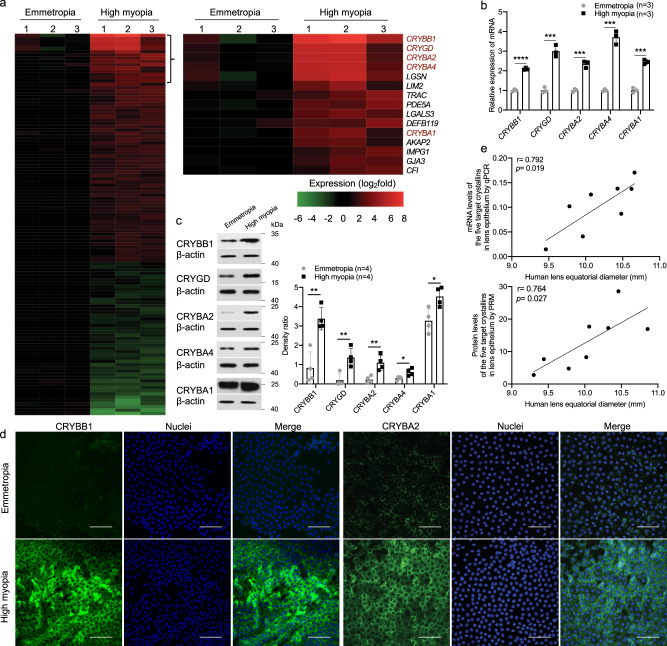
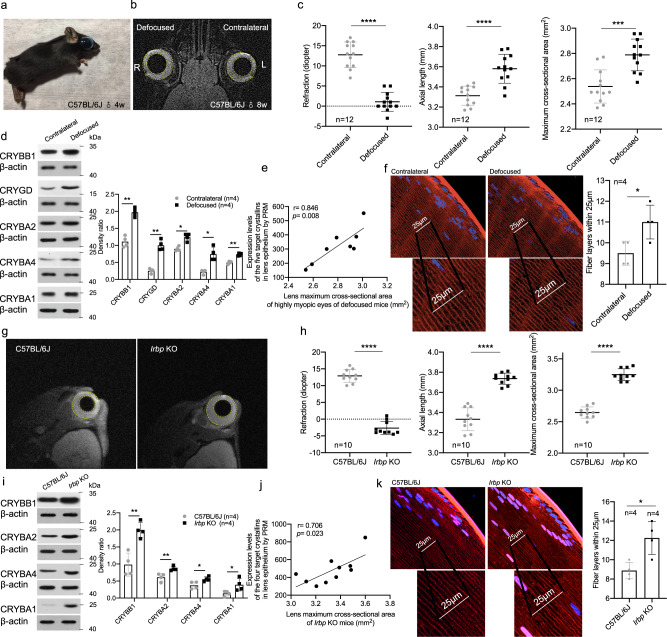
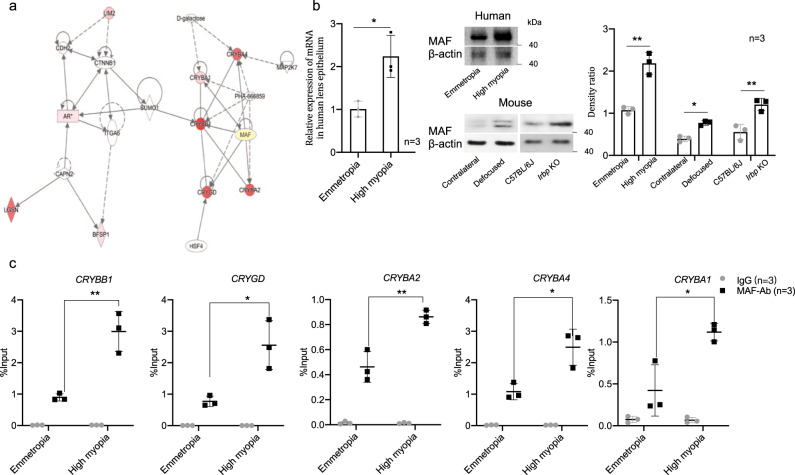
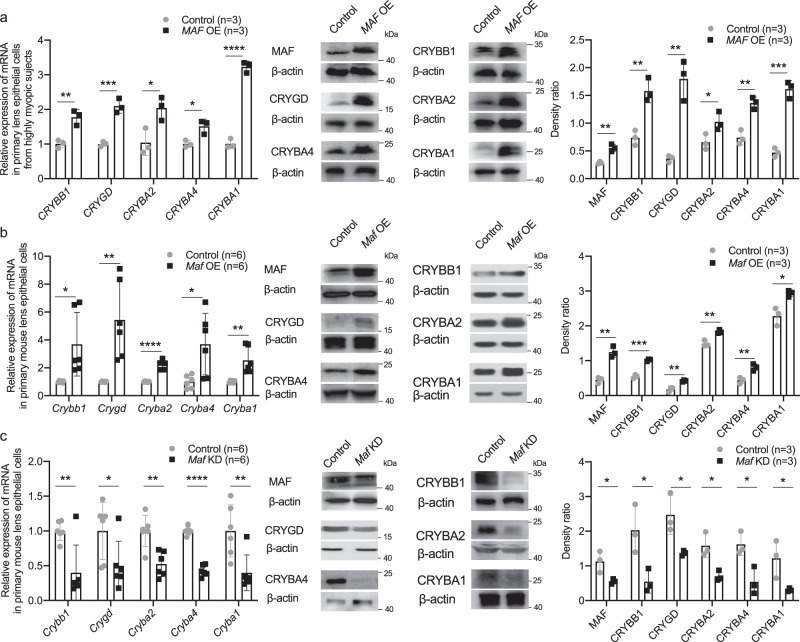
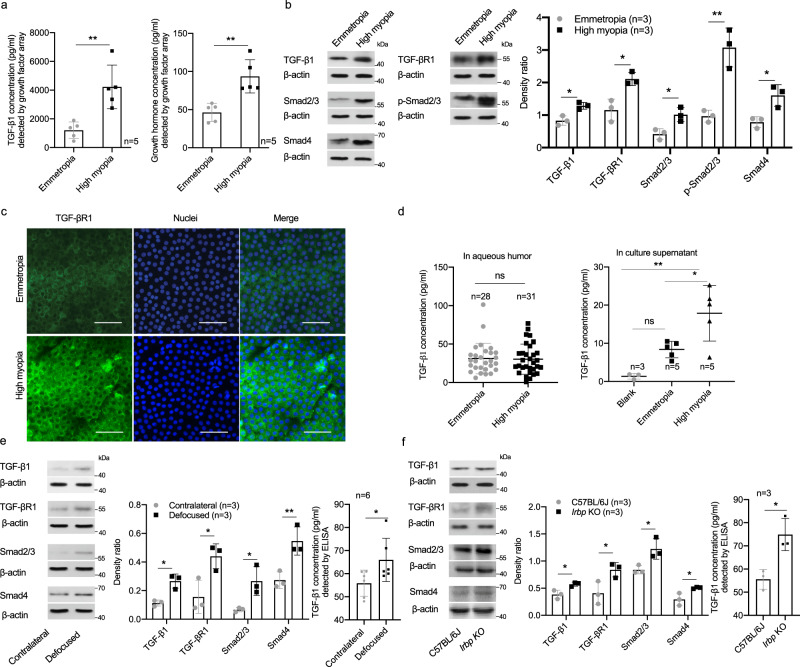
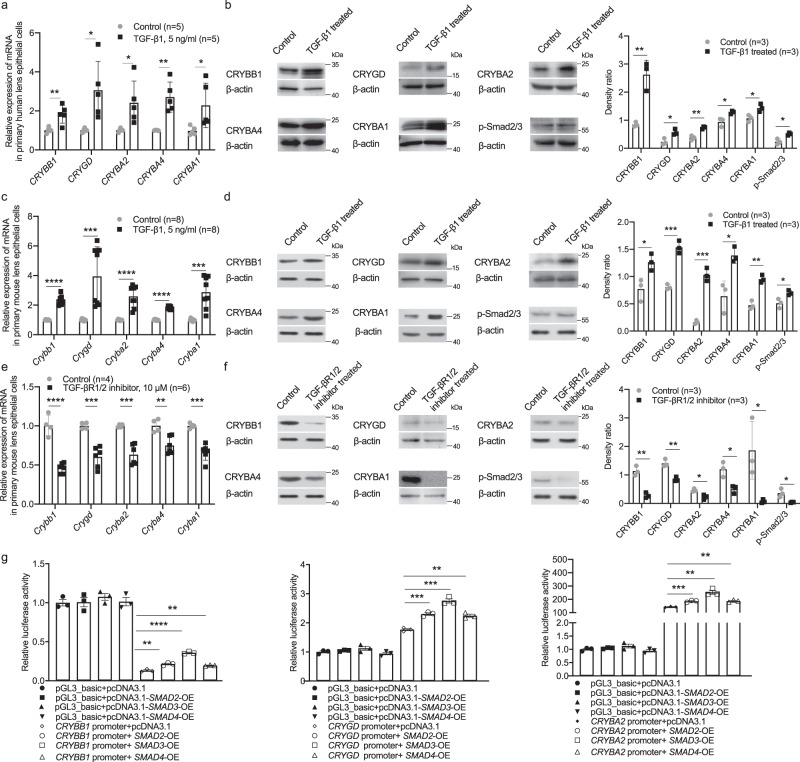
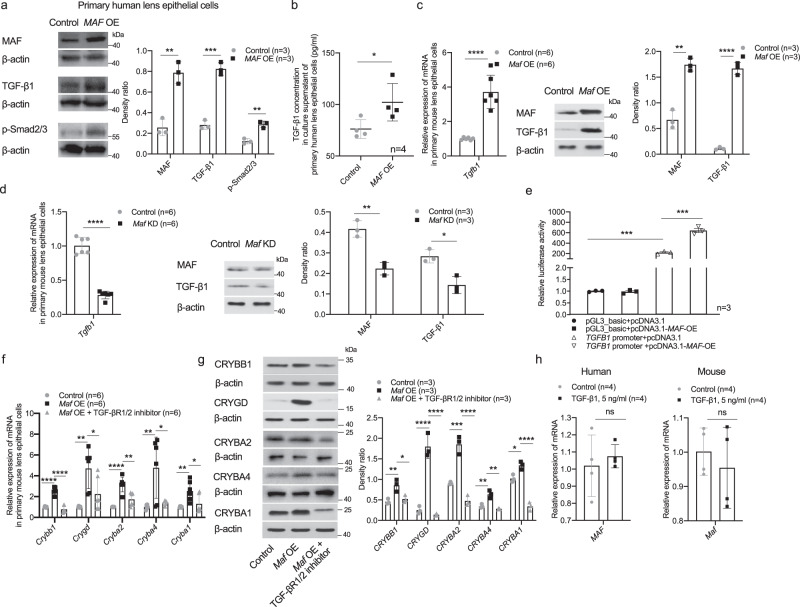
High myopia is a leading cause of blindness worldwide. Myopia progression may lead to pathological changes of lens and affect the outcome of lens surgery, but the underlying mechanism remains unclear. Here, we find an increased lens size in highly myopic eyes associated with up-regulation of β/γ-crystallin expressions. Similar findings are replicated in two independent mouse models of high myopia. Mechanistic studies show that the transcription factor MAF plays an essential role in up-regulating β/γ-crystallins in high myopia, by direct activation of the crystallin gene promoters and by activation of TGF-β1-Smad signaling. Our results establish lens morphological and molecular changes as a characteristic feature of high myopia, and point to the dysregulation of the MAF-TGF-β1-crystallin axis as an underlying mechanism, providing an insight for therapeutic interventions.
高度近视是全球致盲的主要原因之一。近视进展可能导致晶状体的病理性变化,并影响晶状体手术的结果,但潜在机制尚不清楚。在这里,我们发现高度近视眼的晶状体尺寸增加,与β/γ-晶体蛋白表达上调有关。在两种独立的高度近视小鼠模型中也得到了类似的发现。机制研究表明,转录因子 MAF 通过直接激活晶体蛋白基因启动子和激活 TGF-β1-Smad 信号通路,在高度近视中对β/γ-晶体蛋白的上调中发挥重要作用。我们的结果确立了晶状体形态和分子变化作为高度近视的一个特征,并指出 MAF-TGF-β1-晶体蛋白轴的失调是一个潜在的机制,为治疗干预提供了一个思路。