Shi Xiaohe, Cui Bin, Wang Zhugang, Weng Lin, Xu Zhongping, Ma Jinjin, Xu Guotong, Kong Xiangyin, Hu Landian
Institute of Health Sciences, Shanghai Institutes for Biological Sciences, Chinese Academy of Sciences and Ruijin Hospital, Shanghai Jiaotong University School of Medicine, Shanghai 200025, PR China.
BMC Mol Biol. 2009 Feb 19;10:10. doi: 10.1186/1471-2199-10-10.
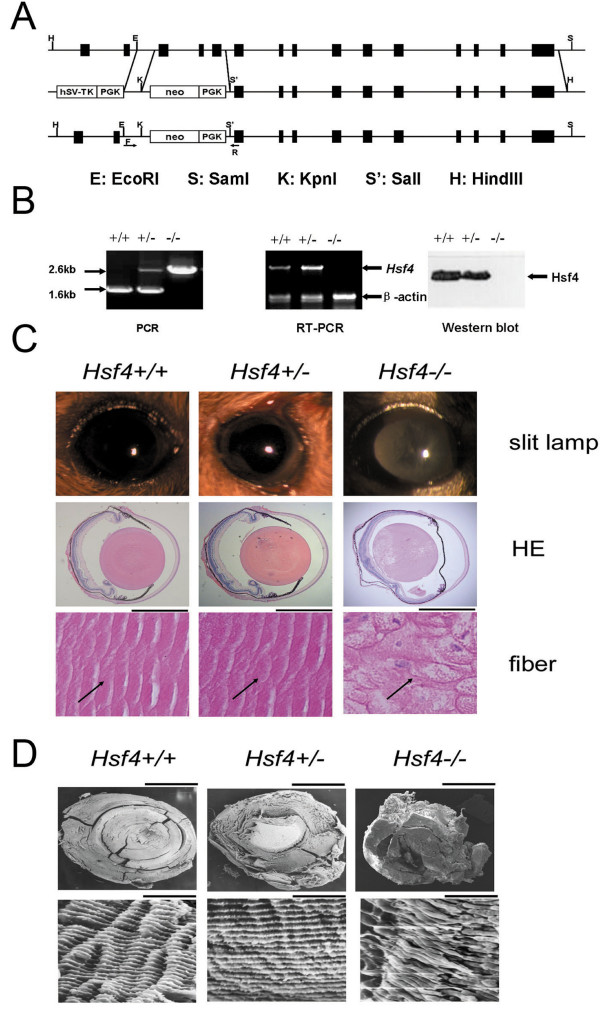
Heat-shock transcription factor 4 (HSF4) mutations are associated with autosomal dominant lamellar cataract and Marner cataract. Disruptions of the Hsf4 gene cause lens defects in mice, indicating a requirement for HSF4 in fiber cell differentiation during lens development. However, neither the relationship between HSF4 and crystallins nor the detailed mechanism of maintenance of lens transparency by HSF4 is fully understood.
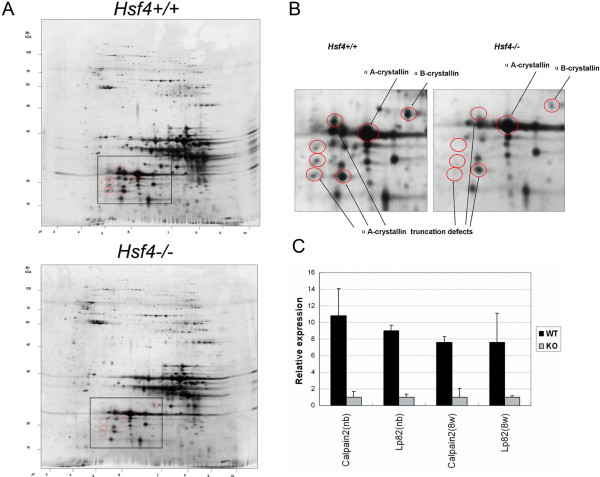
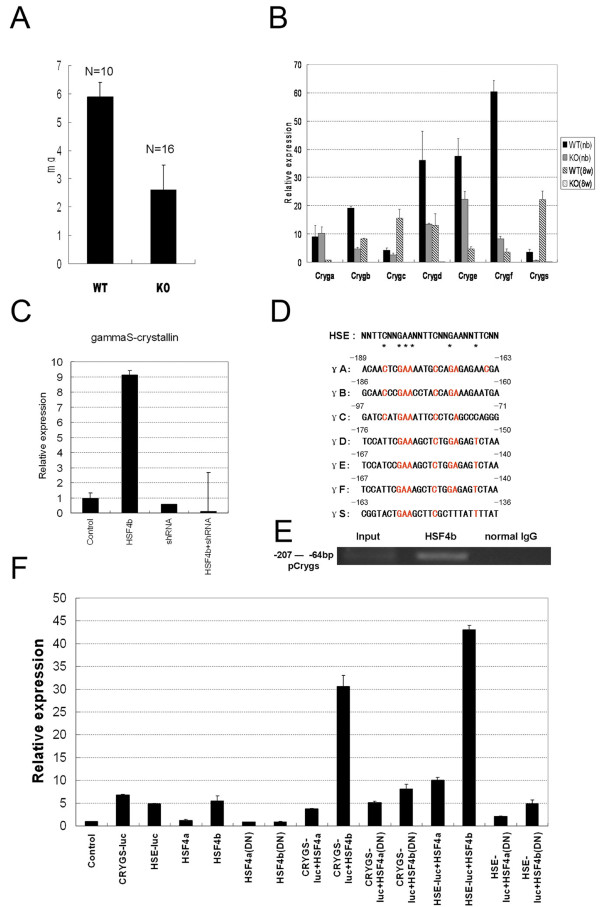
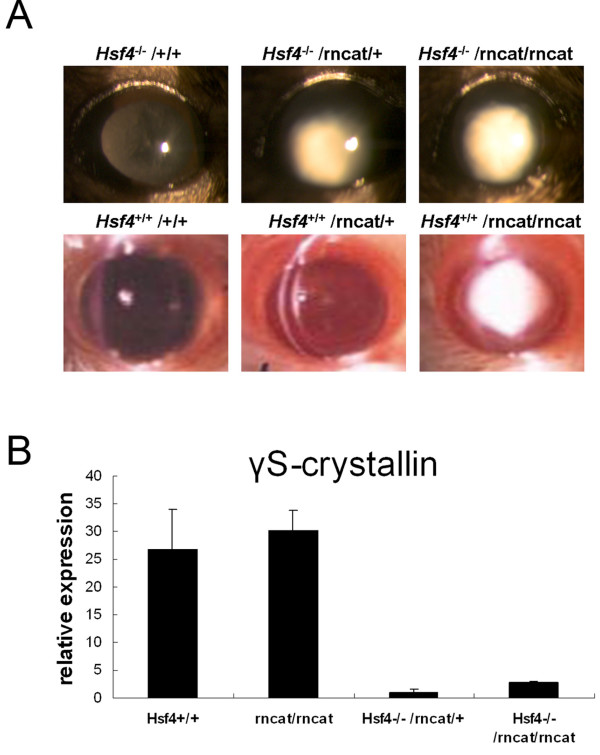
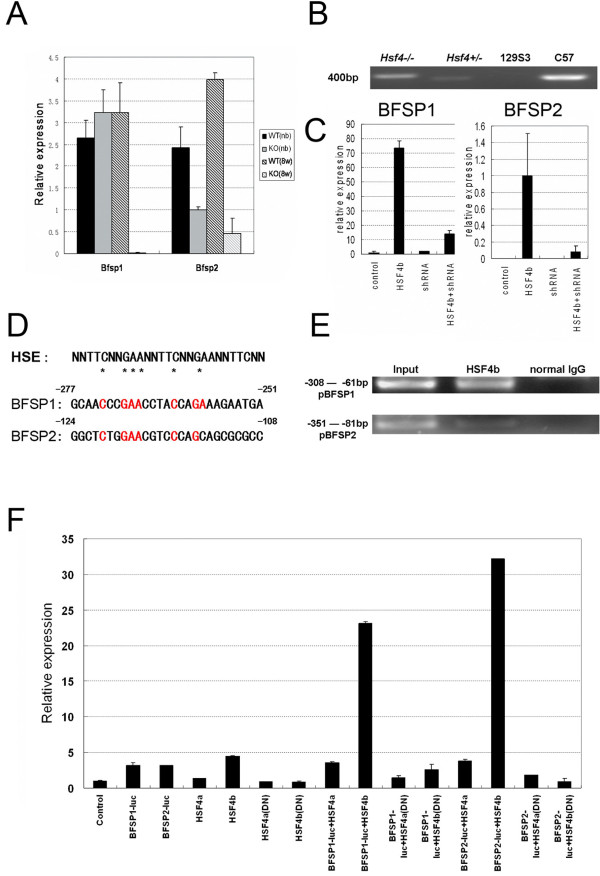
In an attempt to determine how the underlying biomedical and physiological mechanisms resulting from loss of HSF4 contribute to cataract formation, we generated an Hsf4 knockout mouse model. We showed that the Hsf4 knockout mouse (Hsf4-/-) partially mimics the human cataract caused by HSF4 mutations. Q-PCR analysis revealed down-regulation of several cataract-relevant genes, including gamma S-crystallin (Crygs) and lens-specific beaded filament proteins 1 and 2 (Bfsp1 and Bfsp2), in the lens of the Hsf4-/- mouse. Transcription activity analysis using the dual-luciferase system suggested that these cataract-relevant genes are the direct downstream targets of HSF4. The effect of HSF4 on gamma S-crystallin is exemplified by the cataractogenesis seen in the Hsf4-/-,rncat intercross. The 2D electrophoretic analysis of whole-lens lysates revealed a different expression pattern in 8-week-old Hsf4-/- mice compared with their wild-type counterparts, including the loss of some alpha A-crystallin modifications and reduced expression of gamma-crystallin proteins.
Our results indicate that HSF4 is sufficiently important to lens development and disruption of the Hsf4 gene leads to cataracts via at least three pathways: 1) down-regulation of gamma-crystallin, particularly gamma S-crystallin; 2) decreased lens beaded filament expression; and 3) loss of post-translational modification of alpha A-crystallin.
热休克转录因子4(HSF4)突变与常染色体显性板层白内障和马纳白内障相关。Hsf4基因的破坏会导致小鼠晶状体缺陷,这表明在晶状体发育过程中纤维细胞分化需要HSF4。然而,HSF4与晶状体蛋白之间的关系以及HSF4维持晶状体透明度的详细机制尚未完全明确。
为了确定HSF4缺失所引发的潜在生物医学和生理机制如何导致白内障形成,我们构建了Hsf4基因敲除小鼠模型。我们发现Hsf4基因敲除小鼠(Hsf4-/-)部分模拟了由HSF4突变引起的人类白内障。定量聚合酶链反应(Q-PCR)分析显示,在Hsf4-/-小鼠的晶状体中,包括γS晶状体蛋白(Crygs)以及晶状体特异性珠状丝蛋白1和2(Bfsp1和Bfsp2)在内的几个与白内障相关的基因表达下调。使用双荧光素酶系统进行的转录活性分析表明,这些与白内障相关的基因是HSF4的直接下游靶点。HSF4对γS晶状体蛋白的影响在Hsf4-/-与rncat杂交后代的白内障发生过程中得以体现。对整个晶状体裂解物进行的二维电泳分析显示,8周龄的Hsf4-/-小鼠与其野生型对照相比,具有不同的表达模式,包括一些αA晶状体蛋白修饰的缺失以及γ晶状体蛋白表达的降低。
我们的结果表明,HSF4对晶状体发育至关重要,Hsf4基因的破坏通过至少三条途径导致白内障:1)γ晶状体蛋白,特别是γS晶状体蛋白的下调;2)晶状体珠状丝表达降低;3)αA晶状体蛋白翻译后修饰的缺失。