Qi Ying, He Jingni
Department of Radiology, Shengjing Hospital of China Medical University, Shenyang, China.
Department of Surgery, Shengjing Hospital of China Medical University, Shenyang, China.
Front Physiol. 2021 Mar 23;12:638868. doi: 10.3389/fphys.2021.638868. eCollection 2021.
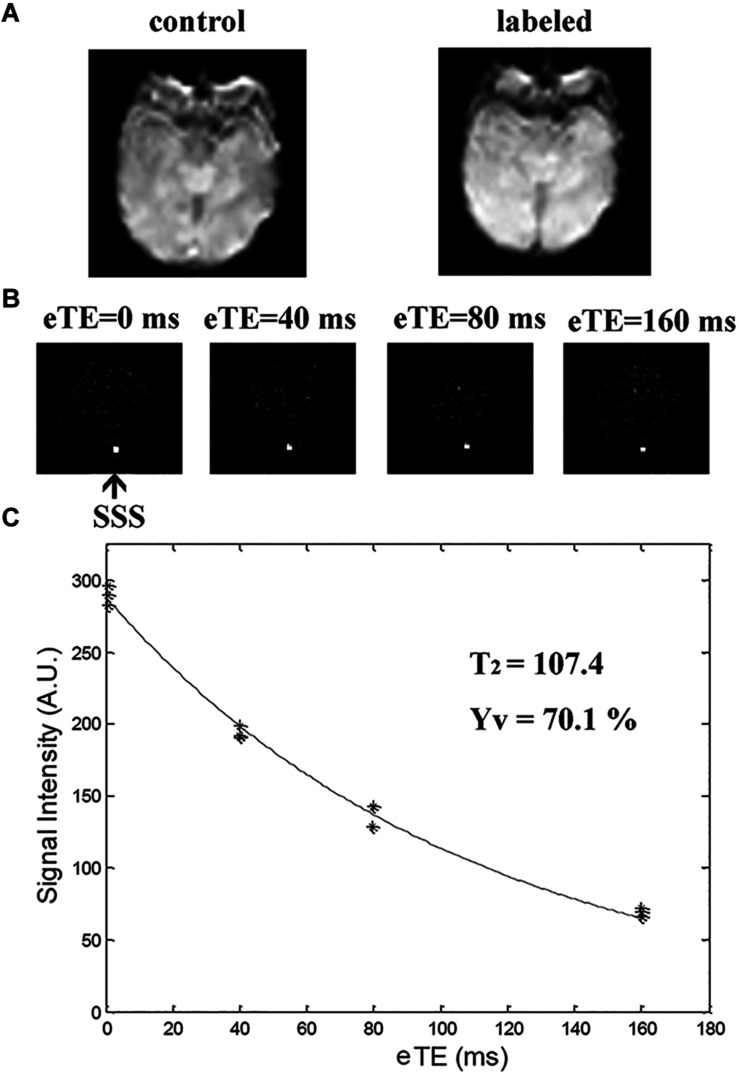
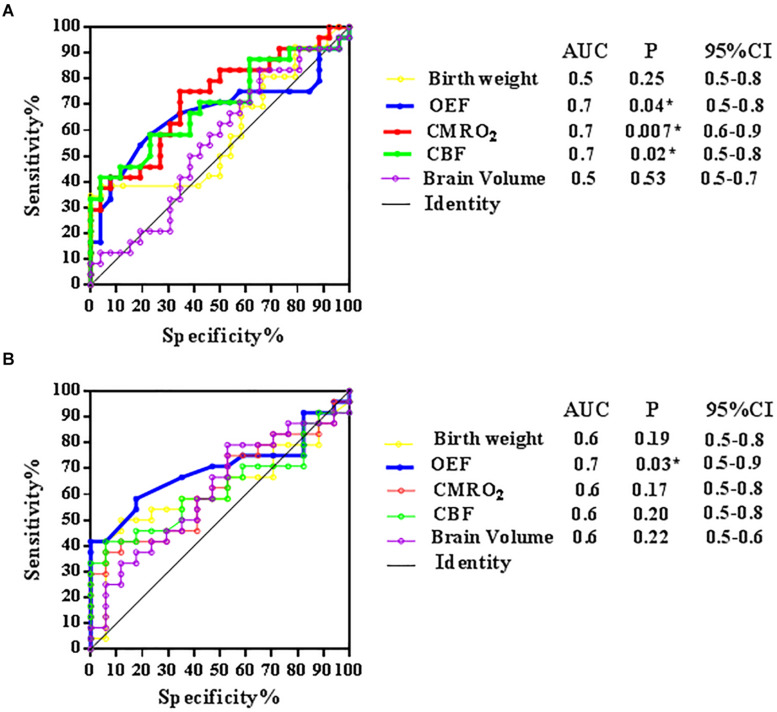
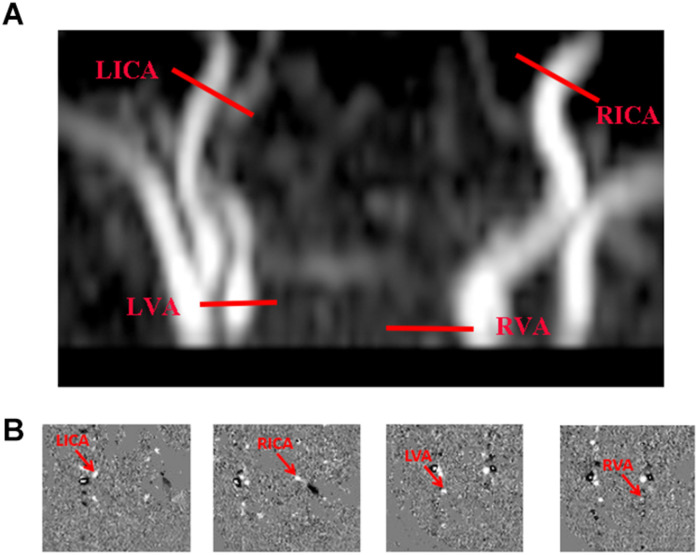
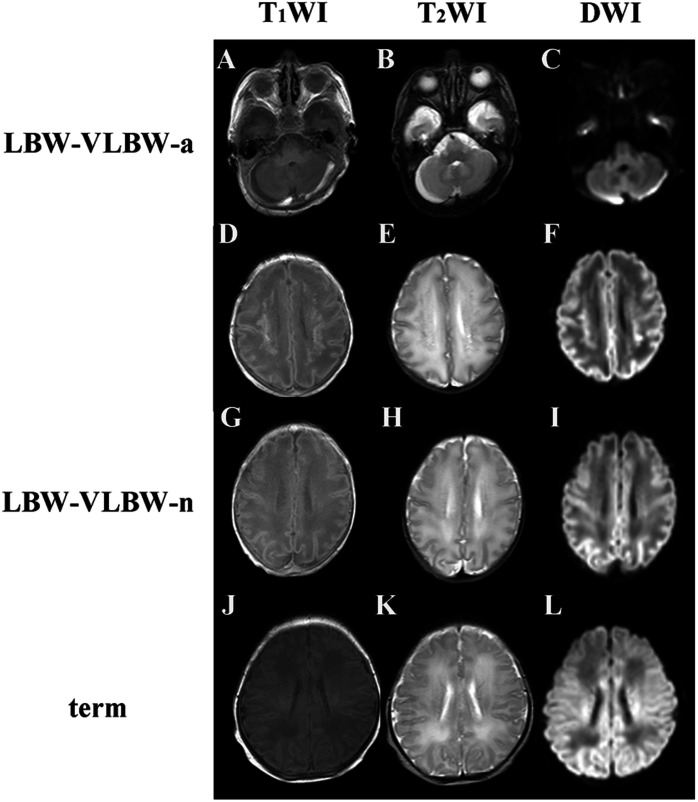
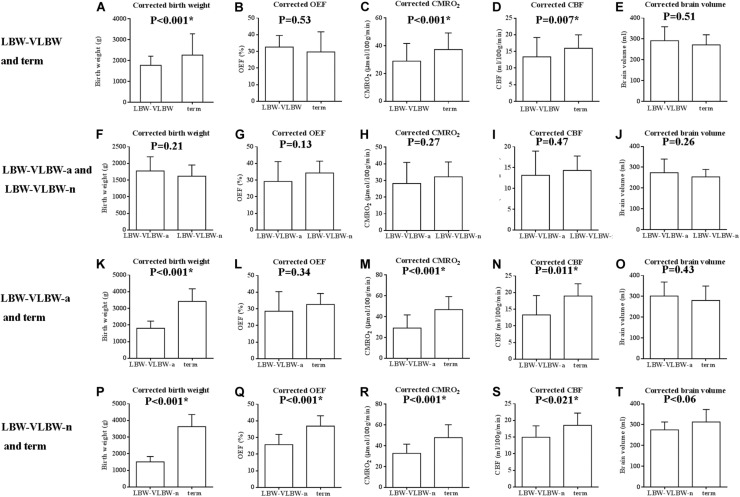
Low birth-weight (LBW) and very low birth-weight (VLBW) newborns have increased risks of brain injuries, growth failure, motor difficulties, developmental coordination disorders or delay, and adult-onset vascular diseases. However, relatively little is known of the neurobiologic underpinnings. To clarify the pathophysiologic vulnerabilities of such neonates, we applied several advanced techniques for assessing brain physiology, namely T2-relaxation-under-spin-tagging (TRUST) magnetic resonance imaging (MRI) and phase-contrast (PC) MRI. This enabled quantification of oxygen extraction fraction (OEF), global cerebral blood flow (CBF), and cerebral metabolic rate of oxygen (CMRO). A total of 50 neonates (LBW-VLBW, 41; term controls, 9) participated in this study. LBW-VLBW neonates were further stratified as those with (LBW-VLBW-a, 24) and without (LBW-VLBW-n, 17) structural MRI (sMRI) abnormalities. TRUST and PC MRI studies were undertaken to determine OEF, CBF, and CMRO. Ultimately, CMRO proved significantly lower ( = 0.01) in LBW-VLBW (vs term) neonates, both LBW-VLBW-a and LBW-VLBW-n subsets showing significantly greater physiologic deficits than term controls ( = 0.03 and = 0.04, respectively). CMRO and CBF in LBW-VLBW-a and LBW-VLBW-n subsets did not differ significantly ( > 0.05), although OEF showed a tendency to diverge ( = 0.15). However, OEF values in the LBW-VLBW-n subset differed significantly from those of term controls ( = 0.02). Compared with brain volume or body weight, these physiologic parameters yield higher area-under-the-curve (AUC) values for distinguishing neonates of the LBW-VLBW-a subset. The latter displayed distinct cerebral metabolic and hemodynamic, whereas changes were marginal in the LBW-VLBW-n subset (i.e., higher OEF and lower CBF and CMRO) by comparison. Physiologic imaging may therefore be useful in identifying LBW-VLBW newborns at high risk of irreversible brain damage.
低出生体重(LBW)和极低出生体重(VLBW)新生儿发生脑损伤、生长发育迟缓、运动困难、发育协调障碍或发育延迟以及成人期血管疾病的风险增加。然而,对于其神经生物学基础却知之甚少。为了阐明此类新生儿的病理生理脆弱性,我们应用了几种先进的技术来评估脑生理学,即自旋标记下的T2弛豫(TRUST)磁共振成像(MRI)和相位对比(PC)MRI。这使得能够对氧摄取分数(OEF)、全脑血流量(CBF)和脑氧代谢率(CMRO)进行量化。共有50名新生儿(LBW-VLBW,41名;足月儿对照组,9名)参与了本研究。LBW-VLBW新生儿进一步分为有(LBW-VLBW-a,24名)和无(LBW-VLBW-n,17名)结构MRI(sMRI)异常的两组。进行TRUST和PC MRI研究以确定OEF、CBF和CMRO。最终,LBW-VLBW(与足月儿相比)新生儿的CMRO显著降低(P = 0.01),LBW-VLBW-a组和LBW-VLBW-n组均显示出比足月儿对照组更大的生理缺陷(分别为P = 0.03和P = 0.04)。LBW-VLBW-a组和LBW-VLBW-n组的CMRO和CBF无显著差异(P>0.05),尽管OEF有差异趋势(P = 0.15)。然而,LBW-VLBW-n组的OEF值与足月儿对照组有显著差异(P = 0.02)。与脑容量或体重相比,这些生理参数在区分LBW-VLBW-a组新生儿时具有更高的曲线下面积(AUC)值。后者表现出明显的脑代谢和血流动力学变化,而相比之下,LBW-VLBW-n组的变化较小(即OEF较高,CBF和CMRO较低)。因此,生理成像可能有助于识别有不可逆脑损伤高风险的LBW-VLBW新生儿。