Arve-Butler Sabine, Schmidt Tobias, Mossberg Anki, Berthold Elisabet, Gullstrand Birgitta, Bengtsson Anders A, Kahn Fredrik, Kahn Robin
Department of Rheumatology, Clinical Sciences Lund, Lund University, Lund, Sweden.
Wallenberg Center for Molecular Medicine, Lund University, Lund, Sweden.
Arthritis Res Ther. 2021 Apr 9;23(1):109. doi: 10.1186/s13075-021-02483-1.
Neutrophils are the most prevalent immune cells in the synovial fluid in inflamed joints of children with oligoarticular juvenile idiopathic arthritis (JIA). Despite this, little is known about neutrophil function at the site of inflammation in JIA and how local neutrophils contribute to disease pathogenesis. This study aimed to characterize the phenotype and function of synovial fluid neutrophils in oligoarticular JIA.
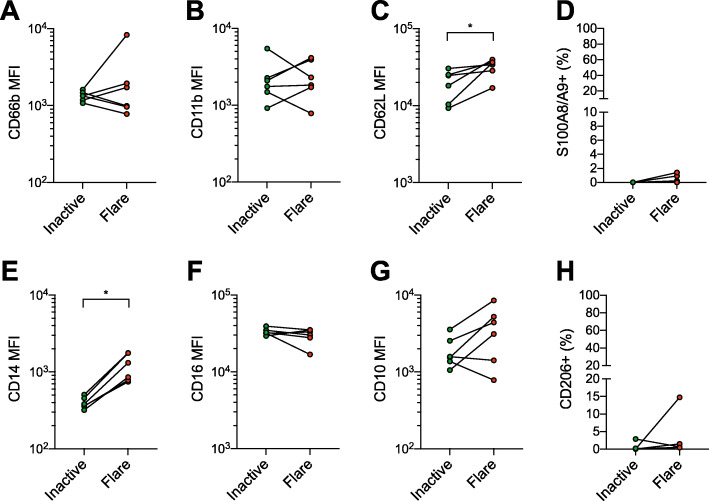
Neutrophils obtained from paired blood and synovial fluid from patients with active oligoarticular JIA were investigated phenotypically (n = 17) and functionally (phagocytosis and oxidative burst, n = 13) by flow cytometry. In a subset of patients (n = 6), blood samples were also obtained during inactive disease at a follow-up visit. The presence of CD206-expressing neutrophils was investigated in synovial biopsies from four patients by immunofluorescence.
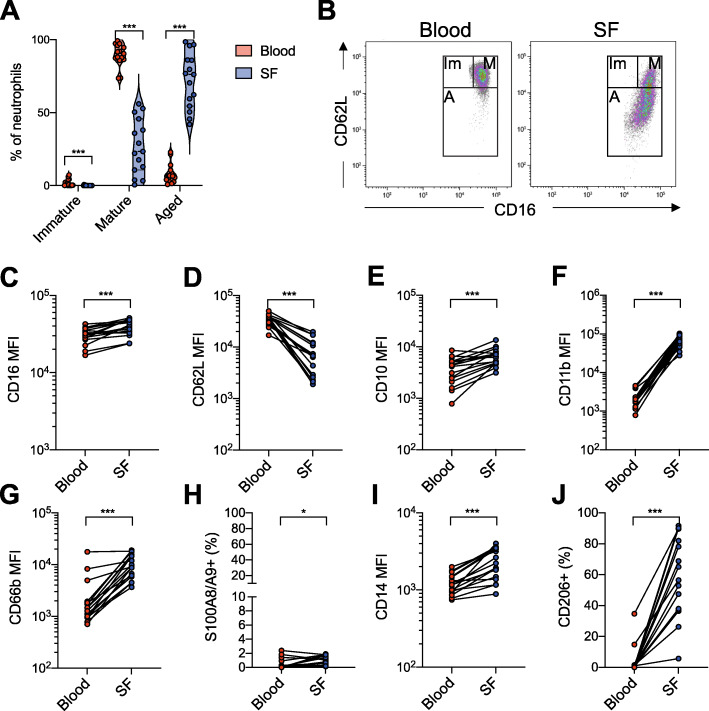
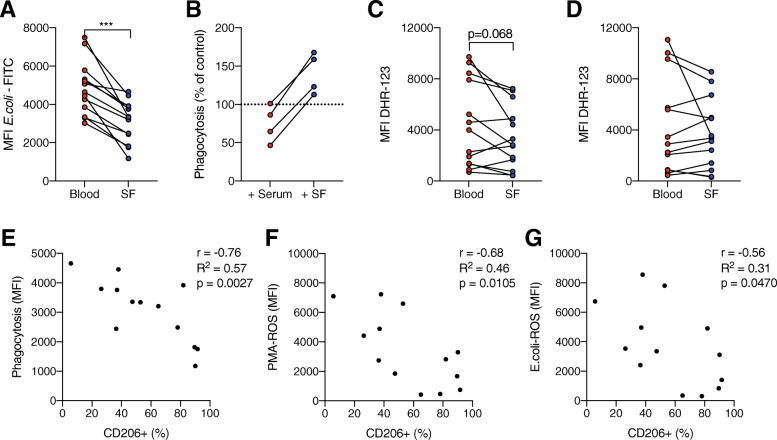
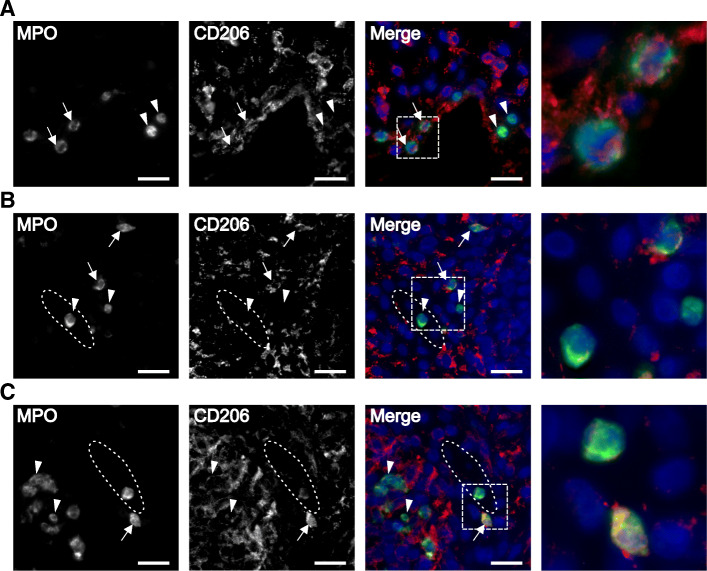
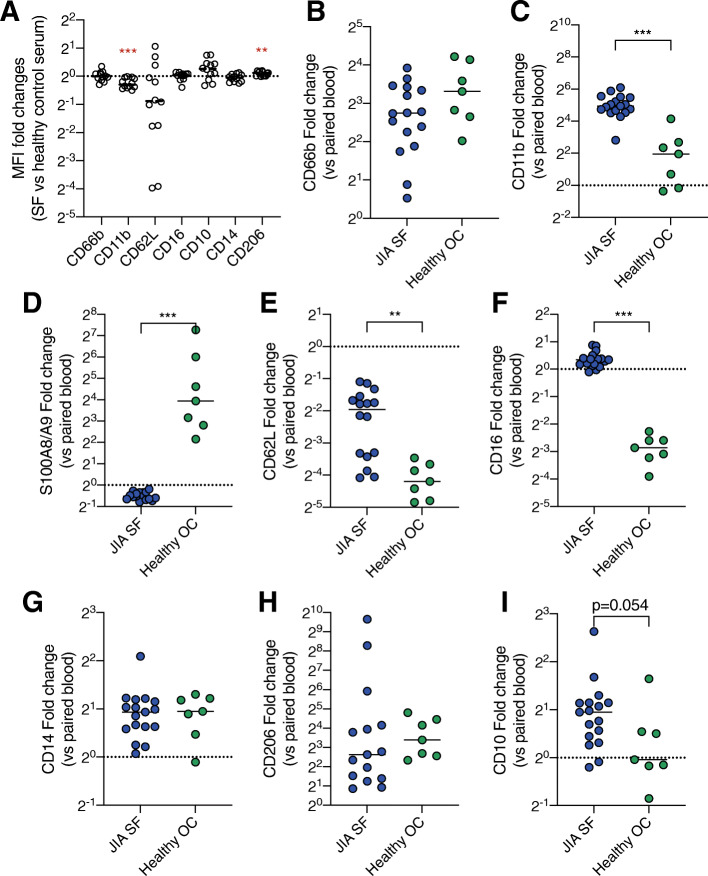
Neutrophils in synovial fluid had an activated phenotype, characterized by increased CD66b and CD11b levels, and most neutrophils had a CD16 CD62Laged phenotype. A large proportion of the synovial fluid neutrophils expressed CD206, a mannose receptor not commonly expressed by neutrophils but by monocytes, macrophages, and dendritic cells. CD206-expressing neutrophils were also found in synovial tissue biopsies. The synovial fluid neutrophil phenotype was not dependent on transmigration alone. Functionally, synovial fluid neutrophils had reduced phagocytic capacity and a trend towards impaired oxidative burst compared to blood neutrophils. In addition, the effector functions of the synovial fluid neutrophils correlated negatively with the proportion of CD206 neutrophils.
Neutrophils in the inflamed joint in oligoarticular JIA were altered, both regarding phenotype and function. Neutrophils in the synovial fluid were activated, had an aged phenotype, had gained monocyte-like features, and had impaired phagocytic capacity. The impairment in phagocytosis and oxidative burst was associated with the phenotype shift. We speculate that these neutrophil alterations might play a role in the sustained joint inflammation seen in JIA.
在少关节型幼年特发性关节炎(JIA)患儿的炎症关节滑液中,中性粒细胞是最普遍的免疫细胞。尽管如此,关于JIA炎症部位中性粒细胞的功能以及局部中性粒细胞如何参与疾病发病机制,我们知之甚少。本研究旨在描述少关节型JIA滑液中性粒细胞的表型和功能。
通过流式细胞术对从活动性少关节型JIA患者的配对血液和滑液中获取的中性粒细胞进行表型分析(n = 17)和功能分析(吞噬作用和氧化爆发,n = 13)。在一部分患者(n = 6)中,随访时在疾病非活动期也采集了血样。通过免疫荧光法在4例患者的滑膜活检组织中研究表达CD206的中性粒细胞的存在情况。
滑液中的中性粒细胞具有活化表型,其特征为CD66b和CD11b水平升高,且大多数中性粒细胞具有CD16 CD62L衰老表型。很大一部分滑液中性粒细胞表达CD206,CD206是一种甘露糖受体,通常不由中性粒细胞表达,而是由单核细胞、巨噬细胞和树突状细胞表达。在滑膜组织活检中也发现了表达CD206的中性粒细胞。滑液中性粒细胞表型并非仅依赖于迁移。在功能上,与血液中的中性粒细胞相比,滑液中性粒细胞的吞噬能力降低,氧化爆发有受损趋势。此外,滑液中性粒细胞的效应功能与CD206阳性中性粒细胞的比例呈负相关。
少关节型JIA炎症关节中的中性粒细胞在表型和功能方面均发生了改变。滑液中的中性粒细胞被激活,具有衰老表型,获得了单核细胞样特征,且吞噬能力受损。吞噬作用和氧化爆发的受损与表型转变有关。我们推测这些中性粒细胞的改变可能在JIA中持续的关节炎症中起作用。