Institute of Immunity and Transplantation, Division of Infection and Immunity, University College London, London, UK.
UCL Great Ormond Street Institute of Child Health, Infection, Immunity, and Inflammation Research and Teaching Department, University College London, London, UK.
Clin Exp Immunol. 2024 Nov 12;218(3):221-241. doi: 10.1093/cei/uxae071.
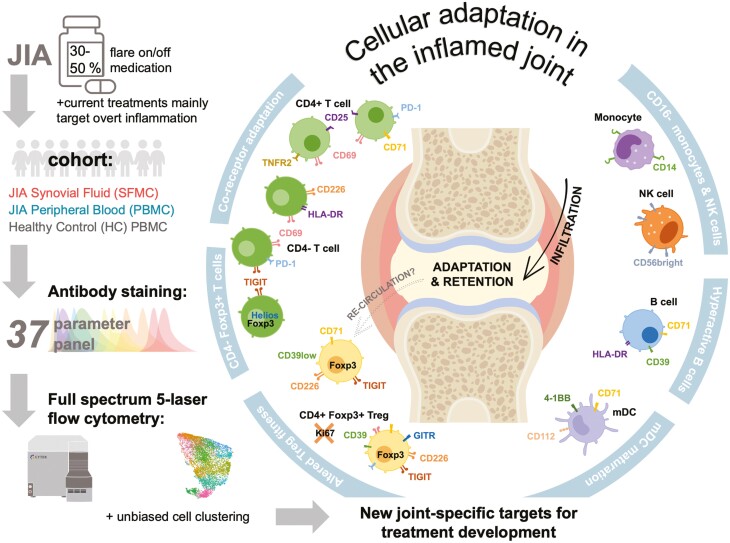
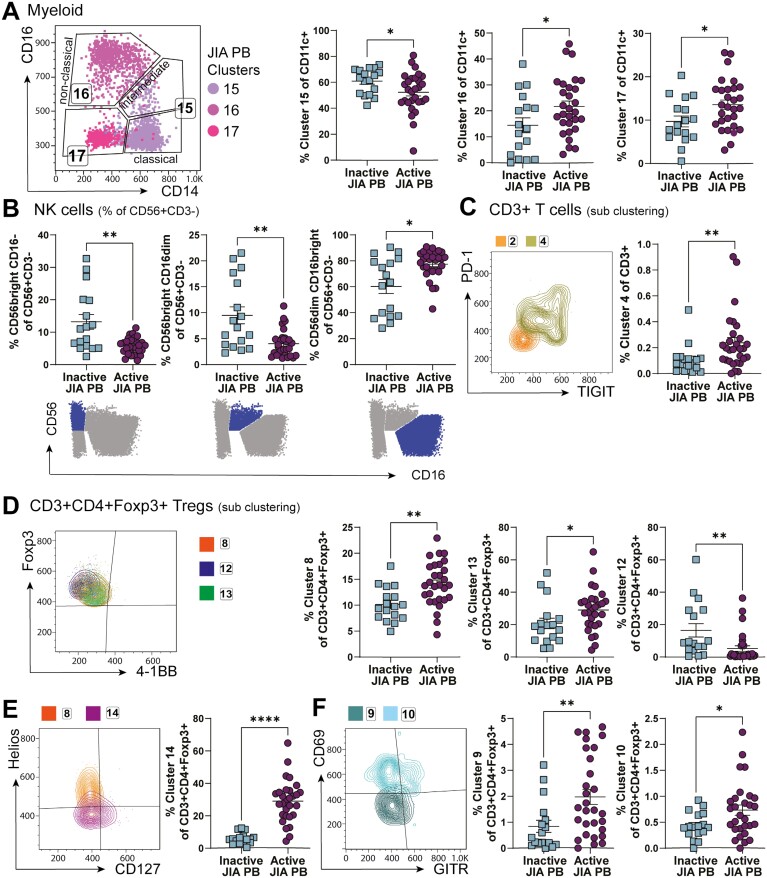
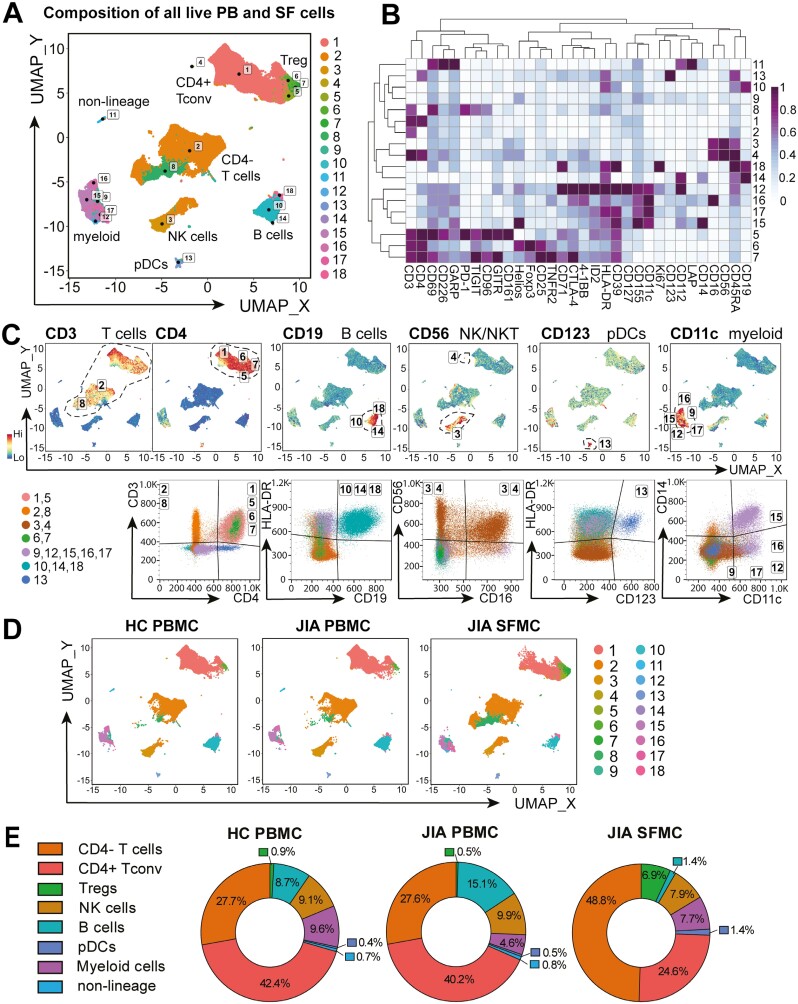
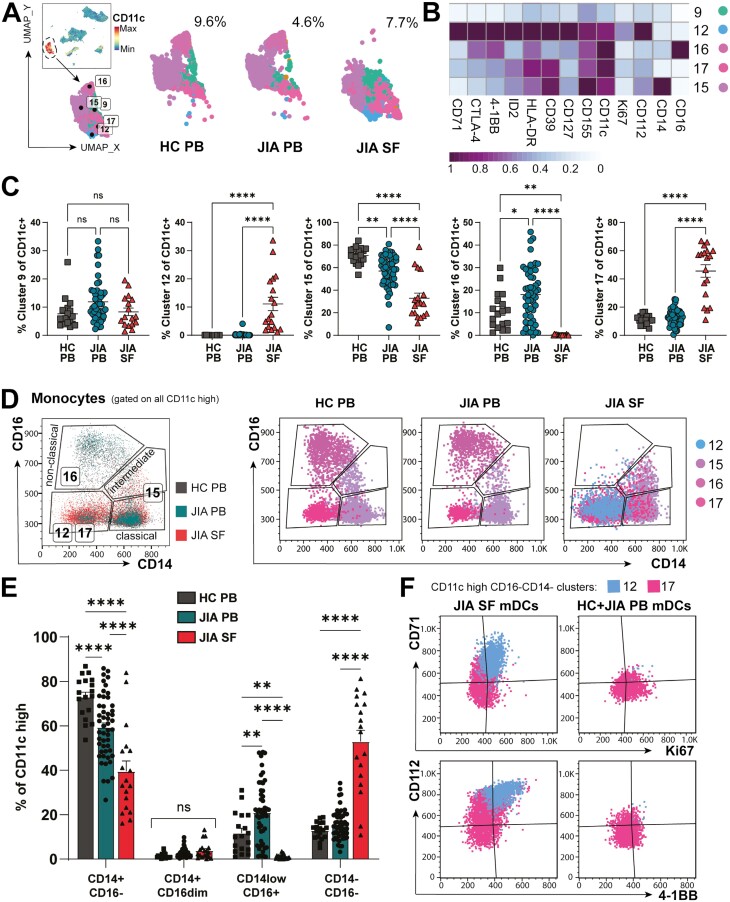
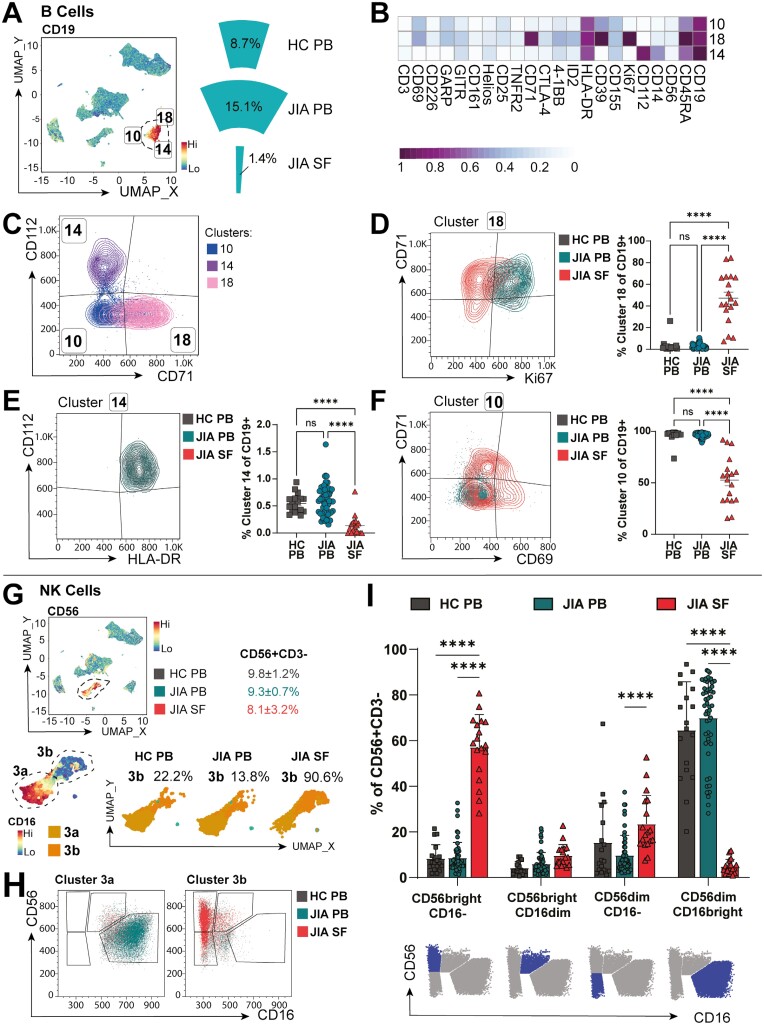
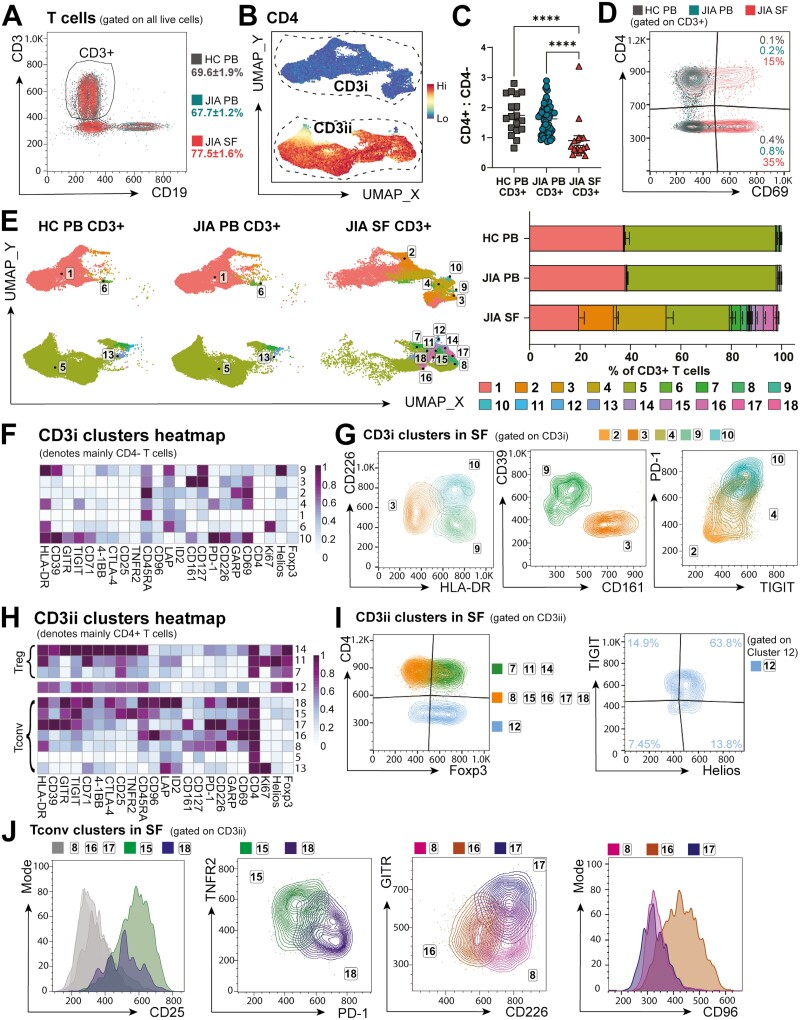
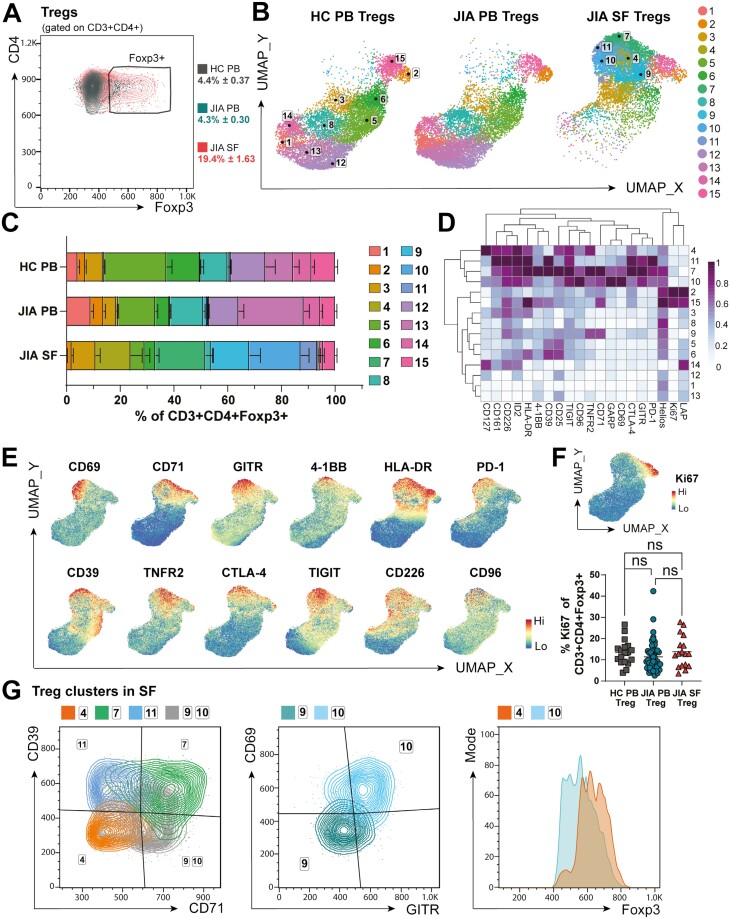
Cellular phenotype and function are altered in different microenvironments. For targeted therapies it is important to understand site-specific cellular adaptations. Juvenile idiopathic arthritis (JIA) is characterized by autoimmune joint inflammation, with frequent inadequate treatment responses. To comprehensively assess the inflammatory immune landscape, we designed a 37-parameter spectral flow cytometry panel delineating mononuclear cells from JIA synovial fluid (SF) of autoimmune inflamed joints, compared to JIA and healthy control blood. Synovial monocytes and NK cells (CD56bright) lack Fc-receptor CD16, suggesting antibody-mediated targeting may be ineffective. B cells and DCs, both in small frequencies in SF, undergo maturation with high 4-1BB, CD71, CD39 expression, supporting T-cell activation. SF effector and regulatory T cells were highly active with newly described co-receptor combinations that may alter function, and suggestion of metabolic reprogramming via CD71, TNFR2, and PD-1. Most SF effector phenotypes, as well as an identified CD4-Foxp3+ T-cell population, were restricted to the inflamed joint, yet specific SF-predominant CD4+ Foxp3+ Treg subpopulations were increased in blood of active but not inactive JIA, suggesting possible recirculation and loss of immunoregulation at distal sites. This first comprehensive dataset of the site-specific inflammatory landscape at protein level will inform functional studies and the development of targeted therapeutics to restore immunoregulatory balance and achieve remission in JIA.
细胞表型和功能在不同的微环境中发生改变。对于靶向治疗,了解特定部位的细胞适应性非常重要。幼年特发性关节炎(JIA)的特征是自身免疫性关节炎症,经常出现治疗反应不足。为了全面评估炎症免疫景观,我们设计了一个 37 个参数的光谱流式细胞术面板,从 JIA 滑膜液(SF)的自身免疫性炎症关节中描绘出单核细胞,与 JIA 和健康对照血液进行比较。滑膜单核细胞和 NK 细胞(CD56bright)缺乏 Fc 受体 CD16,表明抗体介导的靶向治疗可能无效。B 细胞和 DC 细胞在 SF 中的频率都较低,但它们会经历成熟过程,表现出高表达 4-1BB、CD71 和 CD39,支持 T 细胞激活。SF 效应细胞和调节性 T 细胞具有高度活性,具有新描述的共受体组合,这些组合可能改变功能,并通过 CD71、TNFR2 和 PD-1 提示代谢重编程。大多数 SF 效应细胞表型,以及鉴定出的 CD4-Foxp3+T 细胞群,都局限于炎症关节,但在活动性而非非活动性 JIA 的血液中,SF 为主的特定 CD4+Foxp3+Treg 亚群增加,表明可能存在循环和在远端部位失去免疫调节。这是蛋白质水平上特定部位炎症景观的第一个全面数据集,将为功能研究和靶向治疗的发展提供信息,以恢复免疫调节平衡并实现 JIA 的缓解。