Smith+Nephew, Fort Worth, TX, USA.
Department of Anesthesia, Smith+Nephew, Texas and Stanford University School of Medicine, Fort Worth, USA.
Int J Health Econ Manag. 2021 Dec;21(4):457-471. doi: 10.1007/s10754-021-09304-7. Epub 2021 Apr 9.
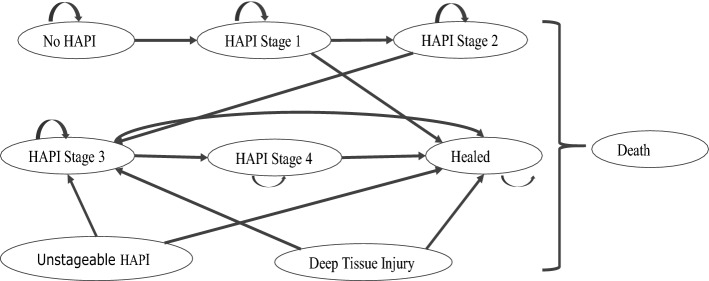
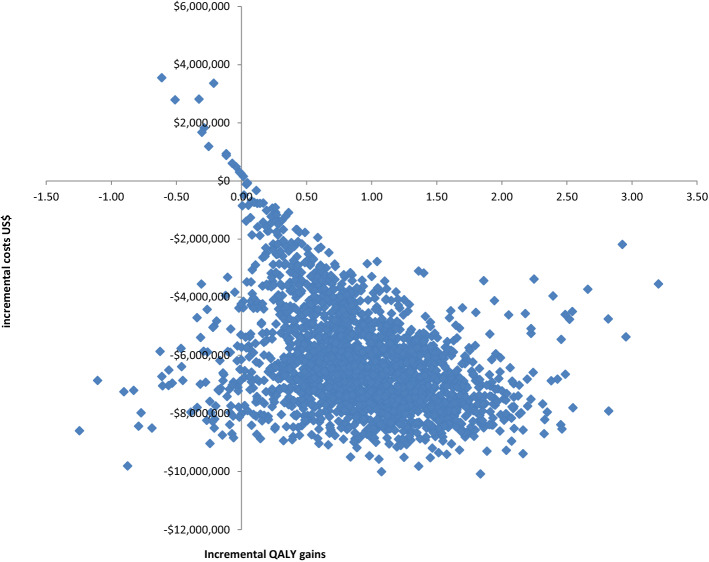
More than 2.5 million people in the United States develop pressure injuries annually, which are one of the most common complications occurring in hospitals. Despite being common, hospital-acquired pressure injuries (HAPIs) are largely considered preventable by regular patient turning. Although current methodologies to prompt on-time repositioning have limited efficacy, a wearable patient sensor has been shown to optimize turning practices and improve clinical outcomes. The purpose of this study was to assess the cost-effectiveness of patient-wearable sensor in the prevention of HAPIs in acutely ill patients when compared to standard practice alone. A decision analytic model was developed to simulate the expected costs and outcomes from the payer's perspective using data from published literature, including a recently published randomized controlled trial. Both univariate and probabilistic sensitivity analysis were conducted. The patient-wearable sensor was found to be cost saving (dominant). It resulted in better clinical outcomes (77% reduction in HAPIs) compared to standard care and an expected cost savings of $6,621 per patient over a one-year period. Applying the model to a cohort of 1,000 patients, an estimated 203 HAPIs would be avoided with annualized cost reduction of $6,222,884 through all patient treatment settings. The probabilistic analysis returned similar results. In conclusion, the patient-wearable sensor was found to be cost-effective in the prevention of HAPIs and cost-saving to payers and hospitals. These results suggest that patient-wearable sensors should be considered as a cost-effective alternative to standard care in the prevention of HAPIs.
美国每年有超过 250 万人患上压疮,这是医院中最常见的并发症之一。尽管很常见,但医院获得性压疮(HAPI)通常被认为可以通过定期为患者翻身来预防。尽管目前有一些提示及时翻身的方法,但效果有限,而可穿戴式患者传感器已被证明可以优化翻身实践并改善临床结果。本研究旨在评估与单独使用标准护理相比,可穿戴式患者传感器在预防急性病患者 HAPI 方面的成本效益。使用来自已发表文献的数据(包括最近发表的一项随机对照试验),从支付者的角度开发了一个决策分析模型来模拟预期的成本和结果。进行了单变量和概率敏感性分析。与标准护理相比,可穿戴式患者传感器具有成本节约(优势),可更好地改善临床结果(HAPI 减少 77%),并且在一年的时间内每位患者预计可节省 6621 美元的成本。将该模型应用于 1000 名患者的队列中,预计可通过所有患者治疗环境避免 203 例 HAPI,年化成本降低 6222884 美元。概率分析得出了类似的结果。总之,可穿戴式患者传感器在预防 HAPI 方面具有成本效益,对支付者和医院来说也是节省成本的。这些结果表明,在预防 HAPI 方面,可穿戴式患者传感器应被视为标准护理的一种具有成本效益的替代方法。