Michigan State University, USA.
Autism. 2021 Oct;25(7):1935-1945. doi: 10.1177/13623613211003747. Epub 2021 Apr 12.
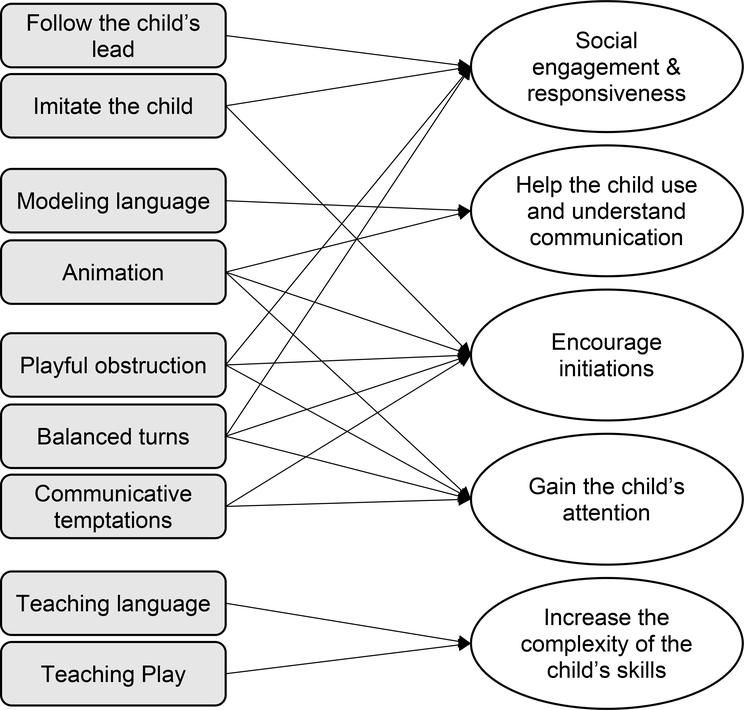
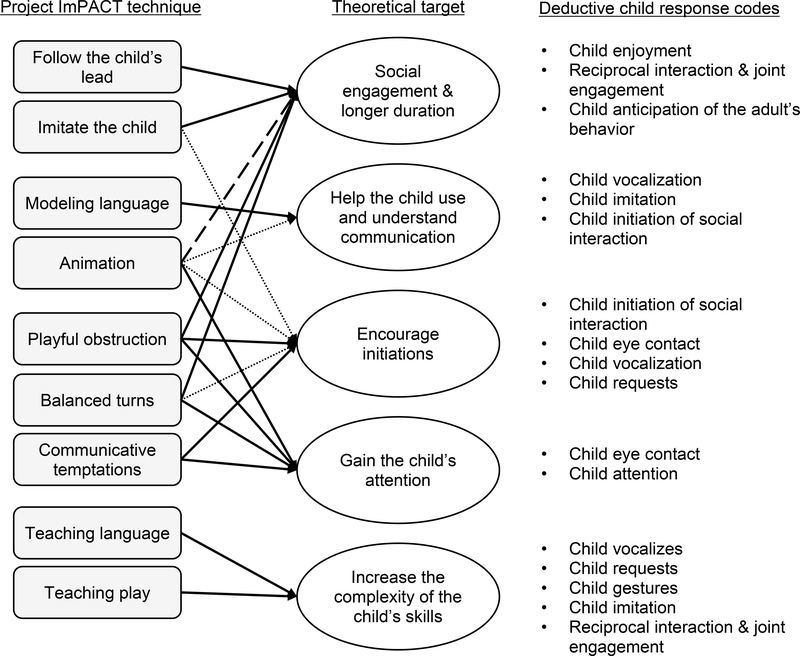
Although naturalistic developmental behavioral interventions are supported by research for supporting the development of children on the autism spectrum, how they work is not well understood. This study reviewed parent reflection comments in a systematic way to better how one such treatment worked, when delivered by caregivers. Caregivers completed weekly written reflection responses as they learned how to use the treatment techniques. We studied these responses to understand caregiver perspectives on how their children responded to the techniques. The responses were then compared to a theory of how the treatment works. Many responses were consistent with the treatment theory; however, others were not. We found that individual techniques were associated with different child responses, suggesting that general measures of social communication may not measure these specific short-term changes. Our findings point to specific behaviors that may be useful to measure in future research, or useful as indicators of treatment response in clinical practice settings. Overall, qualitative methods may be useful for understanding complex treatment processes.
虽然自然主义发展行为干预措施得到了研究的支持,以支持自闭症谱系儿童的发展,但它们的工作原理还不是很清楚。本研究系统地回顾了家长的反思意见,以更好地了解当由照顾者提供时,这种治疗方法是如何发挥作用的。照顾者在学习如何使用治疗技术时每周完成书面反思回复。我们研究了这些回复,以了解照顾者对孩子对技术的反应的看法。然后将这些回复与治疗效果的理论进行了比较。许多回复与治疗理论一致;然而,其他的则不一致。我们发现,个别技术与孩子的不同反应有关,这表明社会沟通的一般衡量标准可能无法衡量这些具体的短期变化。我们的研究结果指出了一些可能在未来的研究中有用的具体行为,或者在临床实践环境中作为治疗反应的指标可能有用。总的来说,定性方法可能有助于理解复杂的治疗过程。