Sun Yue, Qin Hong, Zhang Huihui, Feng Xiangling, Yang Lina, Hou De-Xing, Chen Jihua
Xiangya School of Public Health, Central South University, Changsha, China.
Inspecting Agency, Shanghai Municipal Health Commission, Shanghai, China.
Food Nutr Res. 2021 Mar 25;65. doi: 10.29219/fnr.v65.6355. eCollection 2021.
Fisetin, a natural potent flavonoid, has various beneficial, pharmacological activities. In this study, we investigated expression changes of the fisetin regulating genes in lipopolysaccharide (LPS)-treated RAW264.7 cells and explored the role of fisetin in inflammation and autophagy.
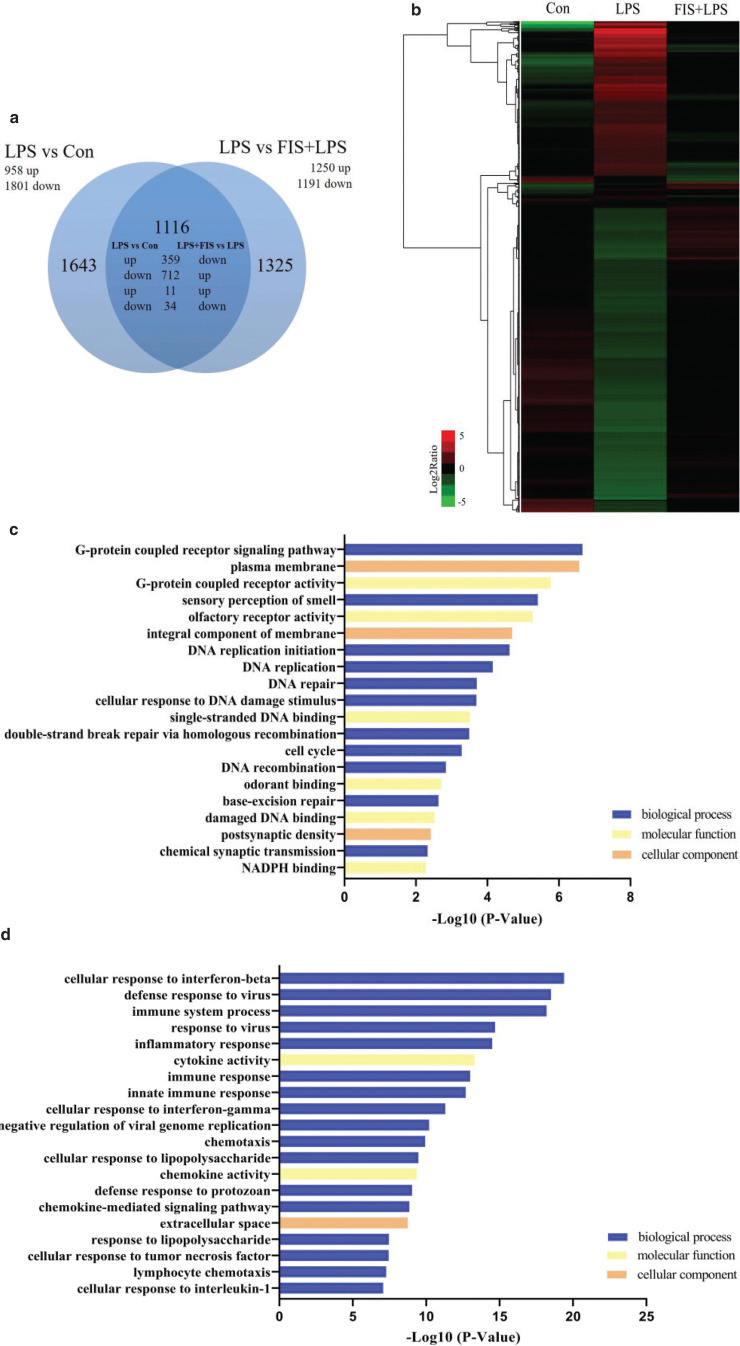
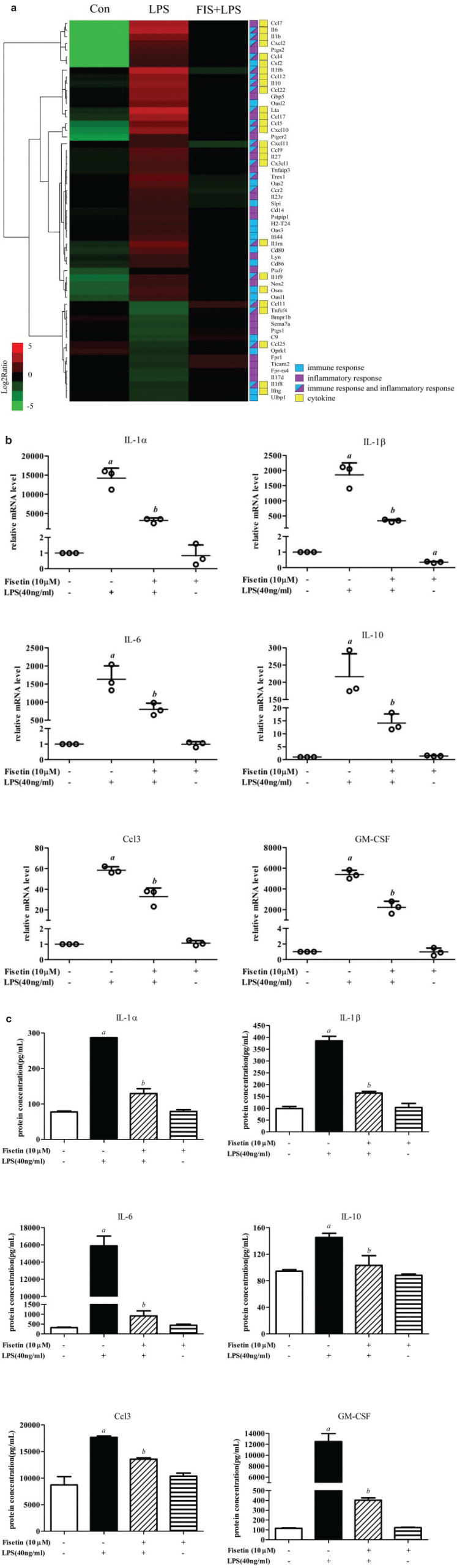
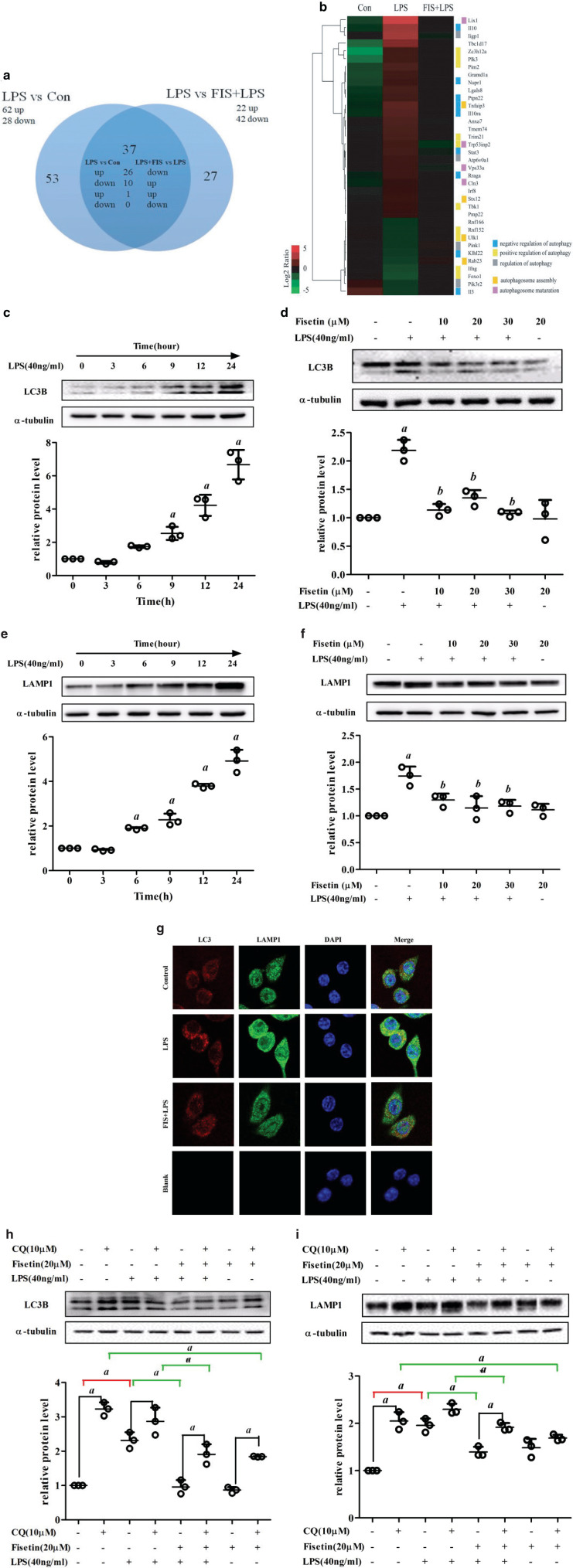
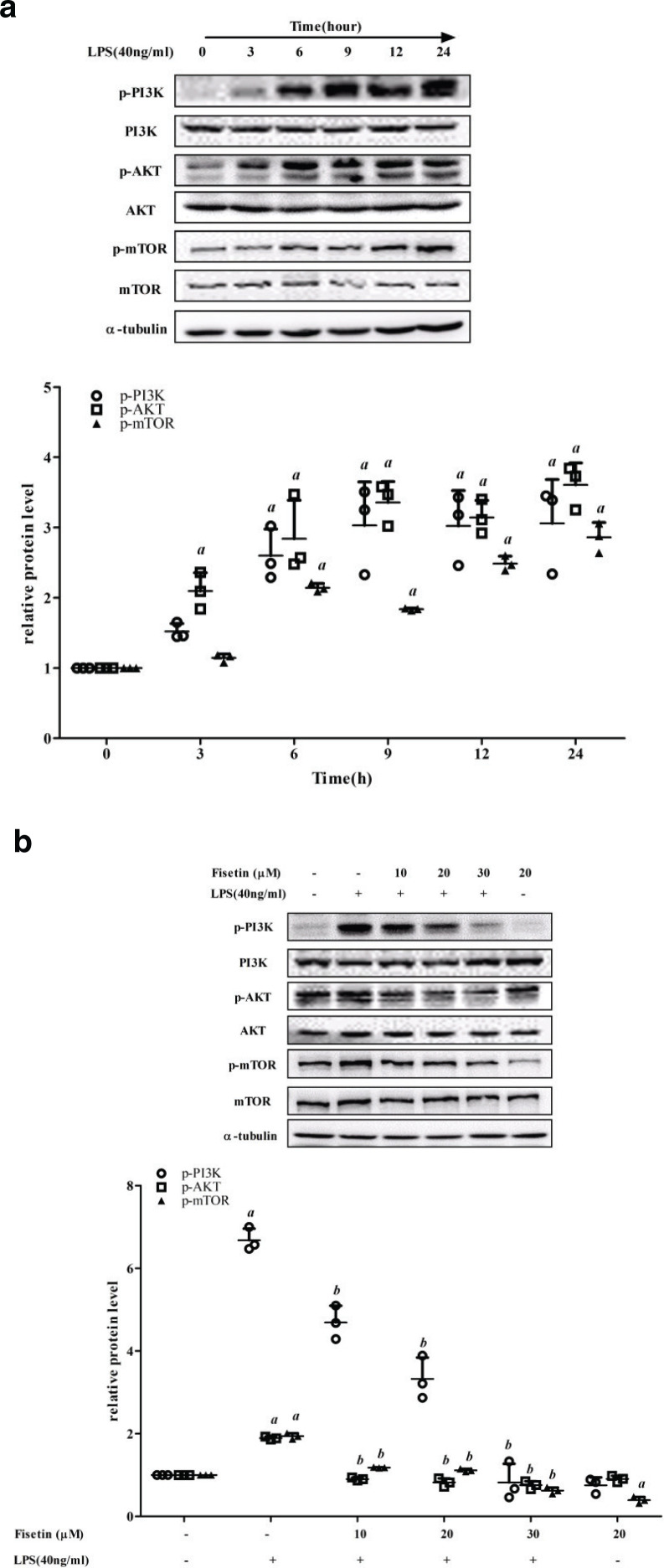
Microarray analysis identified 1,071 genes that were regulated by fisetin in LPS-treated RAW264.7 cells, and these genes were mainly related to the process of immune system response. Quantitative real-time polymerase chain reaction and Bio-Plex analysis indicated that fisetin decreased the expression and secretion of several inflammatory cytokines in cells administered with LPS. Western blot analysis and immunofluorescence assay showed that fisetin decreased microtubule-associated protein 1 light-chain 3B (LC3B) and lysosome-associated membrane protein 1 (LAMP1) expression in LPS-treated cells, while the autophagy inhibitor chloroquine (CQ) could partially reverse this effect. In addition, fisetin reduced the elevated expression of p-PI3K, p-AKT and p-mTOR induced by LPS in a concentration-dependent manner.
Fisetin diminished the expression and secretion of inflammatory cytokines and facilitated autophagosome-lysosome fusion and degradation in LPS-treated RAW264.7 cells via inhibition of the PI3K/AKT/mTOR signaling pathway. Overall, the results of this study provide new clues for the anti-inflammatory mechanism of fisetin and explain the crosstalk between autophagy and inflammation to some extent.
漆黄素是一种天然强效黄酮类化合物,具有多种有益的药理活性。在本研究中,我们研究了漆黄素调控基因在脂多糖(LPS)处理的RAW264.7细胞中的表达变化,并探讨了漆黄素在炎症和自噬中的作用。
微阵列分析确定了1071个在LPS处理的RAW264.7细胞中受漆黄素调控的基因,这些基因主要与免疫系统反应过程相关。定量实时聚合酶链反应和生物芯片分析表明,漆黄素降低了给予LPS的细胞中几种炎性细胞因子的表达和分泌。蛋白质免疫印迹分析和免疫荧光测定显示,漆黄素降低了LPS处理细胞中微管相关蛋白1轻链3B(LC3B)和溶酶体相关膜蛋白1(LAMP1)的表达,而自噬抑制剂氯喹(CQ)可部分逆转这种作用。此外,漆黄素以浓度依赖性方式降低了LPS诱导的p-PI3K、p-AKT和p-mTOR的表达升高。
漆黄素通过抑制PI3K/AKT/mTOR信号通路,减少了LPS处理的RAW264.7细胞中炎性细胞因子的表达和分泌,并促进了自噬体-溶酶体融合及降解。总体而言,本研究结果为漆黄素的抗炎机制提供了新线索,并在一定程度上解释了自噬与炎症之间的相互作用。