Michalek Julia E, Lisi Matteo, Awad Deema, Hadfield Kristin, Mareschal Isabelle, Dajani Rana
Department of Biological and Experimental Psychology, Queen Mary University of London, London, United Kingdom.
Department of Psychology, University of Essex, Colchester, United Kingdom.
Front Psychol. 2021 Mar 24;12:613754. doi: 10.3389/fpsyg.2021.613754. eCollection 2021.
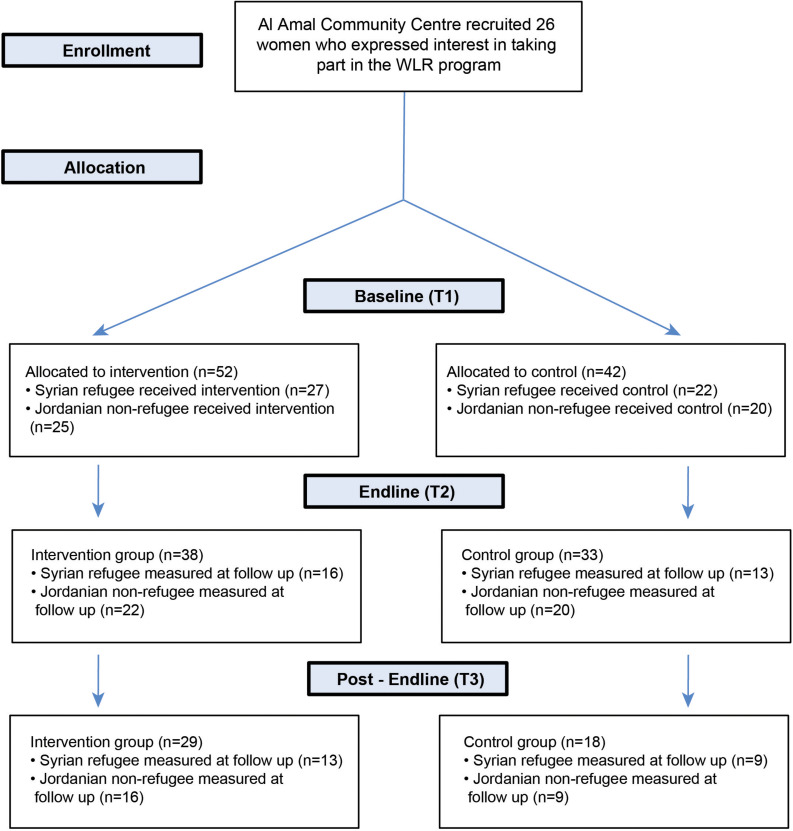
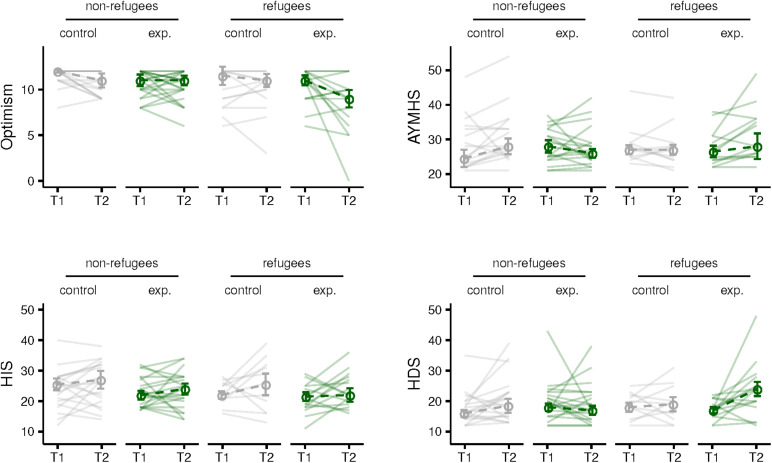
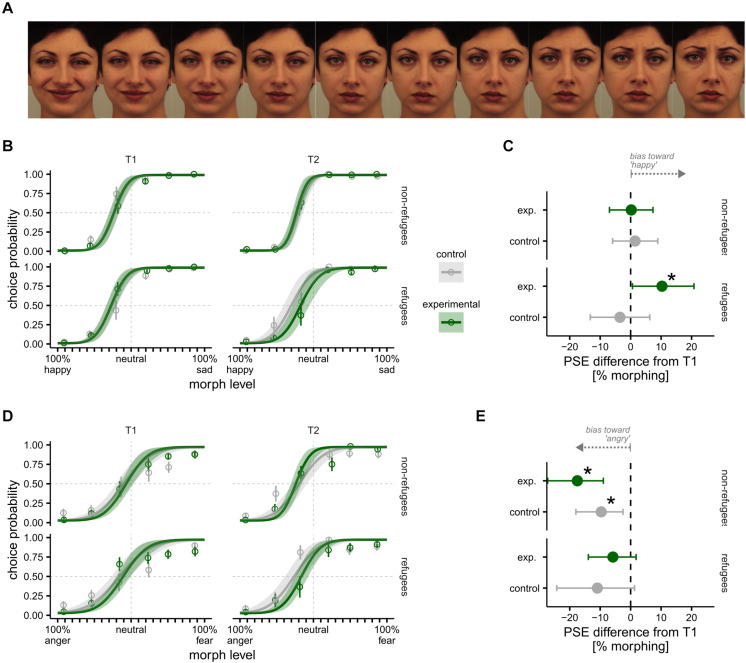
Early adversity and trauma can have profound effects on children's affective development and mental health outcomes. Interventions that improve mental health and socioemotional development are essential to mitigate these effects. We conducted a pilot study examining whether a reading-based program () improves emotion recognition and mental health through socialization in Syrian refugee ( = 49) and Jordanian non-refugee children ( = 45) aged 7-12 years old ( = 8.9, 57% girls) living in Jordan. To measure emotion recognition, children classified the expression in faces morphed between two emotions (happy-sad and fear-anger), while mental health was assessed using survey measures of optimism, depression, anxiety, distress, and insecurity. Prior to the intervention, both groups of children were significantly biased to interpret ambiguous facial expressions as sad, while there was no clear bias on the fear-anger spectrum. Following the intervention, we found changes in Syrian refugee children's bias in emotion recognition away from sad facial expressions, although this returned to pre-intervention levels 2 months after the end of the program. This shift in the bias away from sad facial expressions was not associated with changes in self-reported mental health symptoms. These results suggest a potential positive role of the reading intervention on affective development, but further research is required to determine the longer-term impacts of the program.
早期逆境和创伤会对儿童的情感发展和心理健康产生深远影响。改善心理健康和社会情感发展的干预措施对于减轻这些影响至关重要。我们进行了一项试点研究,调查一项基于阅读的项目()是否通过社交活动改善了居住在约旦的7至12岁叙利亚难民儿童(n = 49)和约旦非难民儿童(n = 45)(平均年龄8.9岁,女孩占57%)的情绪识别能力和心理健康状况。为了测量情绪识别能力,儿童对在两种情绪(快乐 - 悲伤和恐惧 - 愤怒)之间渐变的面部表情进行分类,而心理健康则通过乐观、抑郁、焦虑、痛苦和不安全感的调查量表进行评估。在干预之前,两组儿童在将模糊面部表情解读为悲伤方面都存在显著偏差,而在恐惧 - 愤怒范围内则没有明显偏差。干预后,我们发现叙利亚难民儿童在情绪识别中的偏差发生了变化,不再倾向于将面部表情识别为悲伤,尽管在项目结束2个月后这种偏差又恢复到了干预前的水平。这种从悲伤面部表情偏差的转变与自我报告的心理健康症状变化无关。这些结果表明阅读干预对情感发展可能具有积极作用,但需要进一步研究来确定该项目的长期影响。