Department of Microbiology and Infectious Diseases, Toho University School of Medicine, Tokyo, Japan.
Department of Surgery, Toho University Sakura Medical Center, Chiba, Japan.
Front Cell Infect Microbiol. 2021 Mar 26;11:602833. doi: 10.3389/fcimb.2021.602833. eCollection 2021.
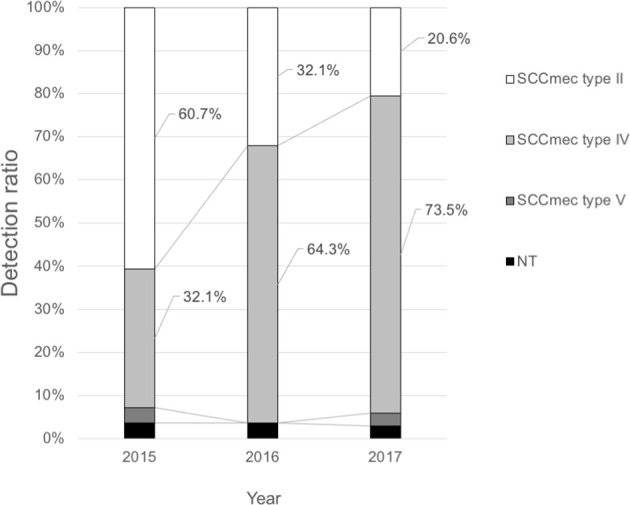
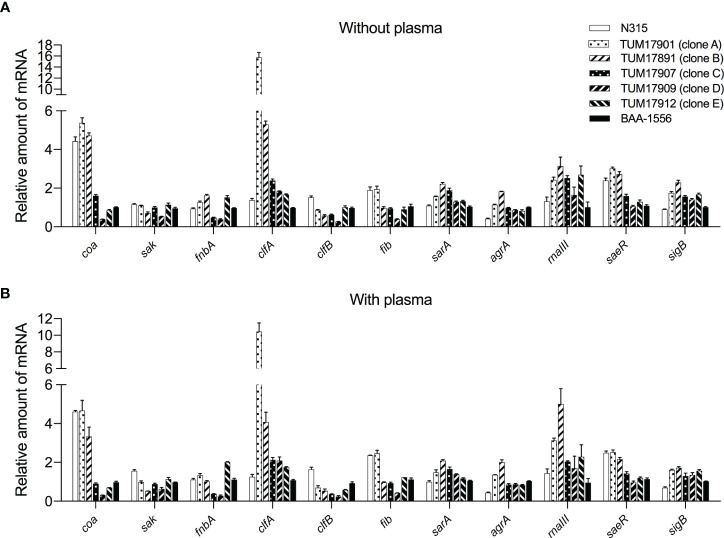
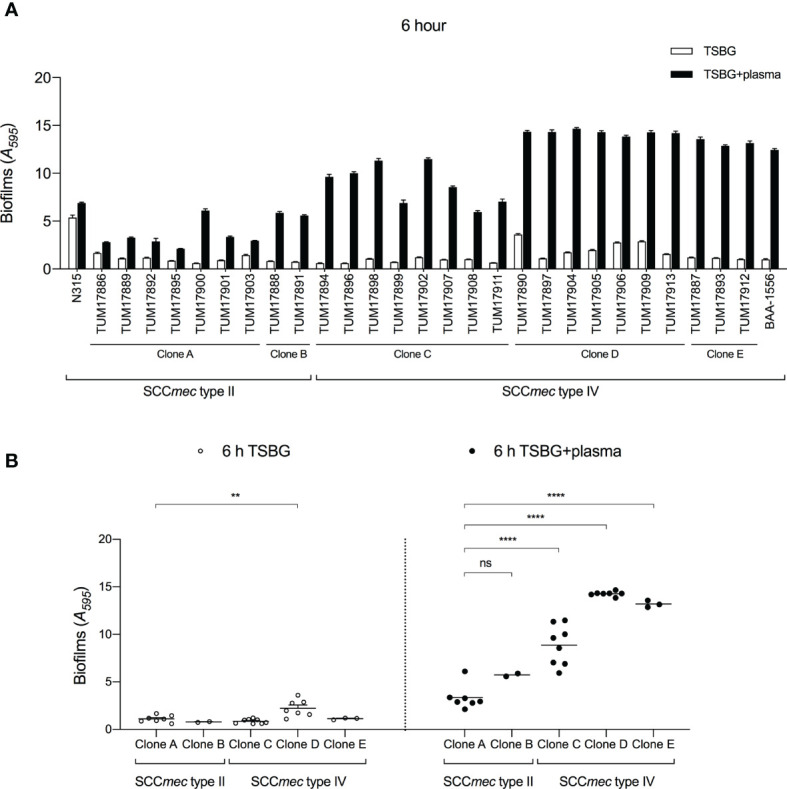
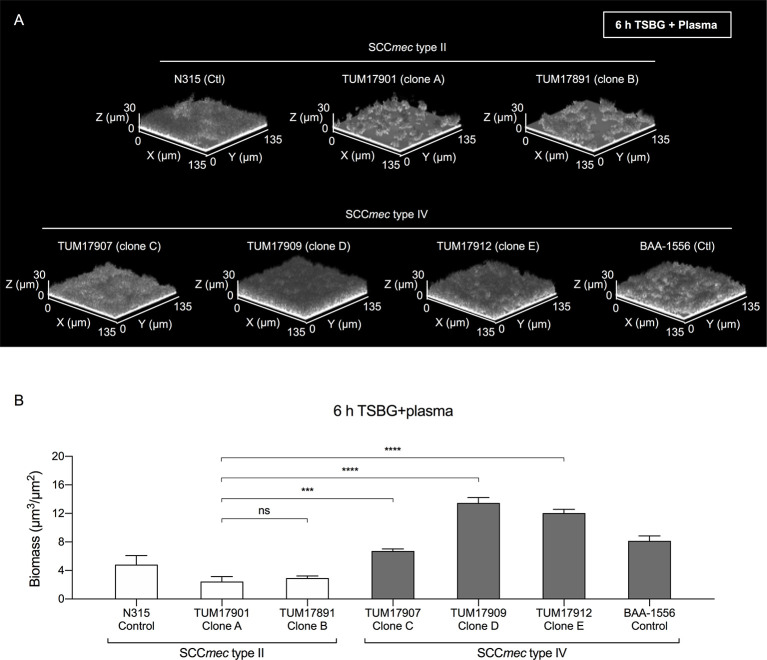
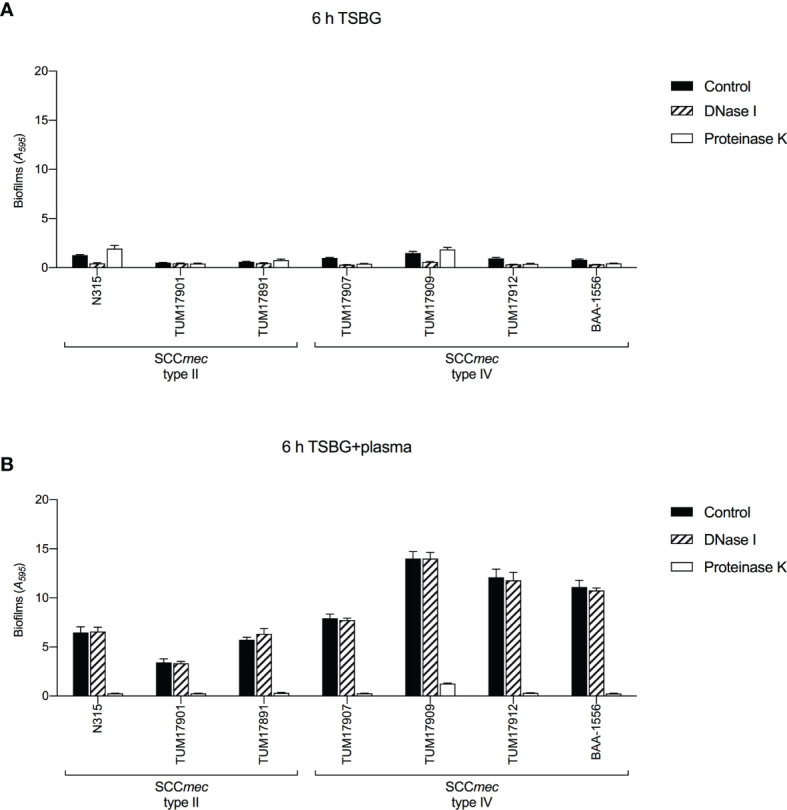
In Japan, Staphylococcal cassette chromosome (SCC) type IV methicillin-resistant (MRSA) is an increasingly prominent cause of bacteremia, but the virulence of most of these strains is unclear. We aimed to investigate the relationship between the molecular characteristics and the ability to form biofilms in the presence of blood plasma (plasma-biofilms) of MRSA strains isolated from bloodstream infections. In this study, the molecular characteristics and biofilms of MRSA strains isolated from blood cultures between 2015 and 2017 were analyzed by PCR-based assays, crystal violet staining, and confocal reflection microscopy methods. Among the 90 MRSA isolates, the detection rate of SCC type II clones decreased from 60.7 to 20.6%. The SCC type IV clone replaced the SCC type II clone as the dominant clone, with a detection rate increasing from 32.1 to 73.5%. The plasma-biofilm formation ability of the SCC type IV clone was higher than the SCC type II clone and even higher in strains harboring the or genes. Plasma-biofilms, mainly composed of proteins, were formed quickly and strongly. Our study demonstrated the increased plasma-biofilm formation ability of SCC type IV strains.
在日本,葡萄球菌盒式染色体 (SCC) 类型 IV 耐甲氧西林金黄色葡萄球菌 (MRSA) 是引起菌血症的一个日益突出的原因,但这些菌株的大多数毒力尚不清楚。我们旨在研究从血流感染中分离出的 MRSA 菌株的分子特征与在血浆存在下形成生物膜的能力(血浆生物膜)之间的关系。在这项研究中,通过基于 PCR 的检测、结晶紫染色和共聚焦反射显微镜方法分析了 2015 年至 2017 年间从血液培养物中分离出的 MRSA 菌株的分子特征和生物膜。在 90 株 MRSA 分离株中,SCC 类型 II 克隆的检测率从 60.7%降至 20.6%。SCC 类型 IV 克隆取代 SCC 类型 II 克隆成为主要克隆,检测率从 32.1%增加到 73.5%。SCC 类型 IV 克隆的血浆生物膜形成能力高于 SCC 类型 II 克隆,在携带 或 基因的菌株中甚至更高。血浆生物膜主要由蛋白质组成,形成迅速且牢固。我们的研究表明 SCC 类型 IV 菌株的血浆生物膜形成能力增强。