Department of Cell, Developmental and Integrative Biology, University of Alabama at Birmingham, Birmingham, AL, USA.
Mitochondria Medicine Laboratory, Department of Pathology, University of Alabama at Birmingham, Birmingham, AL, USA.
Cell Adh Migr. 2021 Dec;15(1):101-115. doi: 10.1080/19336918.2021.1903684.
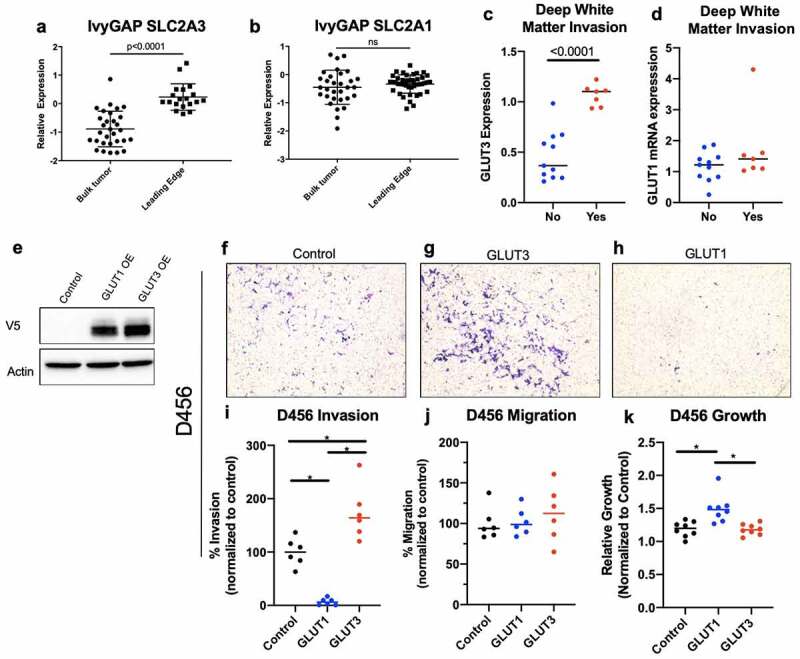
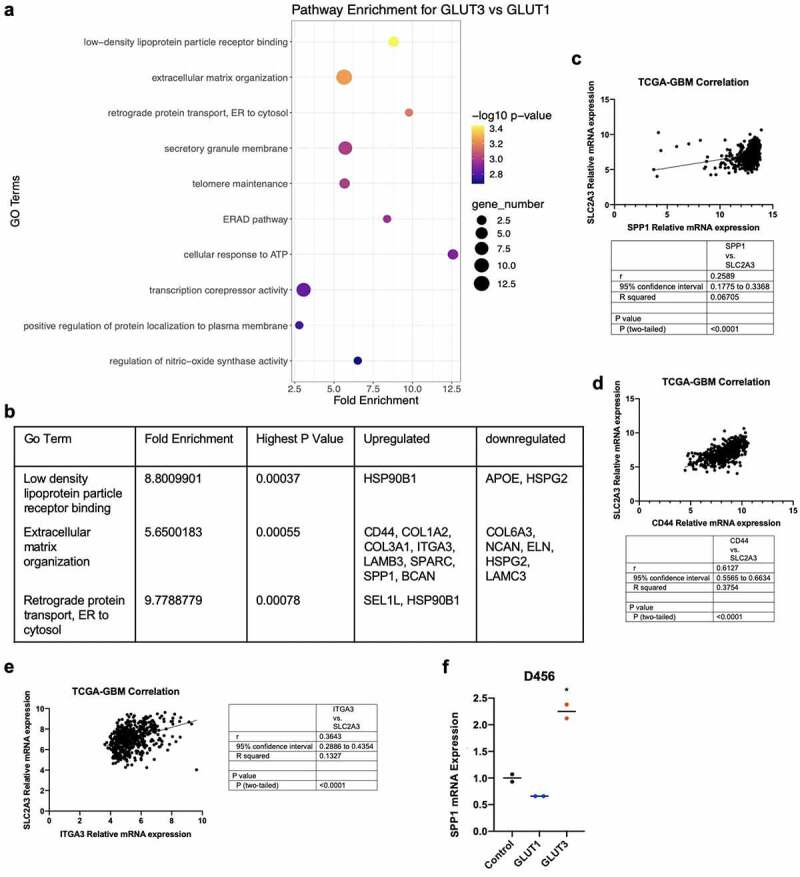
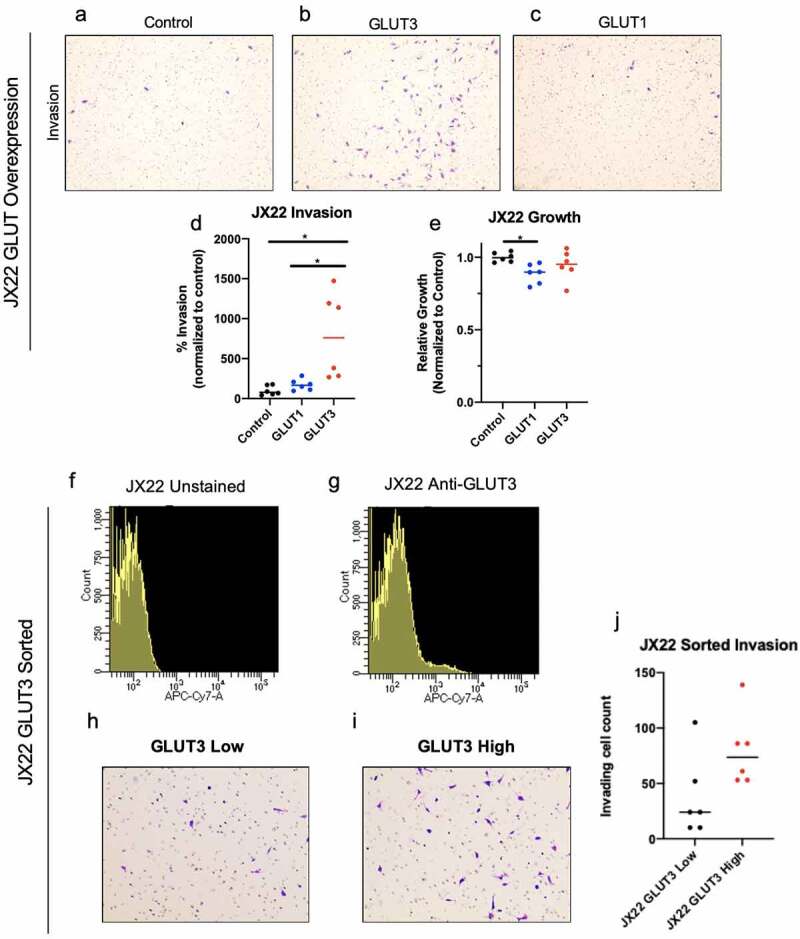
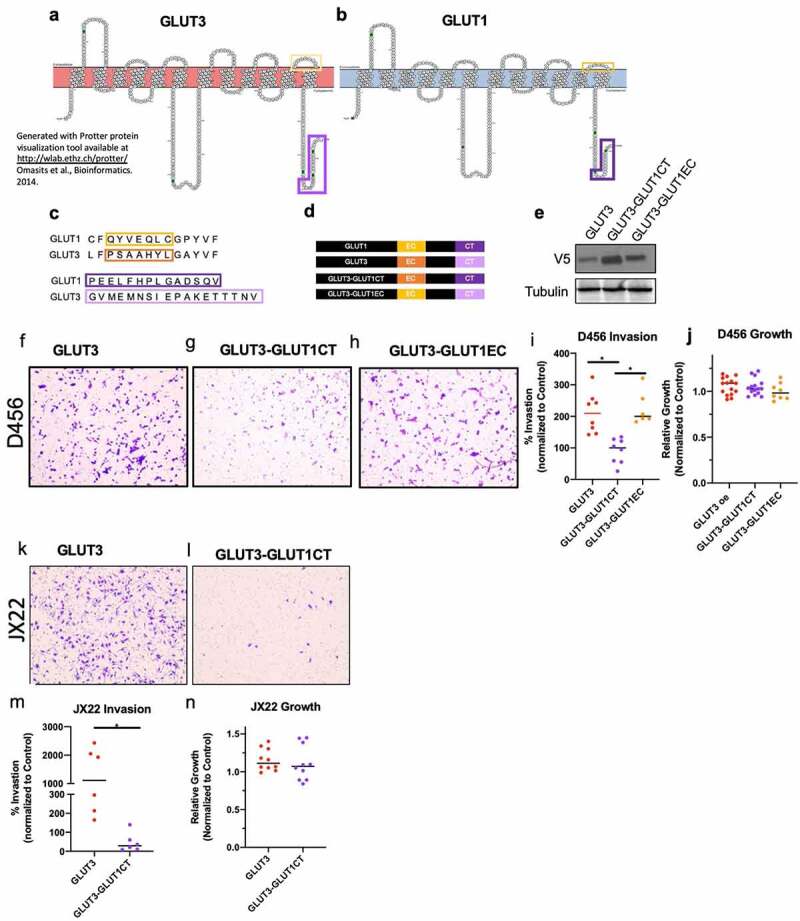
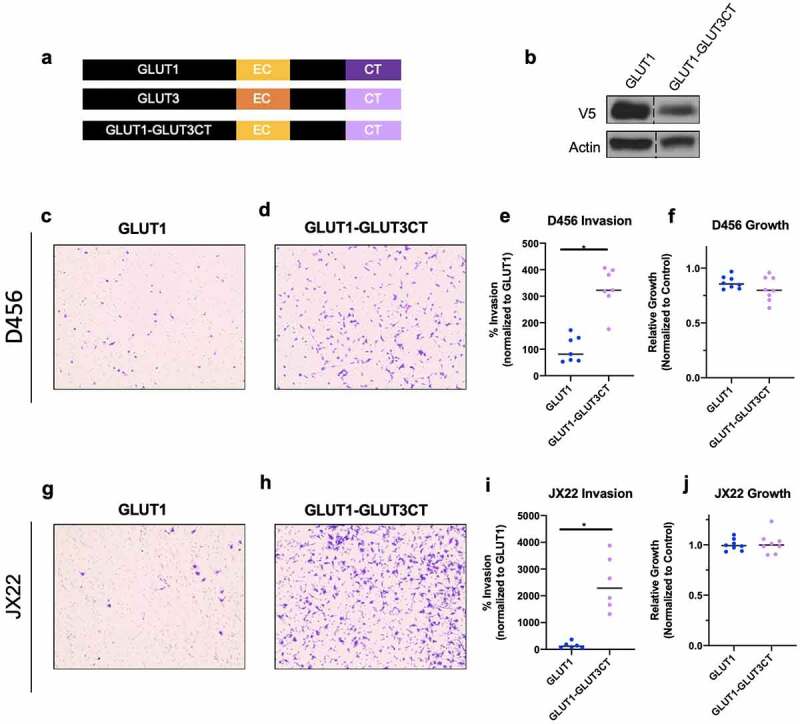
The multifaceted roles of metabolism in invasion have been investigated across many cancers. The brain tumor glioblastoma (GBM) is a highly invasive and metabolically plastic tumor with an inevitable recurrence. The neuronal glucose transporter 3 (GLUT3) was previously reported to correlate with poor glioma patient survival and be upregulated in GBM cells to promote therapeutic resistance and survival under restricted glucose conditions. It has been suggested that the increased glucose uptake mediated by GLUT3 elevation promotes survival of circulating tumor cells to facilitate metastasis. Here we suggest a more direct role for GLUT3 in promoting invasion that is not dependent upon changes in cell survival or metabolism. Analysis of glioma datasets demonstrated that GLUT3, but not GLUT1, expression was elevated in invasive disease. In human xenograft derived GBM cells, GLUT3, but not GLUT1, elevation significantly increased invasion in transwell assays, but not growth or migration. Further, there were no changes in glycolytic metabolism that correlated with invasive phenotypes. We identified the GLUT3 C-terminus as mediating invasion: substituting the C-terminus of GLUT1 for that of GLUT3 reduced invasion. RNA-seq analysis indicated changes in extracellular matrix organization in GLUT3 overexpressing cells, including upregulation of osteopontin. Together, our data suggest a role for GLUT3 in increasing tumor cell invasion that is not recapitulated by GLUT1, is separate from its role in metabolism and survival as a glucose transporter, and is likely broadly applicable since GLUT3 expression correlates with metastasis in many solid tumors.
代谢在侵袭中的多方面作用已在许多癌症中得到研究。脑肿瘤胶质母细胞瘤(GBM)是一种高度侵袭性和代谢可塑性的肿瘤,不可避免地会复发。先前有报道称神经元葡萄糖转运蛋白 3(GLUT3)与胶质瘤患者的不良生存相关,并在 GBM 细胞中上调,以促进在有限的葡萄糖条件下的治疗抵抗和存活。有人认为,由 GLUT3 上调介导的葡萄糖摄取增加促进了循环肿瘤细胞的存活,从而促进了转移。在这里,我们提出了 GLUT3 在促进侵袭方面的更直接作用,而不依赖于细胞存活或代谢的变化。对胶质瘤数据集的分析表明,GLUT3 而不是 GLUT1 的表达在侵袭性疾病中升高。在源自人类异种移植物的 GBM 细胞中,GLUT3 而非 GLUT1 的上调显着增加了 Transwell 测定中的侵袭,但对生长或迁移没有影响。此外,与侵袭表型相关的糖酵解代谢没有变化。我们确定了 GLUT3 的 C 末端介导侵袭:将 GLUT1 的 C 末端替换为 GLUT3 的 C 末端可降低侵袭。RNA-seq 分析表明,GLUT3 过表达细胞中细胞外基质组织发生变化,包括骨桥蛋白上调。总之,我们的数据表明 GLUT3 在增加肿瘤细胞侵袭中的作用不能被 GLUT1 所重现,与作为葡萄糖转运蛋白的代谢和存活作用分开,并且可能广泛适用,因为 GLUT3 表达与许多实体瘤的转移相关。