Greenwood Kathryn, Webb Rebecca, Gu Jenny, Fowler David, de Visser Richard, Bremner Stephen, Abramowicz Iga, Perry Nicky, Clark Stuart, O'Donnell Anastacia, Charlton Dan, Jarvis Rebecca, Garety Philippa, Nandha Sunil, Lennox Belinda, Johns Louise, Rathod Shanaya, Phiri Peter, French Paul, Law Heather, Hodgekins Jo, Painter Michelle, Treise Cate, Plaistow James, Irwin Francis, Thompson Rose, Mackay Tanya, May Carl R, Healey Andy, Hooper Richard, Peters Emmanuelle
R&D, Sussex Partnership NHS Foundation Trust, Hove, UK.
School of Psychology, University of Sussex, Falmer, UK.
Trials. 2021 Apr 12;22(1):272. doi: 10.1186/s13063-021-05105-y.
Early Intervention in Psychosis (EIP) services improve health outcomes for young people with psychosis in the medium-long term, but 25% of young people disengage in the first 12 months with costs to their mental health, families, society and the NHS. This study will evaluate the effectiveness, cost-effectiveness and implementation of a team-based motivational Early Youth Engagement (EYE-2) intervention.
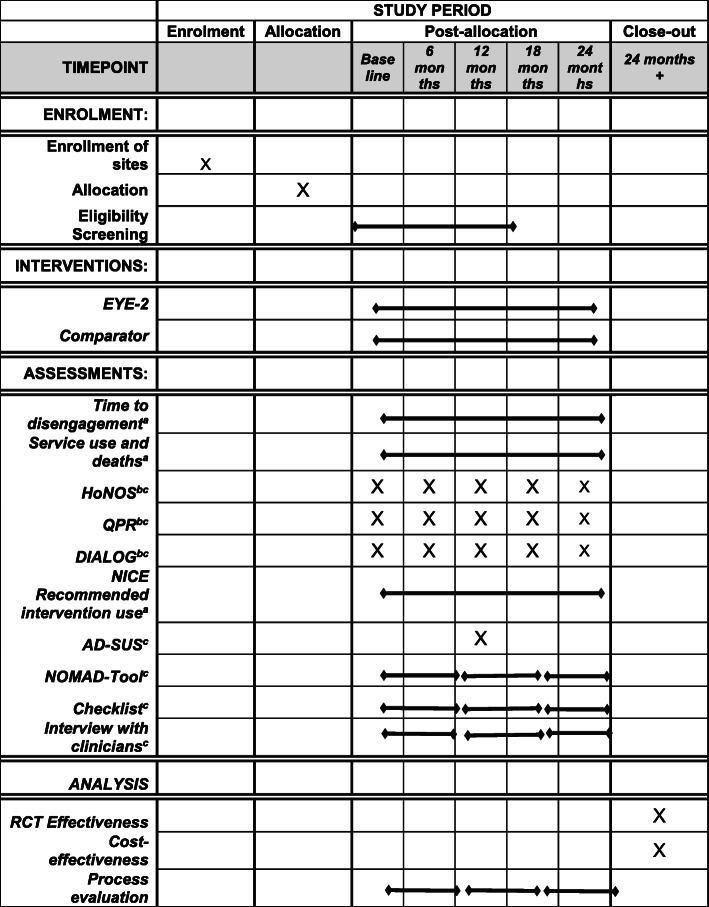
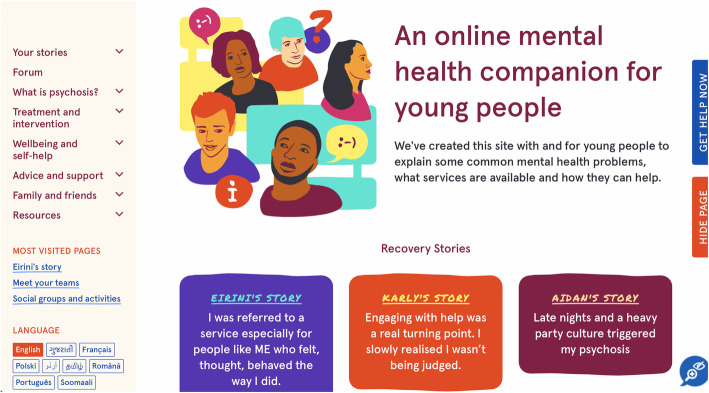
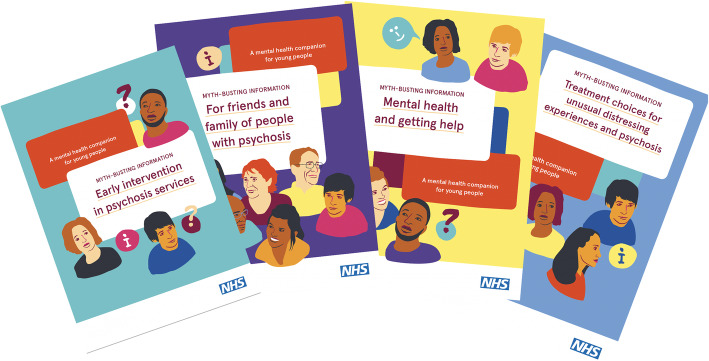
The study design is a cluster randomised controlled trial (RCT) with economic evaluation, comparing the EYE-2 intervention + standardised EIP service to standardised EIP service alone, with randomisation at the team level. A process evaluation will evaluate the delivery of the intervention qualitatively and quantitatively across contexts. The setting is 20 EIP teams in 5 sites: Manchester, South London, East Anglia, Thames Valley and Hampshire. Participants are young people (14-35 years) with first episode psychosis, and EIP staff. The intervention is the team-based motivational engagement (EYE-2) intervention, delivered alongside standardised EIP services, and supported by additional training, website, booklets and social groups. The comparator is the standardised EIP service. Both interventions are delivered by EIP clinicians. The primary outcome is time to disengagement (time in days from date of allocation to care coordinator to date of last contact following refusal to engage with EIP service, or lack of response to EIP contact for a consecutive 3-month period). Secondary outcomes include mental and physical health, deaths, social and occupational function, recovery, satisfaction and service use at 6, 12, 18 and 24 months. A 12-month within-trial economic evaluation will investigate cost-effectiveness from a societal perspective and from an NHS perspective.
The trial will provide the first test of an engagement intervention in standardised care, with the potential for significant impact on the mental health and wellbeing of young people and their families, and economic benefits for services. The intervention will be highly scalable, supported by the toolkit including manuals, commissioning guide, training and resources, adapted to meet the needs of the diverse EIP population, and based on an in-depth process evaluation.
ISRCTN 51629746 prospectively registered 7th May 2019. Date assigned 10th May 2019.
精神病早期干预(EIP)服务可在中长期改善患有精神病的年轻人的健康状况,但25%的年轻人在最初12个月内退出,这对他们的心理健康、家庭、社会及国民健康服务体系(NHS)都造成了损失。本研究将评估基于团队的动机性早期青年参与(EYE-2)干预措施的有效性、成本效益及实施情况。
本研究设计为一项带有经济评估的整群随机对照试验(RCT),将EYE-2干预措施+标准化EIP服务与单独的标准化EIP服务进行比较,随机分组在团队层面进行。一项过程评估将从定性和定量两方面评估干预措施在不同环境中的实施情况。研究地点为5个地区的20个EIP团队:曼彻斯特、伦敦南部、东安格利亚、泰晤士河谷和汉普郡。参与者为首次发作精神病的年轻人(14 - 35岁)以及EIP工作人员。干预措施为基于团队的动机性参与(EYE-2)干预,与标准化EIP服务一同提供,并通过额外培训、网站、手册及社交团体提供支持。对照措施为标准化EIP服务。两种干预措施均由EIP临床医生实施。主要结局指标为退出时间(从分配至护理协调员之日起至拒绝参与EIP服务或连续3个月未回应EIP联系后的最后一次接触之日的天数)。次要结局指标包括6、12、18和24个月时的心理和身体健康状况、死亡情况、社会和职业功能、康复情况、满意度及服务使用情况。一项为期12个月的试验期内经济评估将从社会角度和NHS角度调查成本效益情况。
该试验将首次对标准化护理中的参与干预措施进行测试,有可能对年轻人及其家庭的心理健康和幸福产生重大影响,并为服务带来经济效益。该干预措施具有高度可扩展性,有包括手册、委托指南、培训和资源在内的工具包提供支持,可根据不同EIP人群的需求进行调整,并基于深入的过程评估。
ISRCTN 51629746,于2019年5月7日进行前瞻性注册。2019年5月10日分配注册号。