Department of Neurology, The First Affiliated Hospital, Sun Yat-sen University; Guangdong Provincial Key Laboratory of Diagnosis and Treatment of Major Neurological Diseases, National Key Clinical Department and Key Discipline of Neurology; Zhongshan Medical School, Sun Yat-sen University; Center for Stem Cell Biology and Tissue Engineering, Key Laboratory for Stem Cells and Tissue Engineering, Ministry of Education, Guangzhou, 510080, China.
CAS Key Laboratory of Regenerative Biology, Guangdong Provincial Key Laboratory of Stem Cell and Regenerative Medicine, Guangzhou Institutes of Biomedicine and Health, Chinese Academy of Sciences, Guangzhou, 510530, China.
Genome Med. 2021 Apr 12;13(1):57. doi: 10.1186/s13073-021-00876-0.
Mutations in the DMD gene encoding dystrophin-a critical structural element in muscle cells-cause Duchenne muscular dystrophy (DMD), which is the most common fatal genetic disease. Clustered regularly interspaced short palindromic repeat (CRISPR)-mediated gene editing is a promising strategy for permanently curing DMD.
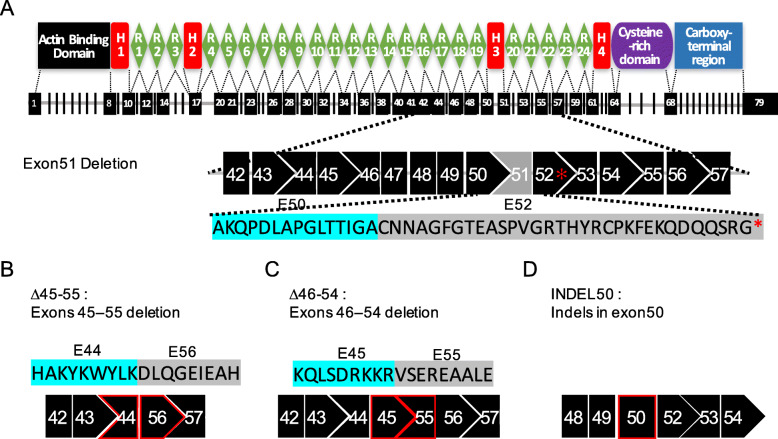
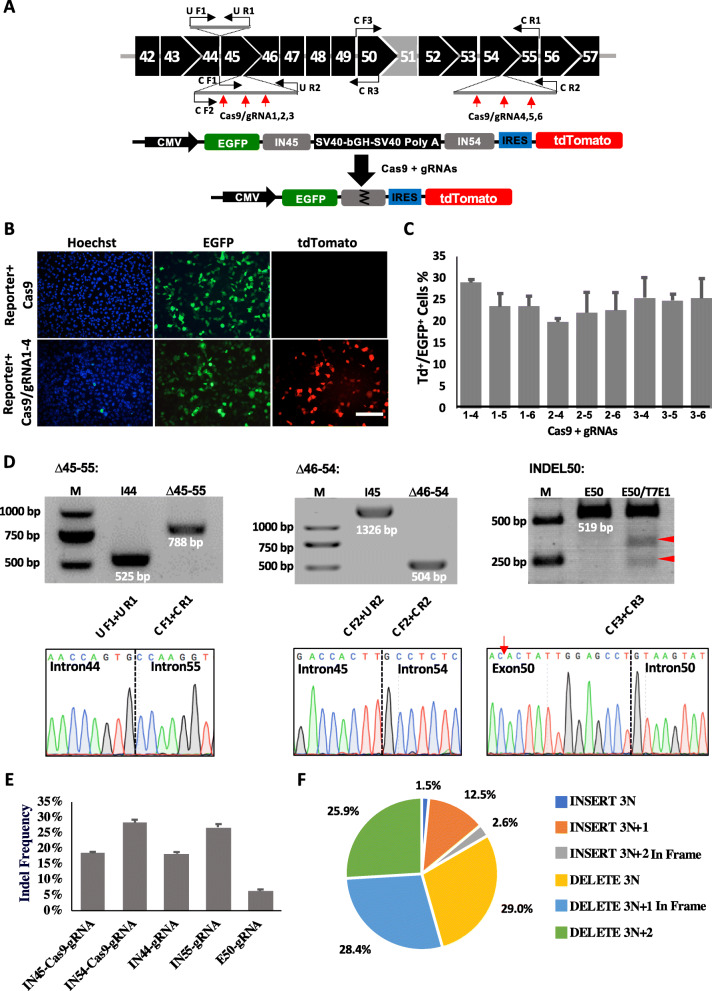
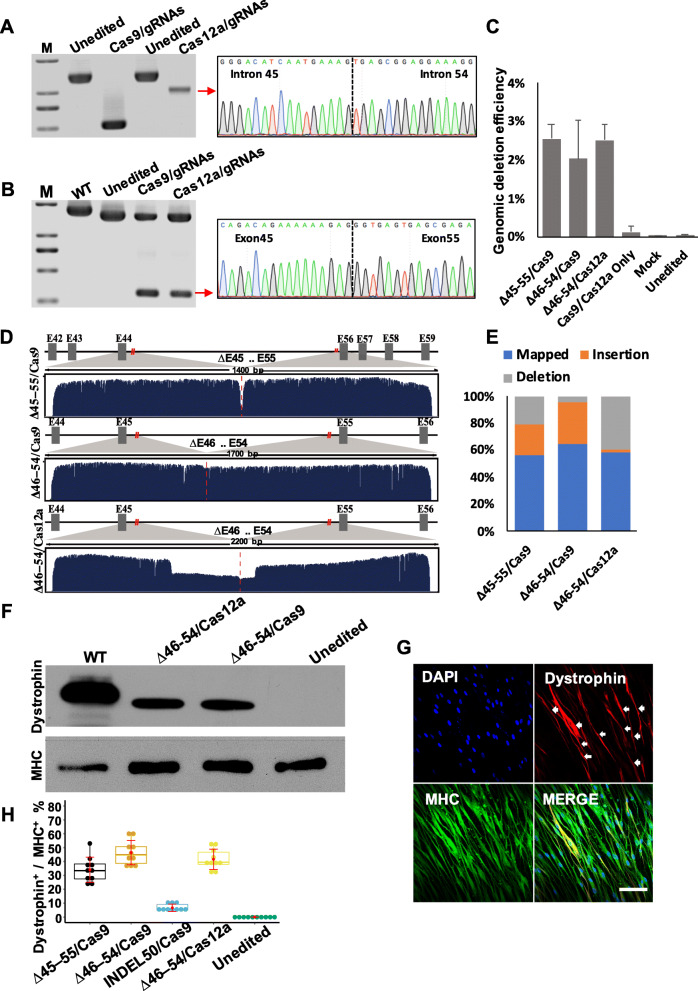
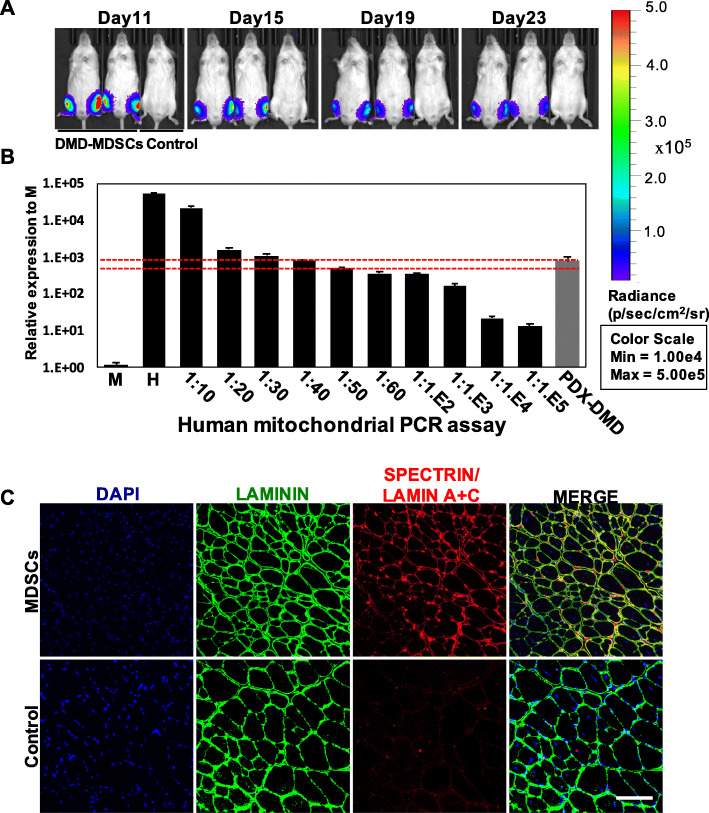
In this study, we developed a novel strategy for reframing DMD mutations via CRISPR-mediated large-scale excision of exons 46-54. We compared this approach with other DMD rescue strategies by using DMD patient-derived primary muscle-derived stem cells (DMD-MDSCs). Furthermore, a patient-derived xenograft (PDX) DMD mouse model was established by transplanting DMD-MDSCs into immunodeficient mice. CRISPR gene editing components were intramuscularly delivered into the mouse model by adeno-associated virus vectors.
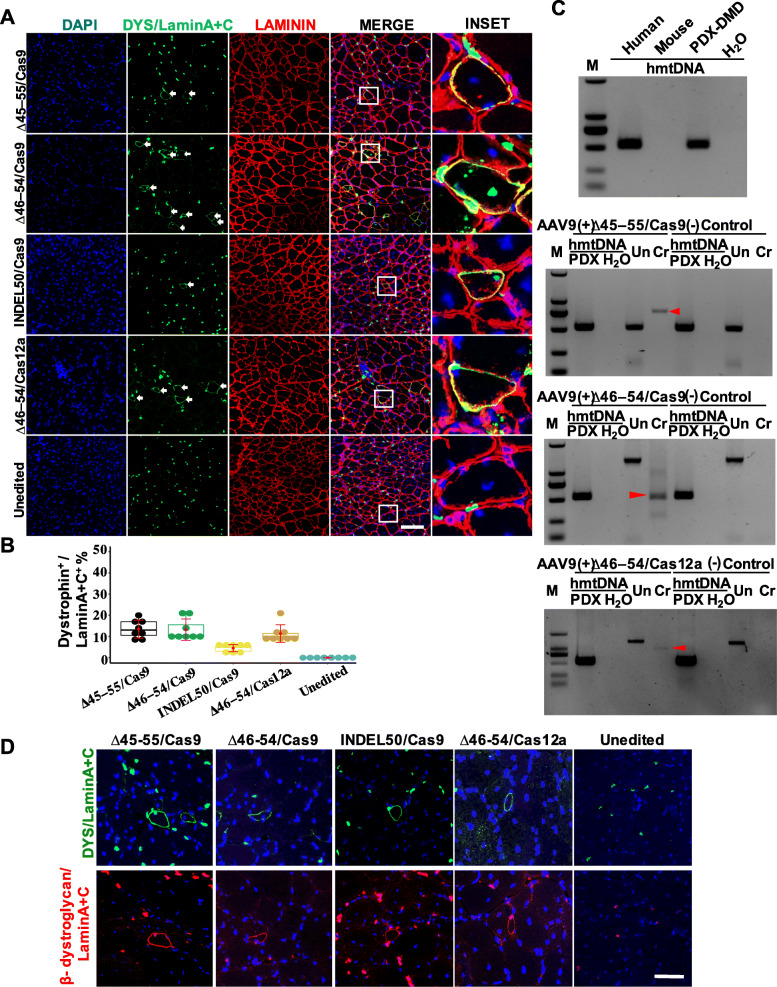
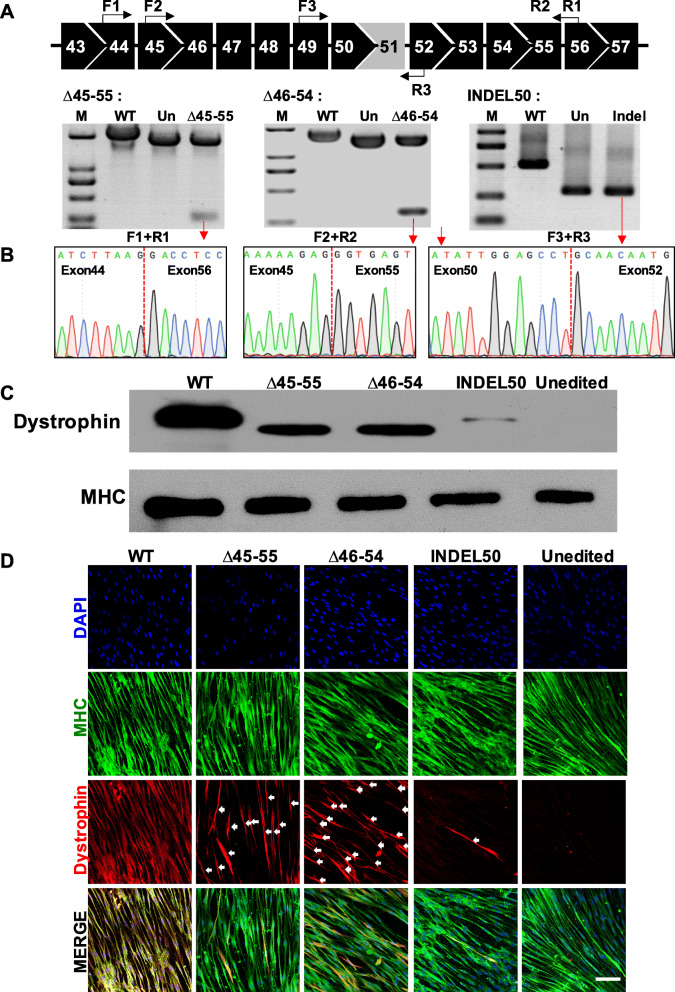
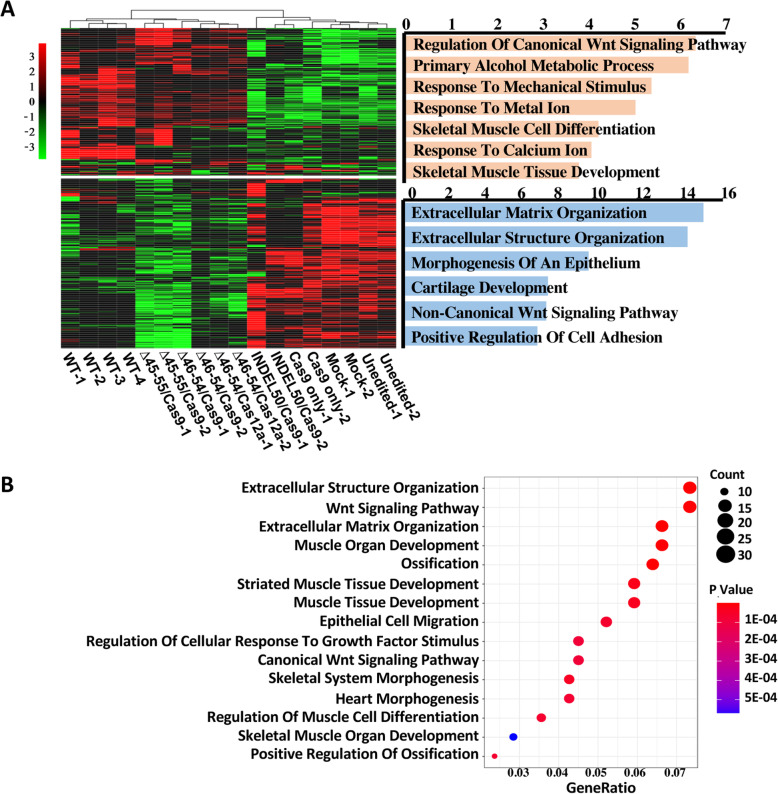
Results demonstrated that the large-scale excision of mutant DMD exons showed high efficiency in restoring dystrophin protein expression. We also confirmed that CRISPR from Prevotella and Francisella 1(Cas12a)-mediated genome editing could correct DMD mutation with the same efficiency as CRISPR-associated protein 9 (Cas9). In addition, more than 10% human DMD muscle fibers expressed dystrophin in the PDX DMD mouse model after treated by the large-scale excision strategies. The restored dystrophin in vivo was functional as demonstrated by the expression of the dystrophin glycoprotein complex member β-dystroglycan.
We demonstrated that the clinically relevant CRISPR/Cas9 could restore dystrophin in human muscle cells in vivo in the PDX DMD mouse model. This study demonstrated an approach for the application of gene therapy to other genetic diseases.
肌营养不良蛋白(Dystrophin)是肌肉细胞中的关键结构元素,其编码基因 DMD 中的突变会导致杜氏肌营养不良症(Duchenne muscular dystrophy,DMD),这是最常见的致命遗传性疾病。基于规律成簇间隔短回文重复序列(Clustered regularly interspaced short palindromic repeat,CRISPR)的基因编辑技术是一种有前途的永久性治疗 DMD 的策略。
本研究通过 CRISPR 介导的大片段外显子 46-54 切除,开发了一种针对 DMD 突变的新型重框策略。我们通过使用 DMD 患者来源的原代肌肉源性干细胞(DMD-MDSCs)比较了这种方法与其他 DMD 挽救策略。此外,通过将 DMD-MDSCs 移植到免疫缺陷小鼠中建立了患者来源的异种移植(Patient-derived xenograft,PDX)DMD 小鼠模型。CRISPR 基因编辑组件通过腺相关病毒载体肌肉内递送至小鼠模型。
结果表明,突变 DMD 外显子的大片段切除在恢复肌营养不良蛋白表达方面具有高效性。我们还证实,Prevotella 和 Francisella 1(Cas12a)来源的 CRISPR 基因组编辑可以以与 CRISPR 相关蛋白 9(Cas9)相同的效率纠正 DMD 突变。此外,经过大片段切除策略处理后,PDX DMD 小鼠模型中超过 10%的人类 DMD 肌纤维表达肌营养不良蛋白。体内表达的肌营养不良蛋白是功能性的,如肌营养不良蛋白糖蛋白复合物成员β-肌聚糖的表达所示。
我们证明了临床上相关的 CRISPR/Cas9 可以在 PDX DMD 小鼠模型中恢复人类肌肉细胞中的肌营养不良蛋白。本研究为基因治疗在其他遗传疾病中的应用提供了一种方法。