Yokota Etsuko, Iwai Miki, Yukawa Takuro, Yoshida Masakazu, Naomoto Yoshio, Haisa Minoru, Monobe Yasumasa, Takigawa Nagio, Guo Minzhe, Maeda Yutaka, Fukazawa Takuya, Yamatsuji Tomoki
Department of General Surgery, Kawasaki Medical School, Okayama, Japan.
General Medical Center Research Unit, Kawasaki Medical School, Okayama, Japan.
NPJ Precis Oncol. 2021 Apr 12;5(1):29. doi: 10.1038/s41698-021-00166-3.
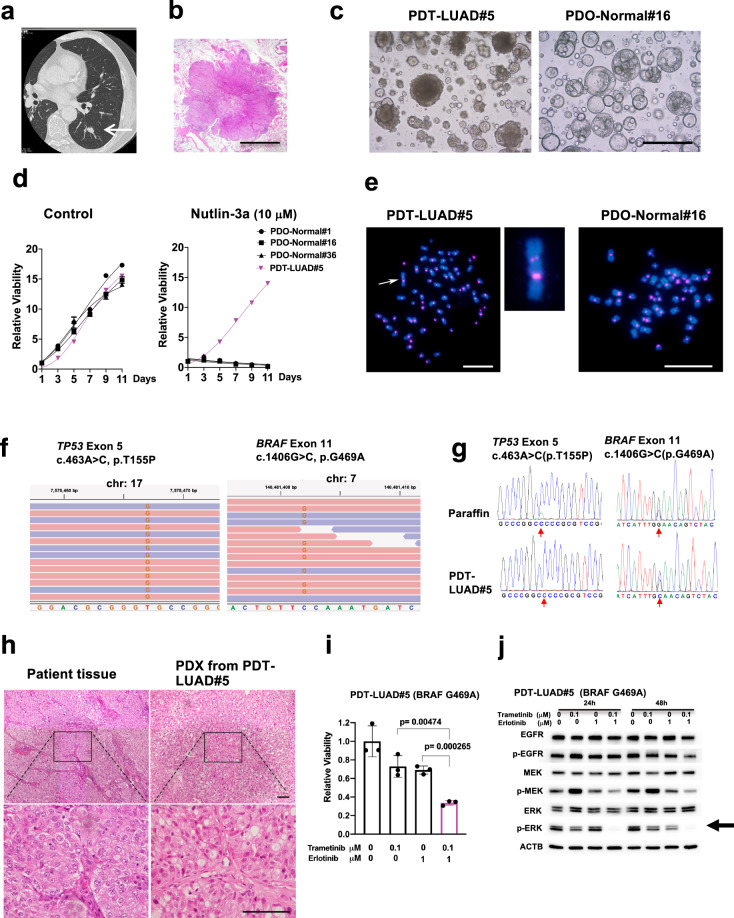
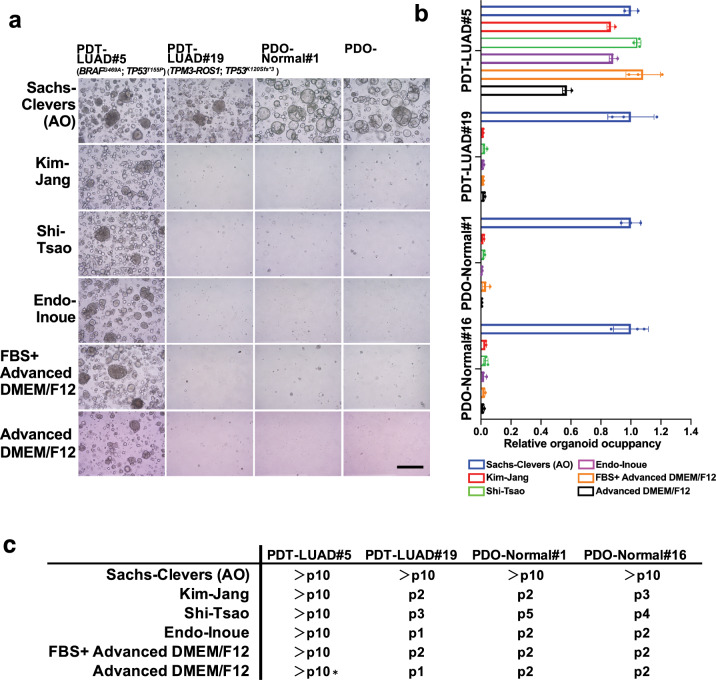
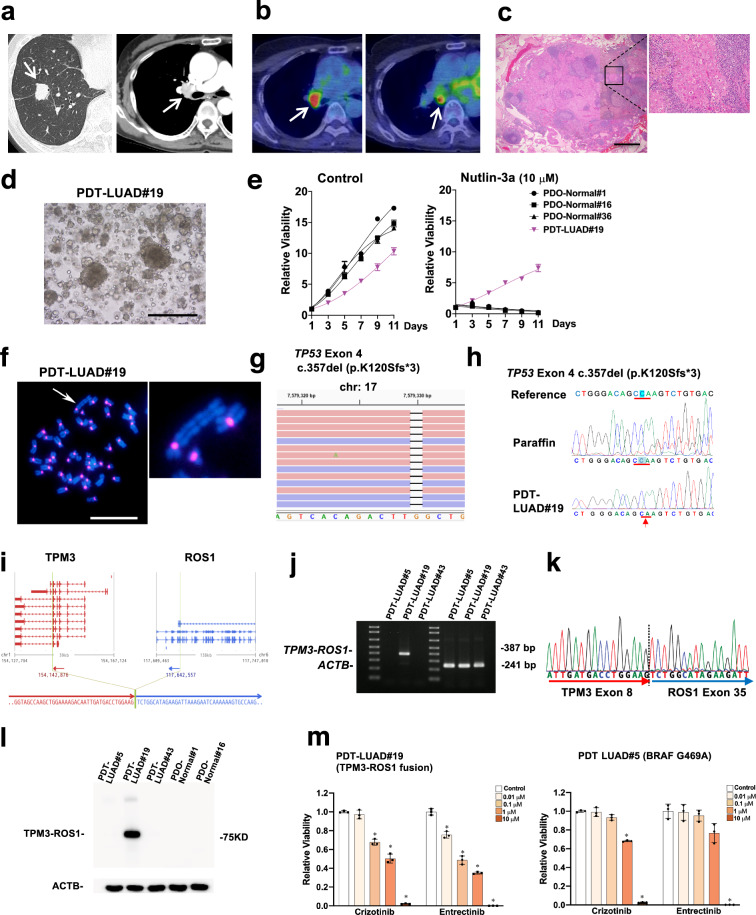
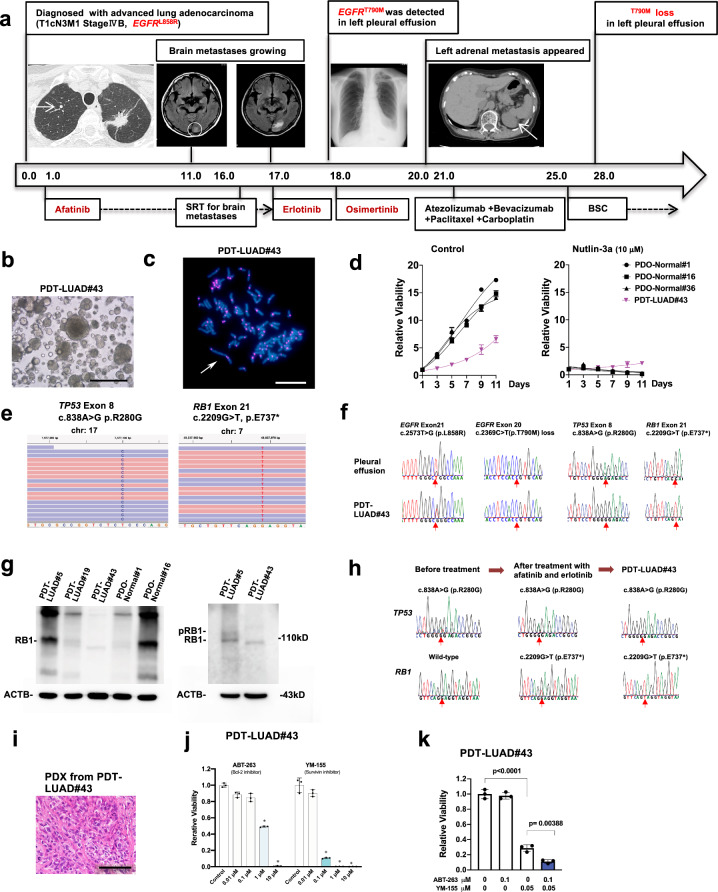
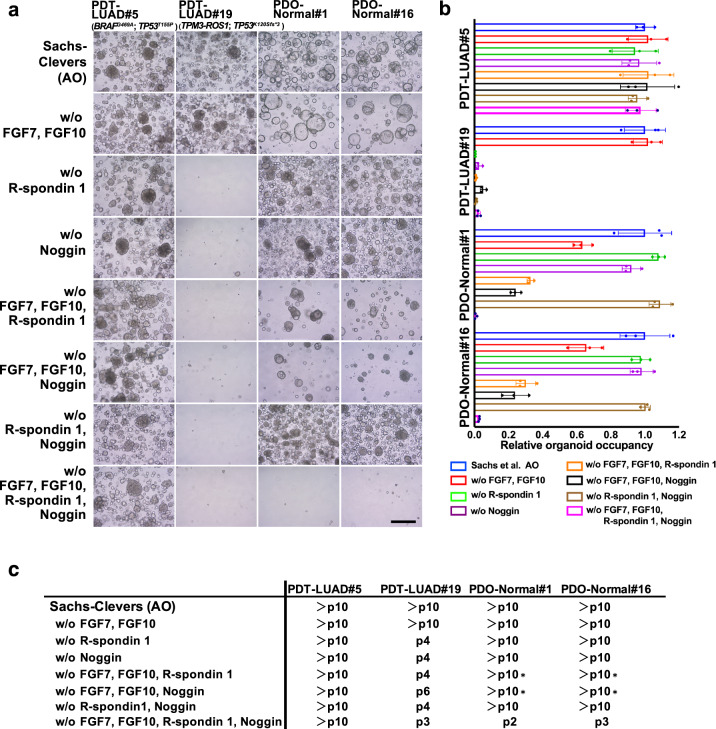
Despite high expectations for lung tumoroids, they have not been applied in the clinic due to the difficulty of their long-term culture. Here, however, using AO (airway organoid) media developed by the Clevers laboratory, we succeeded in generating 3 lung tumoroid lines for long-term culture (>13 months) from 41 lung cancer cases (primary or metastatic). Use of nutlin-3a was key to selecting lung tumoroids that harbor mutant p53 in order to eliminate normal lung epithelial organoids. Next-generation sequencing (NGS) analysis indicated that each lung tumoroid carried BRAF, TPM3-ROS1 or EGFR/RB1, respectively. Targeted therapies using small molecule drugs (trametinib/erlotinib for BRAF, crizotinib/entrectinib for TPM3-ROS1 and ABT-263/YM-155 for EGFR/RB1) significantly suppressed the growth of each lung tumoroid line. AO media was superior to 3 different media developed by other laboratories. Our experience indicates that long-term lung tumoroid culture is feasible, allowing us to identify NGS-based therapeutic targets and determine the responsiveness to corresponding small molecule drugs.
尽管对肺肿瘤类器官寄予厚望,但由于其长期培养困难,尚未应用于临床。然而,在此我们使用由克莱弗斯实验室开发的气道类器官(AO)培养基,成功地从41例肺癌病例(原发性或转移性)中建立了3个可长期培养(>13个月)的肺肿瘤类器官系。使用nutlin-3a是筛选携带突变型p53的肺肿瘤类器官以消除正常肺上皮类器官的关键。二代测序(NGS)分析表明,每个肺肿瘤类器官分别携带BRAF、TPM3-ROS1或EGFR/RB1。使用小分子药物进行靶向治疗(针对BRAF的曲美替尼/厄洛替尼、针对TPM3-ROS1的克唑替尼/恩曲替尼以及针对EGFR/RB1的ABT-263/YM-155)显著抑制了每个肺肿瘤类器官系的生长。AO培养基优于其他实验室开发的3种不同培养基。我们的经验表明,长期肺肿瘤类器官培养是可行的,这使我们能够识别基于NGS的治疗靶点并确定对相应小分子药物的反应性。