Department of Hepatobiliary Surgery, The First Affiliated Hospital of Kunming Medical University, Kunming, Yunnan 650032, P.R. China.
State Key Laboratory of Respiratory Disease, Center of Infection and Immunity, Guangzhou Institutes of Biomedicine and Health, Chinese Academy of Sciences, Guangzhou, Guangdong 510530, P.R. China.
Mol Med Rep. 2021 Jun;23(6). doi: 10.3892/mmr.2021.12057. Epub 2021 Apr 13.
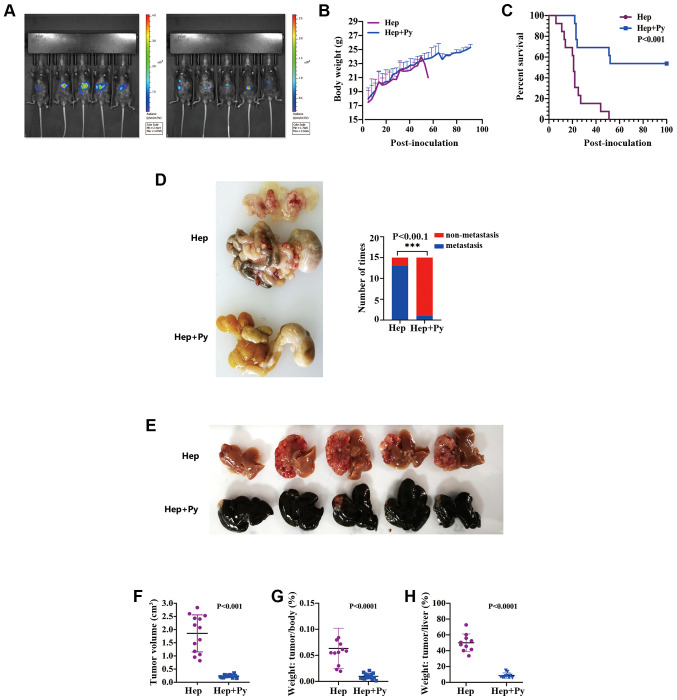
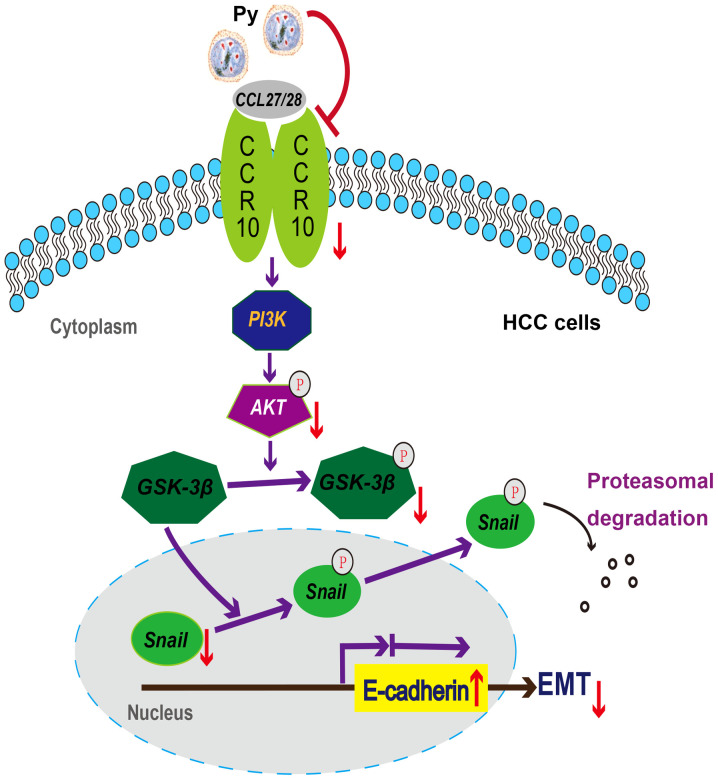
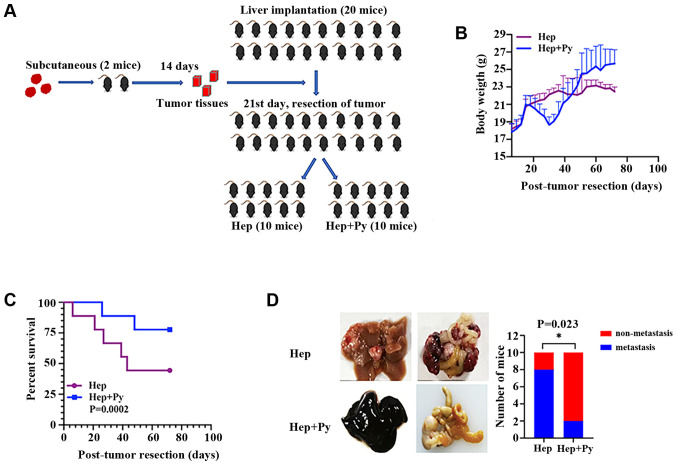
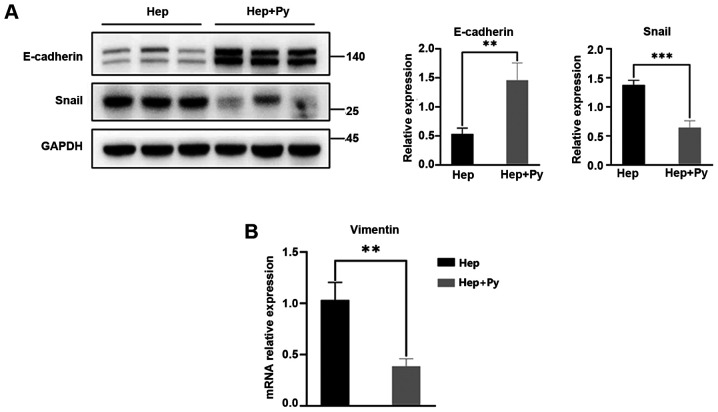
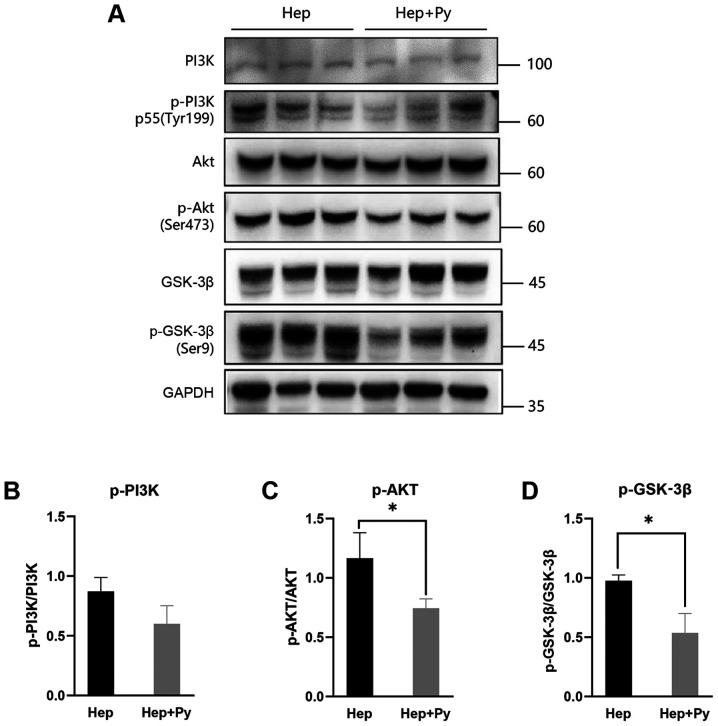
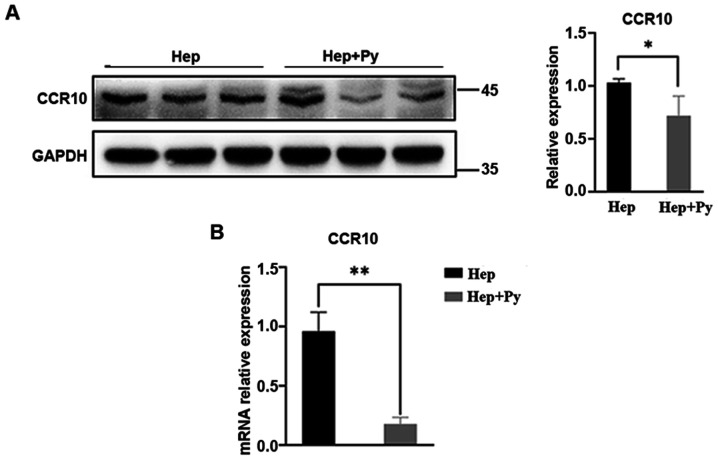
Postoperative recurrence causes a high mortality rate among patients with hepatocellular carcinoma (HCC). The current study aimed to determine the effects of infection on HCC metastasis and recurrence. The antitumor effects of infection were determined using two murine orthotopic HCC models: The non‑resection model and the resection model. Tumour tissues derived from tumour‑bearing mice treated with or without infection were harvested 15 days post‑tumour inoculation. The expression levels of biomarkers related to epithelial‑mesenchymal transition (EMT) and molecules associated with CC‑chemokine receptor 10 (CCR10)‑mediated PI3K/Akt/GSK‑3β/Snail signalling were identified using reverse transcription‑quantitative PCR and western blotting. The results demonstrated that infection significantly suppressed the progression, recurrence and metastasis of HCC in the two mouse models. The expression levels of E‑cadherin were significantly higher in the ‑treated group compared with that in the control group, whereas the expression levels of Vimentin and Snail were significantly lower in the ‑treated group. Furthermore, infection inhibited the activation of Akt and GSK‑3β in the tumour tissues by downregulating the expression levels of CCR10 and subsequently suppressing the accumulation of Snail, which may contribute to the suppression of EMT and the prevention of tumour recurrence and metastasis. In conclusion, the results of the present study demonstrated that infection inhibited the recurrence and metastasis and improved the prognosis of HCC by suppressing CCR10‑mediated PI3K/Akt/GSK‑3β/Snail signalling and preventing the EMT. These results may be important for the development of novel therapies for HCC recurrence and metastasis, especially for patients in the perioperative period.
术后复发导致肝细胞癌 (HCC) 患者死亡率居高不下。本研究旨在探讨 感染对 HCC 转移和复发的影响。采用两种小鼠原位 HCC 模型:非切除模型和切除模型,确定 感染的抗肿瘤作用。在肿瘤接种后 15 天,从接受或未接受 感染治疗的荷瘤小鼠的肿瘤组织中采集肿瘤组织。使用逆转录定量 PCR 和 Western blot 鉴定与上皮间质转化 (EMT) 相关的生物标志物以及与 CC-趋化因子受体 10 (CCR10) 介导的 PI3K/Akt/GSK-3β/Snail 信号相关的分子的表达水平。结果表明, 感染显著抑制了两种小鼠模型中 HCC 的进展、复发和转移。与对照组相比,-处理组的 E-钙黏蛋白表达水平显著升高,而 Vimentin 和 Snail 的表达水平显著降低。此外, 感染通过下调 CCR10 的表达水平抑制了肿瘤组织中 Akt 和 GSK-3β 的激活,从而抑制了 Snail 的积累,这可能有助于抑制 EMT 并防止肿瘤复发和转移。综上所述,本研究结果表明, 感染通过抑制 CCR10 介导的 PI3K/Akt/GSK-3β/Snail 信号通路和防止 EMT 来抑制 HCC 的复发和转移,改善 HCC 的预后。这些结果可能对 HCC 复发和转移的新型治疗方法的发展具有重要意义,尤其是对围手术期患者。