Center for Comparative Biomedicine, MOE Key Laboratory of Systems Biomedicine, State Key Laboratory of Microbial Metabolism, Joint International Research Laboratory of Metabolic & Developmental Sciences, School of Life Sciences and Biotechnology, Institute of Systems Biomedicine, Shanghai Jiao Tong University, Shanghai 200240, China.
Nucleic Acids Res. 2021 May 7;49(8):4506-4521. doi: 10.1093/nar/gkab248.
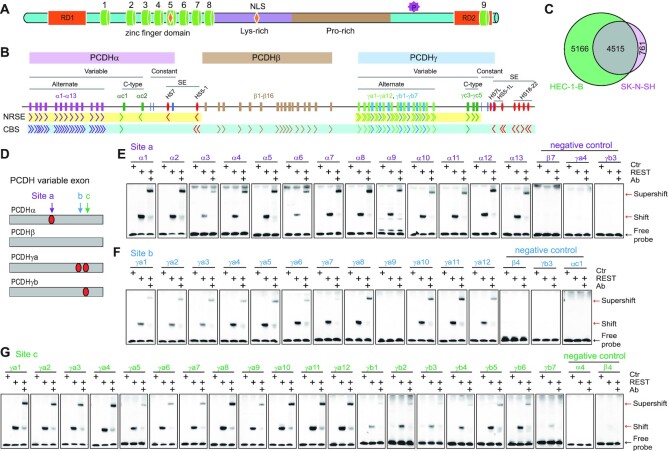
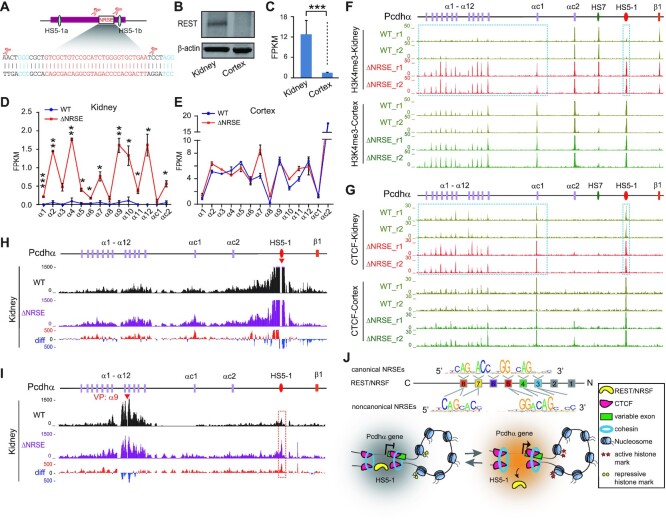
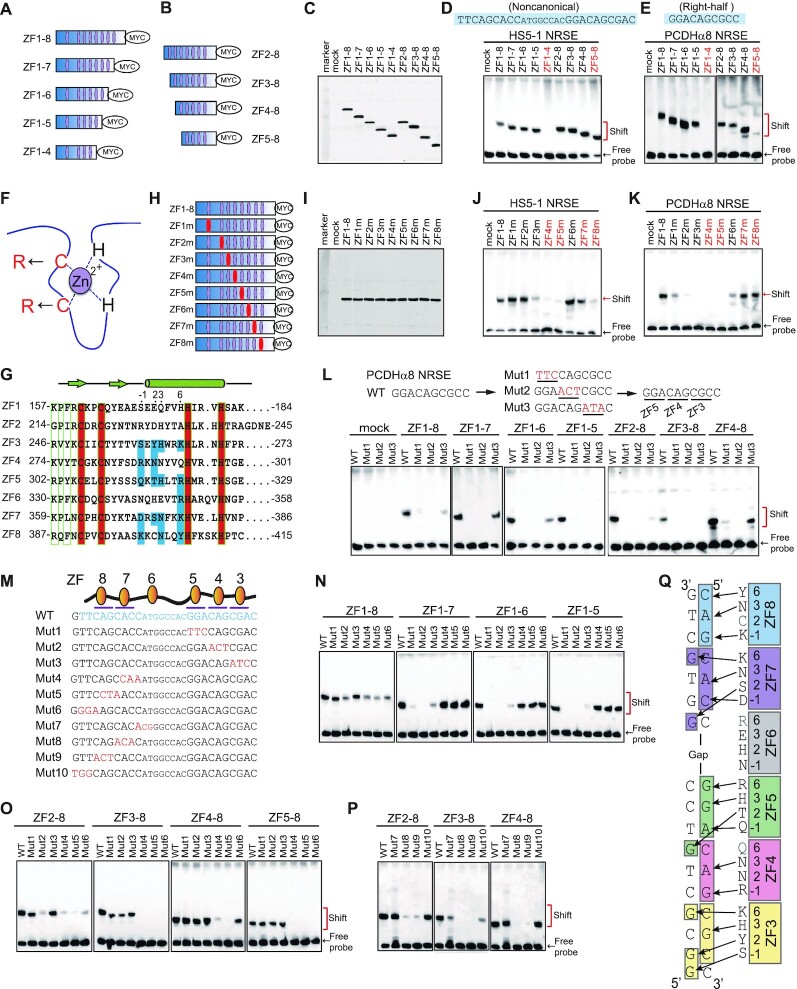
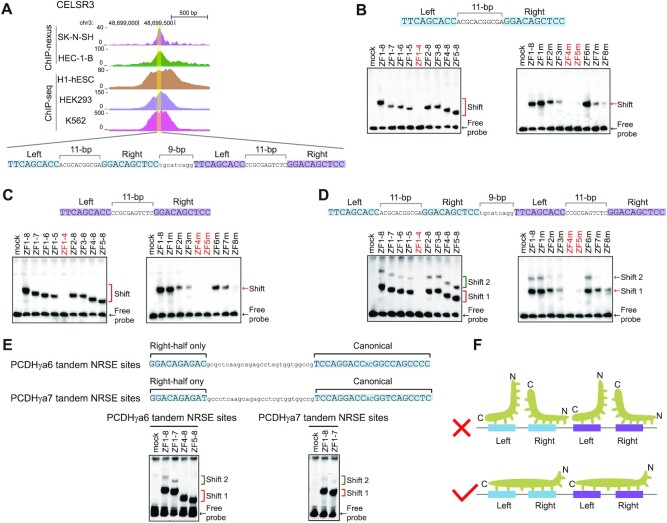
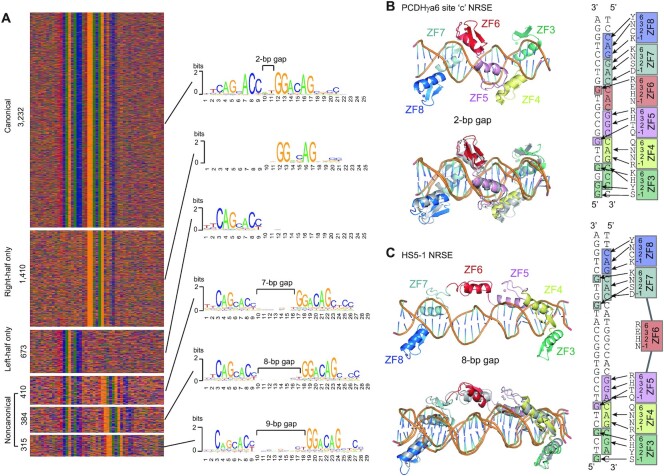
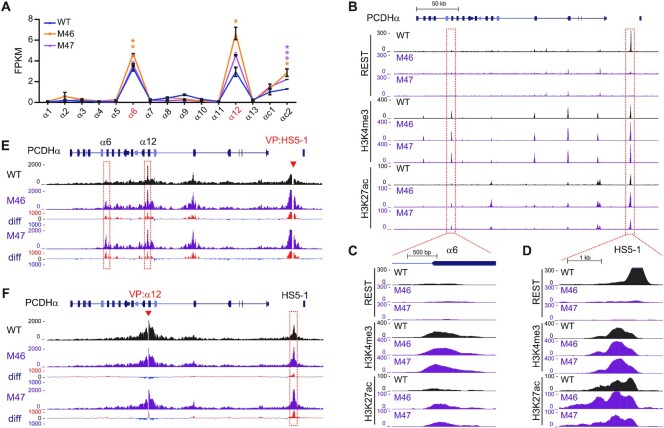
Repressor element-1 silencing transcription factor (REST) or neuron-restrictive silencer factor (NRSF) is a zinc-finger (ZF) containing transcriptional repressor that recognizes thousands of neuron-restrictive silencer elements (NRSEs) in mammalian genomes. How REST/NRSF regulates gene expression remains incompletely understood. Here, we investigate the binding pattern and regulation mechanism of REST/NRSF in the clustered protocadherin (PCDH) genes. We find that REST/NRSF directionally forms base-specific interactions with NRSEs via tandem ZFs in an anti-parallel manner but with striking conformational changes. In addition, REST/NRSF recruitment to the HS5-1 enhancer leads to the decrease of long-range enhancer-promoter interactions and downregulation of the clustered PCDHα genes. Thus, REST/NRSF represses PCDHα gene expression through directional binding to a repertoire of NRSEs within the distal enhancer and variable target genes.
抑制元件-1 沉默转录因子(REST)或神经元限制沉默因子(NRSF)是一种含有锌指(ZF)的转录抑制因子,可识别哺乳动物基因组中数千个神经元限制沉默元件(NRSEs)。REST/NRSF 如何调节基因表达仍不完全清楚。在这里,我们研究了 REST/NRSF 在聚类原钙黏蛋白(PCDH)基因中的结合模式和调控机制。我们发现,REST/NRSF 通过串联 ZF 以反平行方式与 NRSE 定向形成碱基特异性相互作用,但具有惊人的构象变化。此外,REST/NRSF 募集到 HS5-1 增强子导致长距离增强子-启动子相互作用减少,并下调聚类 PCDHα 基因。因此,REST/NRSF 通过定向结合远端增强子内的一系列 NRSE 和可变靶基因来抑制 PCDHα 基因表达。