Lim Nana, Lee Geun Su, Won Ki Hong, Kang Jin Sun, Lee Sung Hoon, Kang Eun Young, Lee Hyun Kyung, Cho Youn Kyung
Department of Rehabilitation Medicine, Kwangju Christian Hospital, Gwangju, Korea.
Ann Rehabil Med. 2021 Apr;45(2):160-164. doi: 10.5535/arm.20118. Epub 2021 Apr 14.
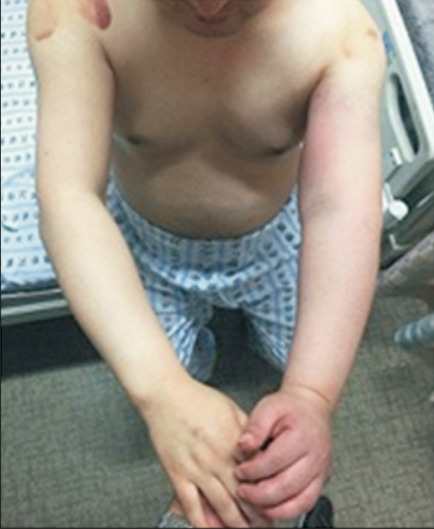
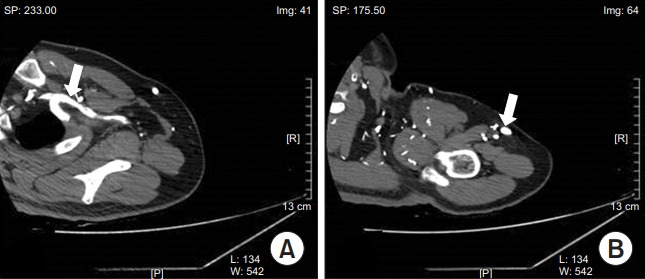
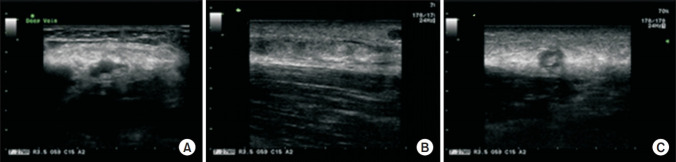
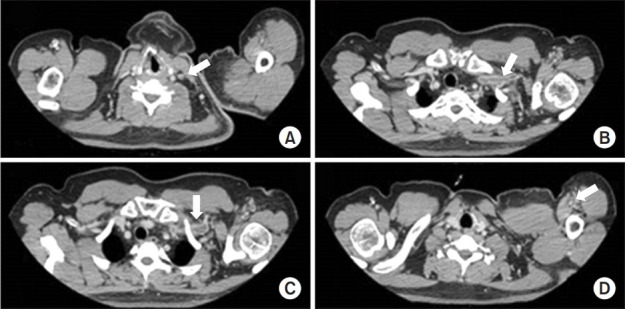
Botulinum toxin (BoNT) injection is widely used to improve spasticity. However, after the treatment, the patient may experience pain, inflammation, swelling and redness at the injection site. In this case, we addressed deep vein thrombosis (DVT) after BoNT treatment of the upper limb. A male aged 37 years had spasticity and dystonia in his left upper extremity. BoNT-A 100 U was injected into the left biceps brachii and an equal amount into the brachialis to relieve spasticity. After three days, he developed redness and painful swelling in the left upper arm and the next day, through the upper extremity computed tomography venography, DVT was identified in the left cephalic vein. The thrombus resolved after the anticoagulation therapy with rivaroxaban (Xarelto). We hypothesized the role of mainly three mechanisms in the development of DVT in this case: repetitive strenuous activity, relative stasis due to reduced muscle tone, and possible direct mechanical damage to the vessel wall.
肉毒杆菌毒素(BoNT)注射被广泛用于改善痉挛。然而,治疗后患者可能会在注射部位出现疼痛、炎症、肿胀和发红。在此情况下,我们探讨了上肢肉毒杆菌毒素治疗后的深静脉血栓形成(DVT)。一名37岁男性左上肢出现痉挛和肌张力障碍。向其左侧肱二头肌注射了100单位A型肉毒杆菌毒素,并向肱肌注射了等量药物以缓解痉挛。三天后,他的左上臂出现发红和疼痛性肿胀,第二天,通过上肢计算机断层静脉造影,在左侧头静脉发现了深静脉血栓。使用利伐沙班(拜瑞妥)进行抗凝治疗后血栓溶解。我们推测该病例中深静脉血栓形成主要有三种机制起作用:重复性剧烈活动、由于肌张力降低导致的相对血流淤滞以及对血管壁可能的直接机械损伤。