Argov Z, Renshaw P F, Boden B, Winokur A, Bank W J
Department of Neurology, University of Pennsylvania School of Medicine, Philadelphia 19104.
J Clin Invest. 1988 Jun;81(6):1695-701. doi: 10.1172/JCI113508.
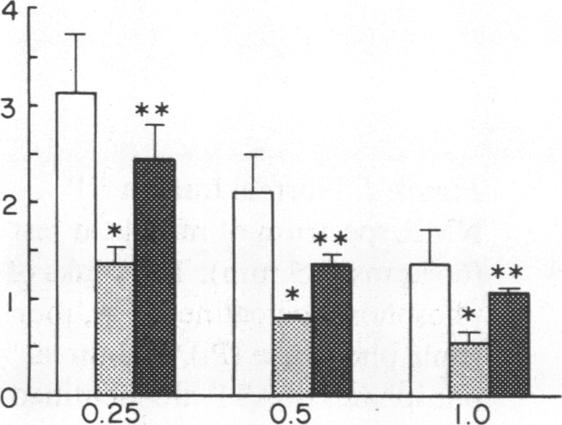
The pathophysiology of the myopathy in dysthyroid states is poorly understood. We therefore tested the effects of thyroid hormones on muscle bioenergetics in humans and rats, using in vivo 31P NMR. Two hypothyroid patients had: low phosphocreatine to inorganic phosphate ratio (PCr/Pi) at rest, increased PCr depletion during exercise and delayed postexercise recovery of PCr/Pi. Eight thyroidectomized rats did not show abnormalities at rest, but muscle work induced by nerve stimulation resulted in a significantly (P less than 0.0001) lower PCr/Pi (35-45% of control) at each of the three stimulation frequencies tested (0.25, 0.5, and 1.0 Hz). Recovery rate was markedly slowed to one-third of normal values. Thyroxine therapy reversed these abnormalities in both human and rat muscle. Five patients and six rats with hyperthyroidism did not differ from normal controls during rest and exercise but had an unusually rapid recovery after exercise. The bioenergetic abnormalities in hypothyroid muscle suggest the existence of a hormone-dependent, reversible mitochondrial impairment in this disorder. The exercise intolerance and fatigue experienced in hypothyroid muscle may be due to such a bioenergetic impairment. The changes in energy metabolism in hyperthyroid muscle probably do not cause the muscular disease in this disorder.
甲状腺功能异常状态下肌病的病理生理学机制尚不清楚。因此,我们利用体内31P核磁共振技术,测试了甲状腺激素对人和大鼠肌肉生物能量学的影响。两名甲状腺功能减退患者出现:静息时磷酸肌酸与无机磷酸的比率(PCr/Pi)较低,运动期间PCr消耗增加,运动后PCr/Pi恢复延迟。八只甲状腺切除的大鼠在静息时未表现出异常,但在测试的三种刺激频率(0.25、0.5和1.0Hz)下,神经刺激诱导的肌肉活动均导致PCr/Pi显著降低(P<0.0001)(为对照的35 - 45%)。恢复速率明显减慢至正常值的三分之一。甲状腺素治疗可逆转人和大鼠肌肉中的这些异常。五名甲状腺功能亢进患者和六只大鼠在静息和运动期间与正常对照无差异,但运动后恢复异常迅速。甲状腺功能减退肌肉中的生物能量异常表明,在这种疾病中存在激素依赖性、可逆的线粒体损伤。甲状腺功能减退肌肉中出现的运动不耐受和疲劳可能归因于这种生物能量损伤。甲状腺功能亢进肌肉中的能量代谢变化可能不会导致这种疾病中的肌肉病变。