Institute for Molecular Bioscience, The University of Queensland, Brisbane, QLD, 4072, Australia.
Present address: Department of Integrative Biology, University of South Florida, Tampa, FL, 33620, USA.
BMC Biol. 2021 Apr 13;19(1):73. doi: 10.1186/s12915-021-00994-6.
Dinoflagellates in the family Symbiodiniaceae are important photosynthetic symbionts in cnidarians (such as corals) and other coral reef organisms. Breakdown of the coral-dinoflagellate symbiosis due to environmental stress (i.e. coral bleaching) can lead to coral death and the potential collapse of reef ecosystems. However, evolution of Symbiodiniaceae genomes, and its implications for the coral, is little understood. Genome sequences of Symbiodiniaceae remain scarce due in part to their large genome sizes (1-5 Gbp) and idiosyncratic genome features.
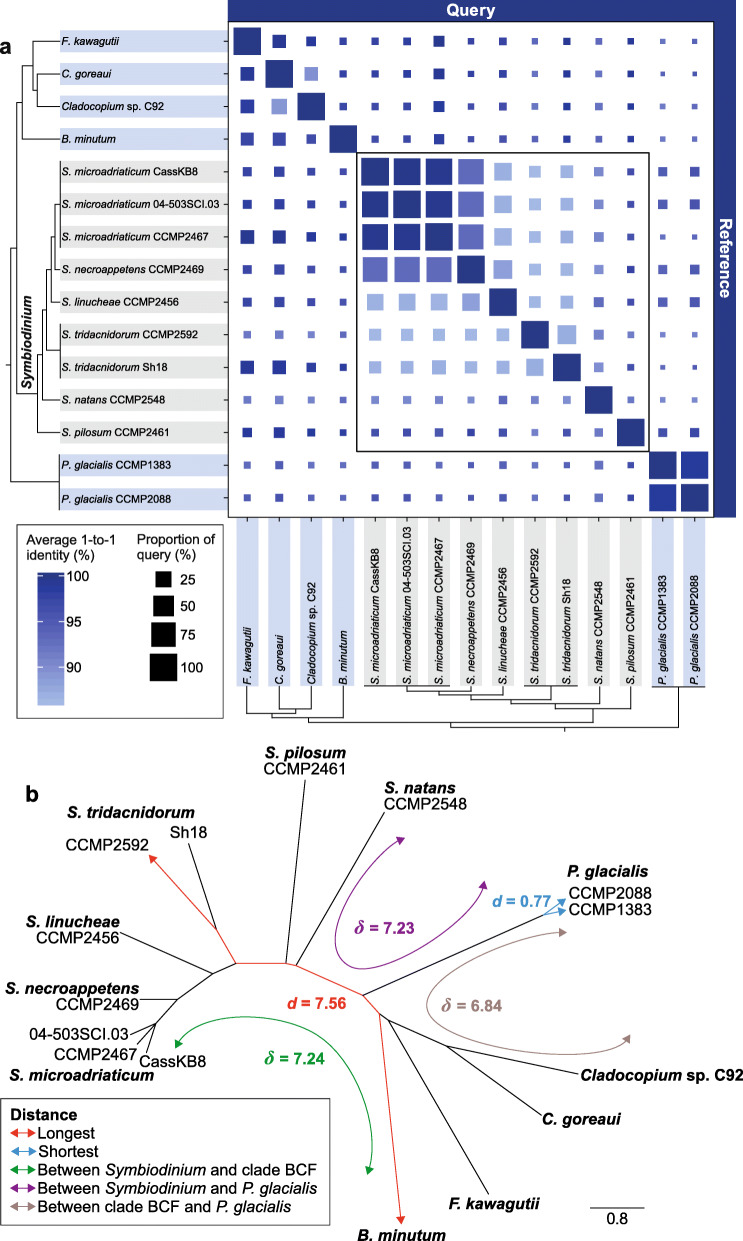
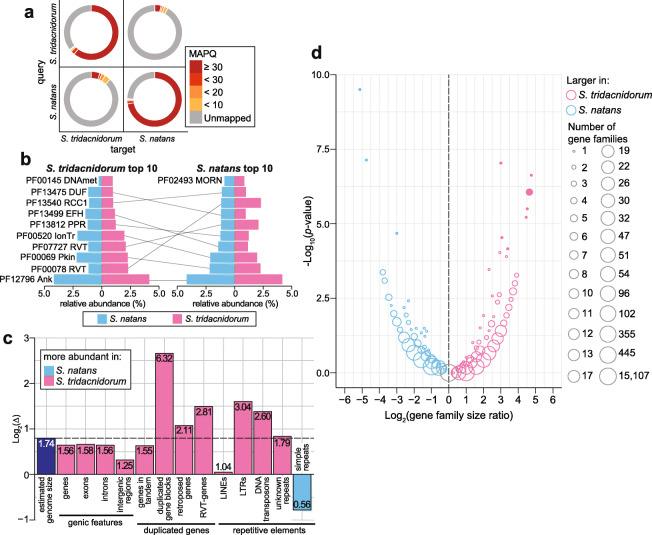
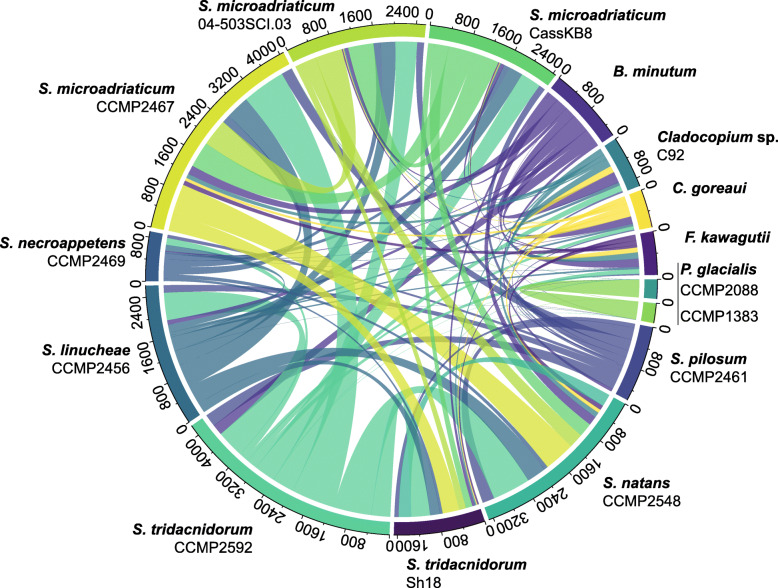
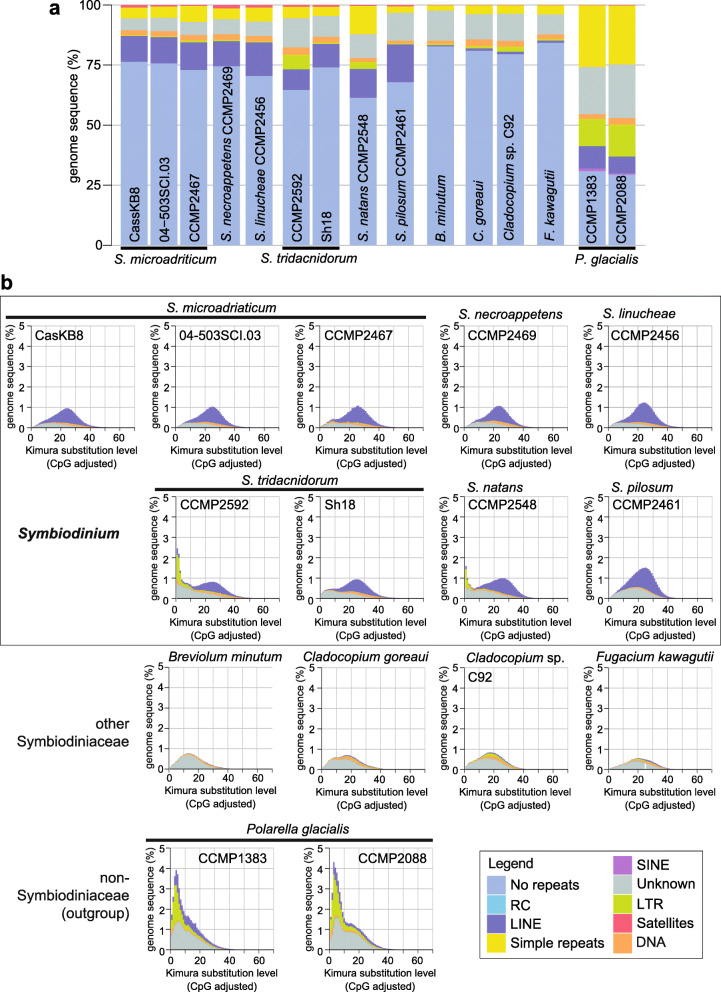
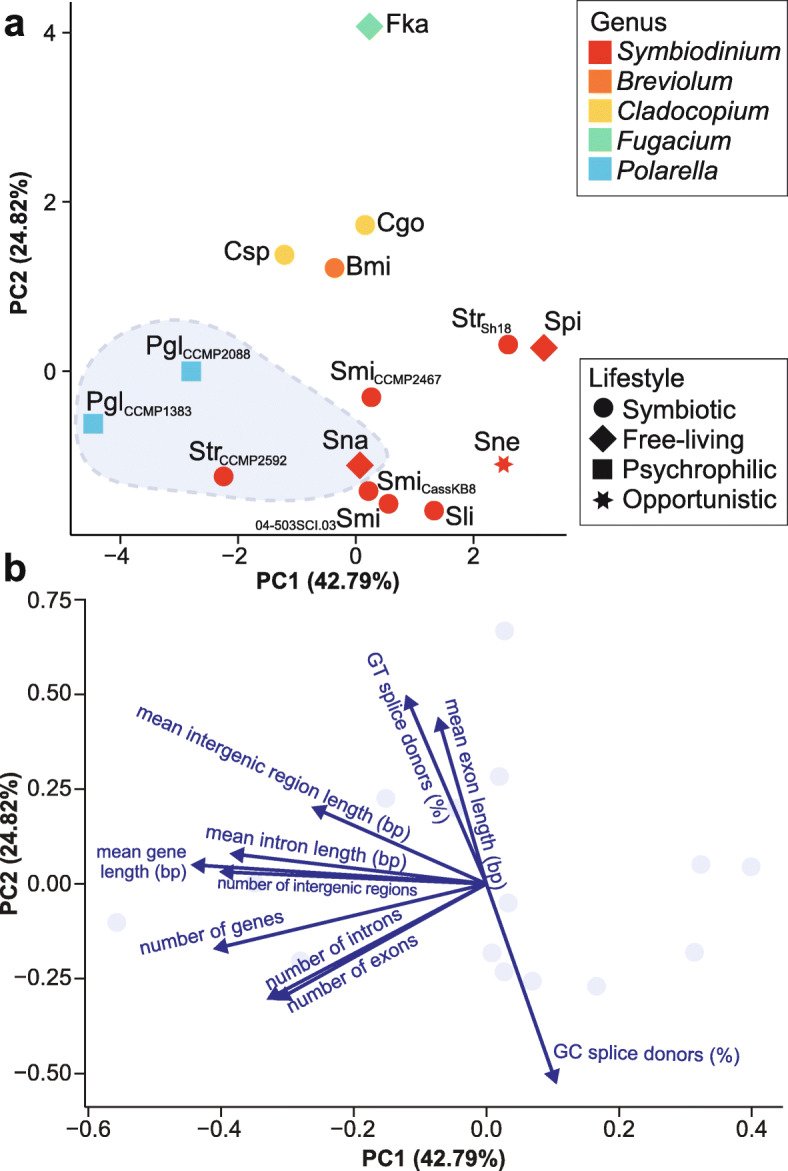
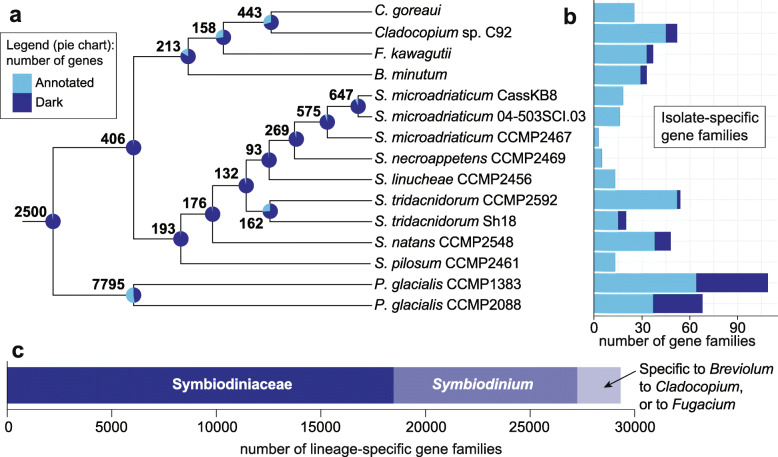
Here, we present de novo genome assemblies of seven members of the genus Symbiodinium, of which two are free-living, one is an opportunistic symbiont, and the remainder are mutualistic symbionts. Integrating other available data, we compare 15 dinoflagellate genomes revealing high sequence and structural divergence. Divergence among some Symbiodinium isolates is comparable to that among distinct genera of Symbiodiniaceae. We also recovered hundreds of gene families specific to each lineage, many of which encode unknown functions. An in-depth comparison between the genomes of the symbiotic Symbiodinium tridacnidorum (isolated from a coral) and the free-living Symbiodinium natans reveals a greater prevalence of transposable elements, genetic duplication, structural rearrangements, and pseudogenisation in the symbiotic species.
Our results underscore the potential impact of lifestyle on lineage-specific gene-function innovation, genome divergence, and the diversification of Symbiodinium and Symbiodiniaceae. The divergent features we report, and their putative causes, may also apply to other microbial eukaryotes that have undergone symbiotic phases in their evolutionary history.
共生鞭毛藻类家族中的虫黄藻是刺胞动物(如珊瑚)和其他珊瑚礁生物的重要光合作用共生体。由于环境压力(即珊瑚白化)导致珊瑚共生关系破裂,可能导致珊瑚死亡和珊瑚礁生态系统的潜在崩溃。然而,共生鞭毛藻类基因组的进化及其对珊瑚的影响知之甚少。由于共生鞭毛藻类基因组较大(1-5 Gbp)且具有特殊的基因组特征,因此其基因组序列仍然很少。
在这里,我们提出了七个共生鞭毛藻类属的 Symbiodinium 成员的从头基因组组装,其中两个是自由生活的,一个是机会共生体,其余的是互利共生体。整合其他可用数据,我们比较了 15 个鞭毛藻类基因组,揭示了高度的序列和结构分化。一些 Symbiodinium 分离株之间的分化与共生鞭毛藻类科的不同属之间的分化相当。我们还恢复了数百个特定于每个谱系的基因家族,其中许多编码未知功能。共生的 Symbiodinium tridacnidorum(从珊瑚中分离出来)和自由生活的 Symbiodinium natans 基因组之间的深入比较表明,在共生物种中,转座元件、遗传复制、结构重排和假基因化更为普遍。
我们的研究结果强调了生活方式对谱系特异性基因功能创新、基因组分化以及 Symbiodinium 和 Symbiodiniaceae 多样化的潜在影响。我们报告的分歧特征及其潜在原因也可能适用于其他在进化历史中经历过共生阶段的微生物真核生物。