Department of Mathematics & Statistics, Boston University, Boston, Massachusetts, United States of America.
Department of Mathematics, University of Iowa, Iowa City, Iowa, United States of America.
PLoS Comput Biol. 2021 Apr 14;17(4):e1008783. doi: 10.1371/journal.pcbi.1008783. eCollection 2021 Apr.
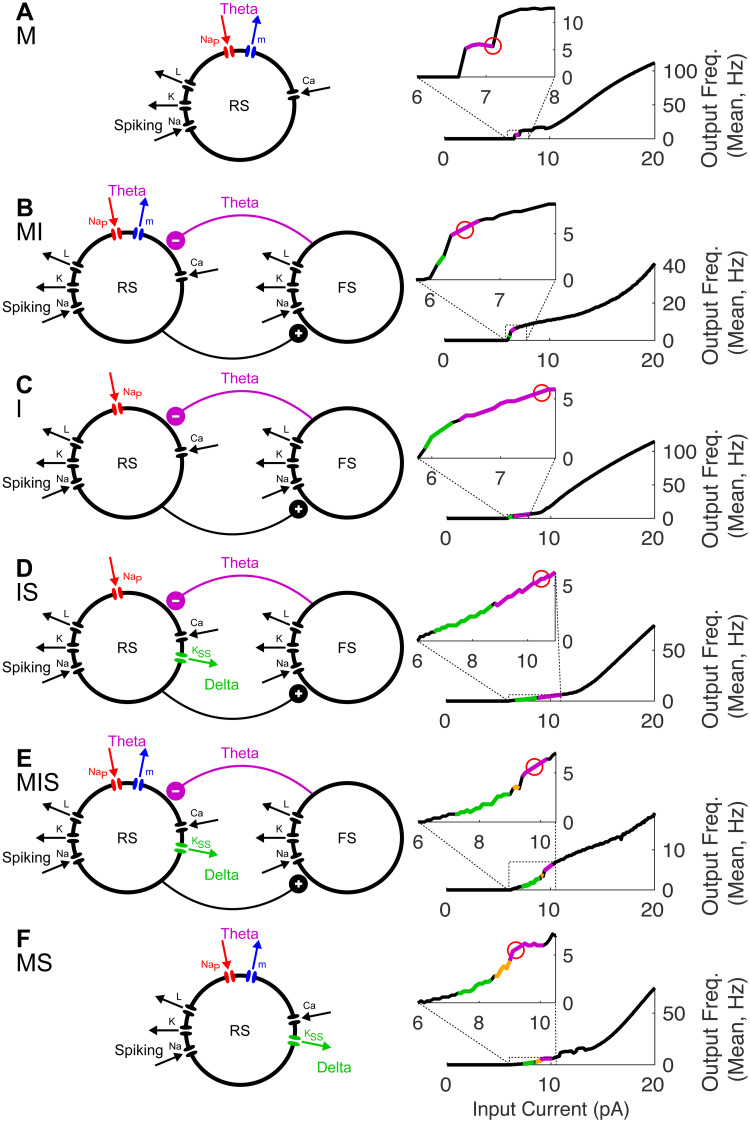
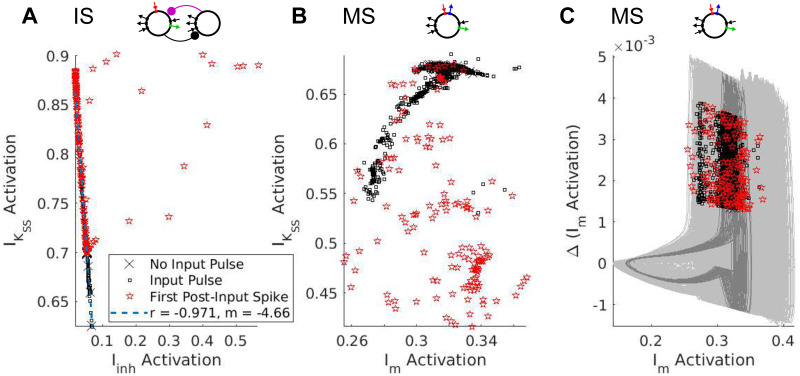
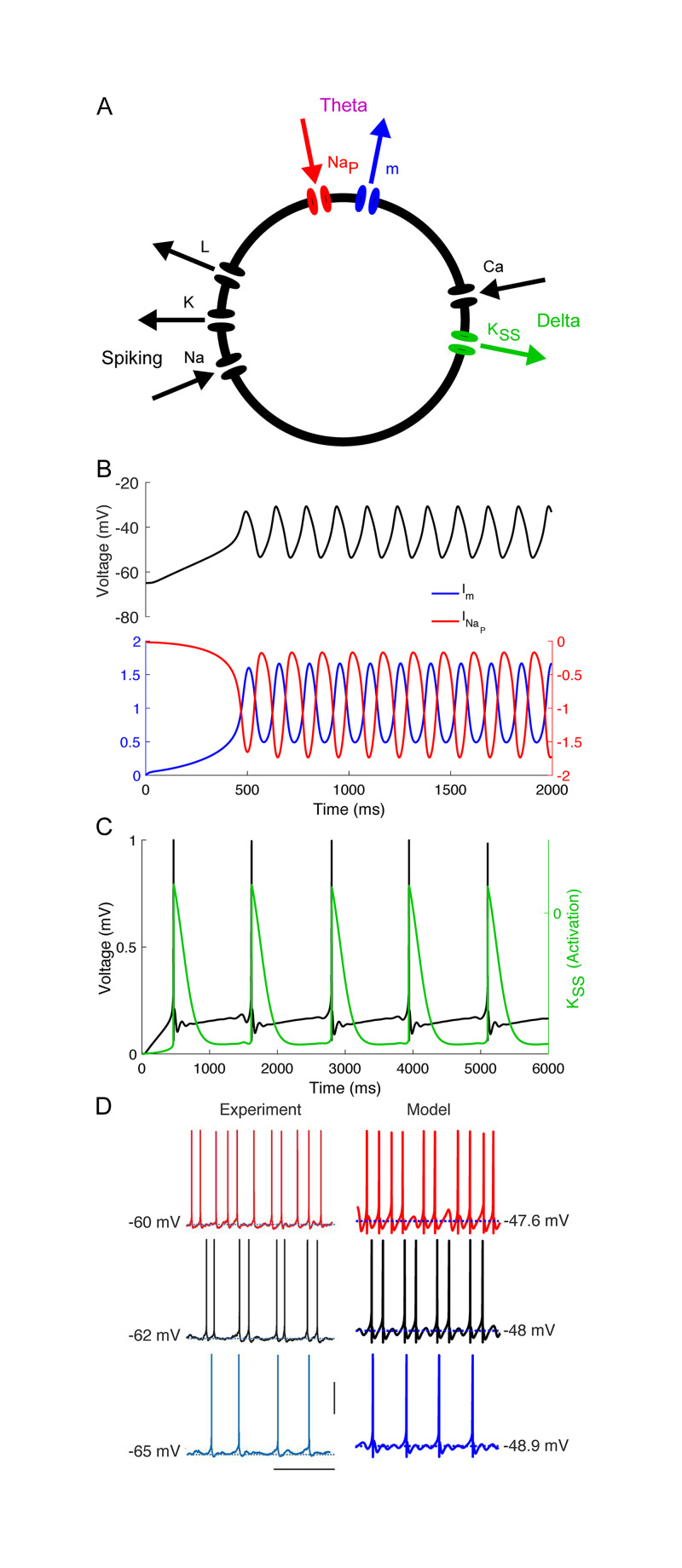
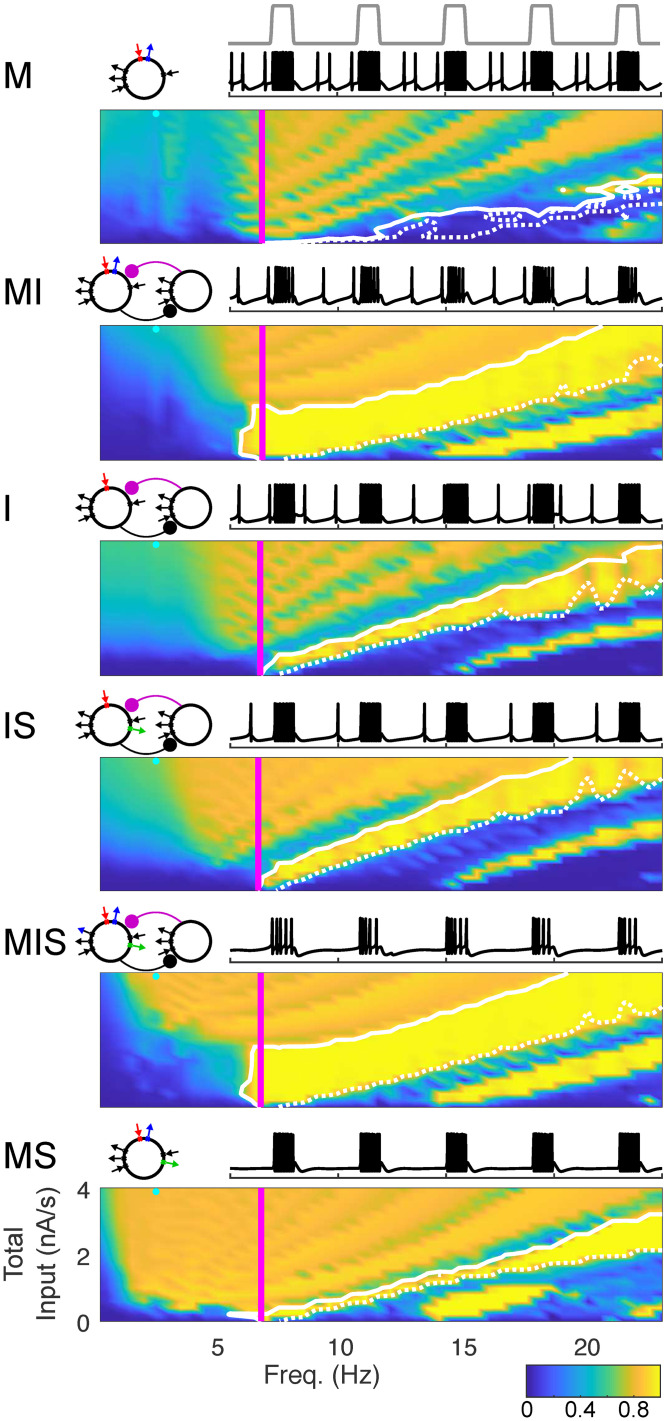
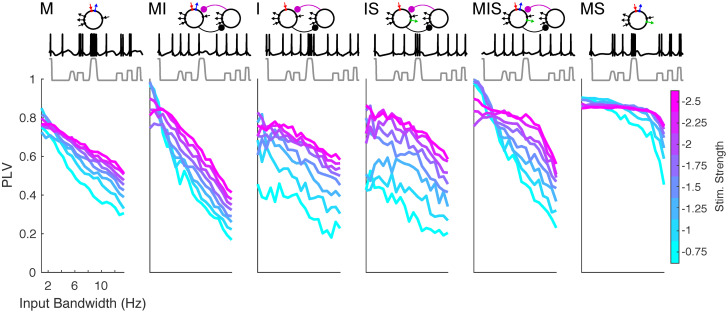
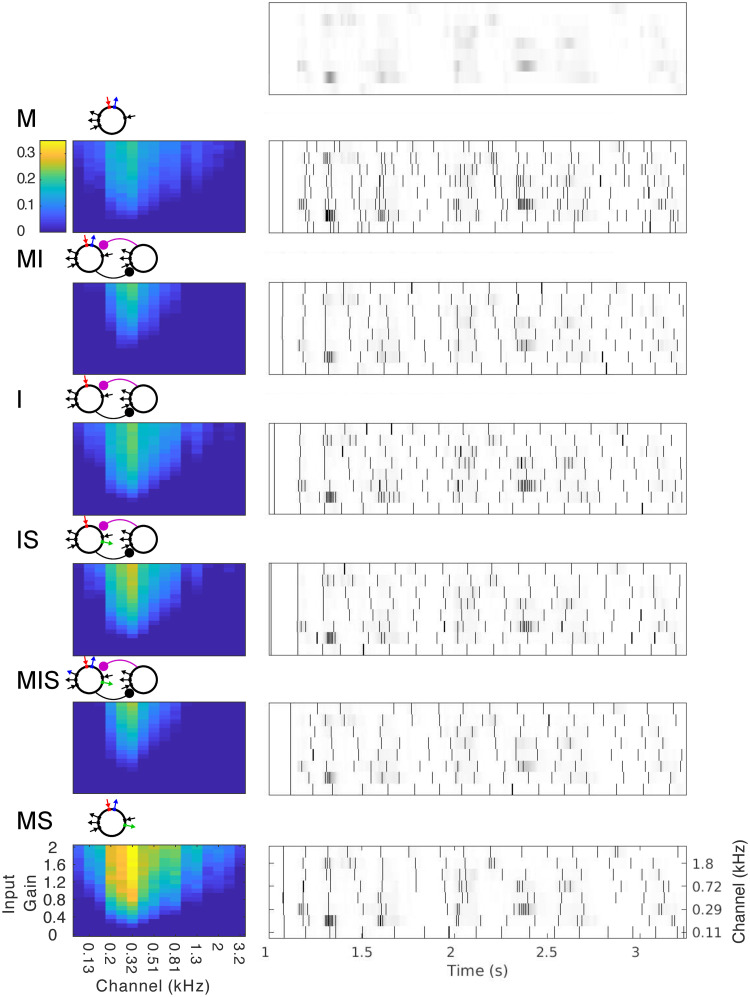
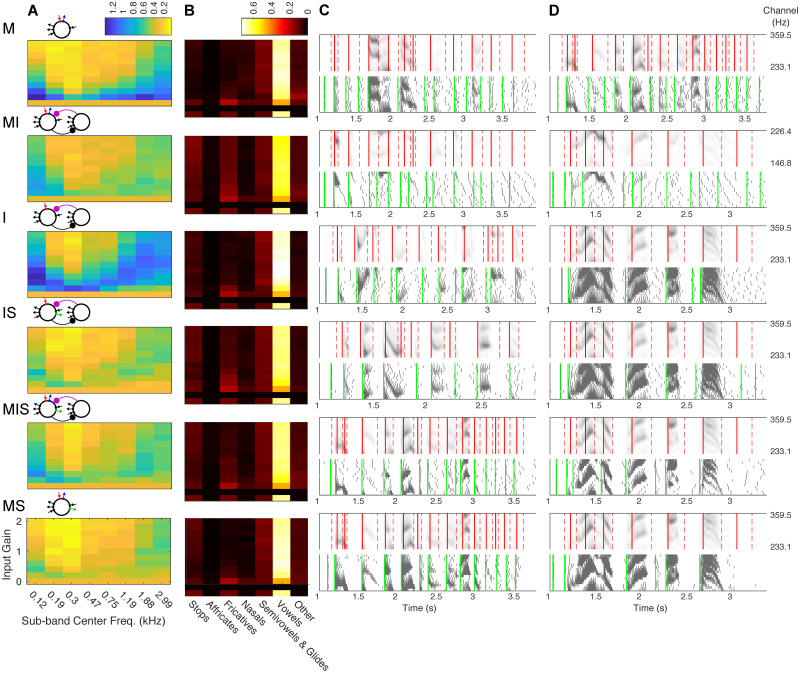
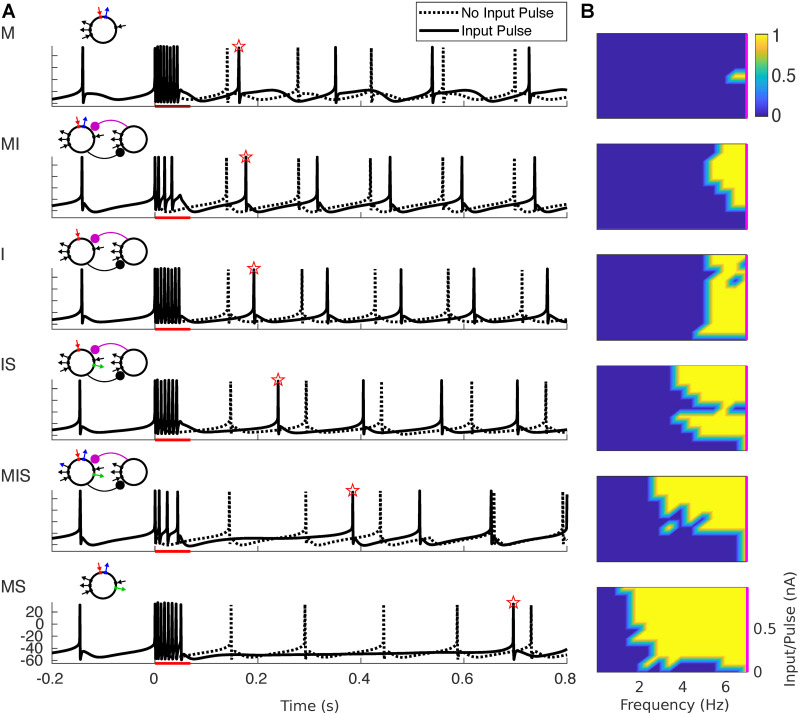
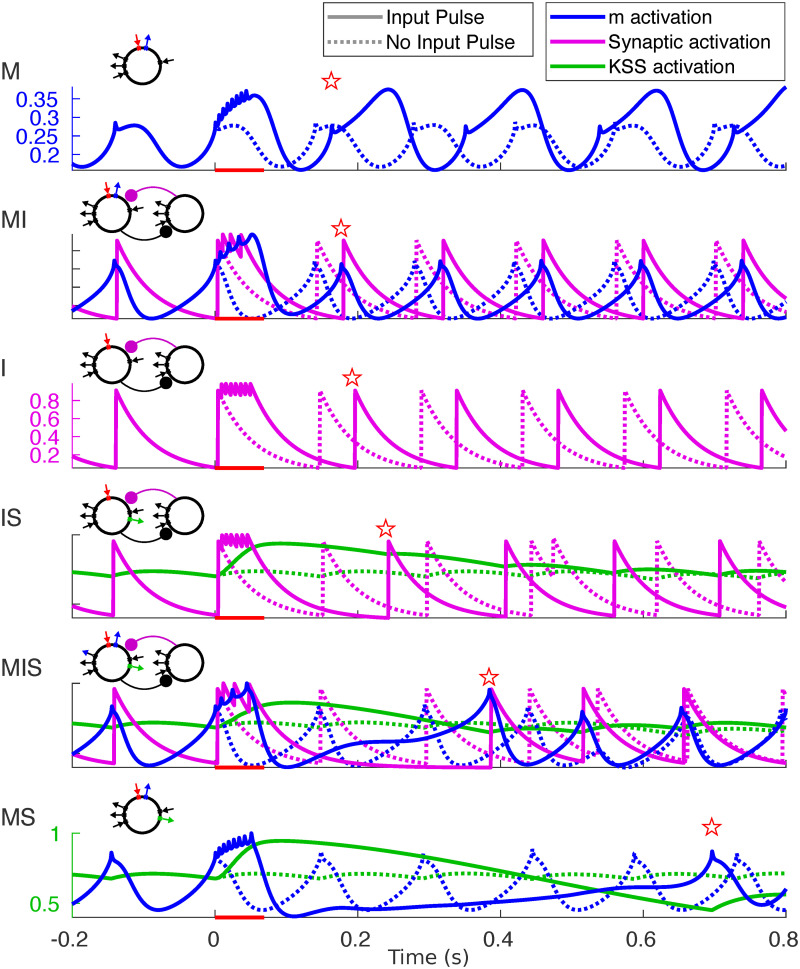
Current hypotheses suggest that speech segmentation-the initial division and grouping of the speech stream into candidate phrases, syllables, and phonemes for further linguistic processing-is executed by a hierarchy of oscillators in auditory cortex. Theta (∼3-12 Hz) rhythms play a key role by phase-locking to recurring acoustic features marking syllable boundaries. Reliable synchronization to quasi-rhythmic inputs, whose variable frequency can dip below cortical theta frequencies (down to ∼1 Hz), requires "flexible" theta oscillators whose underlying neuronal mechanisms remain unknown. Using biophysical computational models, we found that the flexibility of phase-locking in neural oscillators depended on the types of hyperpolarizing currents that paced them. Simulated cortical theta oscillators flexibly phase-locked to slow inputs when these inputs caused both (i) spiking and (ii) the subsequent buildup of outward current sufficient to delay further spiking until the next input. The greatest flexibility in phase-locking arose from a synergistic interaction between intrinsic currents that was not replicated by synaptic currents at similar timescales. Flexibility in phase-locking enabled improved entrainment to speech input, optimal at mid-vocalic channels, which in turn supported syllabic-timescale segmentation through identification of vocalic nuclei. Our results suggest that synaptic and intrinsic inhibition contribute to frequency-restricted and -flexible phase-locking in neural oscillators, respectively. Their differential deployment may enable neural oscillators to play diverse roles, from reliable internal clocking to adaptive segmentation of quasi-regular sensory inputs like speech.
目前的假设表明,语音分割——即将语音流初始划分为候选短语、音节和音素,以便进一步进行语言处理——是由听觉皮层中的振荡器层级执行的。θ 节律(3-12 Hz)通过与标记音节边界的重复声学特征进行相位锁定,起到了关键作用。要可靠地与准节奏输入进行同步,其频率可低于皮质 θ 频率(低至1 Hz),需要“灵活”的 θ 振荡器,但其潜在的神经元机制尚不清楚。使用生物物理计算模型,我们发现神经振荡器的相位锁定灵活性取决于为其提供动力的去极化电流的类型。当这些输入导致(i)尖峰和(ii)随后建立足以延迟进一步尖峰的外向电流时,模拟的皮质 θ 振荡器可以灵活地锁定到缓慢的输入。相位锁定的最大灵活性来自于内在电流的协同相互作用,而在相似的时间尺度上,突触电流无法复制这种相互作用。相位锁定的灵活性使语音输入的同步得到改善,在中频元音通道最佳,这反过来又通过识别元音核支持音节尺度的分割。我们的研究结果表明,突触和内在抑制分别有助于神经振荡器的频率受限和灵活的相位锁定。它们的差异化部署可能使神经振荡器能够发挥多种作用,从可靠的内部计时到对语音等准规则感觉输入的自适应分割。