Institute of Metabolism and Systems Research (IMSR), Medical School, University of Birmingham, Birmingham, UK; Centre for Endocrinology, Diabetes and Metabolism (CEDAM), University of Birmingham, Birmingham, UK.
Centre for Genomic Regulation (CRG), The Barcelona Institute of Science and Technology, Dr. Aiguader 88, Barcelona 08003, Spain; Centro de Investigación Biomédica en red Diabetes y Enfermedades Metabólicas Asociadas (CIBERDEM), Barcelona, Spain.
Cell Rep. 2021 Apr 13;35(2):108981. doi: 10.1016/j.celrep.2021.108981.
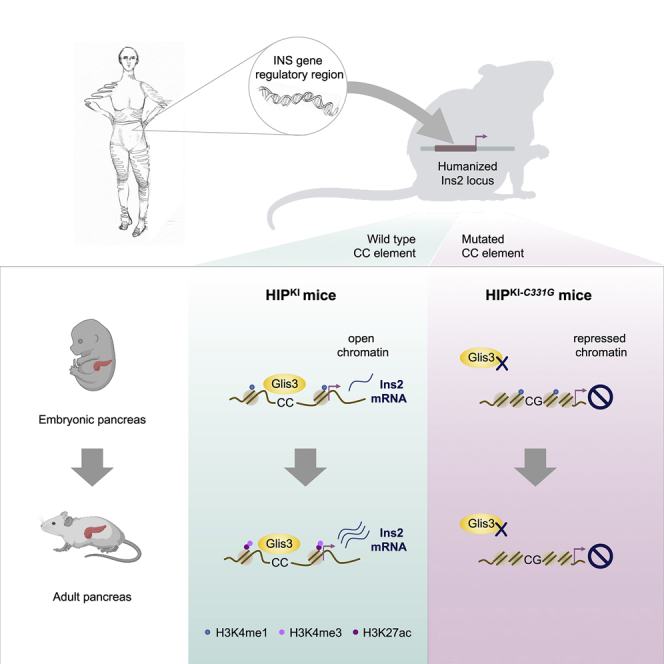
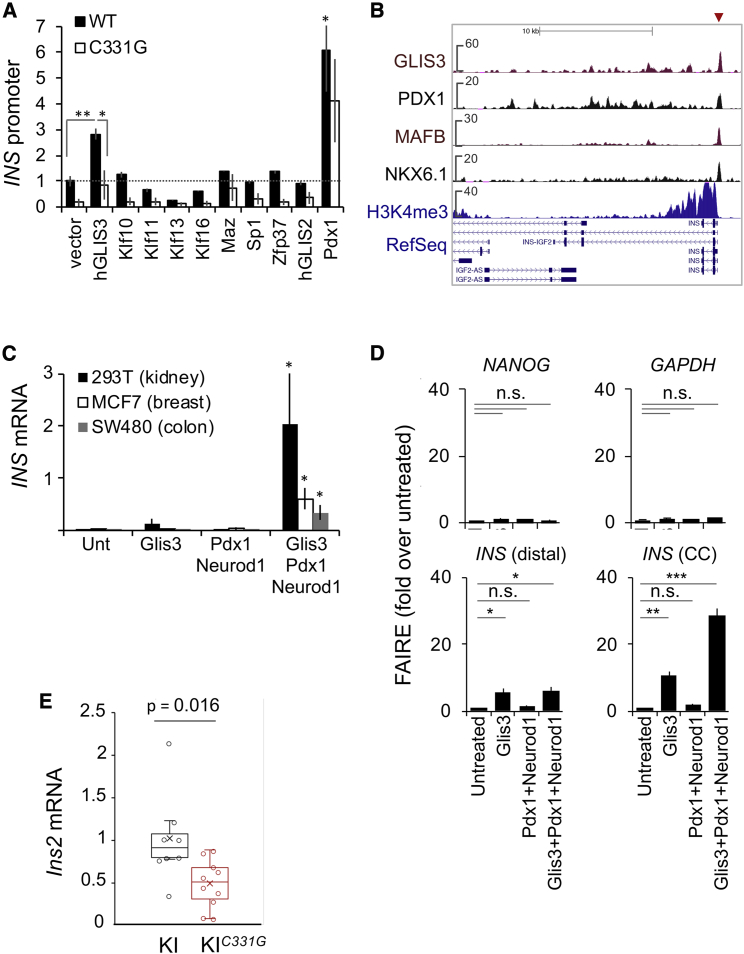
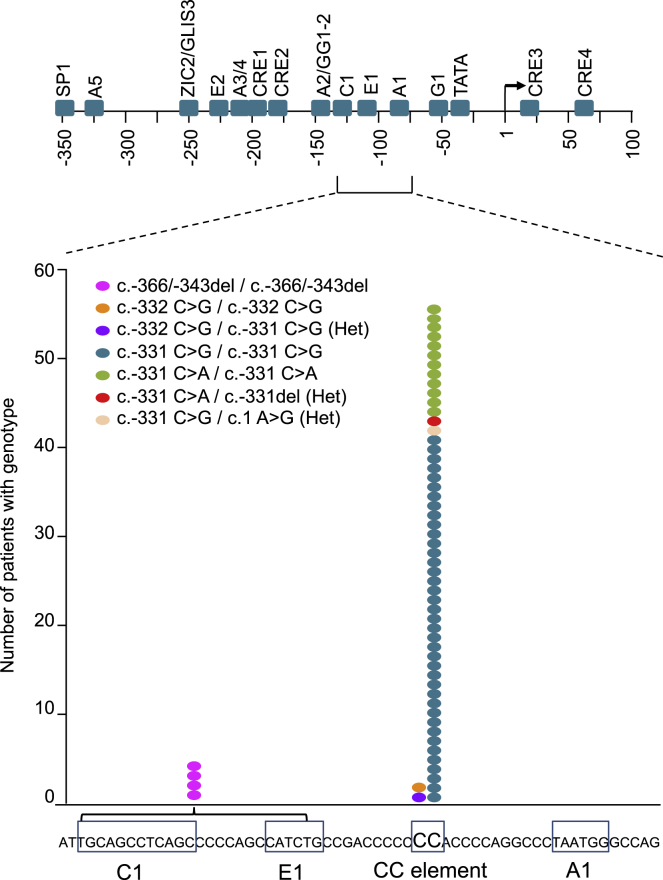
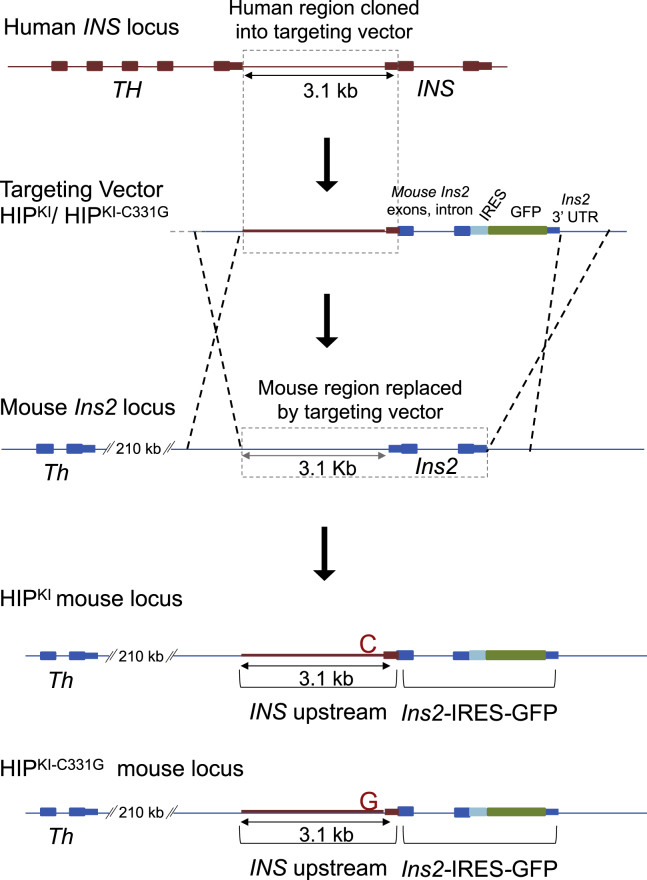
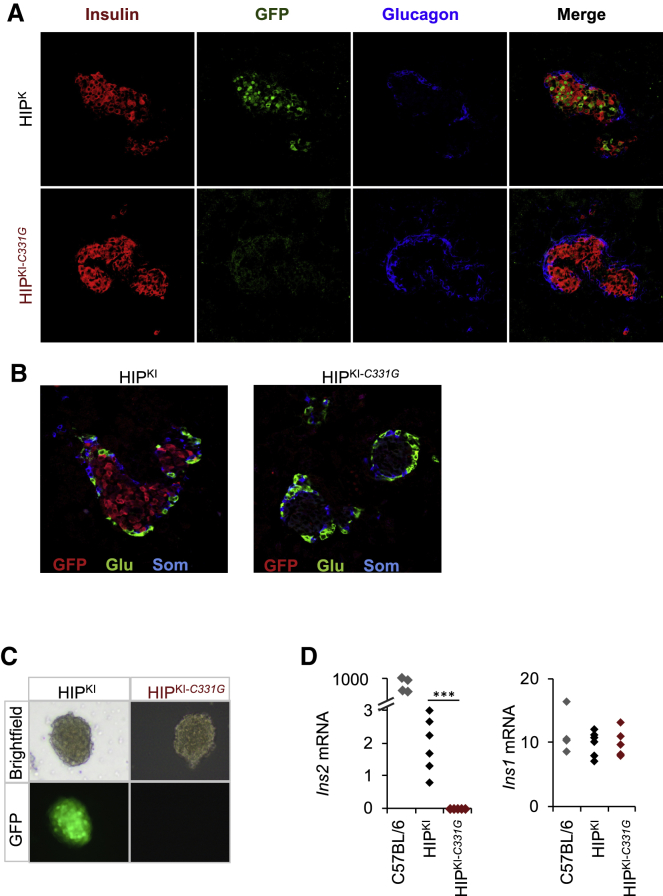
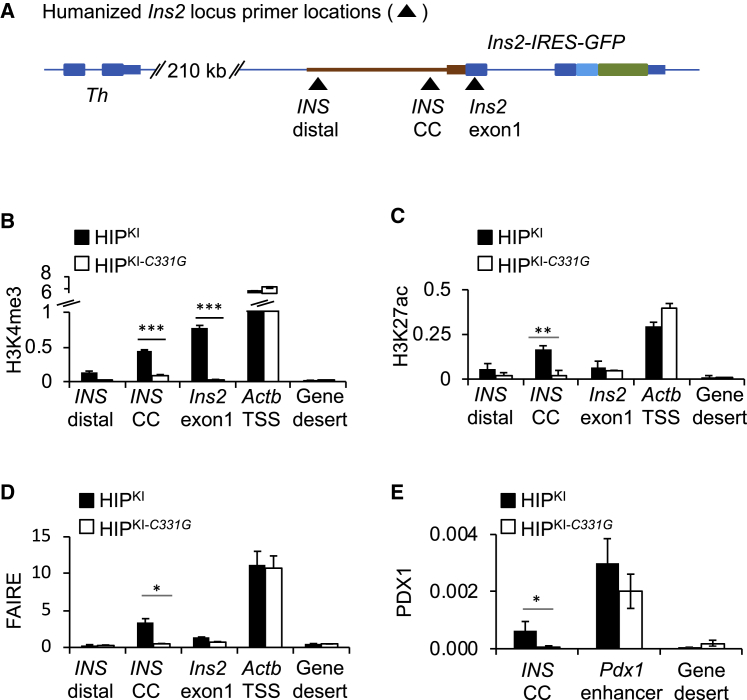
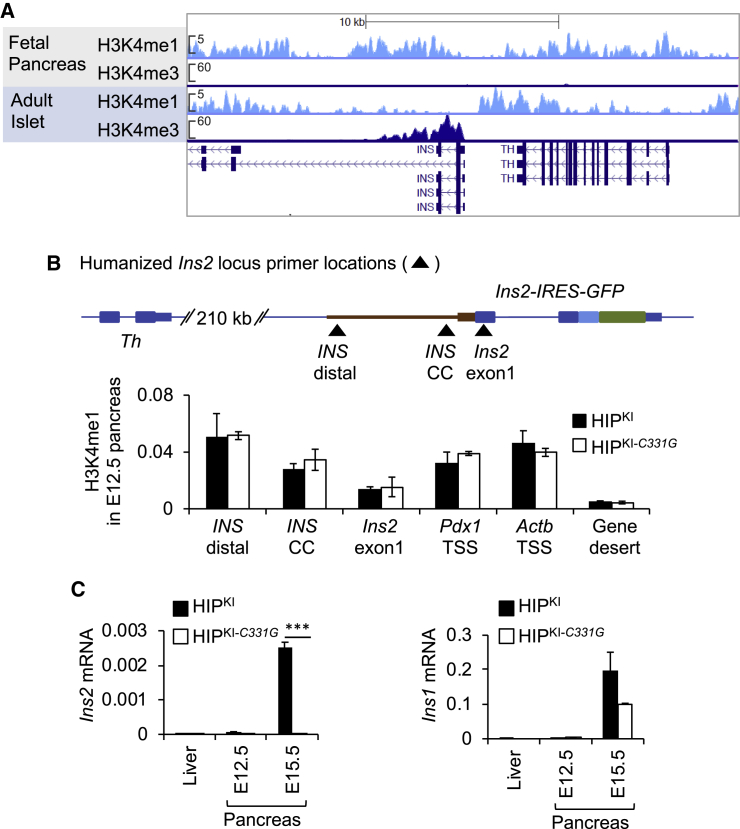
Despite the central role of chromosomal context in gene transcription, human noncoding DNA variants are generally studied outside of their genomic location. This limits our understanding of disease-causing regulatory variants. INS promoter mutations cause recessive neonatal diabetes. We show that all INS promoter point mutations in 60 patients disrupt a CC dinucleotide, whereas none affect other elements important for episomal promoter function. To model CC mutations, we humanized an ∼3.1-kb region of the mouse Ins2 gene. This recapitulated developmental chromatin states and cell-specific transcription. A CC mutant allele, however, abrogated active chromatin formation during pancreas development. A search for transcription factors acting through this element revealed that another neonatal diabetes gene product, GLIS3, has a pioneer-like ability to derepress INS chromatin, which is hampered by the CC mutation. Our in vivo analysis, therefore, connects two human genetic defects in an essential mechanism for developmental activation of the INS gene.
尽管染色体背景在基因转录中起着核心作用,但人类非编码 DNA 变体通常在其基因组位置之外进行研究。这限制了我们对致病调节变体的理解。INS 启动子突变导致隐性新生儿糖尿病。我们表明,60 名患者的所有 INS 启动子点突变都会破坏一个 CC 二核苷酸,而不会影响其他对游离启动子功能很重要的元件。为了模拟 CC 突变,我们对小鼠 Ins2 基因的约 3.1kb 区域进行了人源化。这再现了发育性染色质状态和细胞特异性转录。然而,一个 CC 突变等位基因会在胰腺发育过程中破坏活性染色质的形成。对通过该元件起作用的转录因子的搜索表明,另一个新生儿糖尿病基因产物 GLIS3 具有先驱样能力,可以使 INS 染色质去抑制,而 CC 突变则阻碍了这种能力。因此,我们的体内分析将两个人类遗传缺陷联系起来,揭示了 INS 基因发育激活的一个重要机制。