Institut Necker-Enfants Malades, INSERM U1151/CNRS UMS8253, Université Paris Descartes, Sorbonne Paris Cité, 75993 Paris Cedex 14, France.
Service de Médecine Interne, Centre national de référence des cytopénies auto-immunes de l'adulte, Hôpital Henri Mondor, Assistance Publique Hôpitaux de Paris (AP-HP), Université Paris Est Créteil, 94000 Créteil, France.
Sci Transl Med. 2021 Apr 14;13(589). doi: 10.1126/scitranslmed.abc3961.
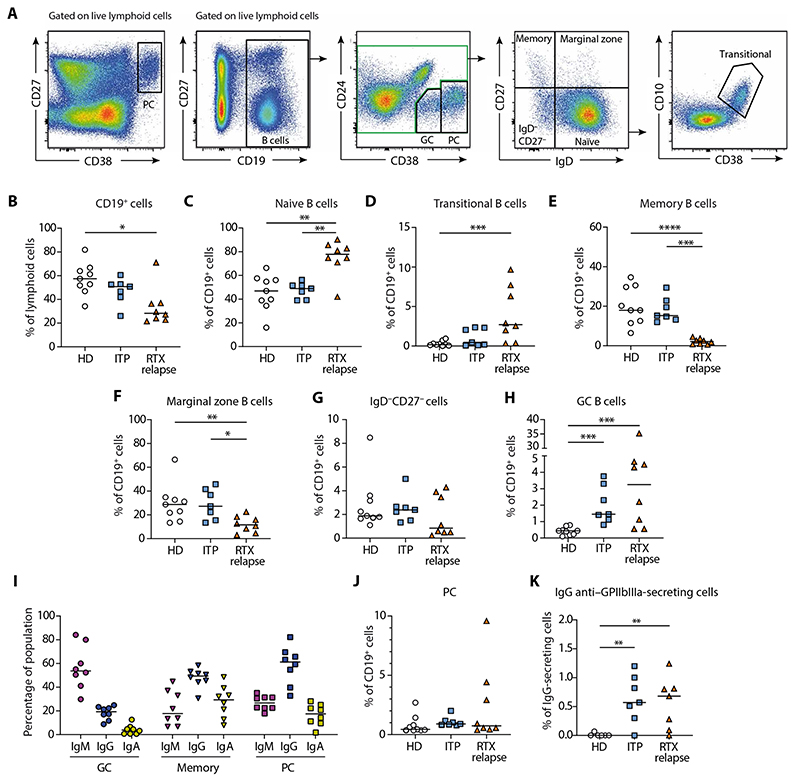
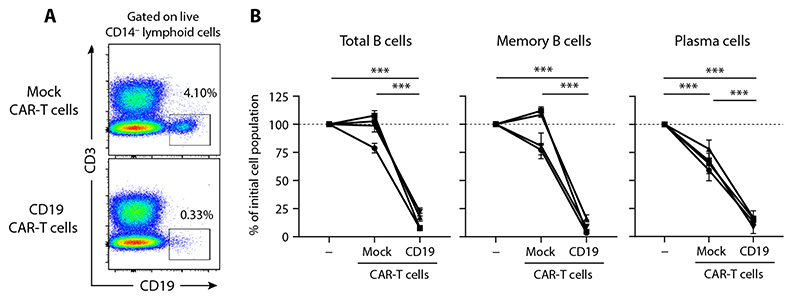
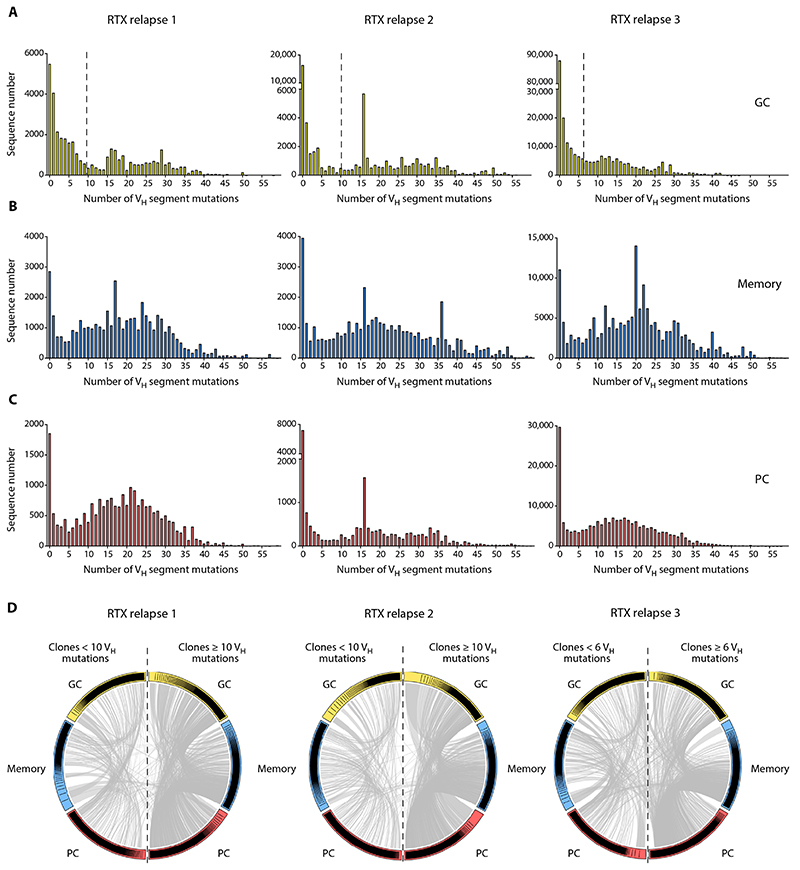
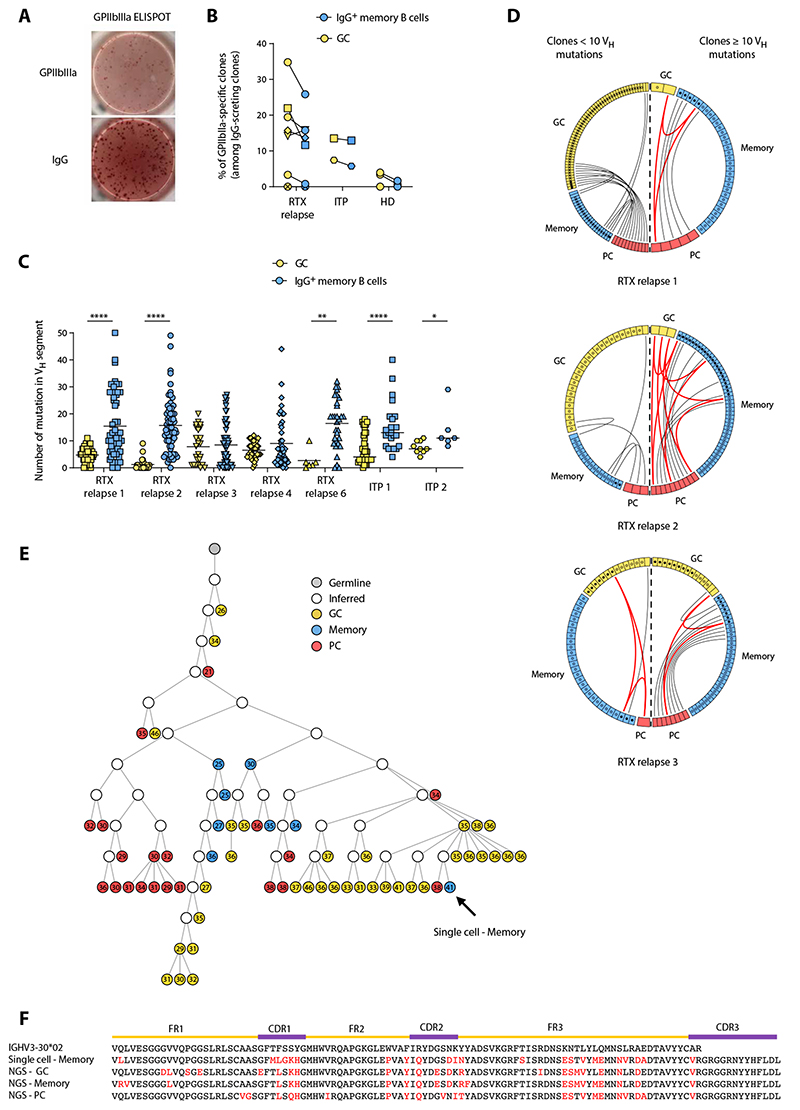
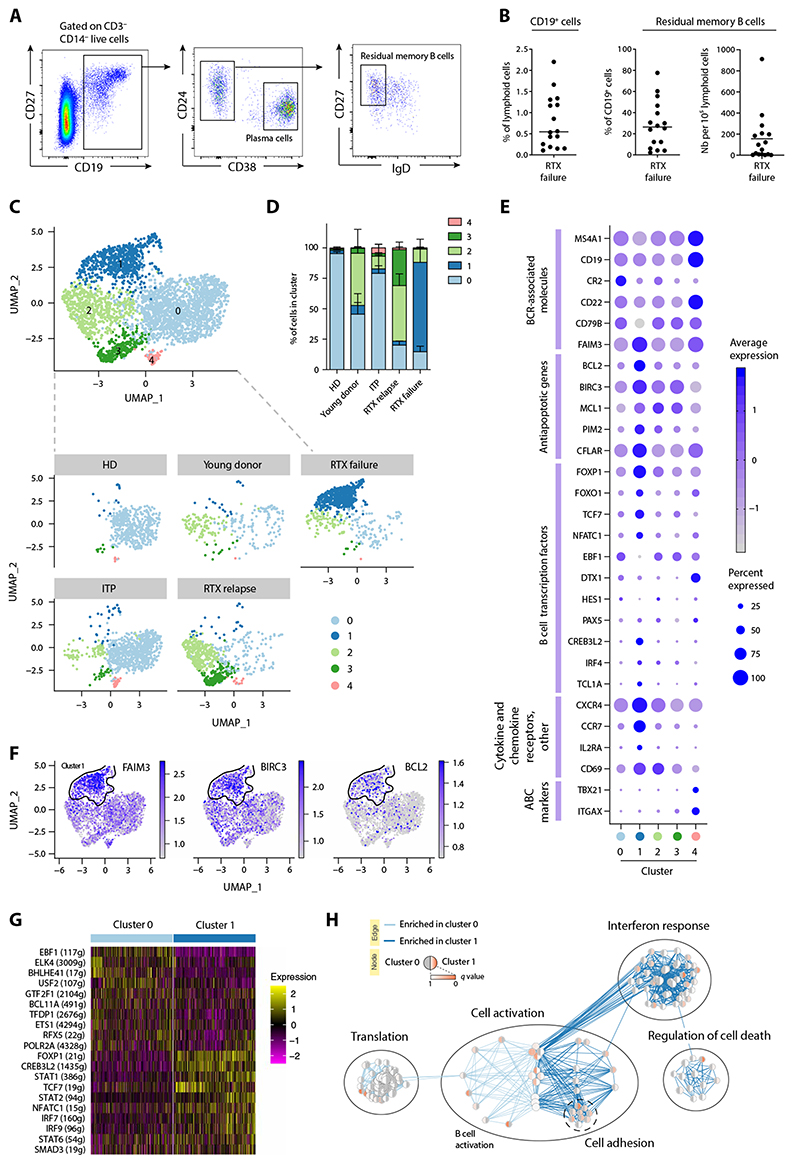
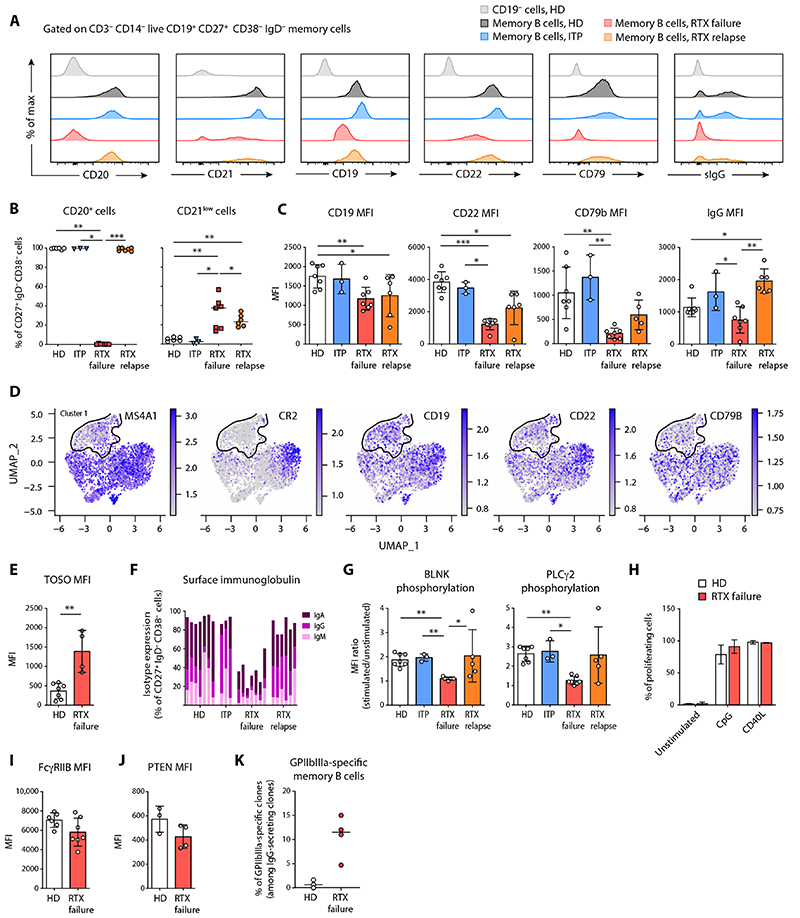
Rituximab (RTX), an antibody targeting CD20, is widely used as a first-line therapeutic strategy in B cell-mediated autoimmune diseases. However, a large proportion of patients either do not respond to the treatment or relapse during B cell reconstitution. Here, we characterize the cellular basis responsible for disease relapse in secondary lymphoid organs in humans, taking advantage of the opportunity offered by therapeutic splenectomy in patients with relapsing immune thrombocytopenia. By analyzing the B and plasma cell immunoglobulin gene repertoire at bulk and antigen-specific single-cell level, we demonstrate that relapses are associated with two responses coexisting in germinal centers and involving preexisting mutated memory B cells that survived RTX treatment and naive B cells generated upon reconstitution of the B cell compartment. To identify distinctive characteristics of the memory B cells that escaped RTX-mediated depletion, we analyzed RTX refractory patients who did not respond to treatment at the time of B cell depletion. We identified, by single-cell RNA sequencing (scRNA-seq) analysis, a population of quiescent splenic memory B cells that present a unique, yet reversible, RTX-shaped phenotype characterized by down-modulation of B cell-specific factors and expression of prosurvival genes. Our results clearly demonstrate that these RTX-resistant autoreactive memory B cells reactivate as RTX is cleared and give rise to plasma cells and further germinal center reactions. Their continued surface expression of CD19 makes them efficient targets for current anti-CD19 therapies. This study thus identifies a pathogenic contributor to autoimmune diseases that can be targeted by available therapeutic agents.
利妥昔单抗(RTX),一种靶向 CD20 的抗体,被广泛用作 B 细胞介导的自身免疫性疾病的一线治疗策略。然而,很大一部分患者要么对治疗无反应,要么在 B 细胞重建期间复发。在这里,我们利用治疗性脾切除术在复发性免疫性血小板减少症患者中提供的机会,描述了人类次级淋巴器官中导致疾病复发的细胞基础。通过分析 bulk 和抗原特异性单细胞水平的 B 细胞和浆细胞免疫球蛋白基因库,我们证明复发与两种在生发中心共存的反应有关,涉及在 RTX 治疗后存活的预先存在的突变记忆 B 细胞和在 B 细胞区室重建时产生的幼稚 B 细胞。为了确定逃避 RTX 介导耗竭的记忆 B 细胞的独特特征,我们分析了在 B 细胞耗竭时对治疗无反应的 RTX 难治性患者。我们通过单细胞 RNA 测序(scRNA-seq)分析鉴定了一群静止的脾脏记忆 B 细胞,它们表现出独特的、但可逆转的 RTX 样表型,其特征是 B 细胞特异性因子的下调和生存基因的表达。我们的结果清楚地表明,这些 RTX 耐药的自身反应性记忆 B 细胞在 RTX 被清除时重新激活,并产生浆细胞和进一步的生发中心反应。它们继续表达 CD19,使其成为当前抗 CD19 治疗的有效靶点。因此,这项研究确定了一种可被现有治疗药物靶向的自身免疫性疾病的致病性贡献者。