Singh Devita, Bradley Susan J, Zucker Kenneth J
Department of Human Development and Applied Psychology, Ontario Institute for Studies in Education, University of Toronto, Toronto, ON, Canada.
Department of Psychiatry, University of Toronto, Toronto, ON, Canada.
Front Psychiatry. 2021 Mar 29;12:632784. doi: 10.3389/fpsyt.2021.632784. eCollection 2021.
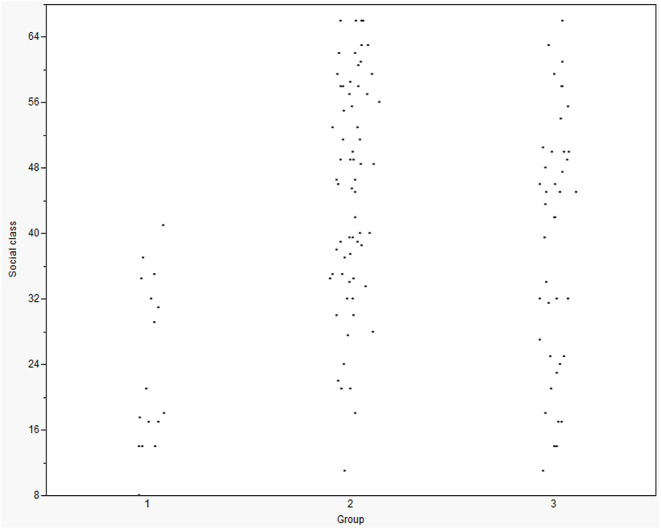
This study reports follow-up data on the largest sample to date of boys clinic-referred for gender dysphoria ( = 139) with regard to gender identity and sexual orientation. In childhood, the boys were assessed at a mean age of 7.49 years (range, 3.33-12.99) at a mean year of 1989 and followed-up at a mean age of 20.58 years (range, 13.07-39.15) at a mean year of 2002. In childhood, 88 (63.3%) of the boys met the DSM-III, III-R, or IV criteria for gender identity disorder; the remaining 51 (36.7%) boys were subthreshold for the criteria. At follow-up, gender identity/dysphoria was assessed via multiple methods and the participants were classified as either persisters or desisters. Sexual orientation was ascertained for both fantasy and behavior and then dichotomized as either biphilic/androphilic or gynephilic. Of the 139 participants, 17 (12.2%) were classified as persisters and the remaining 122 (87.8%) were classified as desisters. Data on sexual orientation in fantasy were available for 129 participants: 82 (63.6%) were classified as biphilic/androphilic, 43 (33.3%) were classified as gynephilic, and 4 (3.1%) reported no sexual fantasies. For sexual orientation in behavior, data were available for 108 participants: 51 (47.2%) were classified as biphilic/androphilic, 29 (26.9%) were classified as gynephilic, and 28 (25.9%) reported no sexual behaviors. Multinomial logistic regression examined predictors of outcome for the biphilic/androphilic persisters and the gynephilic desisters, with the biphilic/androphilic desisters as the reference group. Compared to the reference group, the biphilic/androphilic persisters tended to be older at the time of the assessment in childhood, were from a lower social class background, and, on a dimensional composite of sex-typed behavior in childhood were more gender-variant. The biphilic/androphilic desisters were more gender-variant compared to the gynephilic desisters. Boys clinic-referred for gender identity concerns in childhood had a high rate of desistance and a high rate of a biphilic/androphilic sexual orientation. The implications of the data for current models of care for the treatment of gender dysphoria in children are discussed.
本研究报告了迄今为止针对因性别焦虑症而被转介至诊所的最大规模男孩样本(n = 139)的性别认同和性取向的随访数据。在童年时期,这些男孩于1989年平均年龄7.49岁(范围3.33 - 12.99岁)时接受评估,并于2002年平均年龄20.58岁(范围13.07 - 39.15岁)时进行随访。童年时期,88名(63.3%)男孩符合DSM - III、III - R或IV版性别认同障碍标准;其余51名(36.7%)男孩未达该标准阈值。随访时,通过多种方法评估性别认同/焦虑症,并将参与者分为持续者或缓解者。确定了幻想和行为方面的性取向,然后将其分为双性恋/亲男性或亲女性两类。在139名参与者中,17名(12.2%)被归类为持续者,其余122名(87.8%)被归类为缓解者。129名参与者有幻想方面的性取向数据:82名(63.6%)被归类为双性恋/亲男性,43名(33.3%)被归类为亲女性,4名(3.1%)表示没有性幻想。在行为方面的性取向数据上,108名参与者有相关信息:51名(47.2%)被归类为双性恋/亲男性,29名(26.9%)被归类为亲女性,28名(25.9%)表示没有性行为。多项逻辑回归分析了双性恋/亲男性持续者和亲女性缓解者的结局预测因素,并将双性恋/亲男性缓解者作为参照组。与参照组相比?双性恋/亲男性持续者在童年评估时往往年龄更大,来自较低社会阶层背景,且在童年时期性别类型行为的维度综合得分上性别差异更大。双性恋/亲男性缓解者比亲女性缓解者的性别差异更大。童年时期因性别认同问题被转介至诊所的男孩缓解率高,且双性恋/亲男性性取向比例高。本文讨论了这些数据对当前儿童性别焦虑症治疗照护模式的启示。 (注:原文中“Compared to the reference group, the biphilic/androphilic persisters tended to be older at the time of the assessment in childhood, were from a lower social class background, and, on a dimensional composite of sex-typed behavior in childhood were more gender-variant.”一句中“Compared to the reference group, the biphilic/androphilic persisters tended to be older at the time of the assessment in childhood, were from a lower social class background”翻译较清晰,但“and, on a dimensional composite of sex-typed behavior in childhood were more gender-variant.”翻译较难理解其确切逻辑,所以译文在“与参照组相比?双性恋/亲男性持续者在童年评估时往往年龄更大,来自较低社会阶层背景,且在童年时期性别类型行为的维度综合得分上性别差异更大。”中用“?”表示此处逻辑较模糊。)