Graduate Institute of Medical Sciences, National Defense Medical Center, Taipei, Taiwan.
Division of Clinical Pathology, Department of Pathology, Tri-Service General Hospital, Taipei, Taiwan.
Front Immunol. 2021 Mar 29;12:630380. doi: 10.3389/fimmu.2021.630380. eCollection 2021.
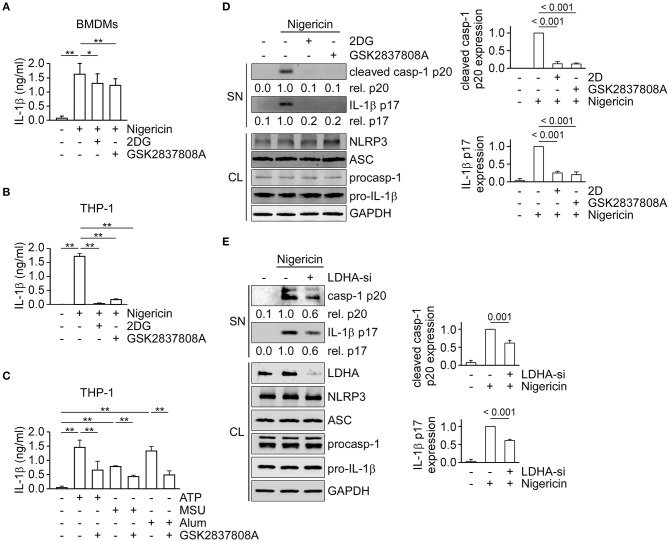
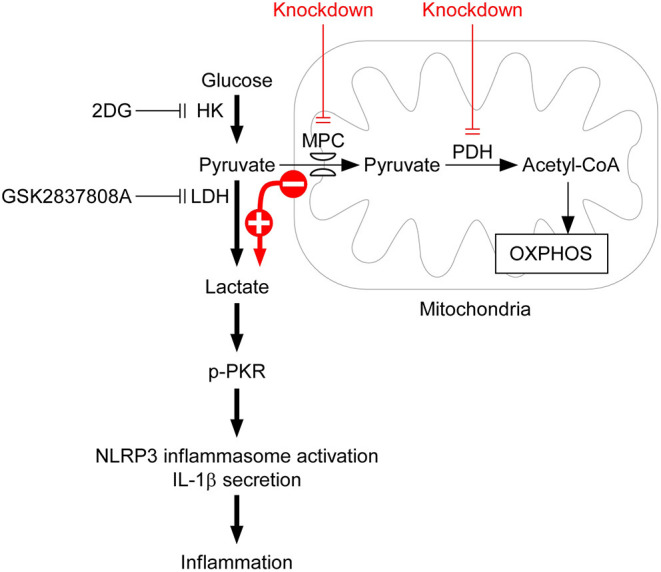
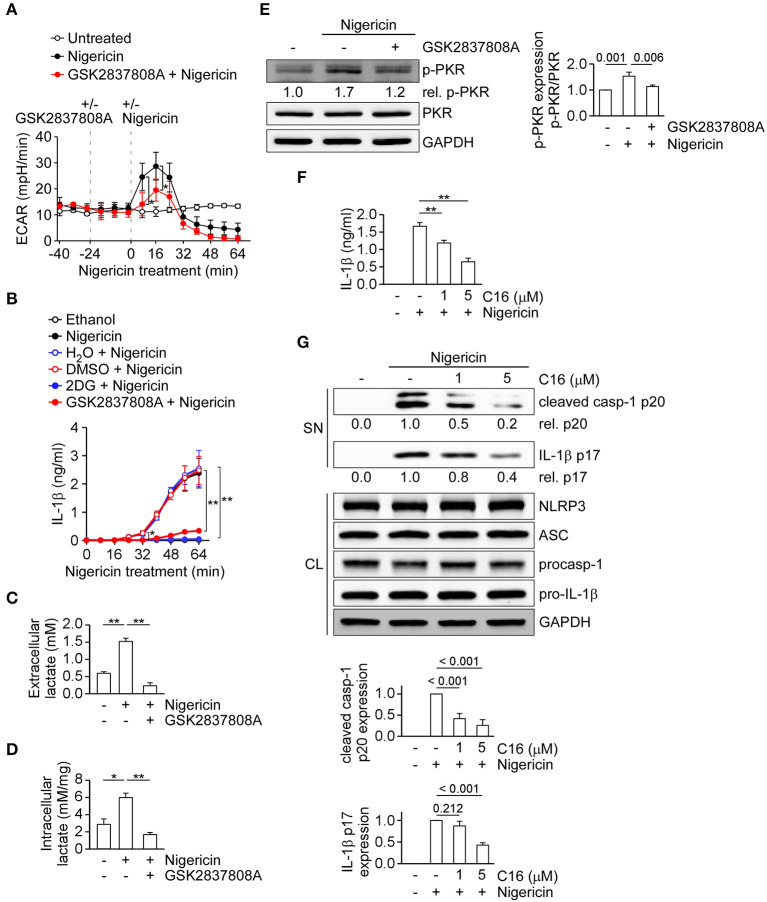
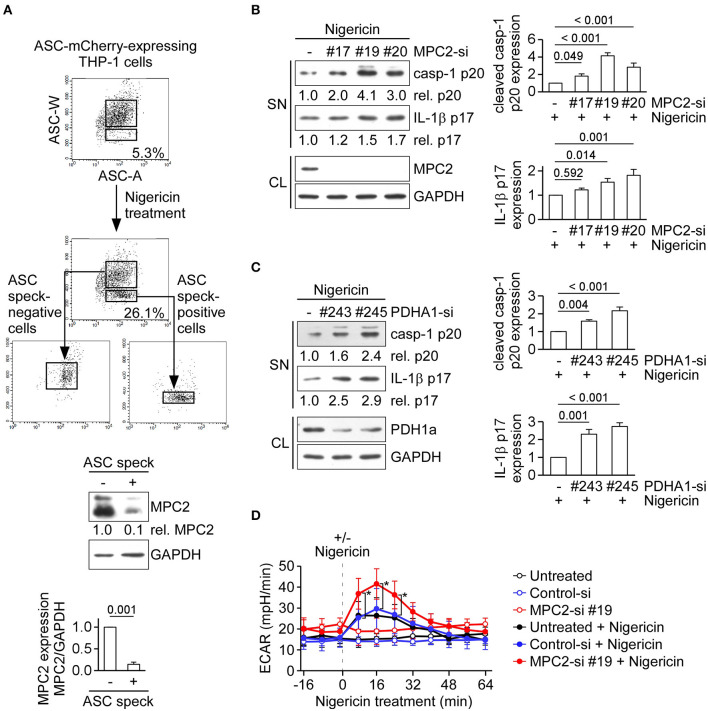
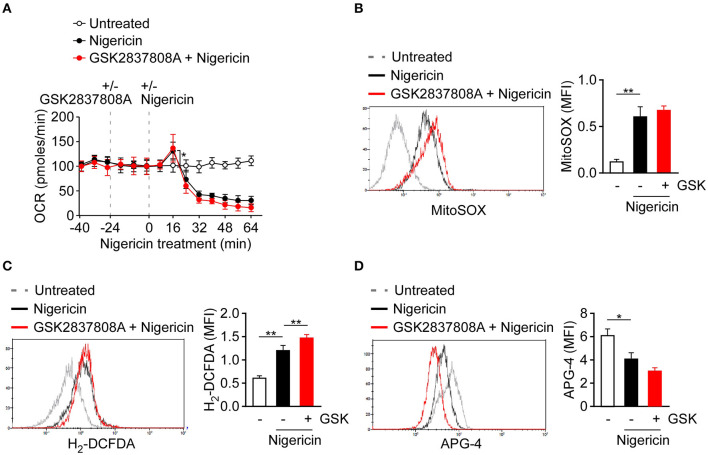
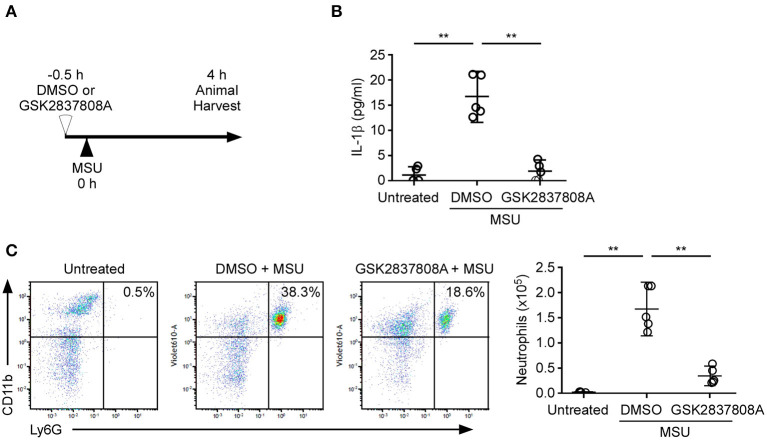
Activation of the Nod-like receptor 3 (NLRP3) inflammasome is important for activation of innate immune responses, but improper and excessive activation can cause inflammatory disease. We previously showed that glycolysis, a metabolic pathway that converts glucose into pyruvate, is essential for NLRP3 inflammasome activation in macrophages. Here, we investigated the role of metabolic pathways downstream glycolysis - lactic acid fermentation and pyruvate oxidation-in activation of the NLRP3 inflammasome. Using pharmacological or genetic approaches, we show that decreasing lactic acid fermentation by inhibiting lactate dehydrogenase reduced caspase-1 activation and IL-1β maturation in response to various NLRP3 inflammasome agonists such as nigericin, ATP, monosodium urate (MSU) crystals, or alum, indicating that lactic acid fermentation is required for NLRP3 inflammasome activation. Inhibition of lactate dehydrogenase with GSK2837808A reduced lactate production and activity of the NLRP3 inflammasome regulator, phosphorylated protein kinase R (PKR), but did not reduce the common trigger of NLRP3 inflammasome, potassium efflux, or reactive oxygen species (ROS) production. By contrast, decreasing the activity of pyruvate oxidation by depletion of either mitochondrial pyruvate carrier 2 (MPC2) or pyruvate dehydrogenase E1 subunit alpha 1 (PDHA1) enhanced NLRP3 inflammasome activation, suggesting that inhibition of mitochondrial pyruvate transport enhanced lactic acid fermentation. Moreover, treatment with GSK2837808A reduced MSU-mediated peritonitis in mice, a disease model used for studying the consequences of NLRP3 inflammasome activation. Our results suggest that lactic acid fermentation is important for NLRP3 inflammasome activation, while pyruvate oxidation is not. Thus, reprograming pyruvate metabolism in mitochondria and in the cytoplasm should be considered as a novel strategy for the treatment of NLRP3 inflammasome-associated diseases.
Nod 样受体 3(NLRP3)炎性小体的激活对于先天免疫反应的激活很重要,但是不适当和过度的激活会导致炎症性疾病。我们之前已经表明,糖酵解(一种将葡萄糖转化为丙酮酸的代谢途径)对于巨噬细胞中 NLRP3 炎性小体的激活是必不可少的。在这里,我们研究了糖酵解下游代谢途径 - 乳酸发酵和丙酮酸氧化 - 在激活 NLRP3 炎性小体中的作用。通过使用药理学或遗传学方法,我们表明通过抑制乳酸脱氢酶来减少乳酸发酵会降低各种 NLRP3 炎性小体激动剂(如 Nigericin、ATP、单钠尿酸盐(MSU)晶体或明矾)引起的半胱天冬酶-1 的激活和白细胞介素-1β的成熟,表明乳酸发酵是 NLRP3 炎性小体激活所必需的。用 GSK2837808A 抑制乳酸脱氢酶会减少乳酸的产生和 NLRP3 炎性小体调节剂磷酸化蛋白激酶 R(PKR)的活性,但不会减少 NLRP3 炎性小体的共同触发因素,钾外流或活性氧(ROS)的产生。相比之下,通过耗尽线粒体丙酮酸载体 2(MPC2)或丙酮酸脱氢酶 E1 亚基 alpha 1(PDHA1)来降低丙酮酸氧化的活性增强了 NLRP3 炎性小体的激活,这表明抑制线粒体丙酮酸转运增强了乳酸发酵。此外,用 GSK2837808A 治疗可降低 MSU 介导的腹膜炎小鼠模型中 NLRP3 炎性小体的激活,这是一种用于研究 NLRP3 炎性小体激活后果的疾病模型。我们的结果表明,乳酸发酵对于 NLRP3 炎性小体的激活很重要,而丙酮酸氧化则不是。因此,重新编程线粒体和细胞质中的丙酮酸代谢应被视为治疗 NLRP3 炎性小体相关疾病的新策略。