Song Lei, Guo Xiaonong, Zhao Fei, Wang Wei, Zhao Zhifang, Jin Long, Wu Chengli, Yao Jibin, Ma Zhongren
Key Laboratory of Biotechnology and Bioengineering of State Ethnic Affairs Commission, Biomedical Research Center, Northwest Minzu University, Lanzhou 730030, Gansu, China.
Department of Medicine, Northwest Minzu University, Lanzhou 730030, Gansu, China.
J Cancer. 2021 Mar 5;12(9):2598-2609. doi: 10.7150/jca.47292. eCollection 2021.
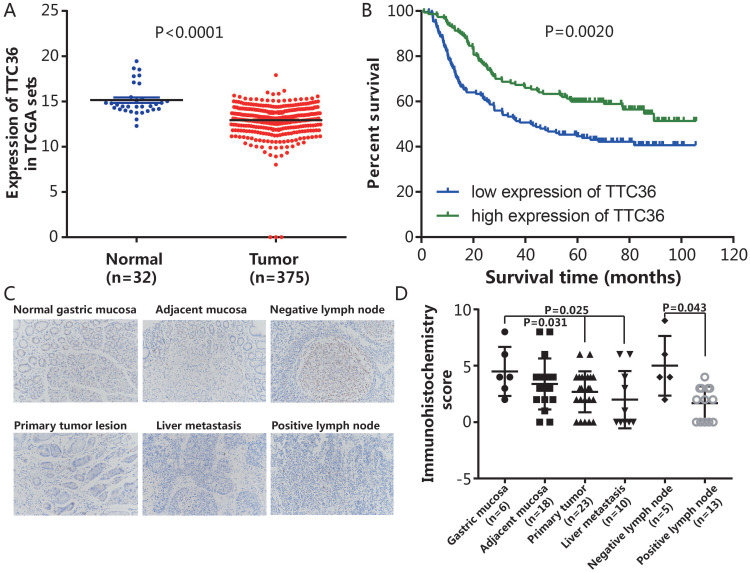
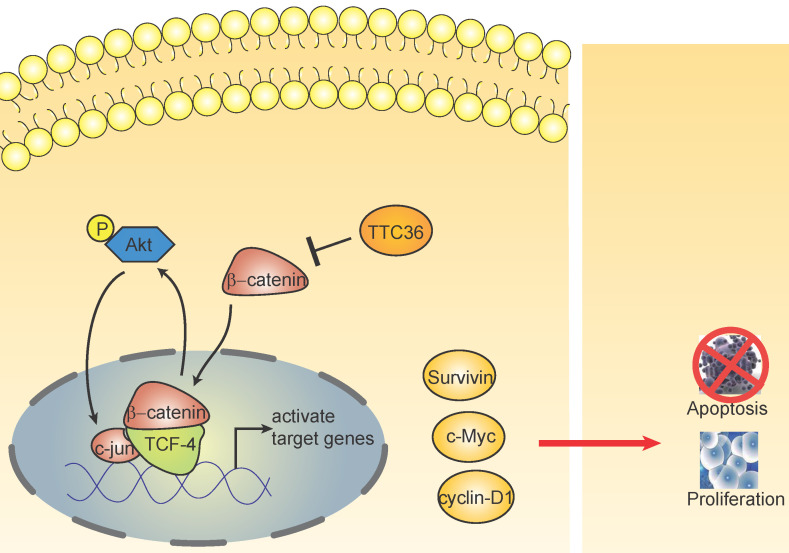
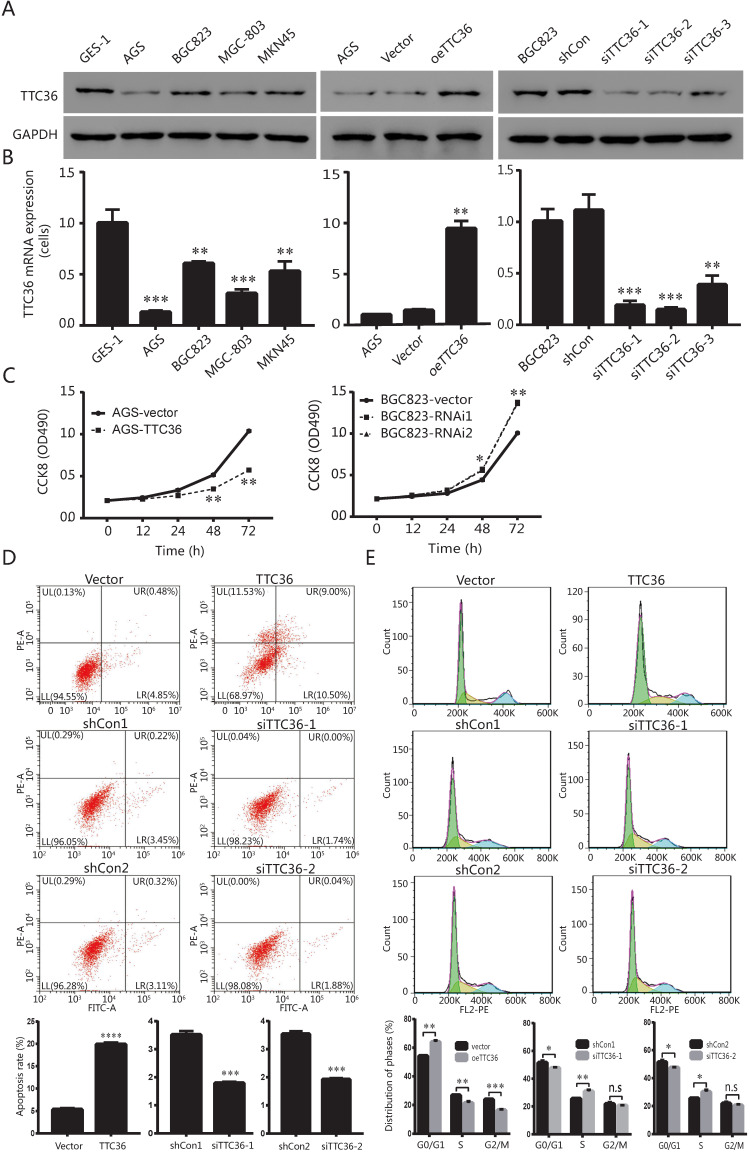
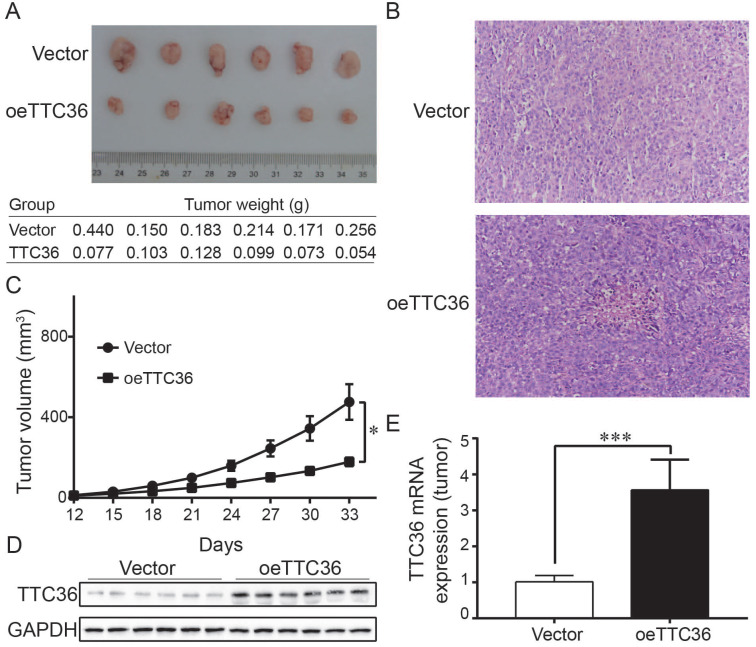
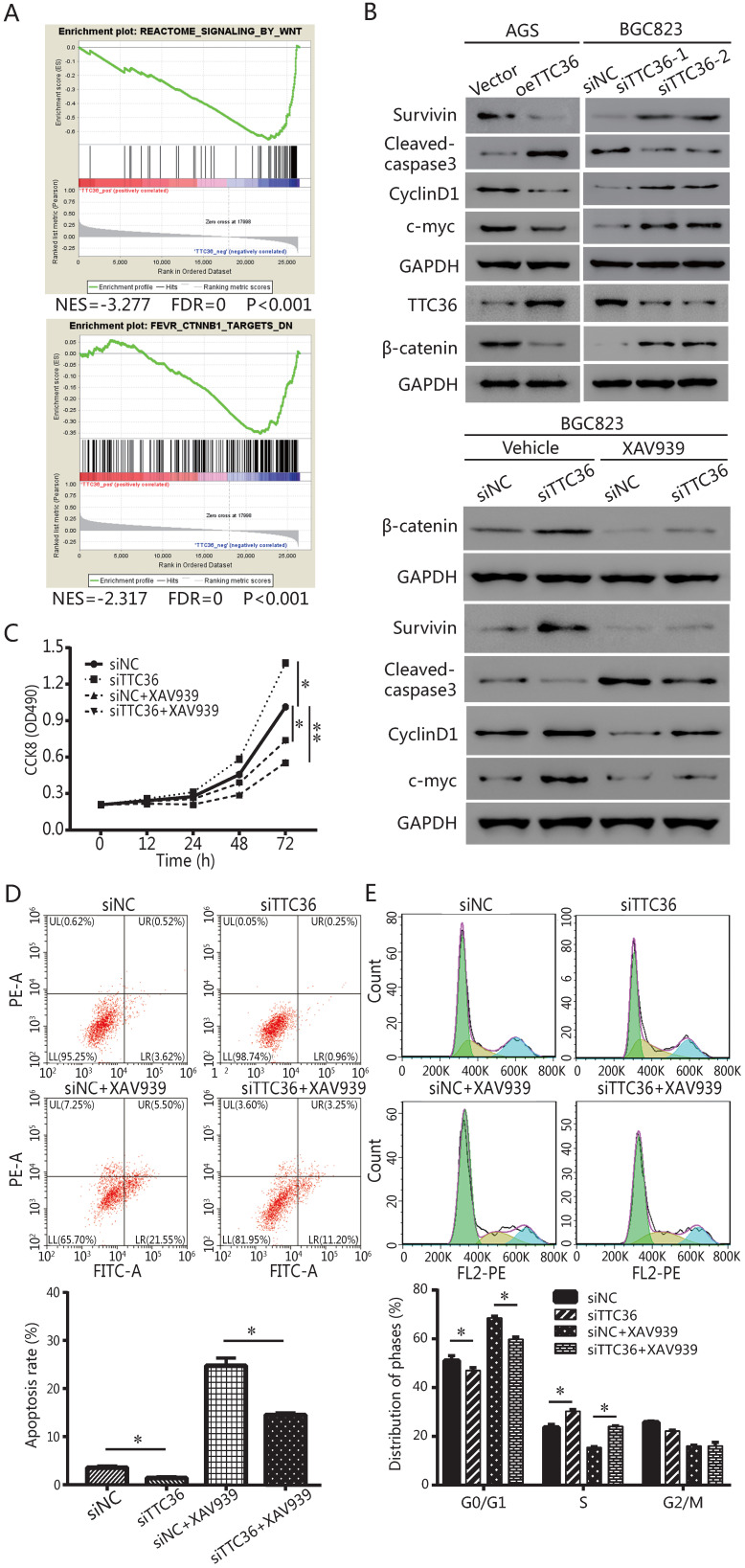
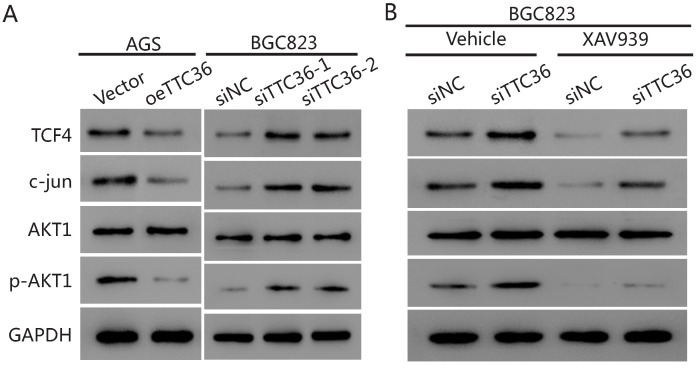
Tetratricopeptide repeat (TRP)-mediated cofactor proteins are involved in a wide range of cancers. TTC36 is little studied member of TRP subfamily. This study aimed to investigate the role of TTC36 in human gastric carcinoma (GC) and explore the potential underlying mechanisms. The analysis of TTC36 differential expression in GC was conducted using data from TCGA and a human tissue microarray. And effects of TTC36 expression on the prognosis of patients with gastric carcinoma were analyzed using the data from the GEO database. Lentivirus was transfected into the cell lines of AGS and BGC823 to construct overexpression and knocked down TTC36 cell model respectively. The effect of TTC36 expression on the growth, apoptosis and cell cycle of cells was explored . Downstream molecules were detected by western blotting. GSEA predicted signal pathway and related proteins were then detected. TTC36 expression in human GC tissues was found significantly lower than that in adjacent normal tissues and closely related to clinical prognosis. The overexpression of TTC36 notably inhibited tumor progression, cell cycle G1/S transfer and increased apoptosis in AGS cells. Conversely, the opposite effects were observed when TTC36 was suppressed in BGC823 cells. The expression of cleaved caspase3, Survivin, cyclin D1 and c-Myc were consistent with the phenotype in TTC36 operated GC cell lines. Intriguingly, GSEA analysis predicted Wnt-β-catenin pathway involved in TTC36 induced effects in GC cells, expression of β-catenin and downstream molecules such as TCF4, c-jun and pAKT were found negative related to TTC36 expression in GC cells. Notably, treatment with the Wnt/β-catenin inhibitor XAV939 dramatically attenuated the effects of TTC36 in GC cells. These results signify a critical role for TTC36 as a tumor suppressor in gastric carcinoma via regulating Wnt-β-catenin pathway.
四肽重复序列(TRP)介导的辅因子蛋白参与多种癌症。TTC36是TRP亚家族中研究较少的成员。本研究旨在探讨TTC36在人胃癌(GC)中的作用,并探索其潜在的作用机制。利用来自TCGA的数据和人组织微阵列对GC中TTC36的差异表达进行分析。并利用来自GEO数据库的数据分析TTC36表达对胃癌患者预后的影响。将慢病毒转染到AGS和BGC823细胞系中,分别构建TTC36过表达和敲低的细胞模型。探讨TTC36表达对细胞生长、凋亡和细胞周期的影响。通过蛋白质免疫印迹法检测下游分子。然后检测GSEA预测的信号通路及相关蛋白。发现人GC组织中TTC36的表达明显低于相邻正常组织,且与临床预后密切相关。TTC36的过表达显著抑制了AGS细胞的肿瘤进展、细胞周期G1/S转换并增加了细胞凋亡。相反,当BGC823细胞中TTC36被抑制时,观察到相反的效果。在TTC36处理的GC细胞系中,裂解的caspase3、Survivin、细胞周期蛋白D1和c-Myc的表达与表型一致。有趣的是,GSEA分析预测Wnt-β-连环蛋白通路参与了TTC36对GC细胞的诱导作用,发现β-连环蛋白和下游分子如TCF4、c-jun和pAKT的表达与GC细胞中TTC36的表达呈负相关。值得注意的是,用Wnt/β-连环蛋白抑制剂XAV939处理显著减弱了TTC36在GC细胞中的作用。这些结果表明TTC36通过调节Wnt-β-连环蛋白通路在胃癌中作为肿瘤抑制因子发挥关键作用。