National Centre for Biological Sciences - Tata Institute of Fundamental Research, Bangalore, India.
Max Planck Institute for Terrestrial Microbiology, LOEWE Centre for Synthetic Microbiology (SYNMIKRO), Marburg, Germany.
Elife. 2021 Apr 15;10:e67552. doi: 10.7554/eLife.67552.
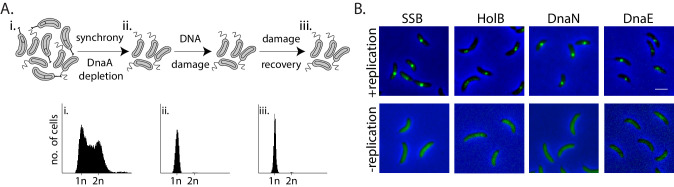
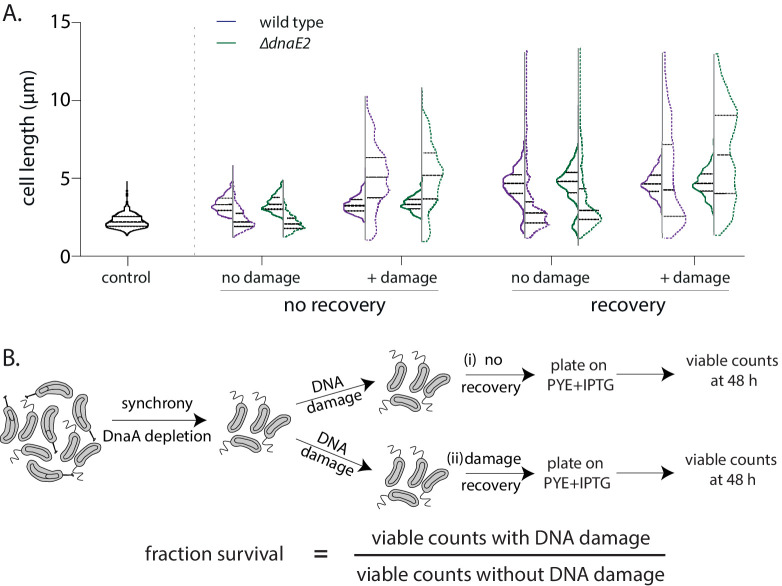
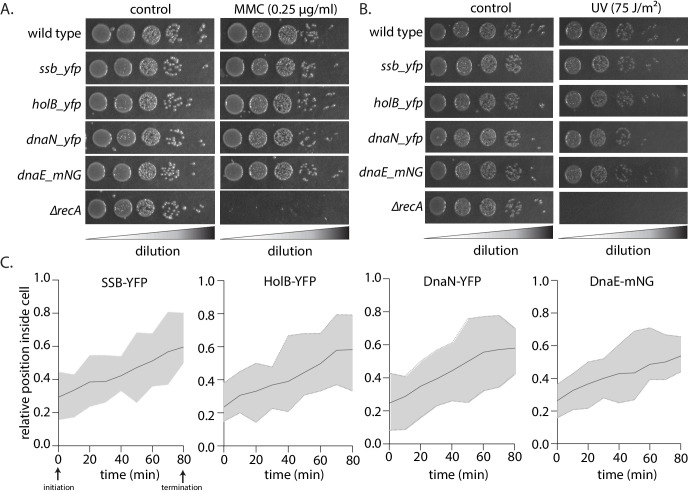
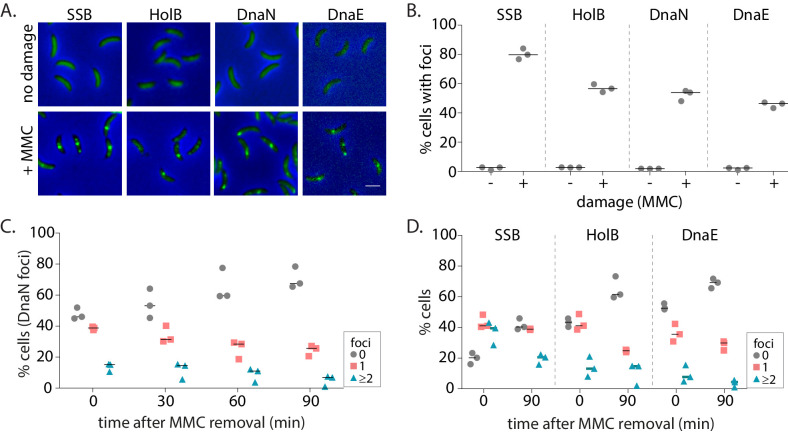
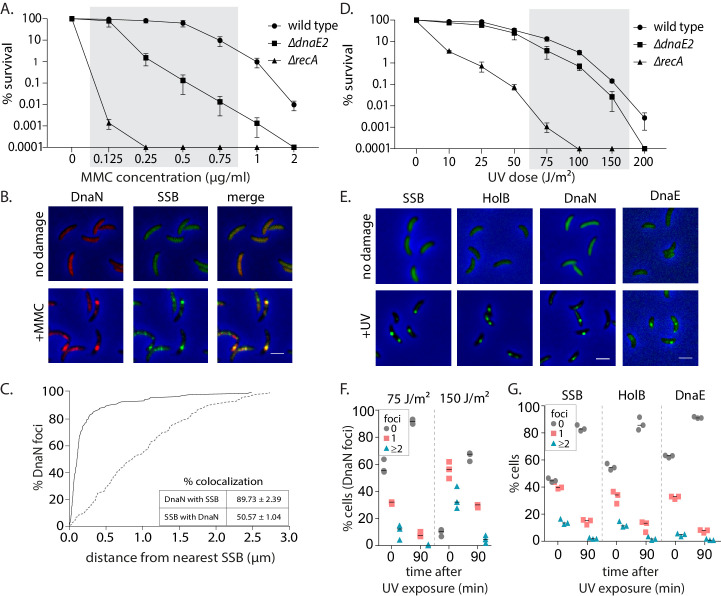
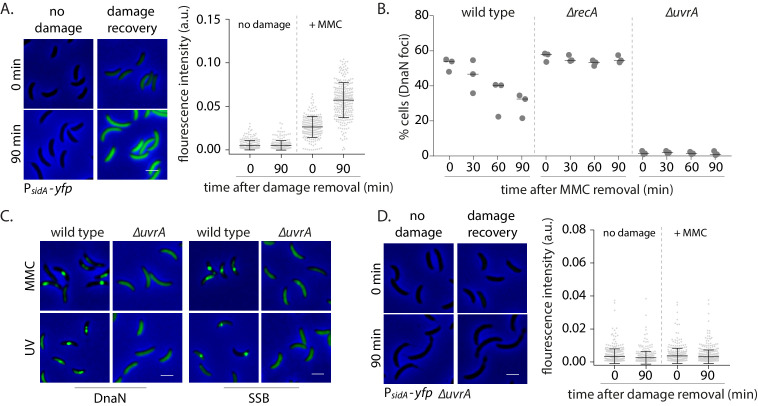
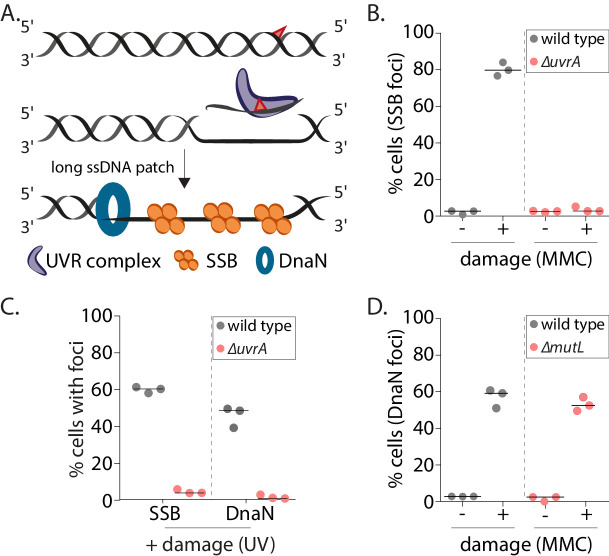
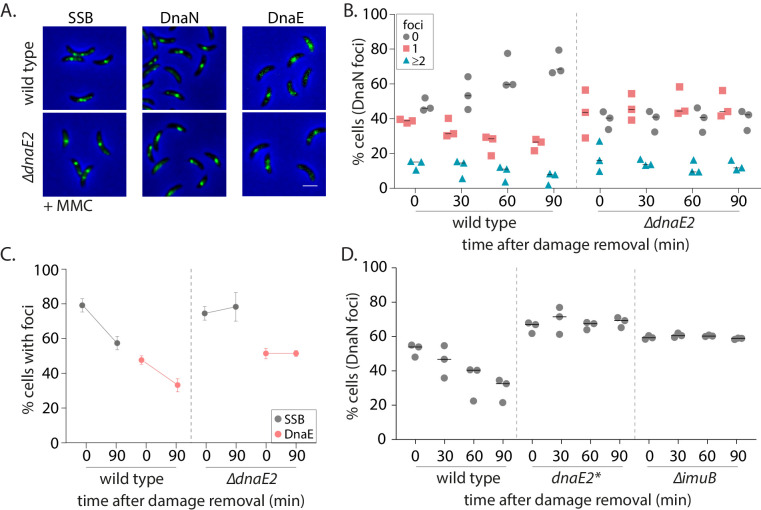
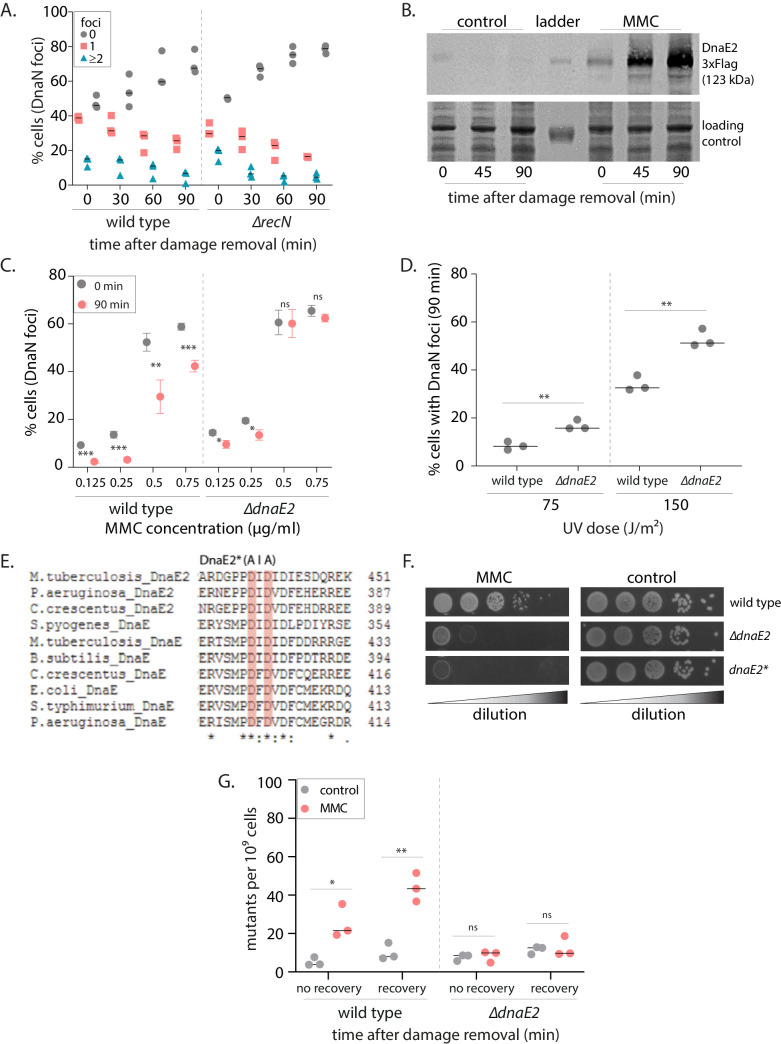
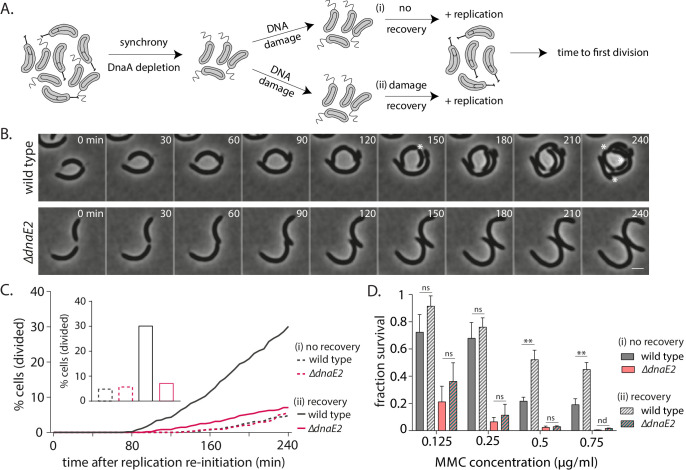
Translesion synthesis (TLS) is a highly conserved mutagenic DNA lesion tolerance pathway, which employs specialized, low-fidelity DNA polymerases to synthesize across lesions. Current models suggest that activity of these polymerases is predominantly associated with ongoing replication, functioning either at or behind the replication fork. Here we provide evidence for DNA damage-dependent function of a specialized polymerase, DnaE2, in replication-independent conditions. We develop an assay to follow lesion repair in non-replicating and observe that components of the replication machinery localize on DNA in response to damage. These localizations persist in the absence of DnaE2 or if catalytic activity of this polymerase is mutated. Single-stranded DNA gaps for SSB binding and low-fidelity polymerase-mediated synthesis are generated by nucleotide excision repair (NER), as replisome components fail to localize in the absence of NER. This mechanism of gap-filling facilitates cell cycle restoration when cells are released into replication-permissive conditions. Thus, such cross-talk (between activity of NER and specialized polymerases in subsequent gap-filling) helps preserve genome integrity and enhances survival in a replication-independent manner.
跨损伤合成(TLS)是一种高度保守的诱变 DNA 损伤容忍途径,它利用专门的、低保真度的 DNA 聚合酶在损伤部位合成。目前的模型表明,这些聚合酶的活性主要与正在进行的复制相关,其功能要么在复制叉上,要么在复制叉后。在这里,我们提供了专门的聚合酶 DnaE2 在非复制条件下依赖于 DNA 损伤的功能的证据。我们开发了一种在非复制条件下跟踪损伤修复的测定方法,并观察到复制机器的组件在 DNA 上定位以响应损伤。这些定位在缺乏 DnaE2 或如果该聚合酶的催化活性发生突变时仍然存在。单链 DNA 缺口是由核苷酸切除修复(NER)产生的,用于 SSB 结合和低保真度聚合酶介导的合成,因为在没有 NER 的情况下,复制体组件无法定位。当细胞被释放到允许复制的条件下时,这种填补缺口的机制有助于细胞周期的恢复。因此,这种交叉对话(NER 活性和随后的缺口填补中的专门聚合酶之间的交叉对话)有助于以非复制的方式维持基因组完整性并提高生存能力。