Univ Lyon, CarMeN laboratory, INSERM, INRAE, INSA Lyon, Université Claude Bernard Lyon 1, Charles Mérieux Medical School, 69310, Pierre-Bénite, France.
TCentre de Recherche en Nutrition Humaine Rhône-Alpes, Univ-Lyon, CarMeN Laboratory, Université Claude Bernard Lyon1, Hospices Civils de Lyon, CENS, FCRIN/FORCE Network, 69310, Pierre-Bénite, France.
JCI Insight. 2021 May 24;6(10):146161. doi: 10.1172/jci.insight.146161.
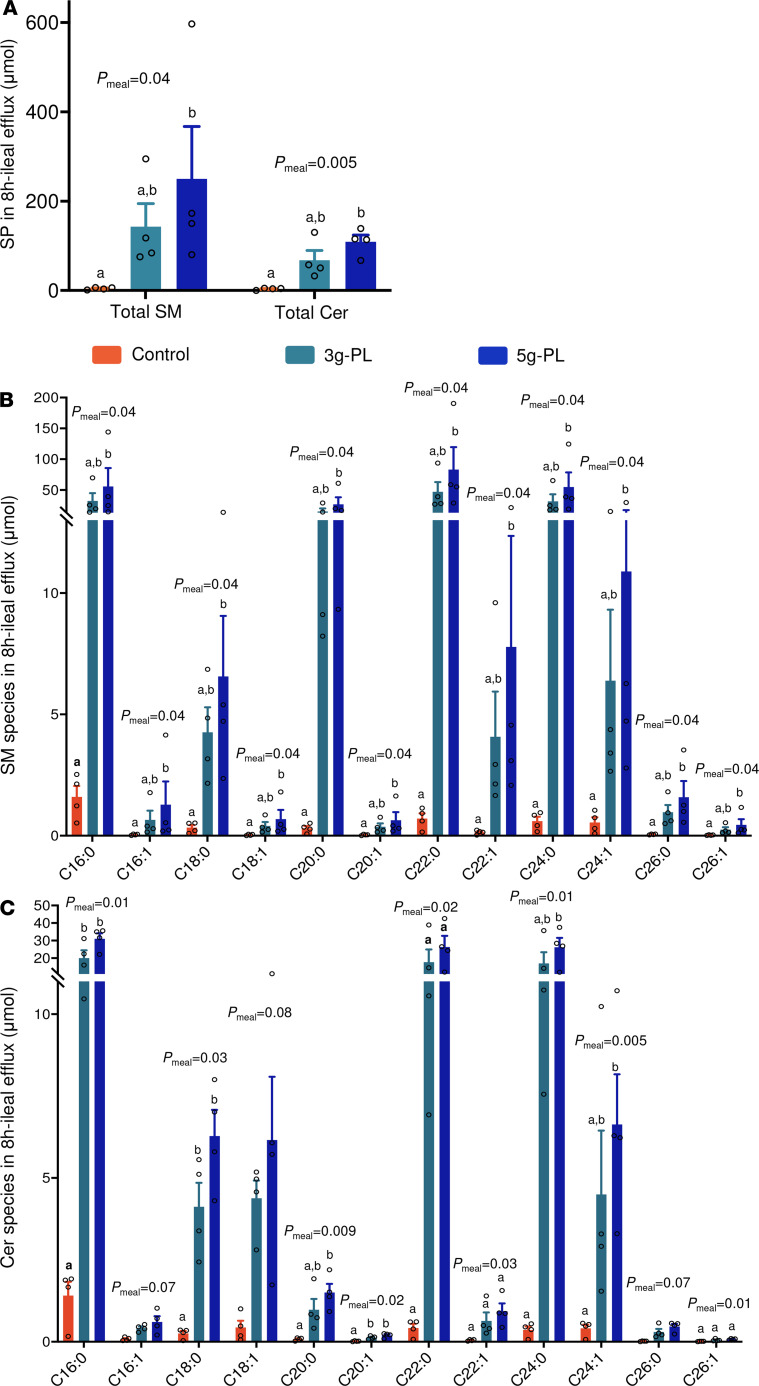
BACKGROUNDHigh circulating levels of ceramides (Cer) and sphingomyelins (SM) are associated with cardiometabolic diseases. The consumption of whole fat dairy products, naturally containing such polar lipids (PL), is associated with health benefits, but the impact on sphingolipidome remains unknown.METHODSIn a 4-week randomized controlled trial, 58 postmenopausal women daily consumed milk PL-enriched cream cheese (0, 3, or 5 g of milk PL). Postprandial metabolic explorations were performed before and after supplementation. Analyses included SM and Cer species in serum, chylomicrons, and feces. The ileal contents of 4 ileostomy patients were also explored after acute milk PL intake.RESULTSMilk PL decreased serum atherogenic C24:1 Cer, C16:1 SM, and C18:1 SM species (Pgroup < 0.05). Changes in serum C16+18 SM species were positively correlated with the reduction of cholesterol (r = 0.706), LDL-C (r = 0.666), and ApoB (r = 0.705) (P < 0.001). Milk PL decreased chylomicron content in total SM and C24:1 Cer (Pgroup < 0.001), parallel to a marked increase in total Cer in feces (Pgroup < 0.001). Milk PL modulated some specific SM and Cer species in both ileal efflux and feces, suggesting differential absorption and metabolization processes in the gut.CONCLUSIONMilk PL supplementation decreased atherogenic SM and Cer species associated with the improvement of cardiovascular risk markers. Our findings bring insights on sphingolipid metabolism in the gut, especially Cer, as signaling molecules potentially participating in the beneficial effects of milk PL.TRIAL REGISTRATIONClinicalTrials.gov, NCT02099032, NCT02146339.FUNDINGANR-11-ALID-007-01; PHRCI-2014: VALOBAB, no. 14-007; CNIEL; GLN 2018-11-07; HCL (sponsor).
循环中高水平的神经酰胺(Cer)和神经鞘磷脂(SM)与心血管代谢疾病有关。食用全脂乳制品,其中天然含有这些极性脂质(PL),与健康益处相关,但对鞘脂谱的影响尚不清楚。
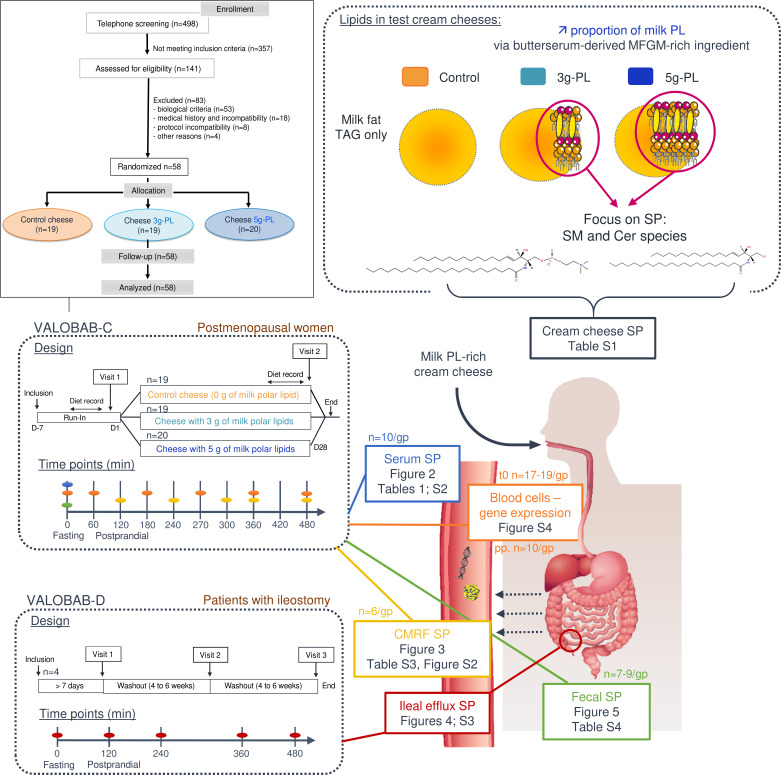
在一项为期 4 周的随机对照试验中,58 名绝经后妇女每天食用富含乳脂 PL 的奶油干酪(0、3 或 5 克乳脂 PL)。补充前后进行餐后代谢探索。分析包括血清、乳糜微粒和粪便中的 SM 和 Cer 种类。还在 4 名回肠造口术患者急性摄入乳脂 PL 后探索了回肠内容物。
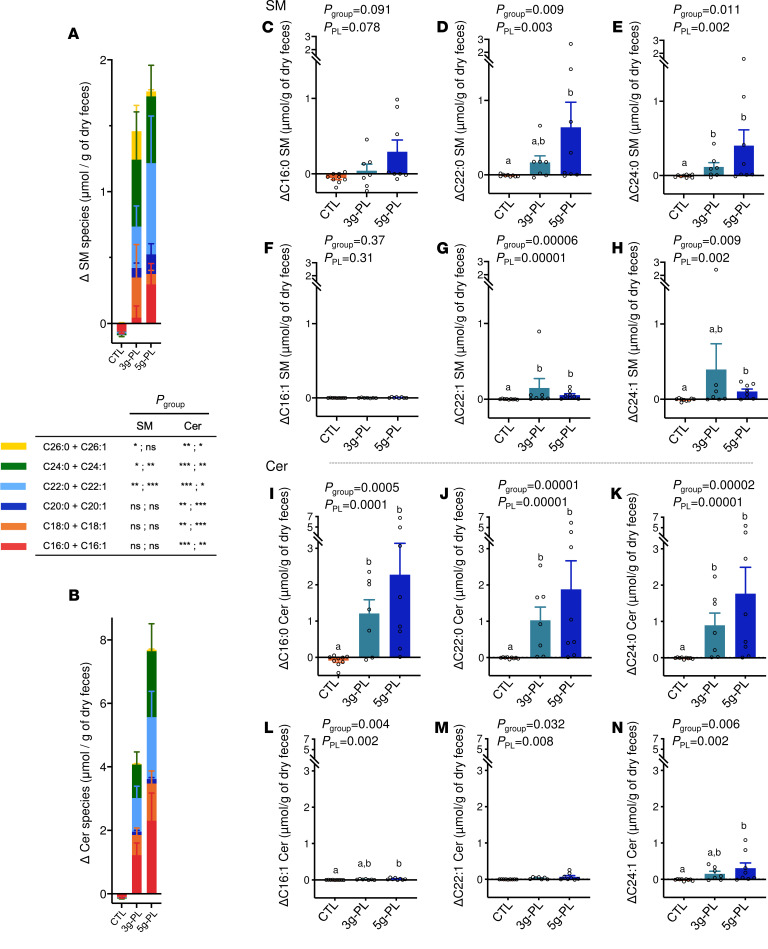
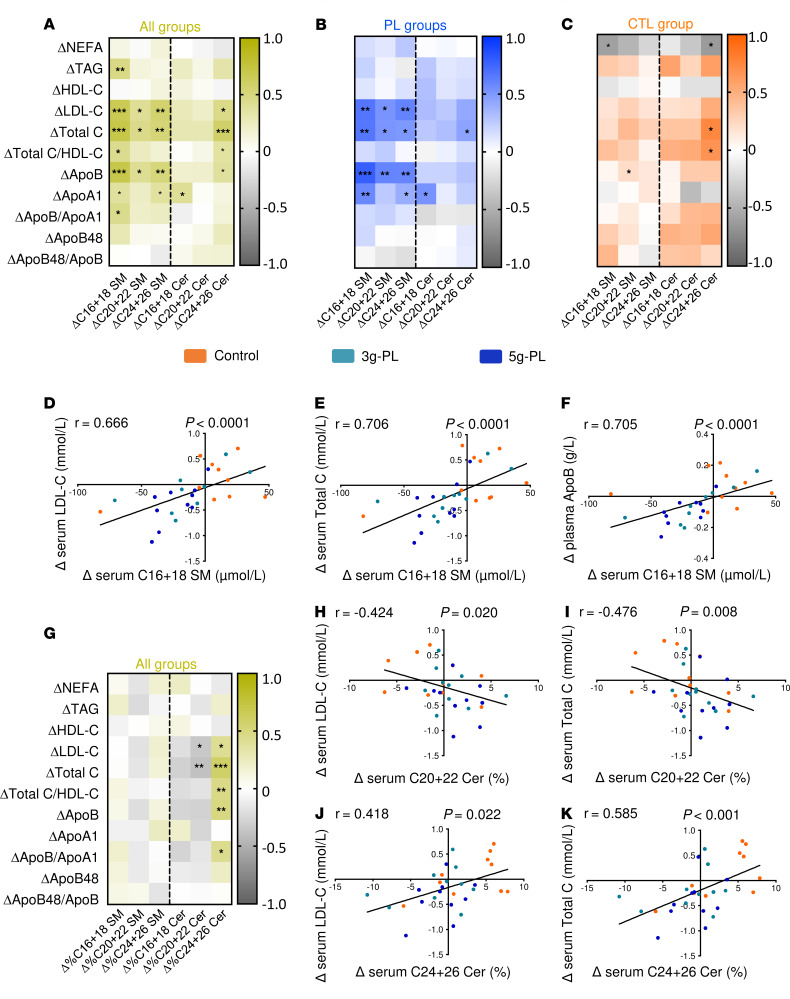
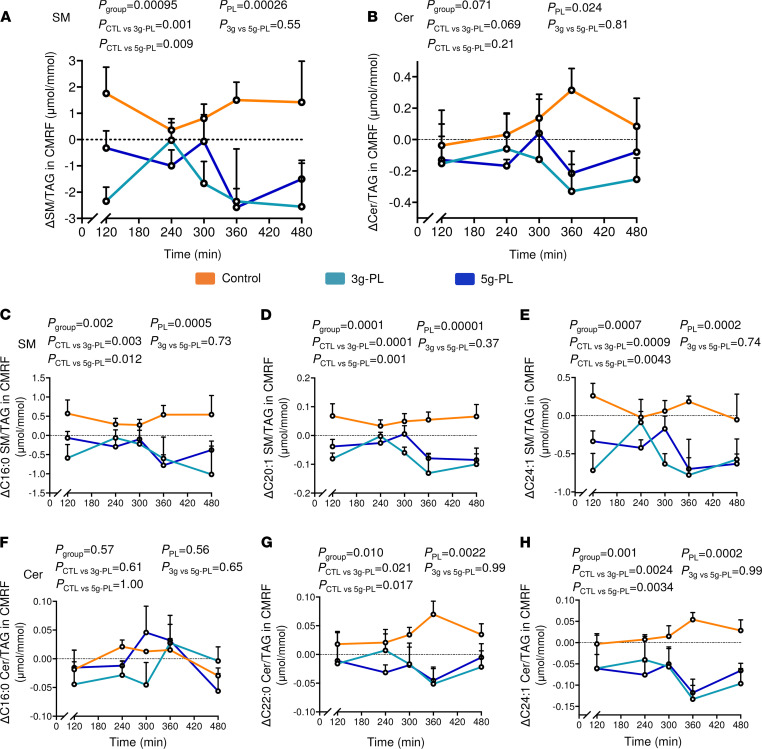
乳脂 PL 降低了血清致动脉粥样硬化的 C24:1 Cer、C16:1 SM 和 C18:1 SM 种类(Pgroup < 0.05)。血清 C16+18 SM 种类的变化与胆固醇(r = 0.706)、LDL-C(r = 0.666)和 ApoB(r = 0.705)的降低呈正相关(P < 0.001)。乳脂 PL 降低了乳糜微粒中总 SM 和 C24:1 Cer 的含量(Pgroup < 0.001),同时粪便中总 Cer 显著增加(Pgroup < 0.001)。乳脂 PL 调节了回肠流出物和粪便中一些特定的 SM 和 Cer 种类,表明在肠道中存在不同的吸收和代谢过程。
乳脂 PL 补充降低了与心血管风险标志物改善相关的致动脉粥样硬化 SM 和 Cer 种类。我们的发现为肠道中的鞘脂代谢提供了新的见解,特别是 Cer,作为潜在参与乳脂 PL 有益作用的信号分子。
ClinicalTrials.gov,NCT02099032,NCT02146339。
ANR-11-ALID-007-01;PHRCI-2014:VALOBAB,编号 14-007;CNIEL;GLN 2018-11-07;HCL(赞助商)。