Department of Bioengineering, University of Washington, Seattle, Washington, USA; Seattle Children's Therapeutics, Seattle, Washington, USA.
Department of Bioengineering, University of Washington, Seattle, Washington, USA; Seattle Children's Therapeutics, Seattle, Washington, USA; Department of Pediatrics, University of Washington, Seattle, Washington, USA; Program in Immunology, Fred Hutchinson Cancer Research Center, Seattle, Washington, USA.
J Biol Chem. 2021 Jan-Jun;296:100657. doi: 10.1016/j.jbc.2021.100657. Epub 2021 Apr 16.
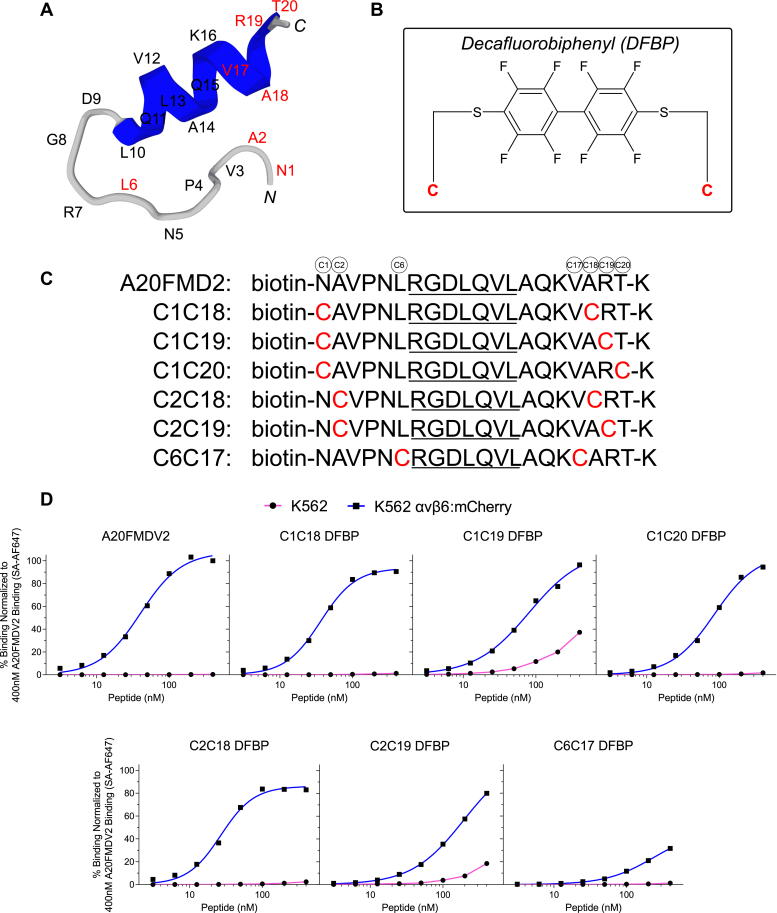
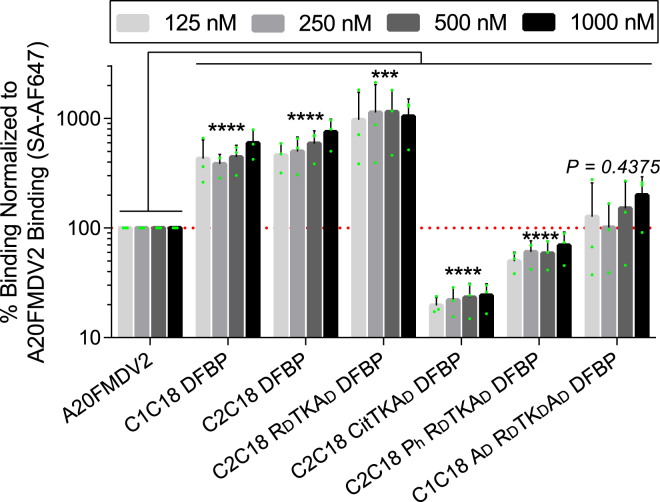
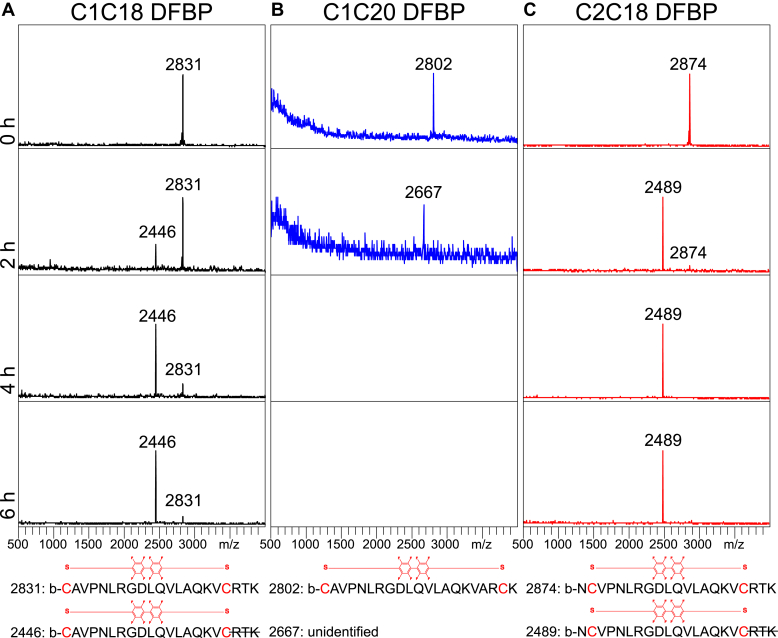
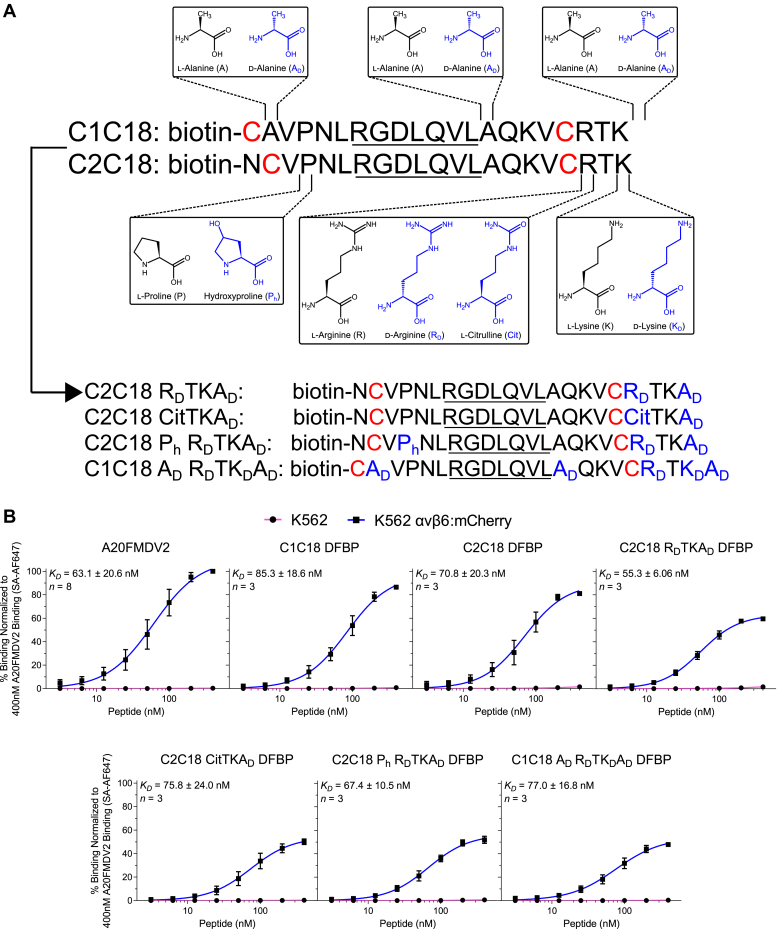
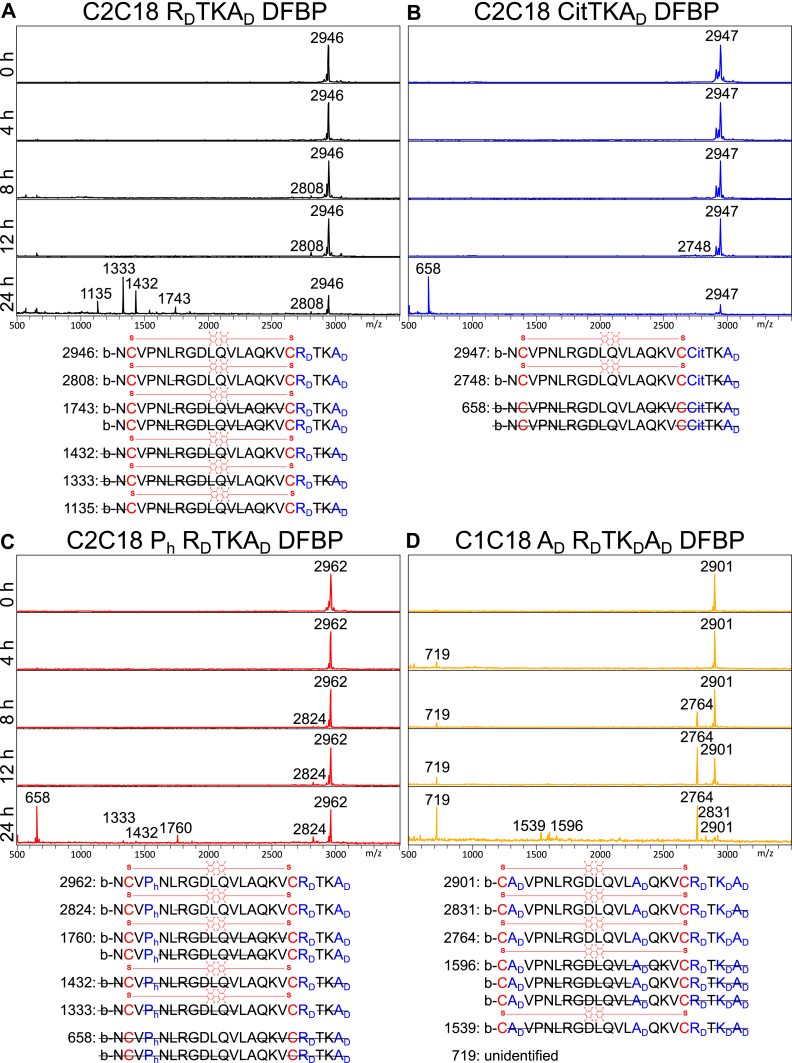
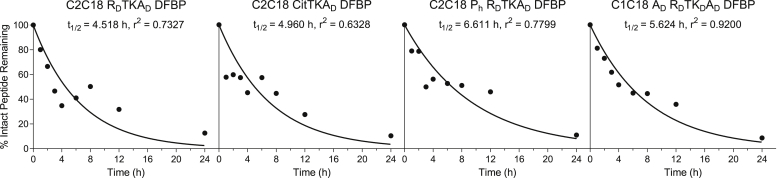
The integrin αvβ6 is an antigen expressed at low levels in healthy tissue but upregulated during tumorigenesis, which makes it a promising target for cancer imaging and therapy. A20FMDV2 is a 20-mer peptide derived from the foot-and-mouth disease virus that exhibits nanomolar and selective affinity for αvβ6 versus other integrins. Despite this selectivity, A20FMDV2 has had limited success in imaging and treating αvβ6 tumors in vivo because of its poor serum stability. Here, we explore the cyclization and modification of the A20FMDV2 peptide to improve its serum stability without sacrificing its affinity and specificity for αvβ6. Using cysteine amino acid substitutions and cyclization by perfluoroarylation with decafluorobiphenyl, we synthesized six cyclized A20FMDV2 variants and discovered that two retained binding to αvβ6 with modestly improved serum stability. Further d-amino acid substitutions and C-terminal sequence optimization outside the cyclized region greatly prolonged peptide serum stability without reducing binding affinity. While the cyclized A20FMDV2 variants exhibited increased nonspecific integrin binding compared with the original peptide, additional modifications with the non-natural amino acids citrulline, hydroxyproline, and d-alanine were found to restore binding specificity, with some modifications leading to greater αvβ6 integrin selectivity than the original A20FMDV2 peptide. The peptide modifications detailed herein greatly improve the potential of utilizing A20FMDV2 to target αvβ6 in vivo, expanding opportunities for cancer targeting and therapy.
整合素 αvβ6 在健康组织中低表达,但在肿瘤发生时上调,这使其成为癌症成像和治疗的有前途的靶点。A20FMDV2 是一种源自口蹄疫病毒的 20 肽,对 αvβ6 与其他整合素具有纳摩尔级和选择性亲和力。尽管具有这种选择性,但由于其血清稳定性差,A20FMDV2 在体内成像和治疗 αvβ6 肿瘤方面的效果有限。在这里,我们探索了 A20FMDV2 肽的环化和修饰,以提高其血清稳定性,而不牺牲其对 αvβ6 的亲和力和特异性。通过使用半胱氨酸氨基酸取代和全氟芳基化与十氟联苯的环化,我们合成了六个环化的 A20FMDV2 变体,并发现其中两个保留了与 αvβ6 的结合,血清稳定性略有提高。进一步的 D-氨基酸取代和环化区域外的 C 末端序列优化极大地延长了肽的血清稳定性,而不会降低结合亲和力。虽然环化的 A20FMDV2 变体与原始肽相比表现出增加的非特异性整合素结合,但用非天然氨基酸瓜氨酸、羟脯氨酸和 D-丙氨酸进行额外修饰被发现恢复了结合特异性,一些修饰导致比原始 A20FMDV2 肽更高的 αvβ6 整合素选择性。本文详述的肽修饰极大地提高了利用 A20FMDV2 在体内靶向 αvβ6 的潜力,为癌症靶向和治疗扩展了机会。