Neurology Department, King Fahad Medical City, Riyadh, Saudi Arabia.
College of Medicine, King Saud Bin Abdulaziz University for Health Sciences, Riyadh, Saudi Arabia; King Abdullah International Medical Research Center, Riyadh, Saudi Arabia; Department of Medicine, Ministry of the National Guard-Health Affairs, Riyadh, Saudi Arabia.
Mult Scler Relat Disord. 2021 Jun;51:102925. doi: 10.1016/j.msard.2021.102925. Epub 2021 Mar 25.
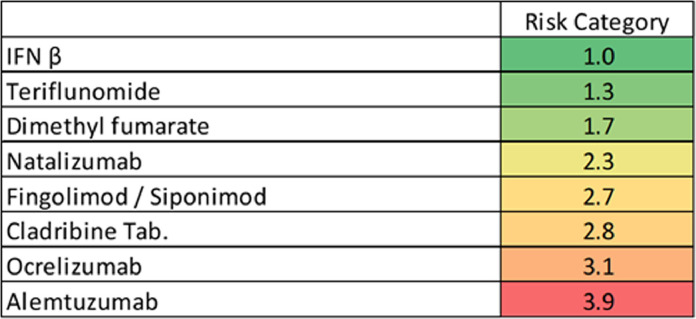
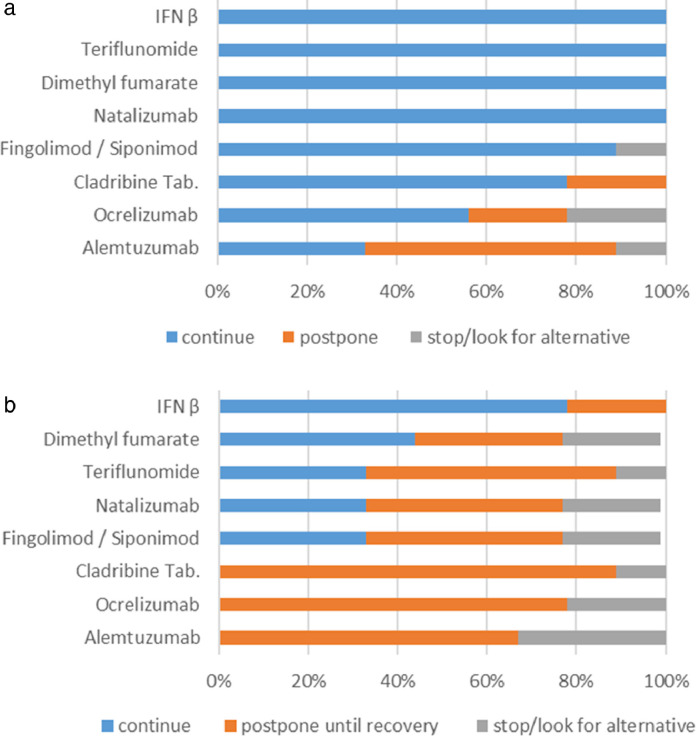
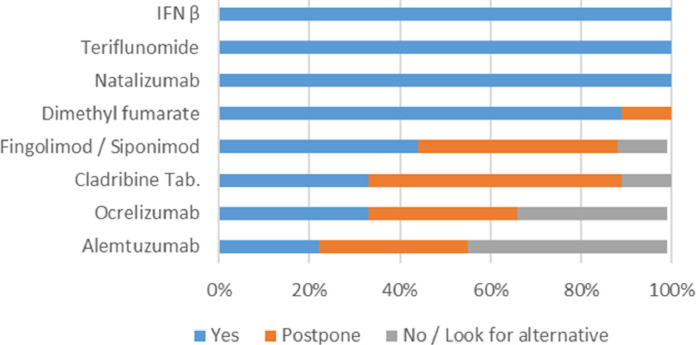
Disease-modifying therapies (DMT) for relapsing-remitting MS (RRMS) act on the immune system, suggesting a need for caution during the SARS-CoV2/Covid-19 pandemic. A group of experts in MS care from Saudi Arabia convened to consider the impact of Covid-19 on MS care in that country, and to develop consensus recommendations on the current application of DMT therapy. Covid-19 has led to disruption to the care of MS in Saudi Arabia as elsewhere. The Expert Panel considered a DMT's overall tolerability/safety profile to be the most important consideration on whether or not to prescribe at this time. Treatment can be started or continued with interferon beta, teriflunomide, dimethyl fumarate, or natalizumab, as these DMTs are not associated with increased risk of infection (there was no consensus on the initiation of other DMTs). A consensus also supported continuing treatment regimens with fingolimod (or siponimod) and cladribine tablets for a patient without active Covid-19. No DMT should be imitated in a patient with active Covid-19, and (only) interferon beta could be continued in the case of Covid-19 infection. Vaccination against Covid-19 is a therapeutic priority for people with MS. New treatment should be delayed for 2-4 weeks for vaccination. Where treatment is already ongoing, vaccination against Covid-19 should be administered immediately without disruption of treatment (first-line DMTs, natalizumab, fingolimod), when lymphocytes have recovered sufficiently (cladribine tablets, alemtuzumab) or 4 months after the last dose (ocrelizumab). These recommendations will need to be refined and updated as new clinical evidence in this area emerges.
用于治疗复发缓解型多发性硬化症(RRMS)的疾病修正疗法(DMT)作用于免疫系统,因此在 SARS-CoV2/COVID-19 大流行期间需要谨慎。来自沙特阿拉伯的一组多发性硬化症护理专家开会讨论 COVID-19 对该国多发性硬化症护理的影响,并就当前 DMT 治疗的应用达成共识建议。COVID-19 像其他地方一样,导致沙特阿拉伯的多发性硬化症护理中断。专家组认为,是否在此刻开处方,最重要的是考虑 DMT 的整体耐受性/安全性概况。干扰素β、特立氟胺、富马酸二甲酯或那他珠单抗可开始或继续治疗,因为这些 DMT 与感染风险增加无关(对于其他 DMT 的开始,没有达成共识)。专家组还一致支持继续使用芬戈莫德(或西尼莫德)和克拉屈滨片治疗没有活动性 COVID-19 的患者。在有活动性 COVID-19 的患者中不应模仿任何 DMT,在 COVID-19 感染的情况下仅可继续使用干扰素β。COVID-19 疫苗接种是多发性硬化症患者的治疗重点。新的治疗应推迟 2-4 周进行疫苗接种。如果已经开始治疗,则应立即在不中断治疗的情况下(一线 DMT、那他珠单抗、芬戈莫德)接种 COVID-19 疫苗,当淋巴细胞恢复足够时(克拉屈滨片、阿仑单抗)或在最后一剂后 4 个月(奥瑞珠单抗)。随着该领域新的临床证据的出现,这些建议将需要进行细化和更新。