Jiang Xueping, Li Yangyi, Zhang Nannan, Gao Yanping, Han Linzhi, Li Shuying, Li Jiali, Liu Xingyu, Gong Yan, Xie Conghua
Department of Radiation and Medical Oncology, Zhongnan Hospital of Wuhan University, Wuhan, 430071, Hubei, China.
Department of Biological Repositories, Zhongnan Hospital of Wuhan University, Wuhan, 430071, Hubei, China.
Cell Biosci. 2021 Apr 15;11(1):74. doi: 10.1186/s13578-021-00586-5.
As one of the most common malignancy, lung adenocarcinoma (LUAD) is characterized by low 5-year survival rate. This research aimed to investigate the effects of ribonucleotide reductase regulatory subunit M2 (RRM2) on malignant biological behaviors and activation of cGAS/STING pathway. We also explored the synergistic sensitization mechanisms of RRM2 and radiotherapy.
Bioinformatic tools were used to evaluate the clinical significance of RRM2 in LUAD patients. The roles of RRM2 in malignant phenotype and DNA damage in LUAD cells were investigated with cell proliferation, colony formation, immunofluorescence, modified Boyden chamber and comet assays. The mouse models were used to evaluate the biological significance of RRM2 in vivo. Cytotoxic T cell infiltration was evaluated via flow cytometric analysis and immunohistochemistry staining in C57BL/6 mice. We also explored the synergistic effects of RRM2 silencing and radiation on LUAD cells with apoptosis assay and immunoblotting in vitro.
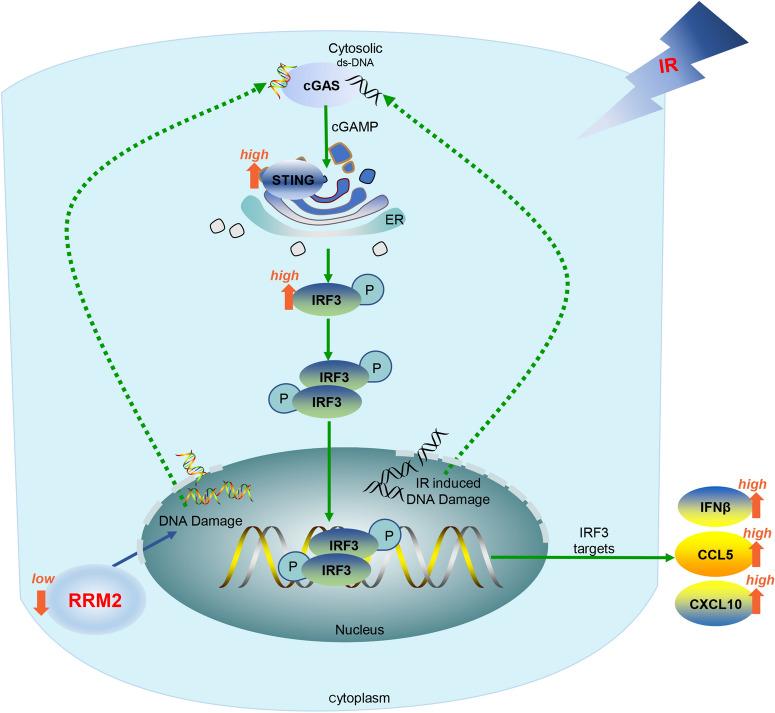
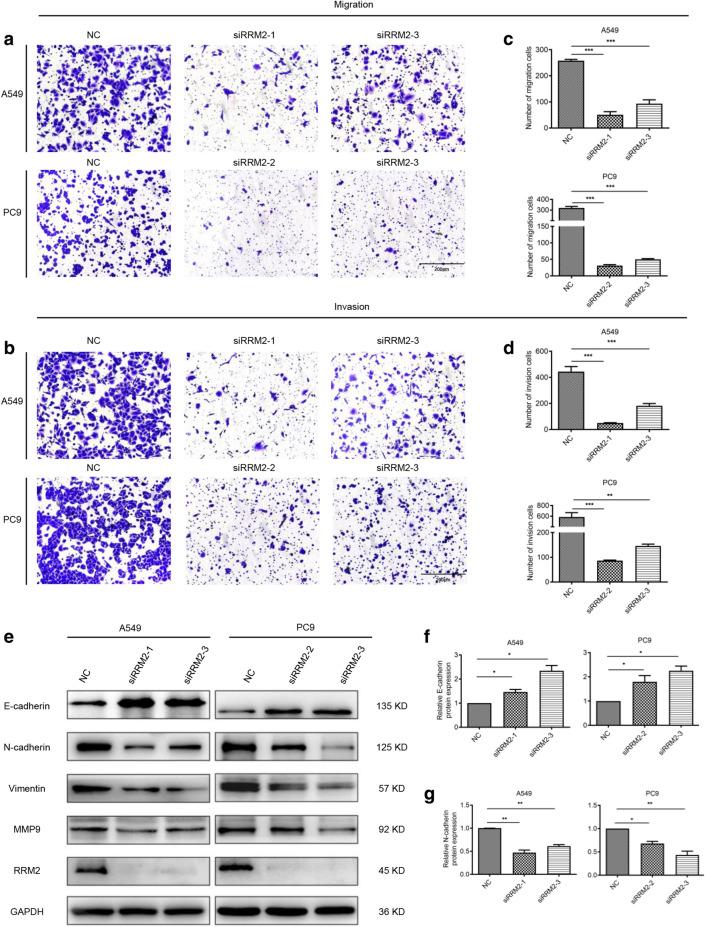
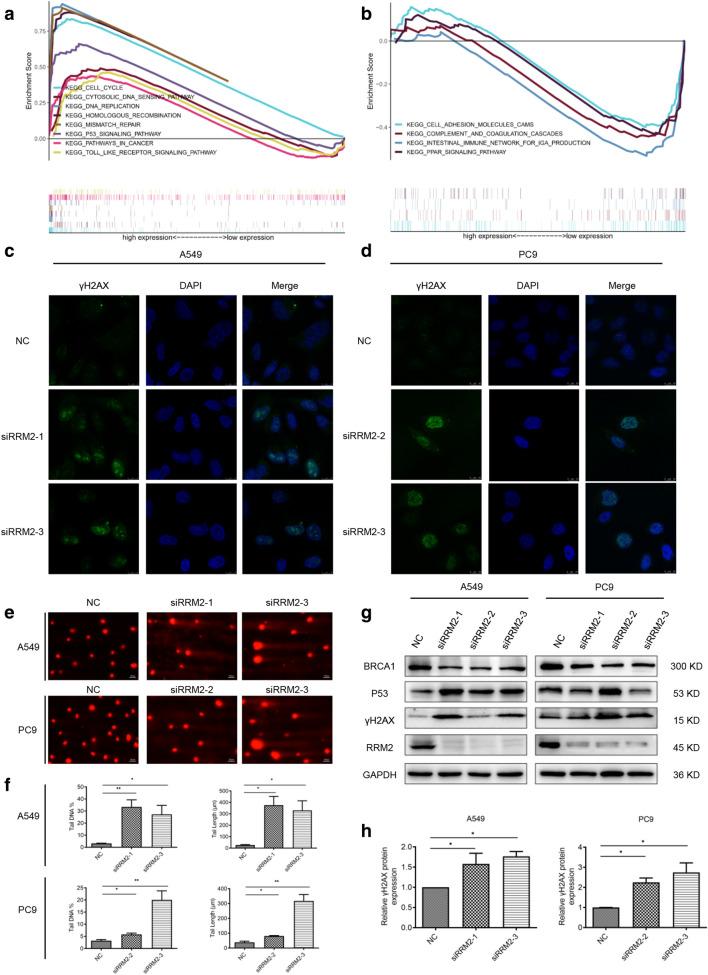
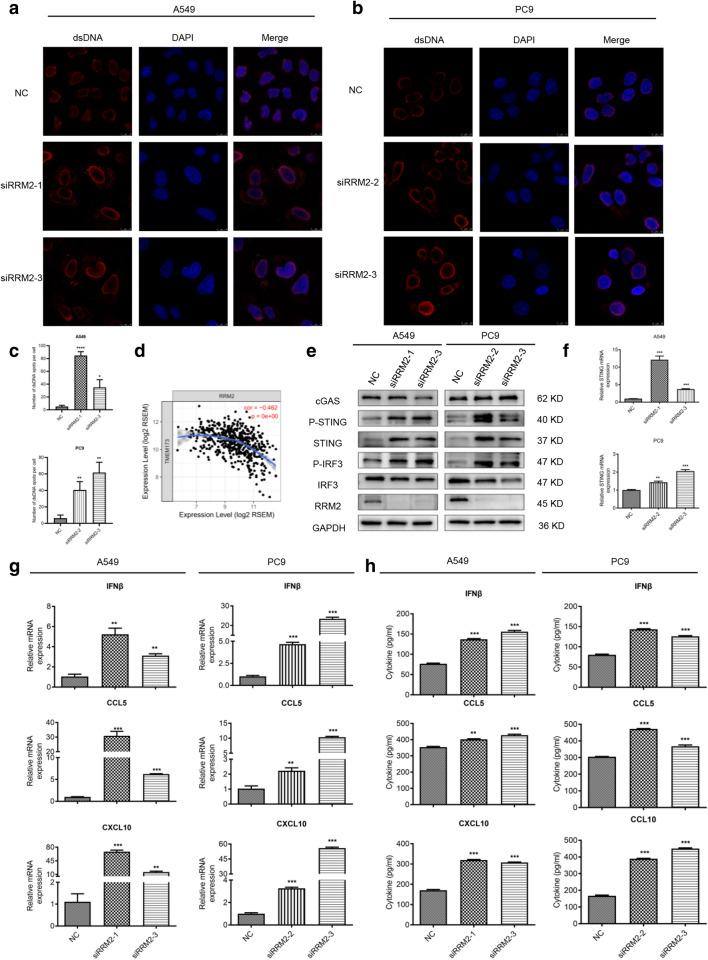
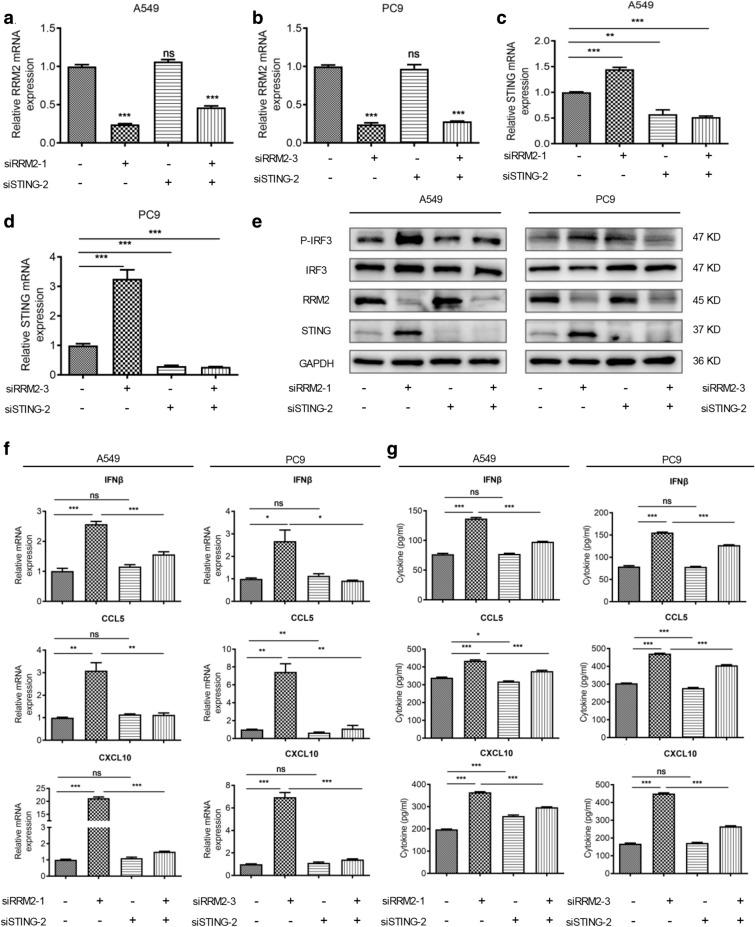
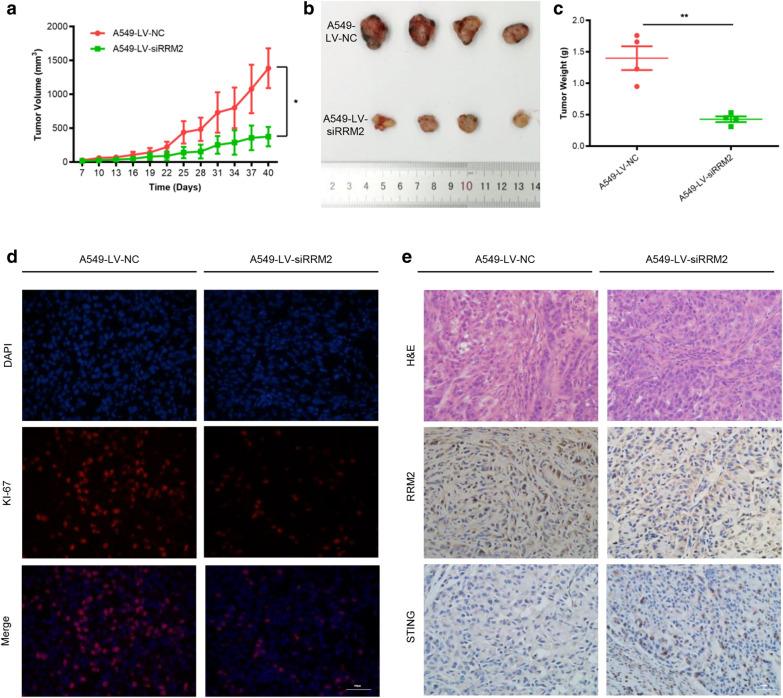
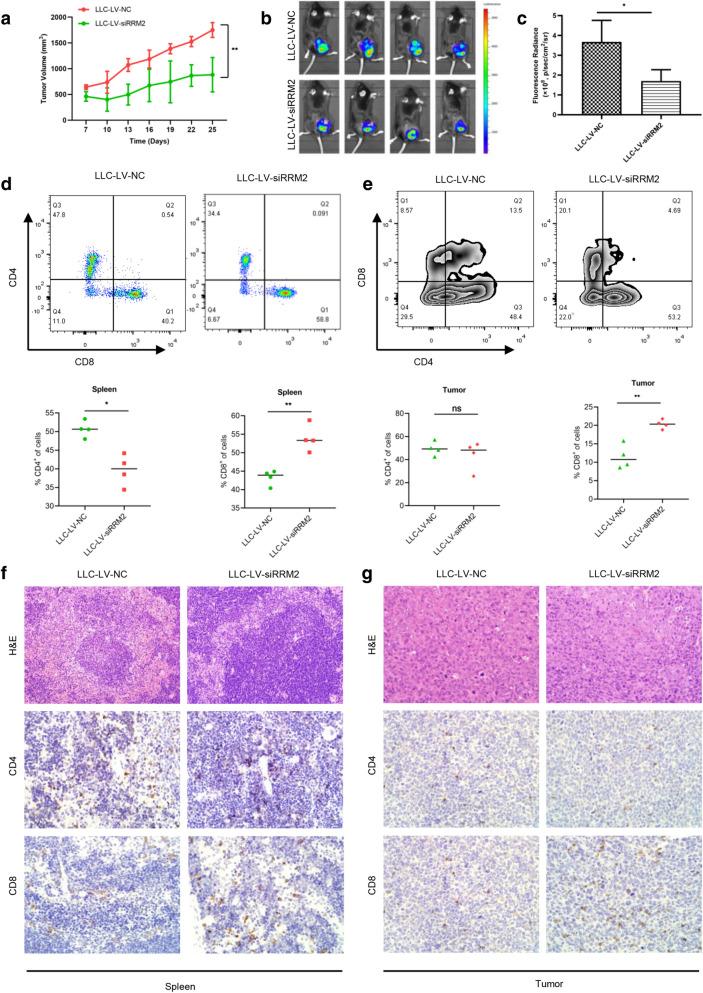
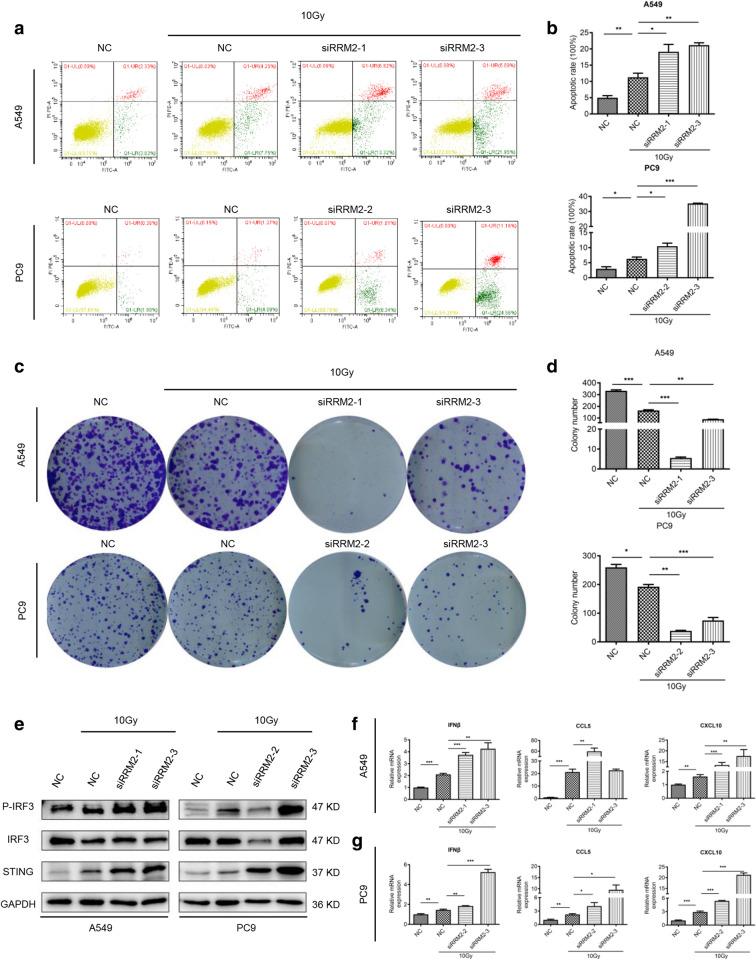
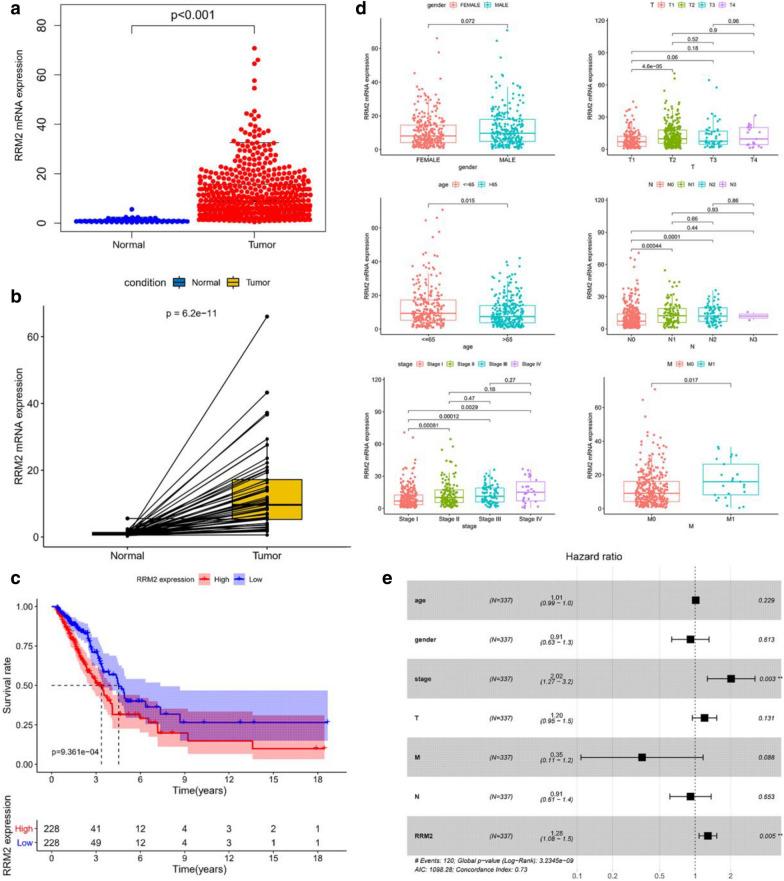
Bioinformatic analysis revealed that RRM2 had diagnostic values for LUAD patients. Higher levels of RRM2 predicted worse prognosis. RRM2 silencing inhibited LUAD cell proliferation, invasion and migration. RRM2 knockdown induced S phase arrest and DNA damage. RRM2 silencing induced cyclic GMP-AMP synthase (cGAS)/stimulator of interferon genes (STING) pathway, and the downstream targets were regulated in a STING-dependent manner. Knockdown of RRM2 suppressed tumor growth in the xenograft tumor models. RRM2 deficiency increased CD8 + T cells in the tumor tissues and spleens. Furthermore, RRM2 silencing had synergistic effects with radiation on inhibiting cell proliferation and promoting apoptosis. Meanwhile, this combination promoted the activation of cGAS/STING signaling pathway synergistically, and simultaneously increased expression of IFNβ, CCL5 and CXCL10.
Our results demonstrated that RRM2 silencing had anti-tumor values and activated the cGAS/STING signaling pathway. RRM2 silencing increased CD8 + T cells infiltration. RRM2 silencing cooperated with radiation to inhibit LUAD cell proliferation, promote apoptosis and enhance the activation of cGAS/STING signaling pathway. RRM2 could be a promising target for tumor regression through cancer immunotherapy in LUAD.
作为最常见的恶性肿瘤之一,肺腺癌(LUAD)的特点是5年生存率低。本研究旨在探讨核糖核苷酸还原酶调节亚基M2(RRM2)对恶性生物学行为及cGAS/STING通路激活的影响。我们还探究了RRM2与放疗的协同增敏机制。
使用生物信息学工具评估RRM2在LUAD患者中的临床意义。通过细胞增殖、集落形成、免疫荧光、改良Boyden小室和彗星试验研究RRM2在LUAD细胞恶性表型和DNA损伤中的作用。使用小鼠模型评估RRM2在体内的生物学意义。通过流式细胞术分析和免疫组织化学染色评估C57BL/6小鼠的细胞毒性T细胞浸润情况。我们还通过体外凋亡试验和免疫印迹探究RRM2沉默与放疗对LUAD细胞的协同作用。
生物信息学分析显示RRM2对LUAD患者具有诊断价值。RRM2水平较高预示着预后较差。RRM沉默抑制了LUAD细胞的增殖、侵袭和迁移。RRM2敲低诱导S期阻滞和DNA损伤。RRM2沉默诱导环鸟苷酸-腺苷酸合成酶(cGAS)/干扰素基因刺激物(STING)通路,且下游靶点以STING依赖的方式受到调节。RRM2敲低抑制了异种移植肿瘤模型中的肿瘤生长。RRM2缺乏增加了肿瘤组织和脾脏中的CD8 + T细胞。此外,RRM2沉默与放疗在抑制细胞增殖和促进凋亡方面具有协同作用。同时,这种联合协同促进了cGAS/STING信号通路的激活,并同时增加了IFNβ、CCL5和CXCL10的表达。
我们的结果表明,RRM2沉默具有抗肿瘤价值并激活了cGAS/STING信号通路。RRM2沉默增加了CD8 + T细胞浸润。RRM2沉默与放疗协同抑制LUAD细胞增殖,促进凋亡并增强cGAS/STING信号通路的激活。RRM2可能是通过癌症免疫疗法使LUAD肿瘤消退的一个有前景的靶点。

 Zotero 插件