Fei Zhenghua, Xie Rongrong, Chen Zhi, Xie Junhui, Gu Yuyang, Zhou Yue, Xu Tongpeng
Department of Oncology, The First Affiliated Hospital of Wenzhou Medical University, Wenzhou, China.
Department of Head and Neck Surgery, Tumor Hospital of Ganzhou, Ganzhou, China.
Front Oncol. 2021 Mar 30;11:625271. doi: 10.3389/fonc.2021.625271. eCollection 2021.
Few studies have addressed the role of immune-related genes in the survival and prognosis of different esophageal cancer (EC) sub-types. We established two new prognostic model indexes by bioinformatics analysis to select patients with esophageal squamous cell carcinoma (ESCC) and esophageal adenocarcinoma (EAC) who may benefit from immunotherapy.
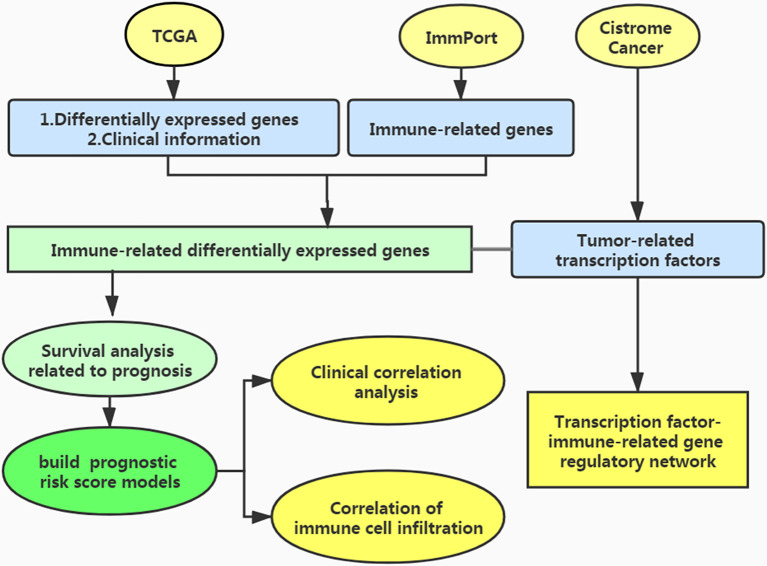
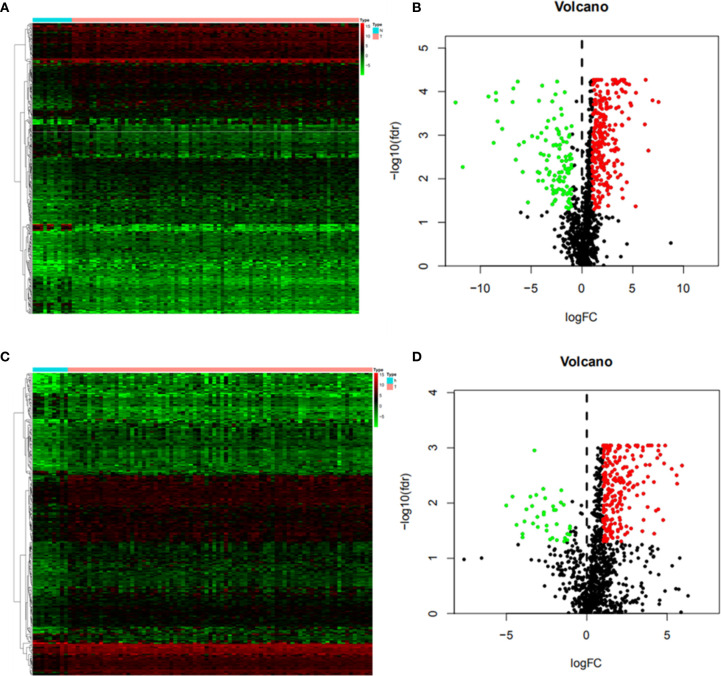
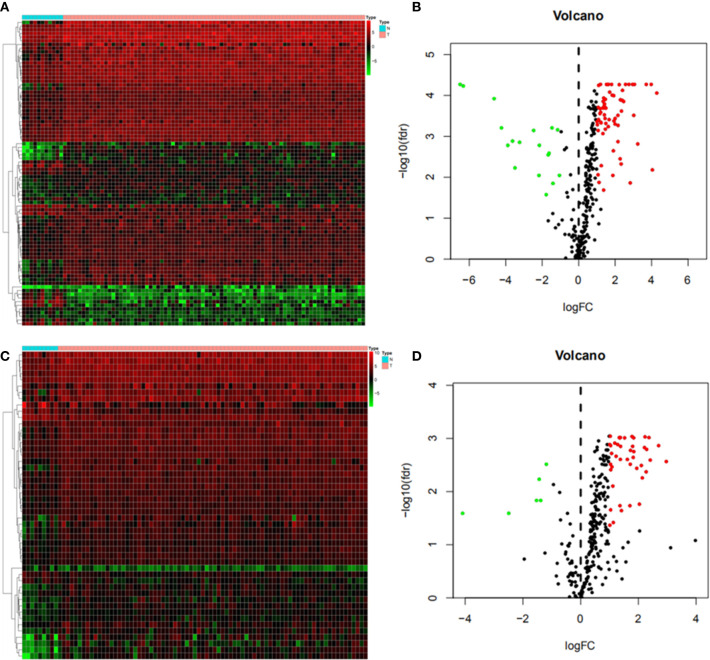
Based on TCGA and ImmPort data sets, we screened immune genes differentially expressed between tumor and normal tissues in ESCC and EAC and analyzed the relationship between these genes and patient survival outcomes. We established the risk score models of immune-related genes in ESCC and EAC by multivariate COX regression analysis.
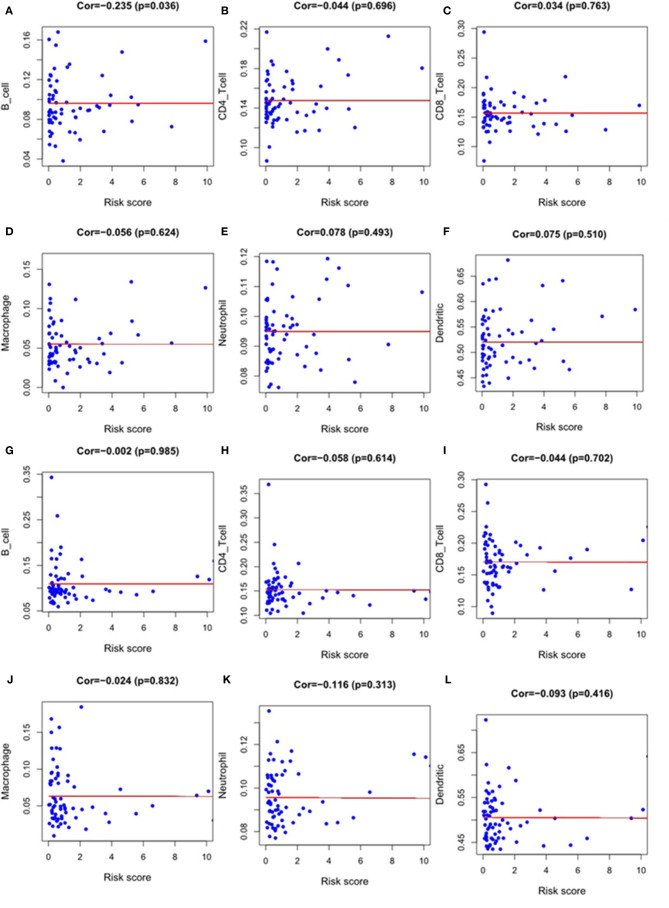
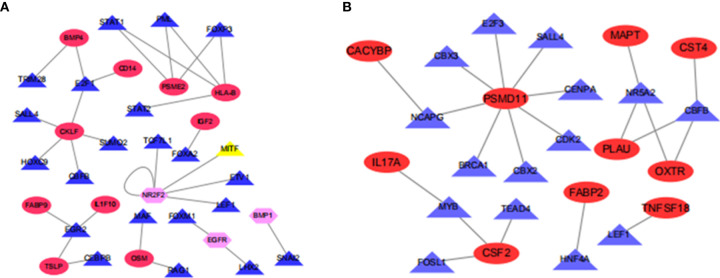
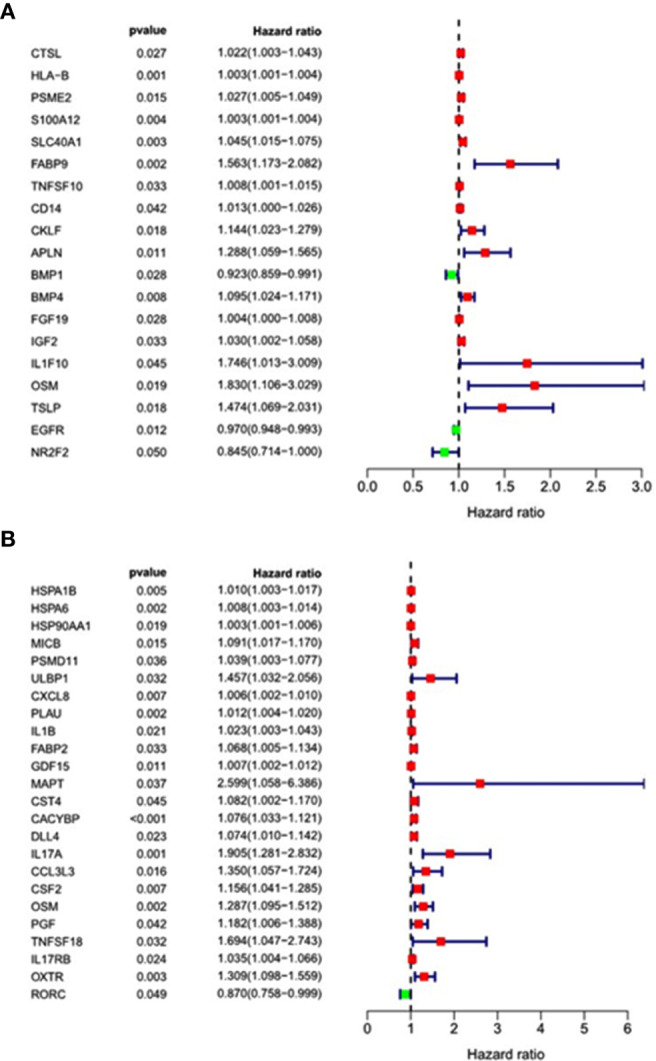
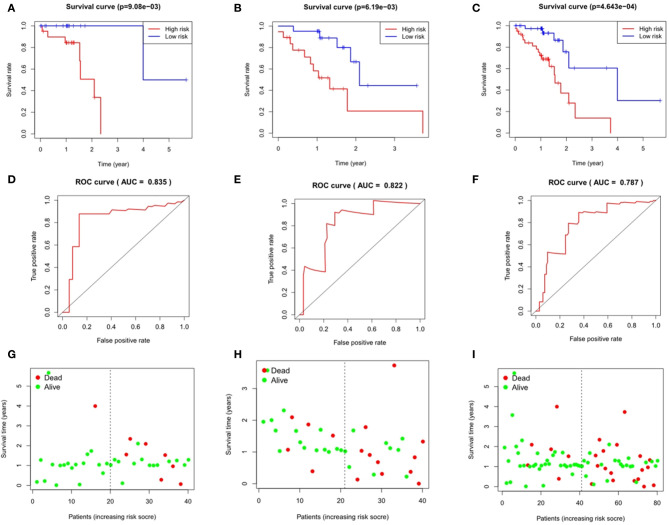
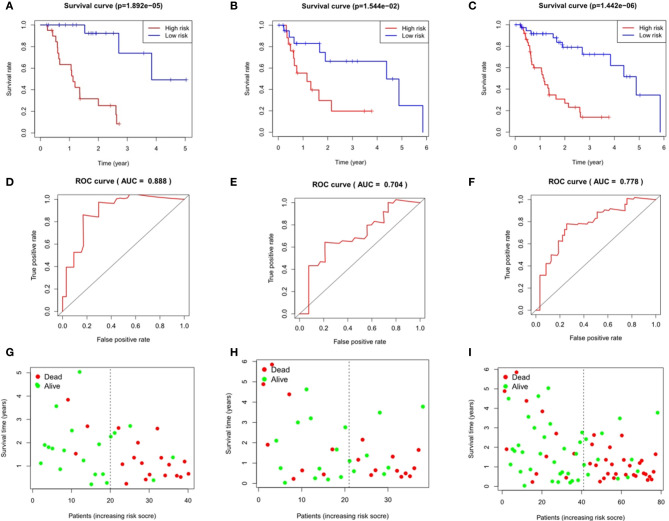
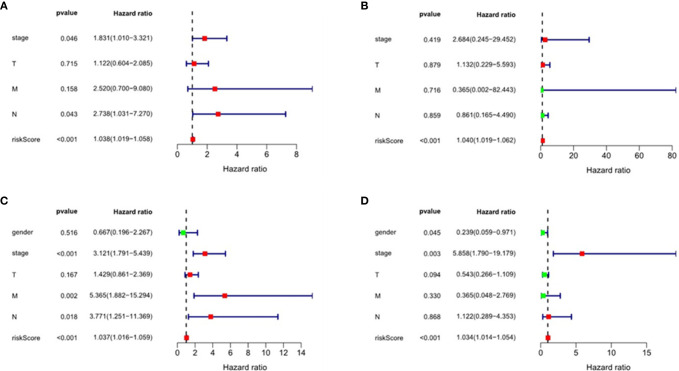
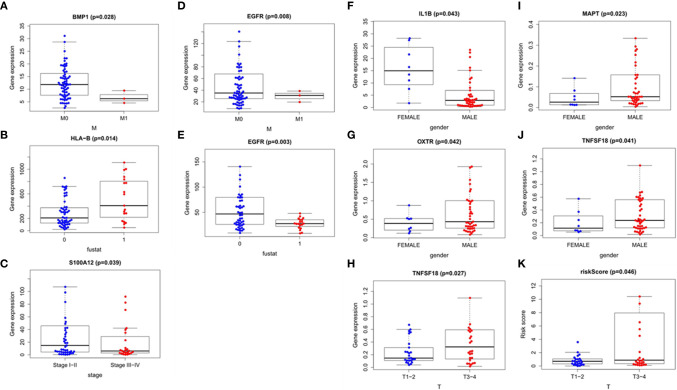
We identified 12 and 11 immune-related differentially expressed genes associated with the clinical prognosis of ESCC and EAC respectively, based on which two prognostic risk score models of the two EC sub-types were constructed. It was found that the survival probability of patients with high scores was significantly lower than that of patients with low scores (p < 0.001). BMP1, EGFR, S100A12, HLA-B, TNFSF18, IL1B, MAPT and OXTR were significantly related to sex, TNM stage or survival outcomes of ESCC or EAC patients (p < 0.05). In addition, the risk score of ESCC was significantly correlated with the level of B cell infiltration in immune cells (p < 0.05).
The prognosis-related immune gene model indexes described herein prove to be useful prognostic biomarkers of the two EC sub-types in that they may provide a reference direction for looking for the beneficiaries of immunotherapy for EC patients.
很少有研究探讨免疫相关基因在不同食管癌(EC)亚型的生存和预后中的作用。我们通过生物信息学分析建立了两个新的预后模型指标,以筛选可能从免疫治疗中获益的食管鳞状细胞癌(ESCC)和食管腺癌(EAC)患者。
基于TCGA和ImmPort数据集,我们筛选了ESCC和EAC肿瘤组织与正常组织之间差异表达的免疫基因,并分析了这些基因与患者生存结果之间的关系。我们通过多变量COX回归分析建立了ESCC和EAC中免疫相关基因的风险评分模型。
我们分别鉴定出12个和11个与ESCC和EAC临床预后相关的免疫相关差异表达基因,并据此构建了两种EC亚型的两个预后风险评分模型。发现高分患者的生存概率显著低于低分患者(p<0.001)。BMP1、EGFR、S100A12、HLA-B、TNFSF18、IL1B、MAPT和OXTR与ESCC或EAC患者的性别、TNM分期或生存结果显著相关(p<0.05)。此外,ESCC的风险评分与免疫细胞中B细胞浸润水平显著相关(p<0.05)。
本文所述的预后相关免疫基因模型指标被证明是两种EC亚型有用的预后生物标志物,因为它们可能为寻找EC患者免疫治疗的受益者提供参考方向。