Mannarino Matthew, Cherif Hosni, Li Li, Sheng Kai, Rabau Oded, Jarzem Peter, Weber Michael H, Ouellet Jean A, Haglund Lisbet
Department of Surgery, Orthopaedic Research Lab, McGill University, Montreal, Canada.
Department of Surgery, McGill Scoliosis and Spine Group, McGill University, Montreal, Canada.
Arthritis Res Ther. 2021 Apr 16;23(1):117. doi: 10.1186/s13075-021-02504-z.
There is an increased level of senescent cells and toll-like teceptor-1, -2, -4, and -6 (TLR) expression in degenerating intervertebral discs (IVDs) from back pain patients. However, it is currently not known if the increase in expression of TLRs is related to the senescent cells or if it is a more general increase on all cells. It is also not known if TLR activation in IVD cells will induce cell senescence.
Cells from non-degenerate human IVD were obtained from spine donors and cells from degenerate IVDs came from patients undergoing surgery for low back pain. Gene expression of TLR-1,2,4,6, senescence and senescence-associated secretory phenotype (SASP) markers was evaluated by RT-qPCR in isolated cells. Matrix synthesis was verified with safranin-O staining and Dimethyl-Methylene Blue Assay (DMMB) confirmed proteoglycan content. Protein expression of p16, SASP factors, and TLR-2 was evaluated by immunocytochemistry (ICC) and/or by enzyme-linked immunosorbent assay (ELISA).
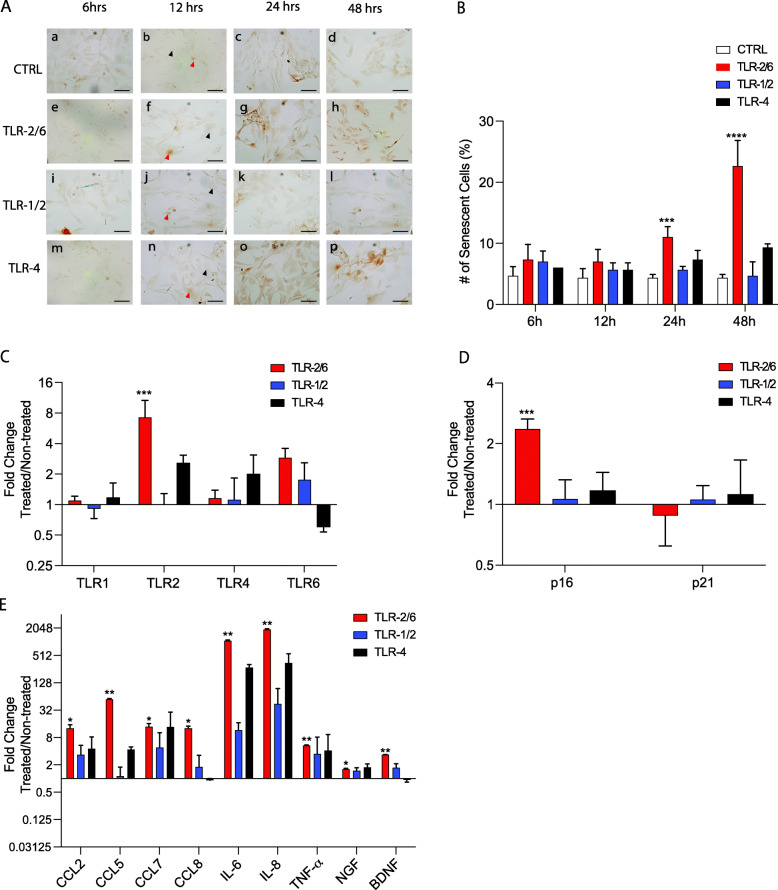
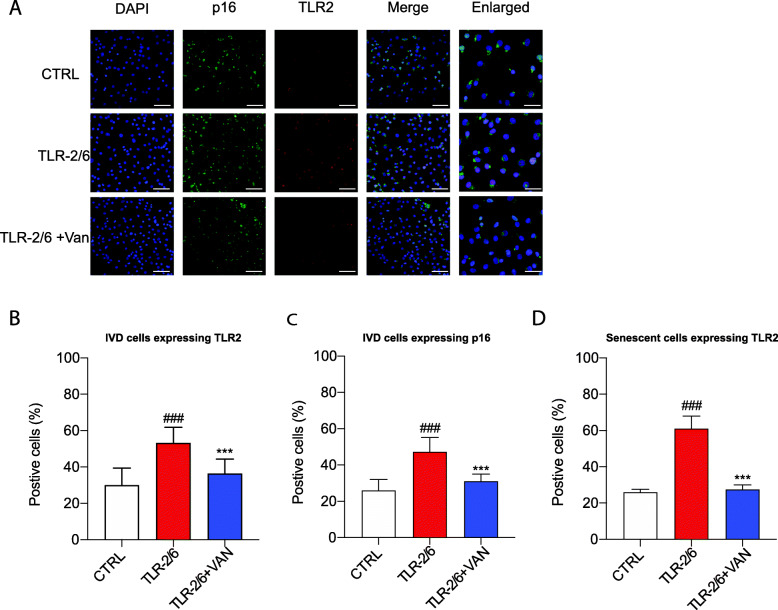
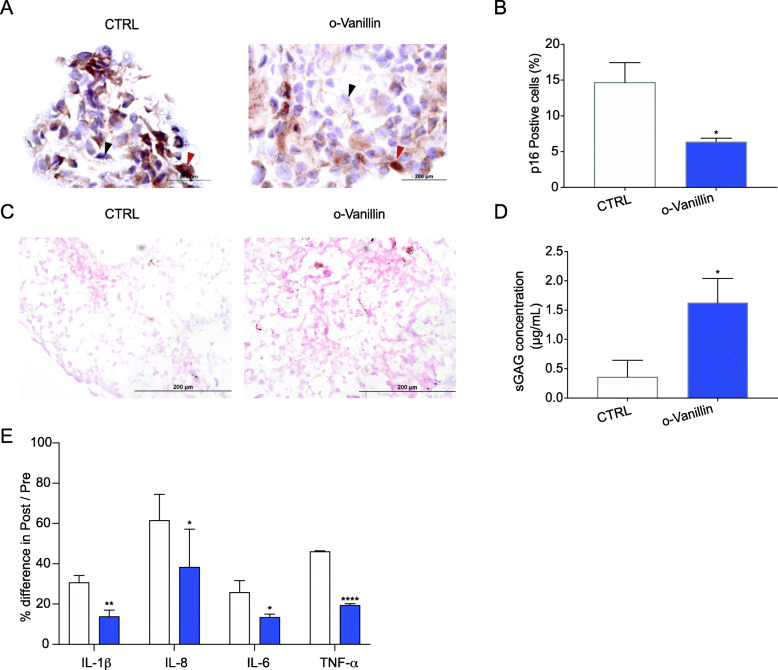
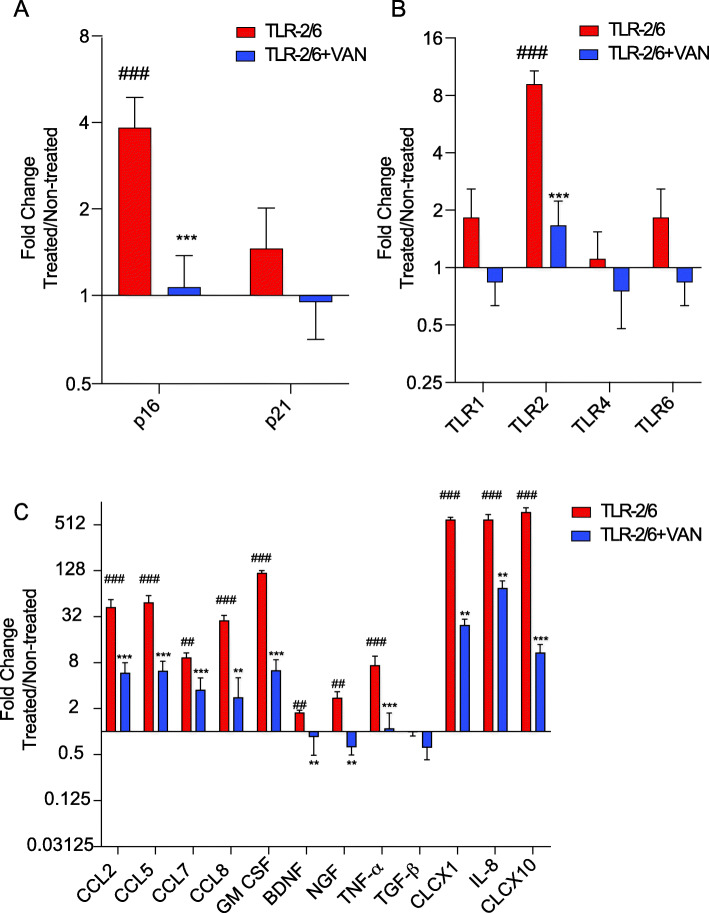
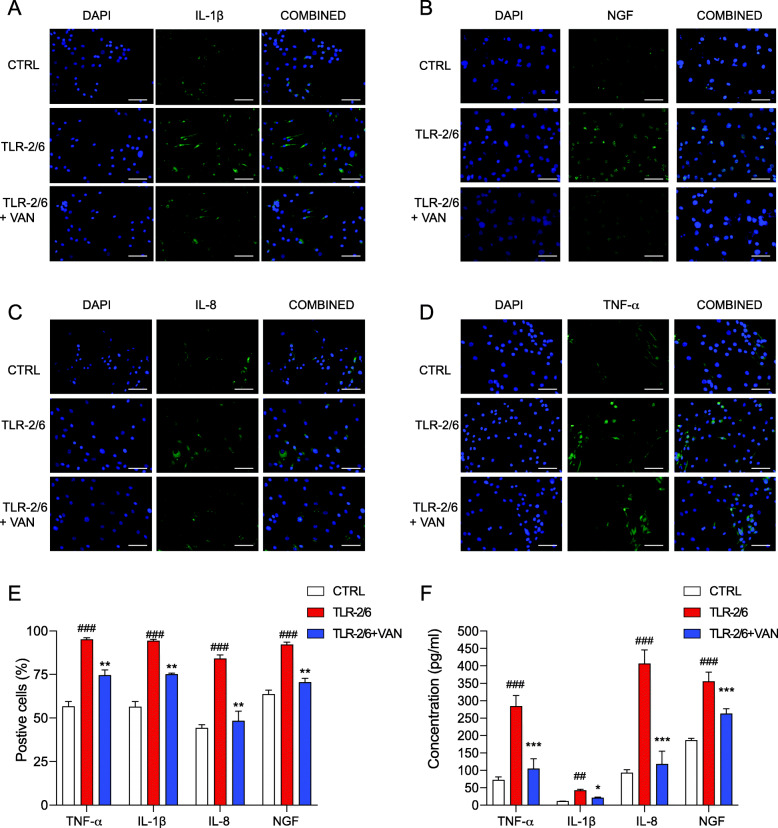
An increase in senescent cells was found following 48-h induction with a TLR-2/6 agonist in cells from both non-degenerate and degenerating human IVDs. Higher levels of SASP factors, TLR-2 gene expression, and protein expression were found following 48-h induction with TLR-2/6 agonist. Treatment with o-vanillin reduced the number of senescent cells, and increased matrix synthesis in IVD cells from back pain patients. Treatment with o-vanillin after induction with TLR-2/6 agonist reduced gene and protein expression of SASP factors and TLR-2. Co-localized staining of p16 and TLR-2 demonstrated that senescent cells have a high TLR-2 expression.
Taken together our data demonstrate that activation of TLR-2/6 induce senescence and increase TLR-2 and SASP expression in cells from non-degenerate IVDs of organ donors without degeneration and back pain and in cells from degenerating human IVD of patients with disc degeneration and back pain. The senescent cells showed high TLR-2 expression suggesting a link between TLR activation and cell senescence in human IVD cells. The reduction in senescence, SASP, and TLR-2 expression suggest o-vanillin as a potential disease-modifying drug for patients with disc degeneration and back pain.
在背痛患者退变的椎间盘(IVD)中,衰老细胞水平以及Toll样受体1、2、4和6(TLR)的表达均有所增加。然而,目前尚不清楚TLR表达的增加是与衰老细胞有关,还是在所有细胞中更为普遍的增加。也不清楚IVD细胞中的TLR激活是否会诱导细胞衰老。
从脊柱供体获取非退变人IVD的细胞,退变IVD的细胞来自接受下腰痛手术的患者。通过RT-qPCR评估分离细胞中TLR-1、2、4、6、衰老及衰老相关分泌表型(SASP)标志物的基因表达。用番红O染色验证基质合成,用二甲基亚甲基蓝法(DMMB)确认蛋白聚糖含量。通过免疫细胞化学(ICC)和/或酶联免疫吸附测定(ELISA)评估p16、SASP因子和TLR-2的蛋白表达。
用TLR-2/6激动剂诱导48小时后,在非退变和退变的人IVD细胞中均发现衰老细胞增加。用TLR-2/6激动剂诱导48小时后,发现SASP因子、TLR-2基因表达和蛋白表达水平更高。用邻香草醛处理可减少衰老细胞数量,并增加背痛患者IVD细胞中的基质合成。在TLR-2/6激动剂诱导后用邻香草醛处理可降低SASP因子和TLR-2的基因及蛋白表达。p16和TLR-2的共定位染色表明衰老细胞具有高TLR-2表达。
综合我们的数据表明,TLR-2/6的激活在器官供体无退变和背痛的非退变IVD细胞以及椎间盘退变和背痛患者的退变人IVD细胞中诱导衰老并增加TLR-2和SASP表达。衰老细胞显示出高TLR-2表达,提示TLR激活与人IVD细胞中的细胞衰老之间存在联系。衰老、SASP和TLR-2表达的降低表明邻香草醛作为椎间盘退变和背痛患者的潜在疾病修饰药物。