Laboratorio de Neuroinmunología, Fundación Ciencia & Vida, Ñuñoa, Chile.
Departmento de Bioquímica y Fisiología, Facultad de Farmacia y Ciencia de los Alimentos, Universidad de Barcelona, Barcelona, Spain; Centro de Investigación en Red sobre Enfermedades Neurodegenerativas (CiberNed), Instituto de Salud Carlos III, Madrid, Spain.
Cell Mol Gastroenterol Hepatol. 2021;12(2):489-506. doi: 10.1016/j.jcmgh.2021.04.006. Epub 2021 Apr 20.
CD4 T cells constitute central players in inflammatory bowel diseases (IBDs), driving inflammation in the gut mucosa. Current evidence indicates that CCR9 and the integrin α4β7 are necessary and sufficient to imprint colonic homing on CD4 T cells upon inflammation. Interestingly, dopaminergic signaling has been previously involved in leukocyte homing. Despite dopamine levels are strongly reduced in the inflamed gut mucosa, the role of dopamine in the gut homing of T cells remains unknown. Here, we study how dopaminergic signaling affects T cells upon gut inflammation.
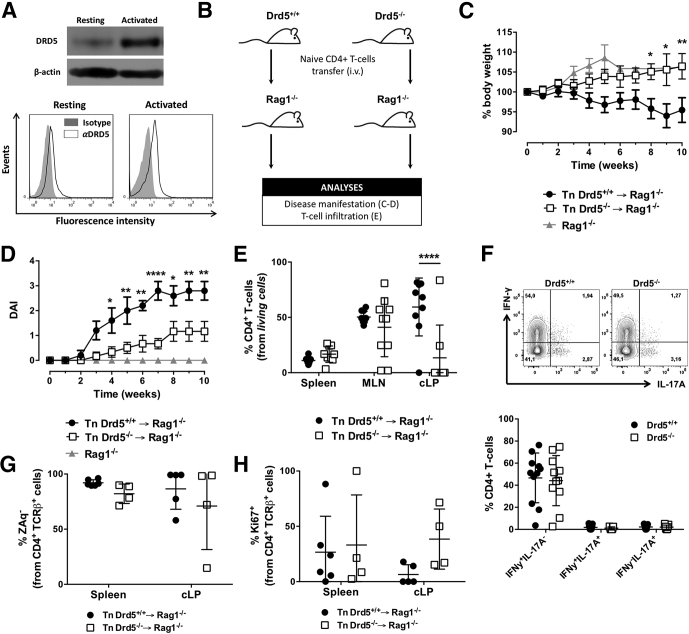
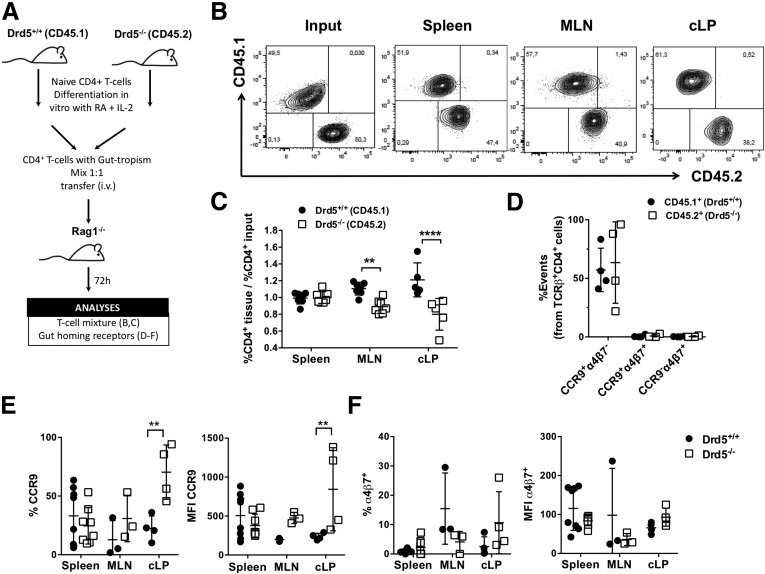
Gut inflammation was induced by transfer of naïve T cells into Rag1 mice or by administration of dextran sodium sulfate. T cell migration and differentiation were evaluated by adoptive transfer of congenic lymphocytes followed by flow cytometry analysis. Protein interaction was studied by bioluminescence resonance energy transfer analysis, bimolecular fluorescence complementation, and in situ proximity ligation assays.
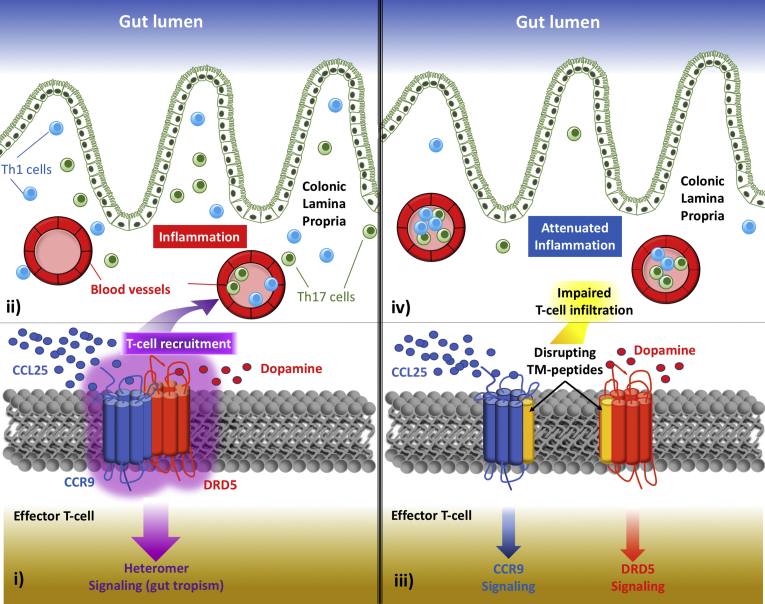
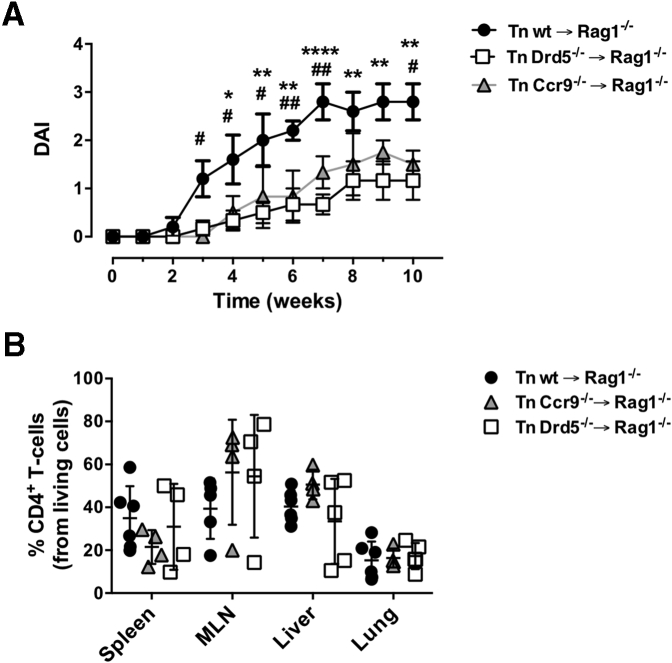
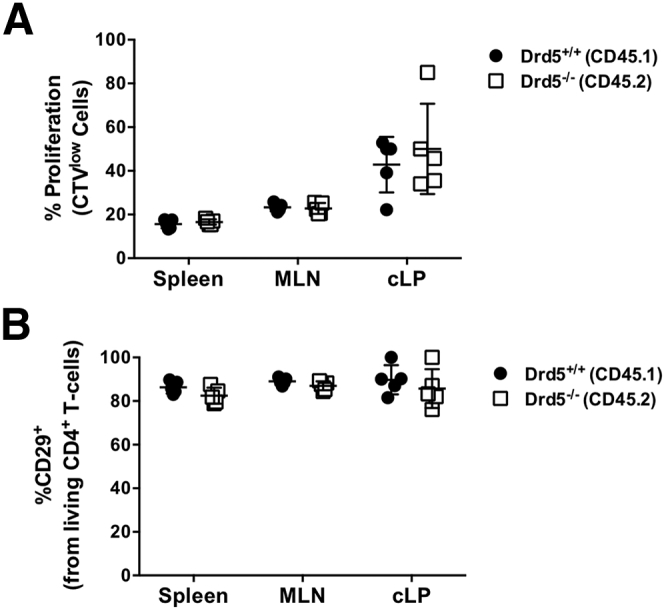
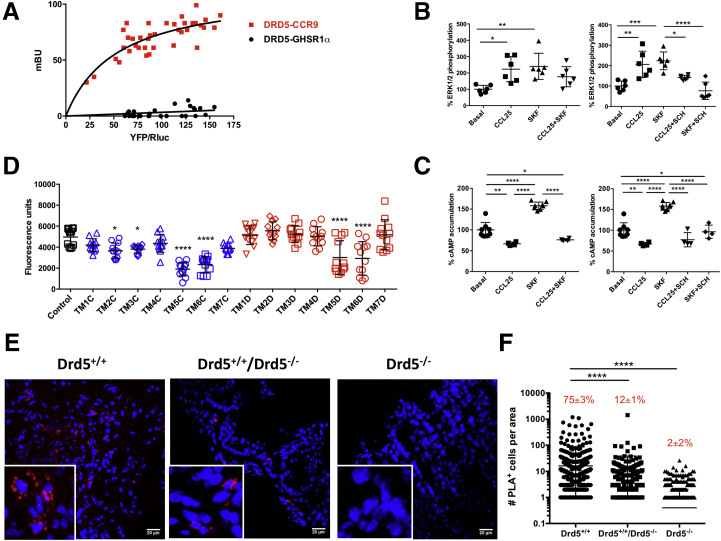
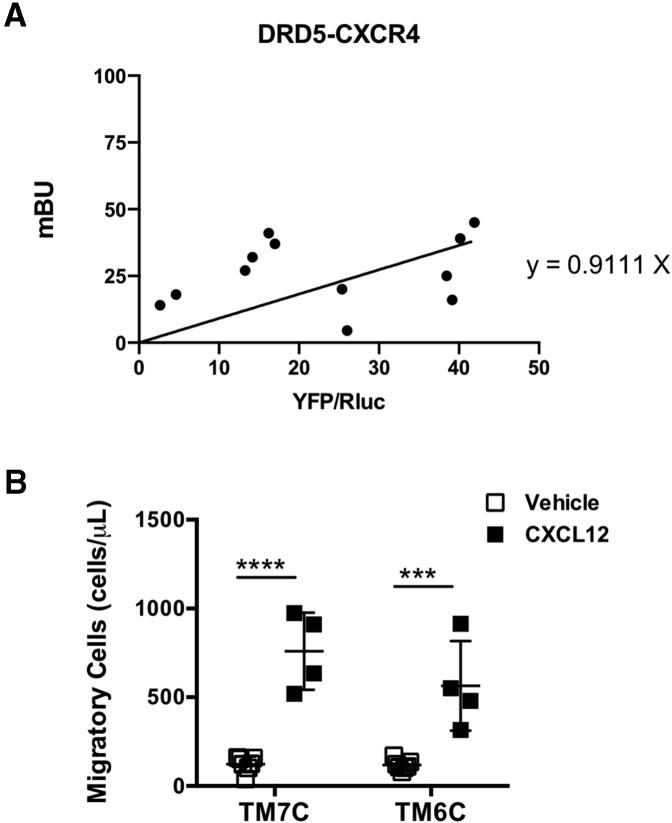
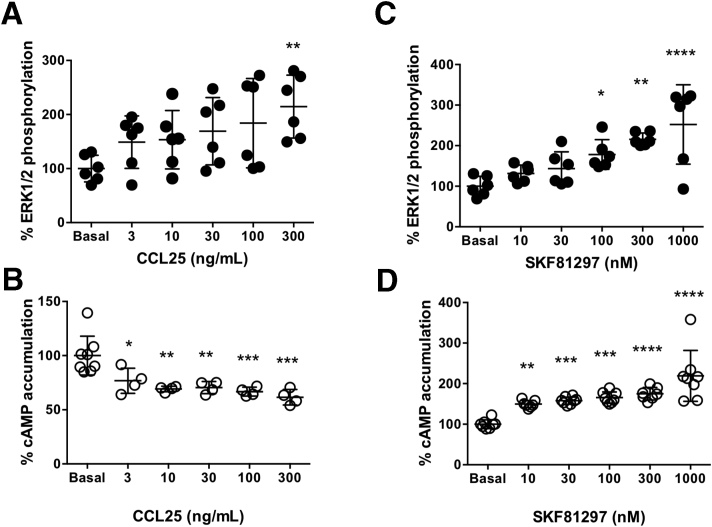
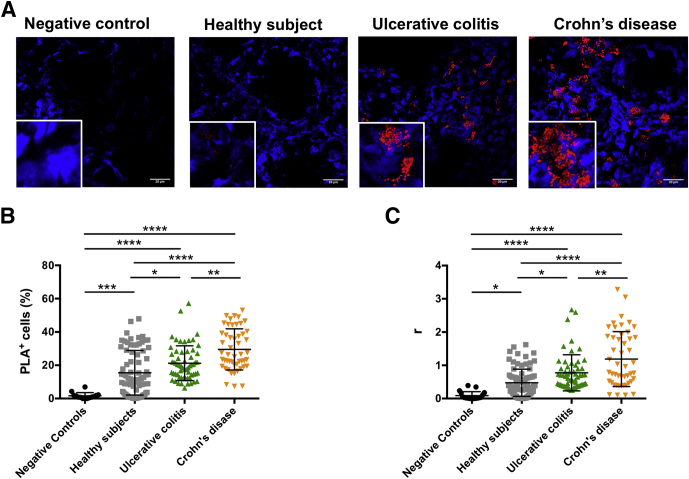
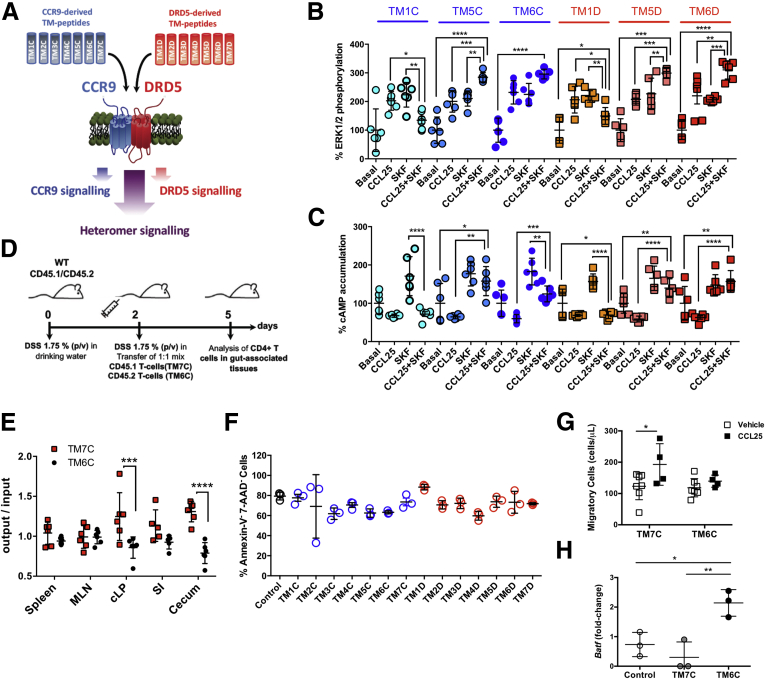
We show the surface receptor providing colonic tropism to effector CD4 T cells upon inflammation is not CCR9 but the complex formed by CCR9 and the dopamine receptor D (DRD5). Assembly of the heteromeric complex was demonstrated in vitro and in vivo using samples from mouse and human origin. The CCR9:DRD5 heteroreceptor was upregulated in the intestinal mucosa of IBD patients. Signaling assays confirmed that complexes behave differently than individual receptors. Remarkably, the disruption of CCR9:DRD5 assembly attenuated the recruitment of CD4 T cells into the colonic mucosa.
Our findings describe a key homing receptor involved in gut inflammation and introduce a new cell surface module in immune cells: macromolecular complexes formed by G protein-coupled receptors integrating the sensing of multiple molecular cues.
CD4 T 细胞是炎症性肠病(IBD)中的主要炎症驱动细胞,导致肠道黏膜炎症。目前的证据表明,CCR9 和整合素 α4β7 是 CD4 T 细胞在炎症时向结肠归巢所必需和充分的。有趣的是,多巴胺能信号已被先前涉及白细胞归巢。尽管炎症肠道黏膜中的多巴胺水平显著降低,但多巴胺在 T 细胞肠道归巢中的作用仍不清楚。在这里,我们研究了多巴胺能信号在肠道炎症时如何影响 T 细胞。
通过将幼稚 T 细胞转移到 Rag1 小鼠或给予葡聚糖硫酸钠来诱导肠道炎症。通过过继转移同源淋巴细胞并进行流式细胞术分析来评估 T 细胞的迁移和分化。通过生物发光共振能量转移分析、双分子荧光互补和原位邻近连接分析研究蛋白相互作用。
我们表明,在炎症时向效应 CD4 T 细胞提供结肠趋向性的表面受体不是 CCR9,而是由 CCR9 和多巴胺受体 D(DRD5)形成的复合物。使用来自鼠和人来源的样本,在体外和体内证明了异源复合物的组装。在 IBD 患者的肠道黏膜中上调了 CCR9:DRD5 异二聚体。信号转导测定证实,复合物的行为与单个受体不同。值得注意的是,破坏 CCR9:DRD5 组装可减弱 CD4 T 细胞向结肠黏膜的募集。
我们的研究结果描述了一个参与肠道炎症的关键归巢受体,并在免疫细胞中引入了一个新的细胞表面模块:由 G 蛋白偶联受体形成的大分子复合物,整合了对多种分子线索的感知。