Jiang Wei, Xu Jiameng, Liao Zirui, Li Guangbin, Zhang Chengpeng, Feng Yu
Department of Thoracic Surgery, The First Affiliated Hospital of Soochow University, Suzhou, China.
Department of Neurology, The Second Affiliated Hospital of Soochow University, Suzhou, China.
Front Cell Dev Biol. 2021 Mar 18;9:655950. doi: 10.3389/fcell.2021.655950. eCollection 2021.
To screen lung adenocarcinoma (LUAC)-specific cell-cycle-related genes (CCRGs) and develop a prognostic signature for patients with LUAC.
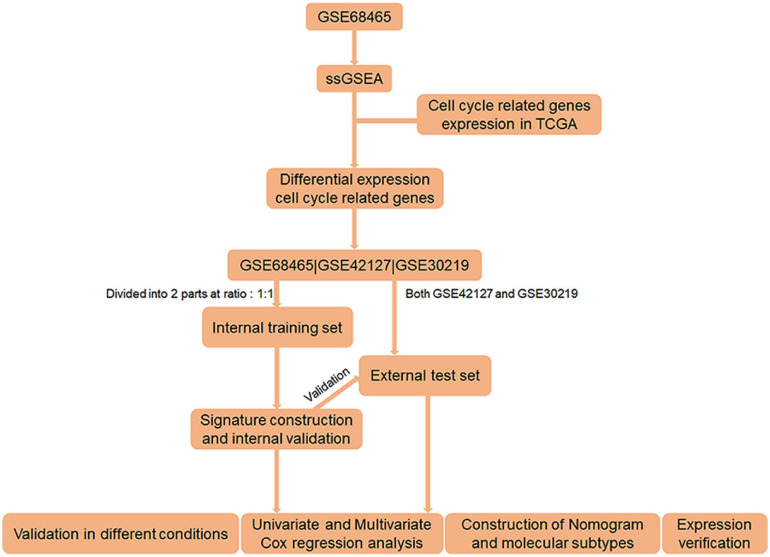
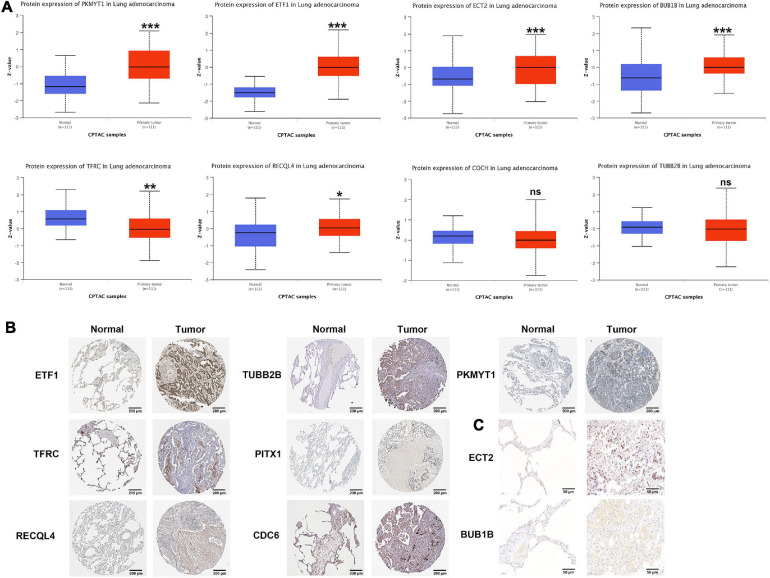
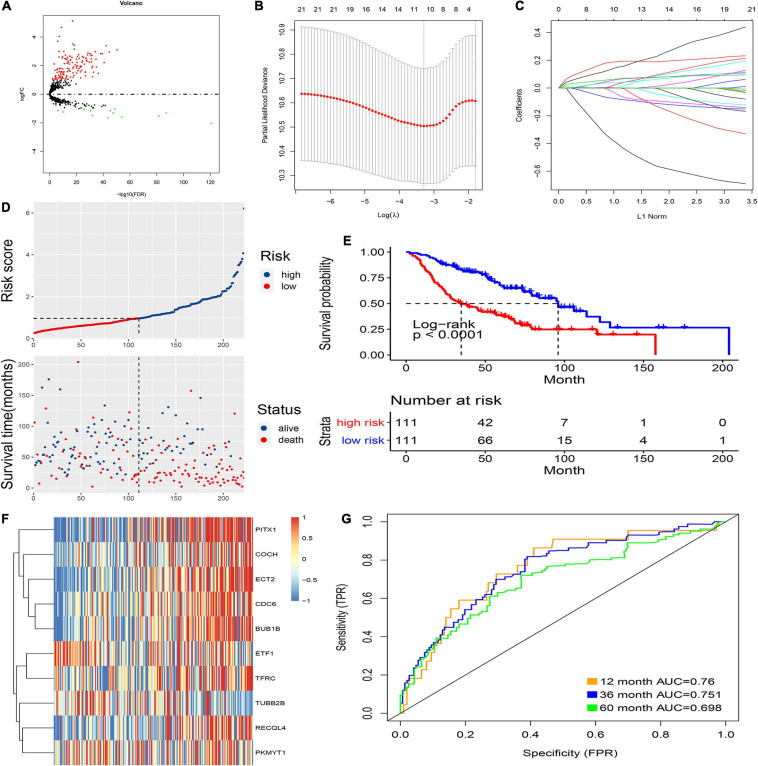
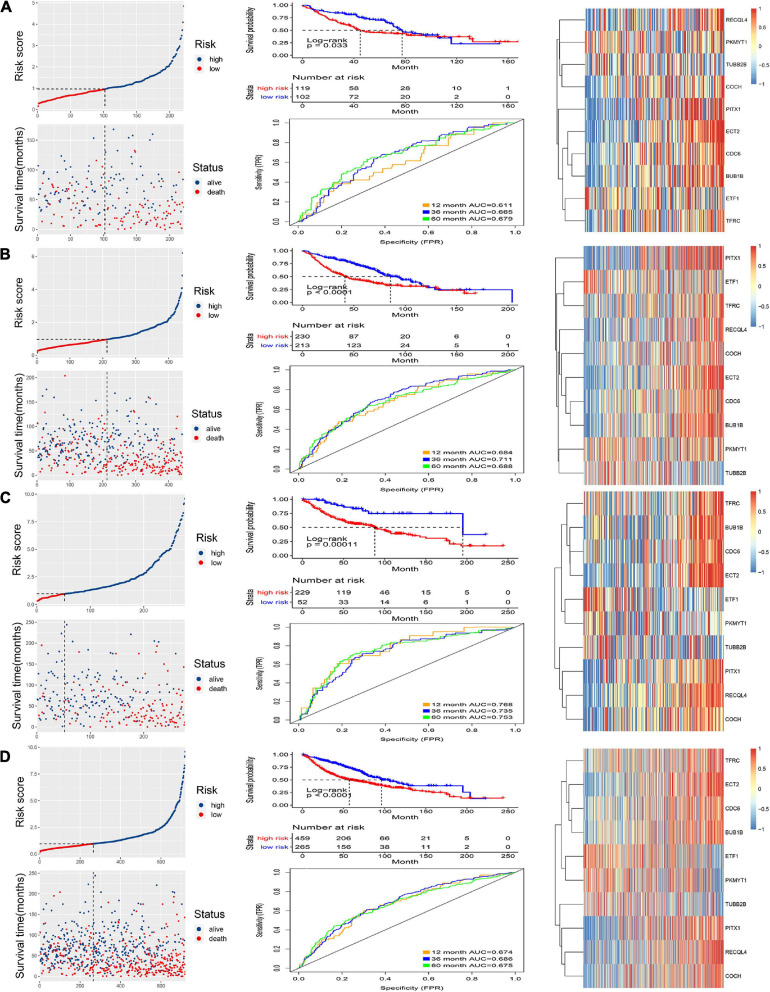
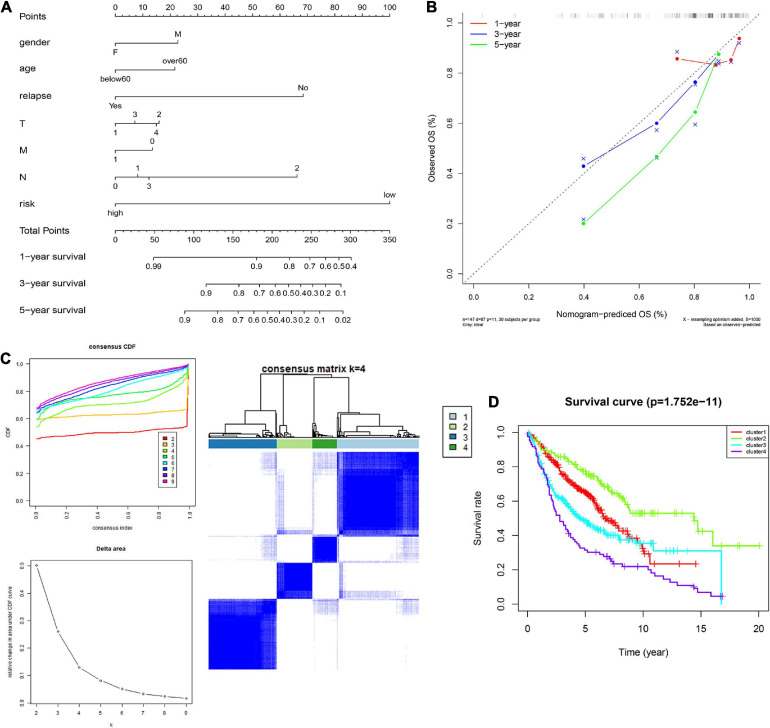
The GSE68465, GSE42127, and GSE30219 data sets were downloaded from the GEO database. Single-sample gene set enrichment analysis was used to calculate the cell cycle enrichment of each sample in GSE68465 to identify CCRGs in LUAC. The differential CCRGs compared with LUAC data from The Cancer Genome Atlas were determined. The genetic data from GSE68465 were divided into an internal training group and a test group at a ratio of 1:1, and GSE42127 and GSE30219 were defined as external test groups. In addition, we combined LASSO (least absolute shrinkage and selection operator) and Cox regression analysis with the clinical information of the internal training group to construct a CCRG risk scoring model. Samples were divided into high- and low-risk groups according to the resulting risk values, and internal and external test sets were used to prove the validity of the signature. A nomogram evaluation model was used to predict prognosis. The CPTAC and HPA databases were chosen to verify the protein expression of CCRGs.
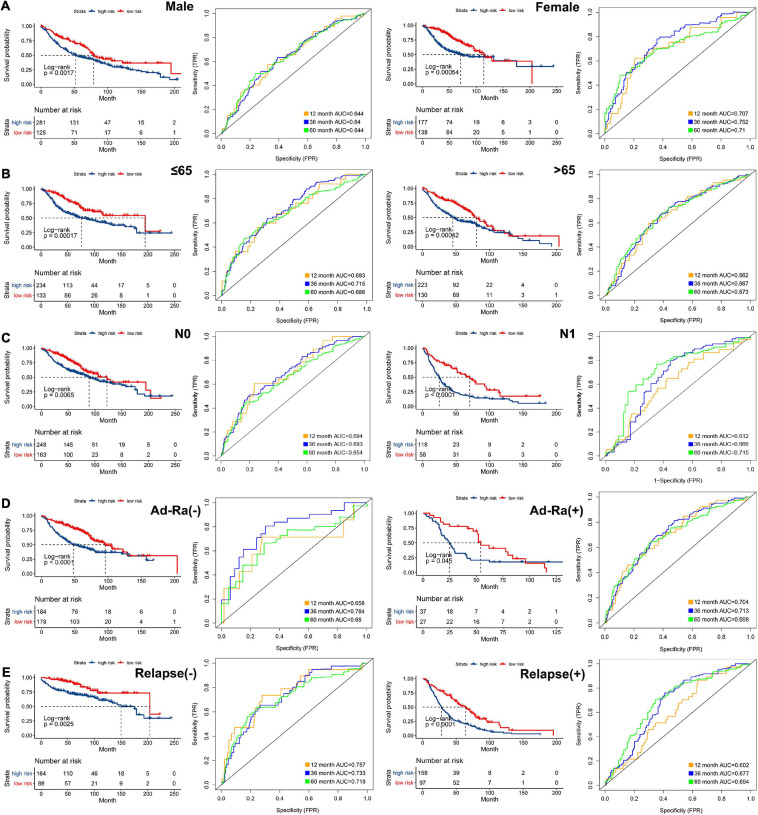
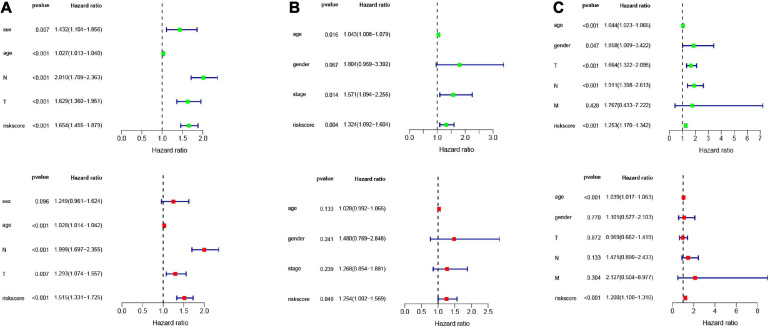
We identified 10 LUAC-specific CCRGs (PKMYT1, ETF1, ECT2, BUB1B, RECQL4, TFRC, COCH, TUBB2B, PITX1, and CDC6) and constructed a model using the internal training group. Based on this model, LUAC patients were divided into high- and low-risk groups for further validation. Time-dependent receiver operating characteristic and Cox regression analyses suggested that the signature could precisely predict the prognosis of LUAC patients. Results obtained with CPTAC, HPA, and IHC supported significant dysregulation of these CCRGs in LUAC tissues.
This prognostic prediction signature based on CCRGs could help to evaluate the prognosis of LUAC patients. The 10 LUAC-specific CCRGs could be used as prognostic markers of LUAC.
筛选肺腺癌(LUAC)特异性细胞周期相关基因(CCRGs),并为LUAC患者建立预后特征。
从GEO数据库下载GSE68465、GSE42127和GSE30219数据集。采用单样本基因集富集分析计算GSE68465中每个样本的细胞周期富集情况,以鉴定LUAC中的CCRGs。确定与来自癌症基因组图谱的LUAC数据相比的差异CCRGs。将GSE68465的基因数据按1:1的比例分为内部训练组和测试组,将GSE42127和GSE30219定义为外部测试组。此外,我们将LASSO(最小绝对收缩和选择算子)和Cox回归分析与内部训练组的临床信息相结合,构建了一个CCRG风险评分模型。根据所得风险值将样本分为高风险组和低风险组,并使用内部和外部测试集来证明该特征的有效性。使用列线图评估模型预测预后。选择CPTAC和HPA数据库来验证CCRGs的蛋白质表达。
我们鉴定出10个LUAC特异性CCRGs(PKMYT1、ETF1、ECT2、BUB1B、RECQL4、TFRC、COCH、TUBB2B、PITX1和CDC6),并使用内部训练组构建了一个模型。基于该模型,将LUAC患者分为高风险组和低风险组进行进一步验证。时间依赖性受试者工作特征曲线和Cox回归分析表明,该特征可以准确预测LUAC患者的预后。CPTAC、HPA和免疫组化获得的结果支持这些CCRGs在LUAC组织中存在显著失调。
这种基于CCRGs的预后预测特征有助于评估LUAC患者的预后。这10个LUAC特异性CCRGs可作为LUAC的预后标志物。