Spörlein Christoph, Kristen Cornelia
Chair for Sociology, esp. Analysis of Social Structures, University of Bamberg, Bamberg, Germany.
Front Sociol. 2019 May 7;4:39. doi: 10.3389/fsoc.2019.00039. eCollection 2019.
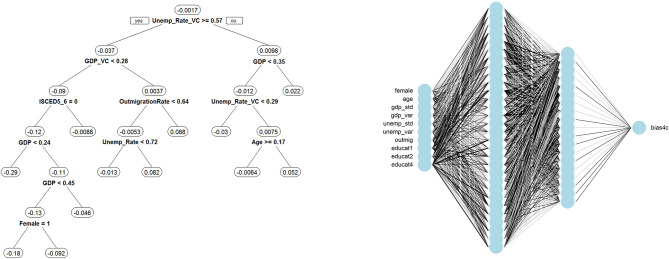
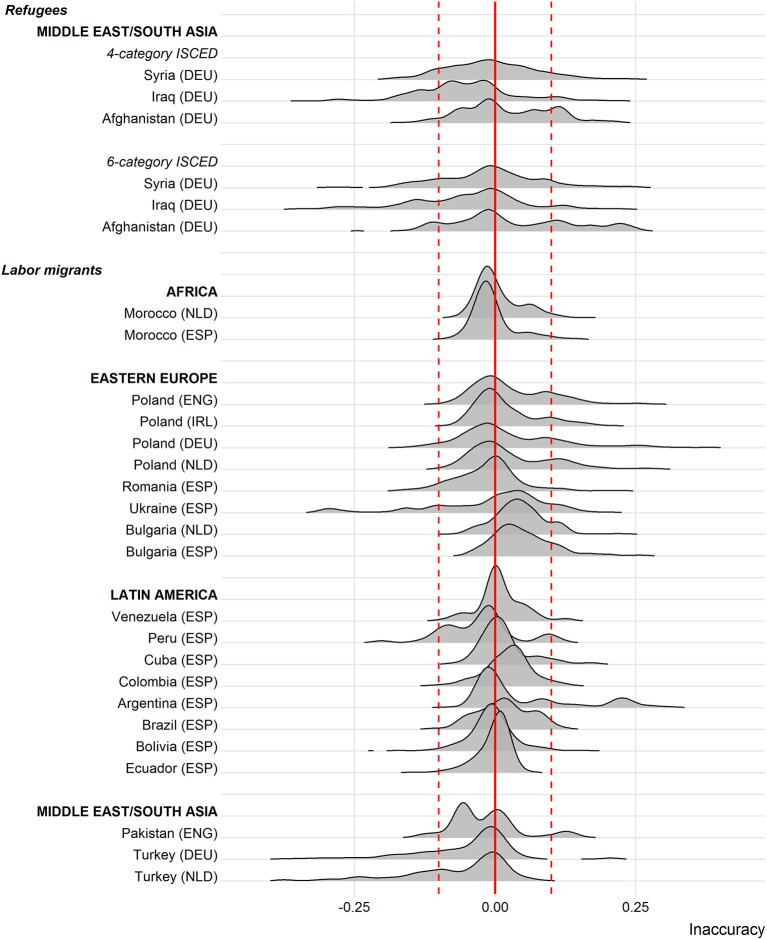
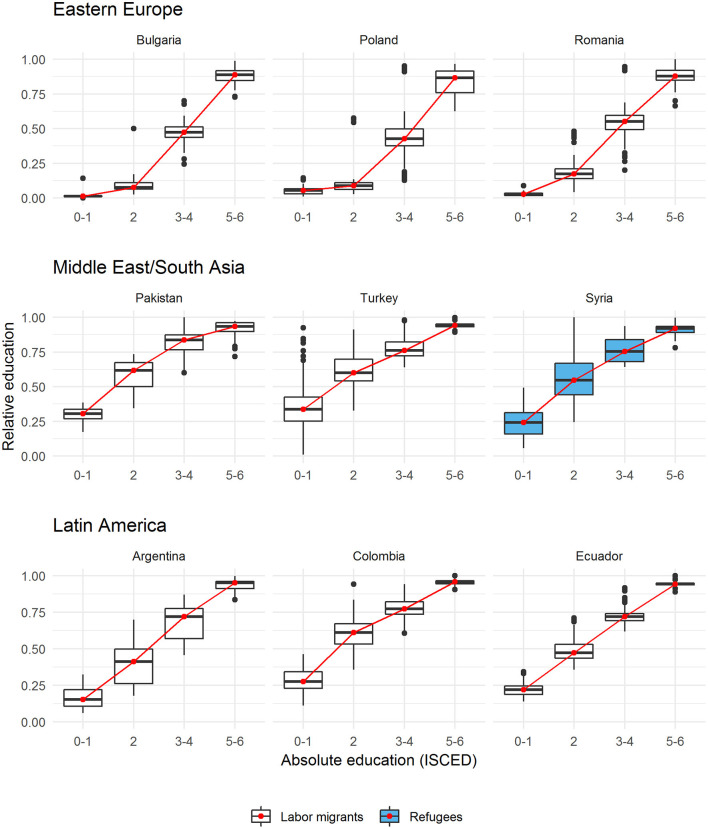
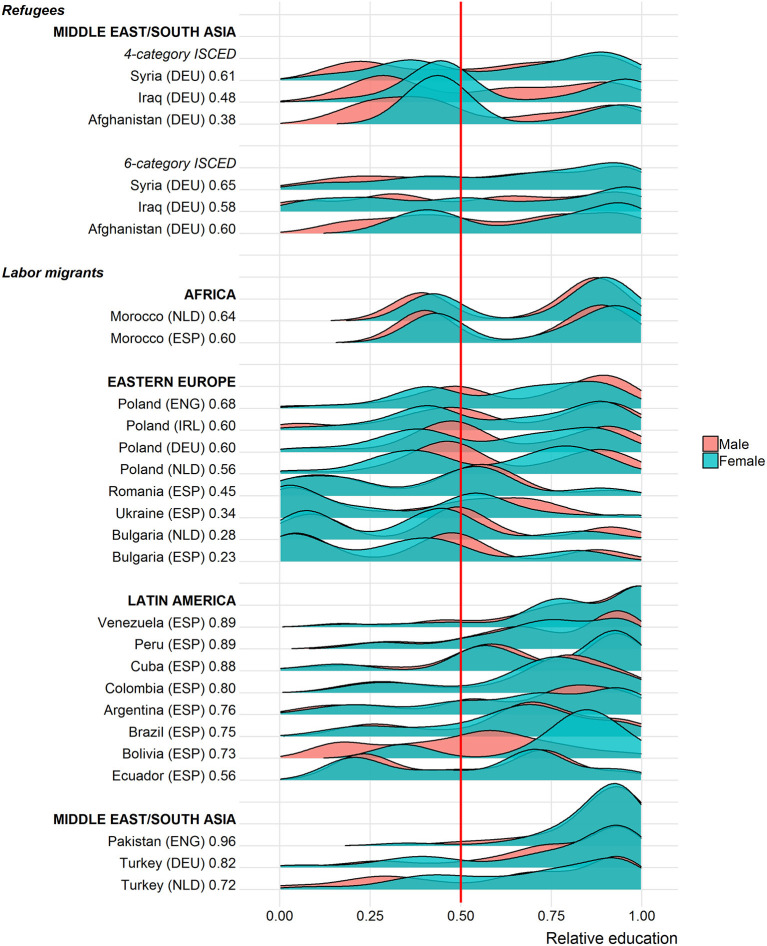
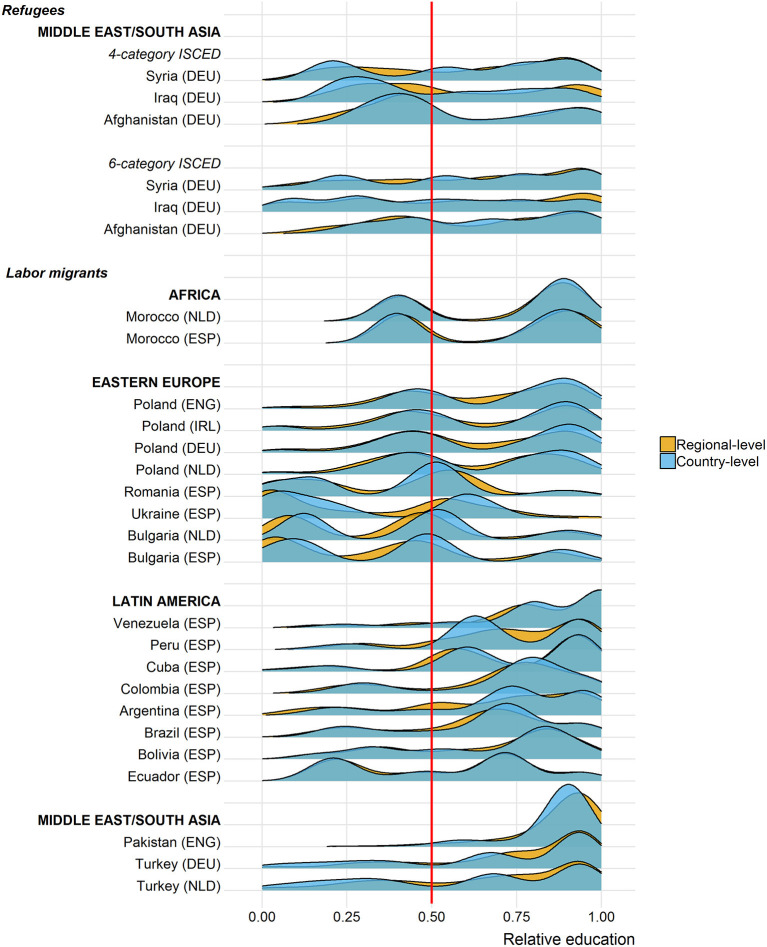
Immigrant selectivity describes the notion that migrants are not a random sample of the population at origin, but differ in certain traits such as educational attainment from individuals who stay behind. In this article, we move away from group-level descriptions of educational selectivity and measure it as an individual's relative position in the age- and gender-specific educational distribution of the country of origin. We describe the extent of educational selectivity for a selection of Western European destinations as well as a selection of origin groups ranging from recent refugee to labor migrant populations. By contrasting refugees to labor migrants, we address longstanding assumptions about typical differences in the degree of selectivity between different types of immigrants. According to our findings, there are few and only minor differences between refugee and labor migrants. However, these differences vary; and there are labor migrant groups that score similar or lower on selectivity than do the refugees covered in this study. Selectivity differences between refugees and labor migrants therefore seem less prominent than arguments in the literature suggest. Another key finding is that every origin group is composed of varying proportions of positively and negatively selected individuals. In most cases, the origin groups cover the whole spectrum of selectivity, so that characterizing them as either predominantly positively or negatively selected does not seem adequate. Furthermore, we show that using country-level educational distributions as opposed to sub-national regional-level distributions can lead to inaccurate measurements of educational selectivity. This problem does not occur universally, but only under certain conditions. That is, when high levels of outmigration from sub-national regions in which economic opportunities are considerably above or below the country average, measurement inaccuracy exceeds ignorable levels. In instances where researchers are not able to use sub-national regional measures, we provide them with practical guidance in the form of pre-trained machine-learning tools to assess the direction and the extent of the measurement inaccuracy that results from relying on country-level as opposed to sub-national regional-level educational distributions.
移民选择性描述的是这样一种观念,即移民并非来源国人口的随机样本,而是在某些特征方面与留在原籍的人有所不同,比如受教育程度。在本文中,我们不再从群体层面描述教育选择性,而是将其衡量为个人在原籍国年龄和性别特定教育分布中的相对位置。我们描述了针对一系列西欧目的地以及从近期难民到劳务移民等一系列原籍群体的教育选择性程度。通过对比难民和劳务移民,我们探讨了关于不同类型移民在选择性程度上典型差异的长期假设。根据我们的研究结果,难民和劳务移民之间几乎没有且仅有细微差异。然而,这些差异各不相同;并且存在一些劳务移民群体在选择性方面的得分与本研究涵盖的难民相似或更低。因此,难民和劳务移民之间的选择性差异似乎并不像文献中的观点所表明的那样显著。另一个关键发现是,每个原籍群体都由不同比例的正向和负向选择个体组成。在大多数情况下,原籍群体涵盖了选择性的整个范围,所以将它们描述为主要是正向或负向选择似乎并不恰当。此外,我们表明,与使用国家以下区域层面的分布相比,使用国家层面的教育分布可能会导致对教育选择性的测量不准确。这个问题并非普遍存在,而是仅在某些条件下出现。也就是说,当来自经济机会显著高于或低于国家平均水平的国家以下区域的移民率很高时,测量不准确程度会超过可忽略的水平。在研究人员无法使用国家以下区域层面测量方法的情况下,我们以预先训练的机器学习工具的形式为他们提供实用指导,以评估依赖国家层面而非国家以下区域层面的教育分布所导致的测量不准确的方向和程度。