Mokaya Jolynne, McNaughton Anna L, Bester Phillip A, Goedhals Dominique, Barnes Eleanor, Marsden Brian D, Matthews Philippa C
Nuffield Department of Medicine, University of Oxford, Medawar Building, South Parks Road, Oxford, OX1 3SY, UK.
Division of Virology, National Health Laboratory Service/University of the Free State, Bloemfontein, South Africa.
Wellcome Open Res. 2020 Jun 29;5:151. doi: 10.12688/wellcomeopenres.15992.1. eCollection 2020.
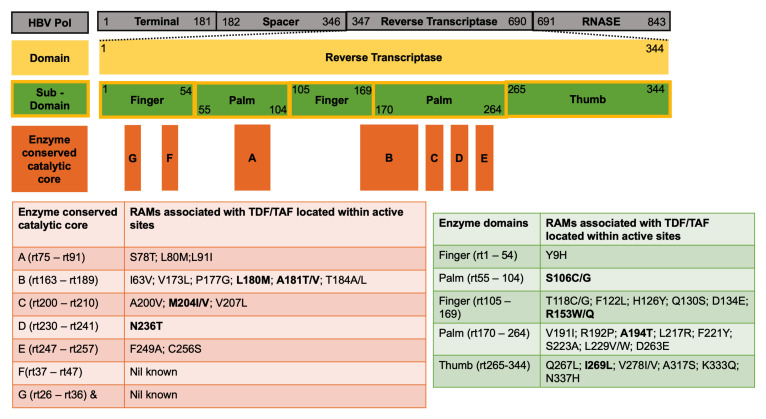
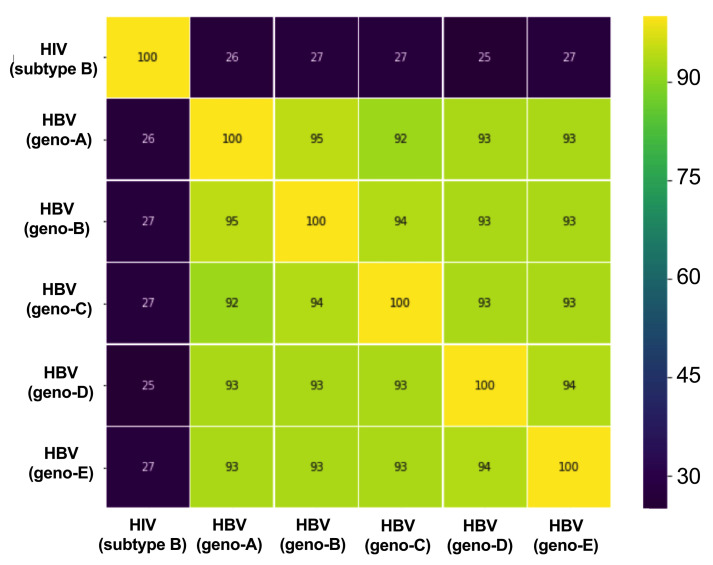
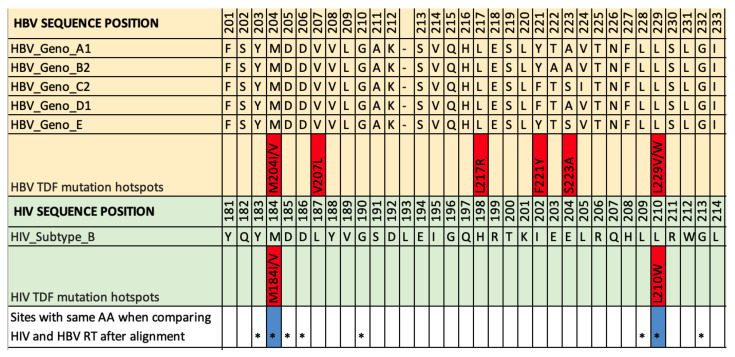
Tenofovir (TFV) is a widely used treatment for chronic hepatitis B virus (HBV) infection. There is a high genetic barrier to the selection of TFV resistance-associated mutations (RAMs), but the distribution and clinical significance of TFV RAMs are not well understood. We here present assimilated evidence for putative TFV RAMs with the aims of cataloguing and characterising mutations that have been reported, and starting to develop insights into mechanisms of resistance. We carried out a systematic literature search in PubMed and Scopus to identify clinical, and evidence of TFV resistance. We included peer-reviewed studies presenting original data regarding virological TFV breakthrough, using published methods to assess the quality of each study. We generated a list of RAMs that have been reported in association with TFV resistance, developing a 'long-list' (all reported RAMs) and a 'short-list' (a refined list supported by the most robust evidence). We assessed the potential functional and structural consequences by mapping onto the crystal structure for HIV reverse transcriptase (RT), as the structure of HBV RT has not been solved. We identified a 'long-list' of 37 putative TFV RAMs in HBV RT, occurring within and outside sites of enzyme activity, some of which can be mapped onto a homologous HIV RT structure. A 'short-list' of nine sites are supported by the most robust evidence. If clinically significant resistance arises, it is most likely to be in the context of suites of multiple RAMs. Other factors including adherence, viral load, HBeAg status, HIV coinfection and NA dosage may also influence viraemic suppression. There is emerging evidence for polymorphisms that may reduce susceptibility to TVF. However, good correlation between viral sequence and treatment outcomes is currently lacking; further studies are essential to optimise individual treatment and public health approaches.
替诺福韦(TFV)是一种广泛用于治疗慢性乙型肝炎病毒(HBV)感染的药物。选择与TFV耐药相关的突变(RAMs)存在很高的遗传屏障,但TFV RAMs的分布和临床意义尚未得到充分了解。我们在此提供了关于假定TFV RAMs的综合证据,目的是对已报道的突变进行编目和特征描述,并开始深入了解耐药机制。我们在PubMed和Scopus中进行了系统的文献检索,以确定临床和TFV耐药的证据。我们纳入了经过同行评审的研究,这些研究提供了关于病毒学TFV突破的原始数据,并使用已发表的方法评估每项研究的质量。我们生成了一份与TFV耐药相关的已报道RAMs列表,制定了一个“长列表”(所有已报道的RAMs)和一个“短列表”(由最有力证据支持的精炼列表)。由于HBV逆转录酶(RT)的结构尚未解析,我们通过映射到HIV逆转录酶(RT)的晶体结构来评估潜在的功能和结构后果。我们在HBV RT中确定了37个假定TFV RAMs的“长列表”,这些突变发生在酶活性位点内外,其中一些可以映射到同源的HIV RT结构上。最有力的证据支持了一个由九个位点组成的“短列表”。如果出现具有临床意义的耐药,最有可能发生在多个RAMs组合的情况下。其他因素,包括依从性、病毒载量、HBeAg状态、HIV合并感染和核苷(酸)类似物剂量,也可能影响病毒血症抑制。有新证据表明多态性可能降低对TFV的易感性。然而,目前病毒序列与治疗结果之间缺乏良好的相关性;进一步的研究对于优化个体治疗和公共卫生方法至关重要。