Department of Surgery, Johns Hopkins University School of Medicine, Baltimore, MD, USA.
Department of Epidemiology, Johns Hopkins Bloomberg School of Public Health, Baltimore, MD, USA.
Am J Transplant. 2021 Oct;21(10):3333-3345. doi: 10.1111/ajt.16605. Epub 2021 May 20.
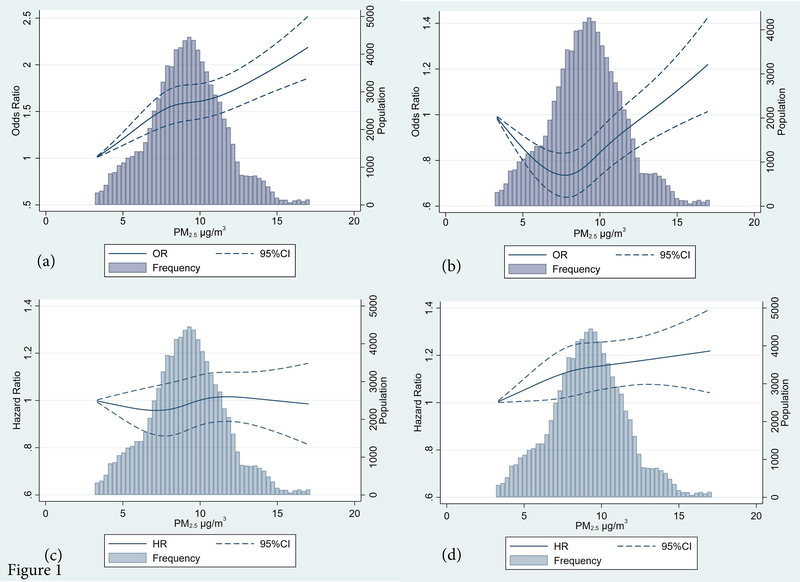
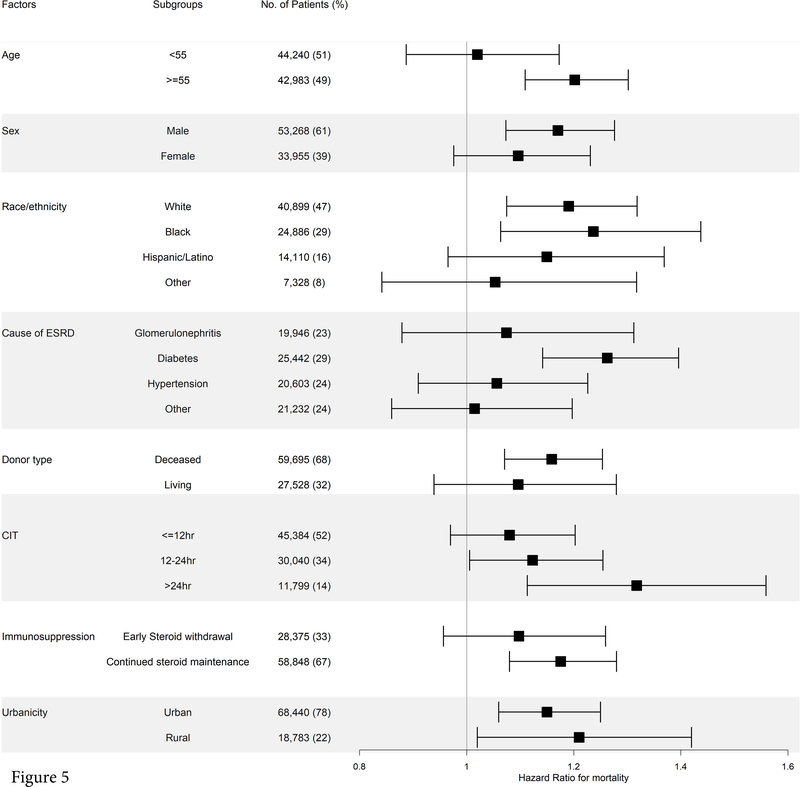
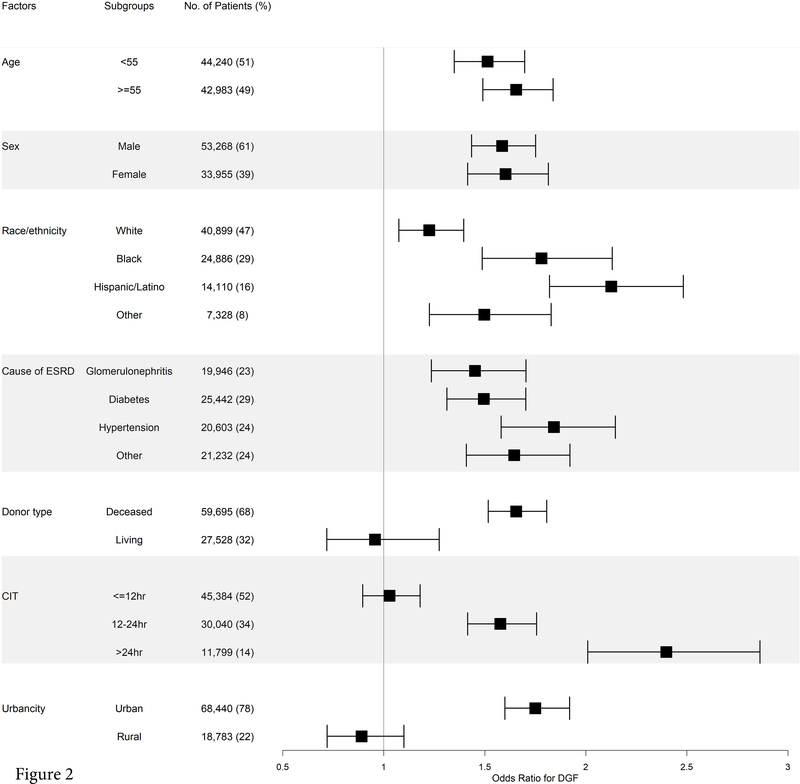
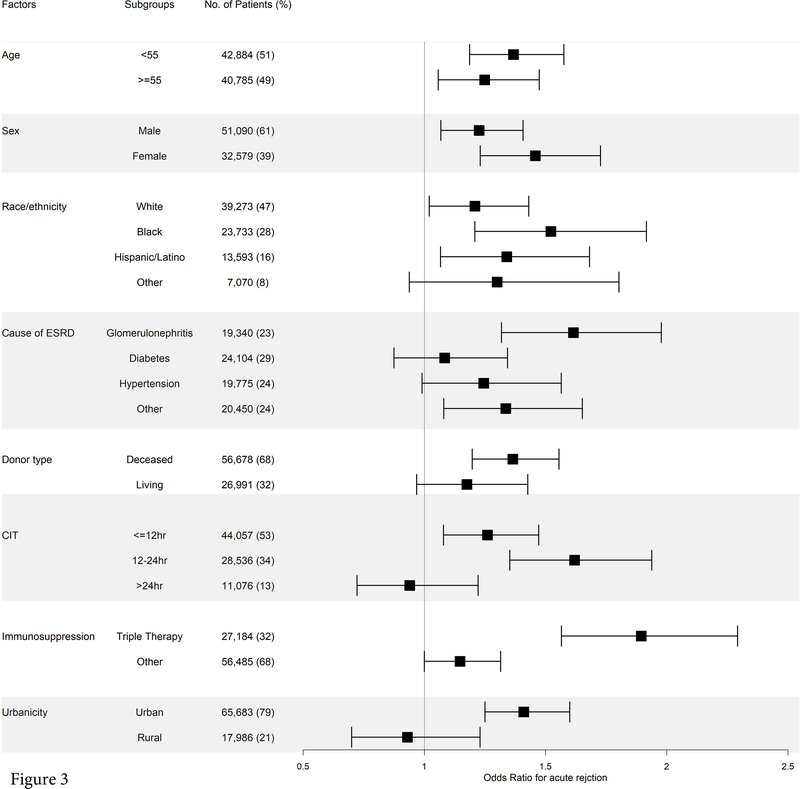
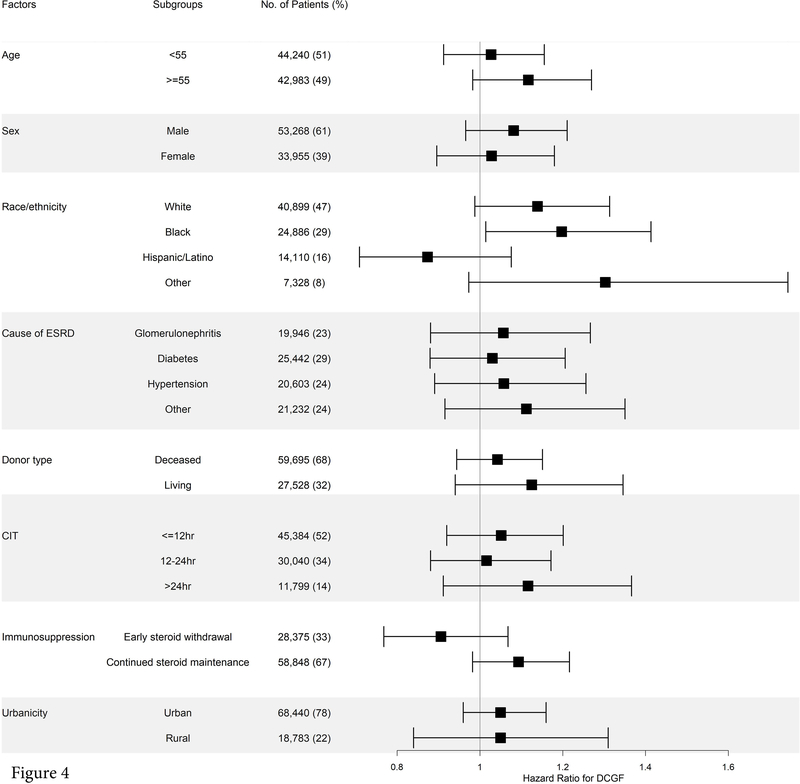
Fine particulate matter (PM ), a common form of air pollution which can induce systemic inflammatory response, is a risk factor for adverse health outcomes. Kidney transplant (KT) recipients are likely vulnerable to PM due to comorbidity and chronic immunosuppression. We sought to quantify the association between PM and post-KT outcomes. For adult KT recipients (1/1/2010-12/31/2016) in the Scientific Registry of Transplant Recipients, we estimated annual zip-code level PM concentrations at the time of KT using NASA's SEDAC Global PM Grids. We determined the associations between PM and delayed graft function (DGF) and 1-year acute rejection using logistic regression and death-censored graft failure (DCGF) and mortality using Cox proportional hazard models. All models were adjusted for sociodemographics, recipient, transplant, and ZIP code level confounders. Among 87 233 KT recipients, PM was associated with increased odds of DGF (OR = 1.59; 95% CI: 1.48-1.71) and 1-year acute rejection (OR = 1.31; 95% CI: 1.17-1.46) and increased risk of all-cause mortality (HR = 1.15; 95% CI: 1.07-1.23) but not DCGF (HR = 1.05; 95% CI: 0.97-1.51). In conclusion, PM was associated with higher odds of DGF and 1-year acute rejection and elevated risk of mortality among KT recipients. Our study highlights the importance of considering environmental exposure as risk factors for post-KT outcomes.
细颗粒物(PM)是一种常见的空气污染形式,可引起全身炎症反应,是不良健康结果的危险因素。由于合并症和慢性免疫抑制,肾移植(KT)受者可能容易受到 PM 的影响。我们试图量化 PM 与 post-KT 结果之间的关联。对于 Scientific Registry of Transplant Recipients 中的成年 KT 受者(1/1/2010-12/31/2016),我们使用 NASA 的 SEDAC 全球 PM 网格在 KT 时估计每年邮政编码级别的 PM 浓度。我们使用逻辑回归确定 PM 与延迟移植物功能障碍(DGF)和 1 年急性排斥反应之间的关联,并使用 Cox 比例风险模型确定死亡相关移植物衰竭(DCGF)和死亡率之间的关联。所有模型均针对社会人口统计学、受者、移植和邮政编码水平的混杂因素进行了调整。在 87233 名 KT 受者中,PM 与 DGF(OR=1.59;95%CI:1.48-1.71)和 1 年急性排斥反应(OR=1.31;95%CI:1.17-1.46)的几率增加以及全因死亡率(HR=1.15;95%CI:1.07-1.23)的风险增加有关,但与 DCGF 无关(HR=1.05;95%CI:0.97-1.51)。总之,PM 与 KT 受者的 DGF 和 1 年急性排斥反应的几率增加以及死亡率升高有关。我们的研究强调了将环境暴露视为 post-KT 结果的危险因素的重要性。