• 文献检索
  • 文档翻译
  • 深度研究
  • 学术资讯
  • Suppr Zotero 插件Zotero 插件
  • 邀请有礼
  • 套餐&价格
  • 历史记录
应用&插件
Suppr Zotero 插件Zotero 插件浏览器插件Mac 客户端Windows 客户端微信小程序
定价
高级版会员购买积分包购买API积分包
服务
文献检索文档翻译深度研究API 文档MCP 服务
关于我们
关于 Suppr公司介绍联系我们用户协议隐私条款
关注我们

Suppr 超能文献

核心技术专利:CN118964589B侵权必究
粤ICP备2023148730 号-1Suppr @ 2026

文献检索

告别复杂PubMed语法,用中文像聊天一样搜索,搜遍4000万医学文献。AI智能推荐,让科研检索更轻松。

立即免费搜索

文件翻译

保留排版,准确专业,支持PDF/Word/PPT等文件格式,支持 12+语言互译。

免费翻译文档

深度研究

AI帮你快速写综述,25分钟生成高质量综述,智能提取关键信息,辅助科研写作。

立即免费体验

VI 型分泌系统及其效应物 PdpC、PdpD 和 OpiA 有助于家蚕幼虫的毒力。

Type VI Secretion System and Its Effectors PdpC, PdpD, and OpiA Contribute to Virulence in Galleria mellonella Larvae.

机构信息

Biozentrum, University of Basel, Basel, Switzerland.

出版信息

Infect Immun. 2021 Jun 16;89(7):e0057920. doi: 10.1128/IAI.00579-20.

DOI:10.1128/IAI.00579-20
PMID:33875476
原文链接:https://pmc.ncbi.nlm.nih.gov/articles/PMC8208517/
Abstract

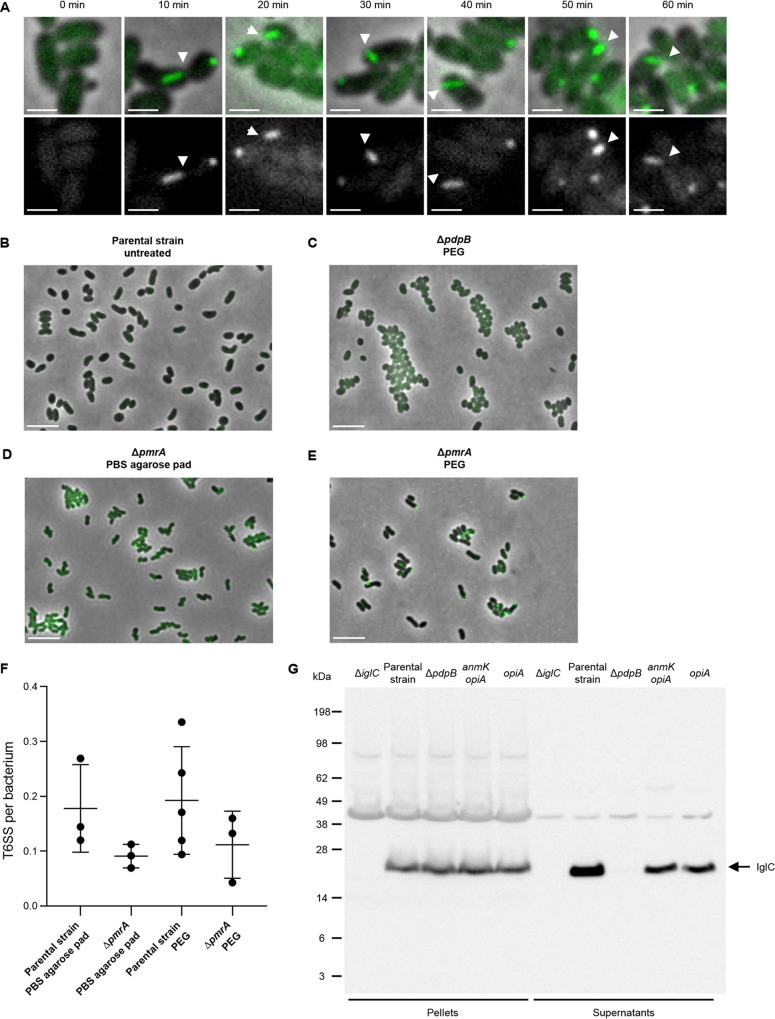
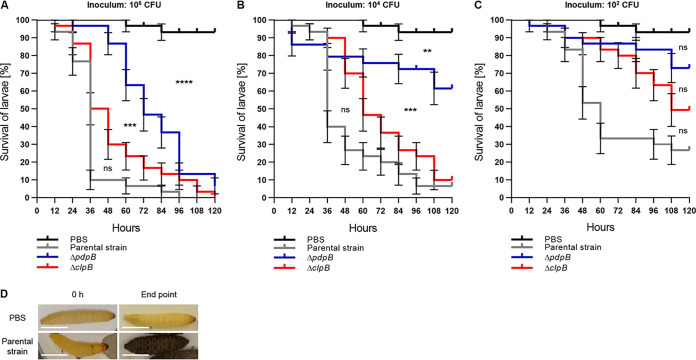
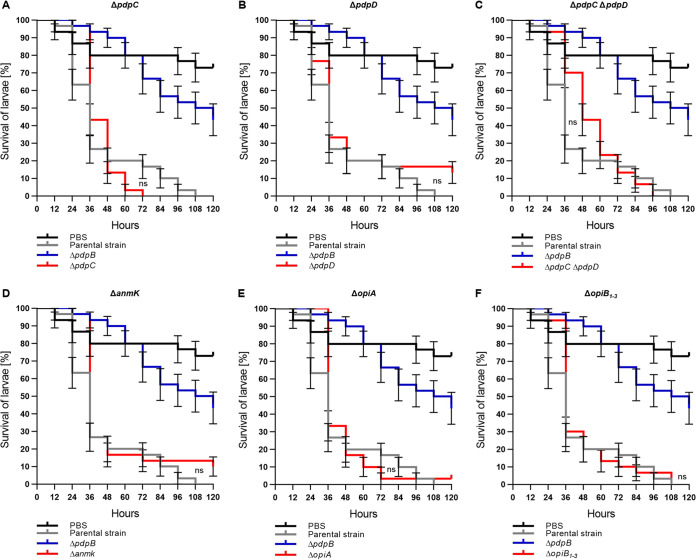
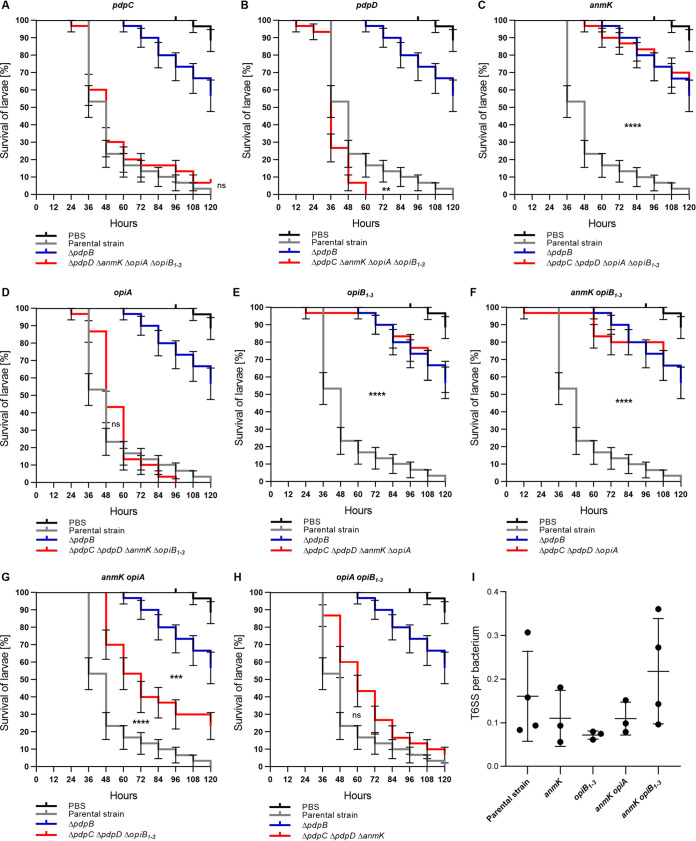
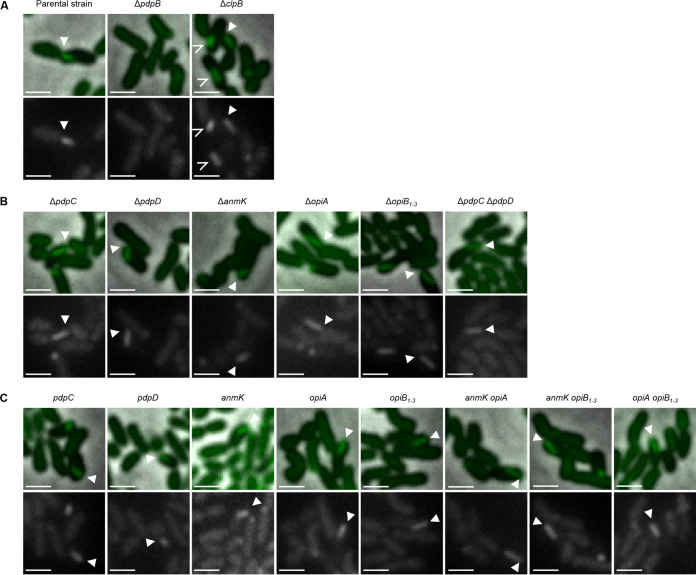
Francisella tularensis causes the deadly zoonotic disease tularemia in humans and is able to infect a broad range of organisms including arthropods, which are thought to play a major role in transmission. However, while mammalian and infection models are widely used to investigate pathogenicity, a detailed characterization of the major virulence factor, a noncanonical type VI secretion system (T6SS), in an arthropod infection model is missing. Here, we use Galleria mellonella larvae to analyze the role of the T6SS and its corresponding effectors in F. tularensis subsp. virulence. We report that G. mellonella larvae killing depends on the functional T6SS and infectious dose. In contrast to other mammalian infection models, even one of the T6SS effectors PdpC, PdpD, or OpiA is sufficient to kill G. mellonella larvae, while sheath recycling by ClpB is dispensable. We further demonstrate that treatment by polyethylene glycol (PEG) activates T6SS in liquid culture and that this is independent of the response regulator PmrA. PEG-activated IglC secretion is dependent on T6SS structural component PdpB but independent of putative effectors PdpC, PdpD, AnmK, OpiB, OpiB, and OpiB. The results of larvae infection and secretion assay suggest that AnmK, a putative T6SS component with unknown function, interferes with OpiA-mediated toxicity but not with general T6SS activity. We establish that the easy-to-use G. mellonella larvae infection model provides new insights into the function of T6SS and pathogenesis of .

摘要

弗朗西斯菌会导致人类致命的人畜共患疾病——野兔热,并且能够感染包括节肢动物在内的广泛生物体,这些生物体被认为在传播中起着重要作用。然而,尽管哺乳动物感染模型和感染模型被广泛用于研究致病性,但在节肢动物感染模型中,一种主要的毒力因子——一种非典型的 VI 型分泌系统(T6SS),其详细特征尚未得到描述。在这里,我们使用家蚕幼虫来分析 T6SS 及其相应效应物在弗朗西斯菌亚种中的作用。我们报告说,家蚕幼虫的死亡依赖于功能正常的 T6SS 和感染剂量。与其他哺乳动物感染模型不同,即使是 T6SS 效应物 PdpC、PdpD 或 OpiA 中的一种,也足以杀死家蚕幼虫,而 ClpB 的鞘回收则是可有可无的。我们进一步证明,聚乙二醇(PEG)处理可在液体培养中激活 T6SS,而这与响应调节子 PmrA 无关。PEG 激活的 IglC 分泌依赖于 T6SS 结构成分 PdpB,但不依赖于假定的效应物 PdpC、PdpD、AnmK、OpiB、OpiB 和 OpiB。幼虫感染和分泌试验的结果表明,AnmK 是一种具有未知功能的假定 T6SS 成分,它干扰 OpiA 介导的毒性,但不干扰一般的 T6SS 活性。我们建立了易于使用的家蚕幼虫感染模型,为 T6SS 的功能和的发病机制提供了新的见解。
https://cdn.ncbi.nlm.nih.gov/pmc/blobs/a9bb/8208517/b9077ca7b6f8/iai.00579-20-f0005.jpg
https://cdn.ncbi.nlm.nih.gov/pmc/blobs/a9bb/8208517/df136bfbfcc3/iai.00579-20-f0001.jpg
https://cdn.ncbi.nlm.nih.gov/pmc/blobs/a9bb/8208517/0c1acef97da5/iai.00579-20-f0002.jpg
https://cdn.ncbi.nlm.nih.gov/pmc/blobs/a9bb/8208517/5b8bbc96a122/iai.00579-20-f0003.jpg
https://cdn.ncbi.nlm.nih.gov/pmc/blobs/a9bb/8208517/9ea0ac74b17a/iai.00579-20-f0004.jpg
https://cdn.ncbi.nlm.nih.gov/pmc/blobs/a9bb/8208517/b9077ca7b6f8/iai.00579-20-f0005.jpg
https://cdn.ncbi.nlm.nih.gov/pmc/blobs/a9bb/8208517/df136bfbfcc3/iai.00579-20-f0001.jpg
https://cdn.ncbi.nlm.nih.gov/pmc/blobs/a9bb/8208517/0c1acef97da5/iai.00579-20-f0002.jpg
https://cdn.ncbi.nlm.nih.gov/pmc/blobs/a9bb/8208517/5b8bbc96a122/iai.00579-20-f0003.jpg
https://cdn.ncbi.nlm.nih.gov/pmc/blobs/a9bb/8208517/9ea0ac74b17a/iai.00579-20-f0004.jpg
https://cdn.ncbi.nlm.nih.gov/pmc/blobs/a9bb/8208517/b9077ca7b6f8/iai.00579-20-f0005.jpg

相似文献

1
Type VI Secretion System and Its Effectors PdpC, PdpD, and OpiA Contribute to Virulence in Galleria mellonella Larvae.VI 型分泌系统及其效应物 PdpC、PdpD 和 OpiA 有助于家蚕幼虫的毒力。
Infect Immun. 2021 Jun 16;89(7):e0057920. doi: 10.1128/IAI.00579-20.
2
Francisella requires dynamic type VI secretion system and ClpB to deliver effectors for phagosomal escape.弗朗西斯菌需要动态型 VI 分泌系统和 ClpB 来输送效应蛋白以逃避吞噬体。
Nat Commun. 2017 Jun 16;8:15853. doi: 10.1038/ncomms15853.
3
Francisella tularensis IglG Belongs to a Novel Family of PAAR-Like T6SS Proteins and Harbors a Unique N-terminal Extension Required for Virulence.土拉弗朗西斯菌IglG属于一类新型的类PAAR六型分泌系统蛋白家族,并具有毒力所需的独特N端延伸。
PLoS Pathog. 2016 Sep 7;12(9):e1005821. doi: 10.1371/journal.ppat.1005821. eCollection 2016 Sep.
4
Reveals Niche Differences Between Highly Pathogenic and Closely Related Strains of spp.揭示 spp. 高度致病性和密切相关菌株之间的生态位差异。
Front Cell Infect Microbiol. 2018 Jun 5;8:188. doi: 10.3389/fcimb.2018.00188. eCollection 2018.
5
OpiA, a Type Six Secretion System Substrate, Localizes to the Cell Pole and Plays a Role in Bacterial Growth and Viability in LVS.OpiA 是一种六型分泌系统底物,定位于细胞极,在 LVS 中对细菌生长和活力起作用。
J Bacteriol. 2020 Jun 25;202(14). doi: 10.1128/JB.00048-20.
6
Atomic Structure of IglD Demonstrates Its Role as a Component of the Baseplate Complex of the Type VI Secretion System.IgI-D 原子结构表明其作为 VI 型分泌系统底座复合物组件的作用。
mBio. 2022 Oct 26;13(5):e0127722. doi: 10.1128/mbio.01277-22. Epub 2022 Aug 29.
7
Secreted Effectors Encoded within and outside of the Francisella Pathogenicity Island Promote Intramacrophage Growth.弗朗西斯菌致病岛内外编码的分泌效应蛋白促进巨噬细胞内生长。
Cell Host Microbe. 2016 Nov 9;20(5):573-583. doi: 10.1016/j.chom.2016.10.008.
8
Phenotypic characterization of the Francisella tularensis ΔpdpC and ΔiglG mutants.弗氏志贺菌ΔpdpC 和 ΔiglG 突变株的表型特征。
Microbes Infect. 2016 Dec;18(12):768-776. doi: 10.1016/j.micinf.2016.07.006. Epub 2016 Jul 29.
9
The Francisella pathogenicity island protein PdpD is required for full virulence and associates with homologues of the type VI secretion system.弗朗西斯菌致病岛蛋白PdpD是完全毒力所必需的,并与VI型分泌系统的同源物相关。
J Bacteriol. 2008 Jul;190(13):4584-95. doi: 10.1128/JB.00198-08. Epub 2008 May 9.
10
Screen of FDA-approved drug library identifies maprotiline, an antibiofilm and antivirulence compound with QseC sensor-kinase dependent activity in Francisella novicida.对美国食品药品监督管理局(FDA)批准的药物库进行筛选,鉴定出了马普替林,这是一种在新凶手弗朗西斯菌中具有QseC传感器激酶依赖性活性的抗生物膜和抗毒力化合物。
Virulence. 2015;6(5):487-503. doi: 10.1080/21505594.2015.1046029.

引用本文的文献

1
Atomic Structure and Phospholipid Binding Properties of the Type VI Secretion System Effector Protein PdpC.VI型分泌系统效应蛋白PdpC的原子结构及磷脂结合特性
bioRxiv. 2025 May 8:2025.05.08.652963. doi: 10.1101/2025.05.08.652963.
2
Breaking the cellular defense: the role of autophagy evasion in virulence.突破细胞防御:自噬逃避在毒力中的作用。
Front Cell Infect Microbiol. 2024 Dec 24;14:1523597. doi: 10.3389/fcimb.2024.1523597. eCollection 2024.
3
Phenotypic and transcriptional characterization of LVS during transition into a viable but non-culturable state.

本文引用的文献

1
Environmental Viscosity Modulates Interbacterial Killing during Habitat Transition.环境粘度调节栖息地转换过程中的细菌间杀伤作用。
mBio. 2020 Feb 4;11(1):e03060-19. doi: 10.1128/mBio.03060-19.
2
Ecology of . 的生态学
Annu Rev Entomol. 2020 Jan 7;65:351-372. doi: 10.1146/annurev-ento-011019-025134. Epub 2019 Oct 10.
3
Assembly and Subcellular Localization of Bacterial Type VI Secretion Systems.细菌 VI 型分泌系统的组装和亚细胞定位。
土拉热弗朗西斯菌在转变为活的但不可培养状态过程中的表型和转录特征分析
Front Microbiol. 2024 Feb 6;15:1347488. doi: 10.3389/fmicb.2024.1347488. eCollection 2024.
4
Pathogenicity and virulence of . 的致病性和毒力。
Virulence. 2023 Dec;14(1):2274638. doi: 10.1080/21505594.2023.2274638. Epub 2023 Nov 8.
5
Investigating Secretion Systems and Effectors on Galleria mellonella.研究家蚕中的分泌系统和效应子。
Methods Mol Biol. 2024;2715:601-608. doi: 10.1007/978-1-0716-3445-5_38.
6
Killing in the name of: T6SS structure and effector diversity.以杀戮为名:T6SS 的结构与效应子多样性。
Microbiology (Reading). 2023 Jul;169(7). doi: 10.1099/mic.0.001367.
7
-A Model for the Study of aPDT-Prospects and Drawbacks.- 一种用于光动力疗法(aPDT)研究的模型——前景与不足
Microorganisms. 2023 May 31;11(6):1455. doi: 10.3390/microorganisms11061455.
8
Structural disruption of Ntox15 nuclease effector domains by immunity proteins protects against type VI secretion system intoxication in Bacteroidales.免疫蛋白对 Ntox15 核酸酶效应结构域的结构破坏可防止 Bacteroidales 中 VI 型分泌系统中毒。
mBio. 2023 Aug 31;14(4):e0103923. doi: 10.1128/mbio.01039-23. Epub 2023 Jun 22.
9
Galleria mellonella-intracellular bacteria pathogen infection models: the ins and outs.金蝇幼虫-胞内细菌病原体感染模型:来龙去脉。
FEMS Microbiol Rev. 2023 Mar 10;47(2). doi: 10.1093/femsre/fuad011.
10
PdpC, a secreted effector protein of the type six secretion system, is required for erythrocyte invasion by LVS.PdpC 是一种六型分泌系统分泌的效应蛋白,它是 LVS 红细胞入侵所必需的。
Front Cell Infect Microbiol. 2022 Sep 27;12:979693. doi: 10.3389/fcimb.2022.979693. eCollection 2022.
Annu Rev Microbiol. 2019 Sep 8;73:621-638. doi: 10.1146/annurev-micro-020518-115420. Epub 2019 Jun 21.
4
UniProt: a worldwide hub of protein knowledge.UniProt:蛋白质知识的全球枢纽。
Nucleic Acids Res. 2019 Jan 8;47(D1):D506-D515. doi: 10.1093/nar/gky1049.
5
Mobilizable Plasmids for Tunable Gene Expression in .用于在……中进行可调基因表达的可移动质粒
Front Cell Infect Microbiol. 2018 Aug 31;8:284. doi: 10.3389/fcimb.2018.00284. eCollection 2018.
6
A Phosphatidylinositol 3-Kinase Effector Alters Phagosomal Maturation to Promote Intracellular Growth of Francisella.一种磷酯酰肌醇 3-激酶效应物改变吞噬体成熟以促进弗朗西斯菌的细胞内生长。
Cell Host Microbe. 2018 Aug 8;24(2):285-295.e8. doi: 10.1016/j.chom.2018.07.003. Epub 2018 Jul 26.
7
ClpB mutants of Francisella tularensis subspecies holarctica and tularensis are defective for type VI secretion and intracellular replication.弗朗西斯氏土拉菌亚种 holarctica 和 tularensis 的 ClpB 突变体在 VI 型分泌和细胞内复制方面存在缺陷。
Sci Rep. 2018 Jul 27;8(1):11324. doi: 10.1038/s41598-018-29745-4.
8
Reveals Niche Differences Between Highly Pathogenic and Closely Related Strains of spp.揭示 spp. 高度致病性和密切相关菌株之间的生态位差异。
Front Cell Infect Microbiol. 2018 Jun 5;8:188. doi: 10.3389/fcimb.2018.00188. eCollection 2018.
9
Population Genomics of subsp. and its Implication on the Eco-Epidemiology of Tularemia in Switzerland.瑞士小种及其在兔热病生态流行病学中的意义的种群基因组学研究。
Front Cell Infect Microbiol. 2018 Mar 22;8:89. doi: 10.3389/fcimb.2018.00089. eCollection 2018.
10
Genome Sequence of (Greater Wax Moth).大蜡螟的基因组序列
Genome Announc. 2018 Jan 11;6(2):e01220-17. doi: 10.1128/genomeA.01220-17.