Department of Biology, Chemistry and Forensic Science, University of Wolverhampton, Wulfruna Street, Wolverhampton, WV1 1LY, UK.
Department of Anthropology & Behaviour, Ecology and Evolution Research Centre, Durham University, South Road, Durham, DH1 3LE, UK.
Sci Rep. 2021 Apr 19;11(1):8506. doi: 10.1038/s41598-021-87893-6.
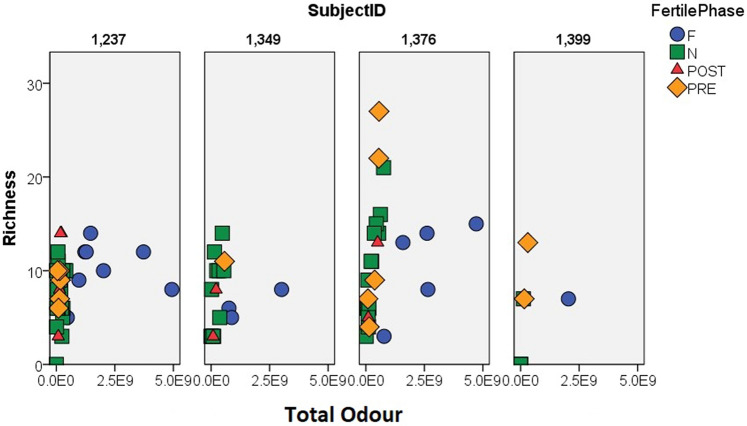
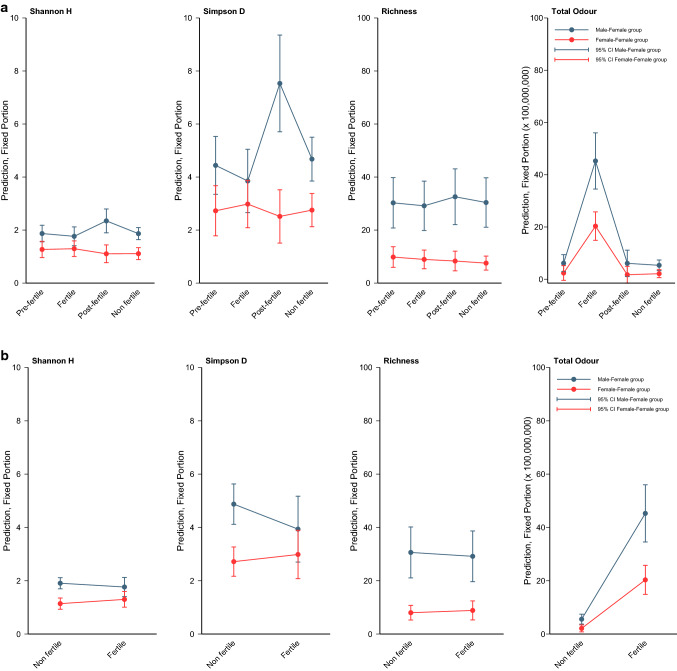
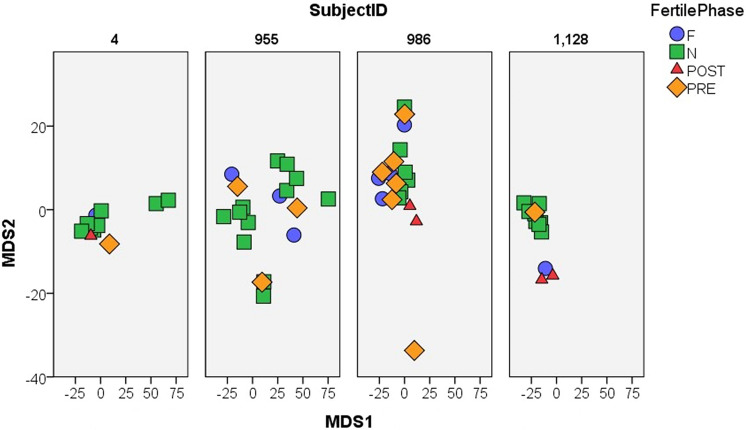
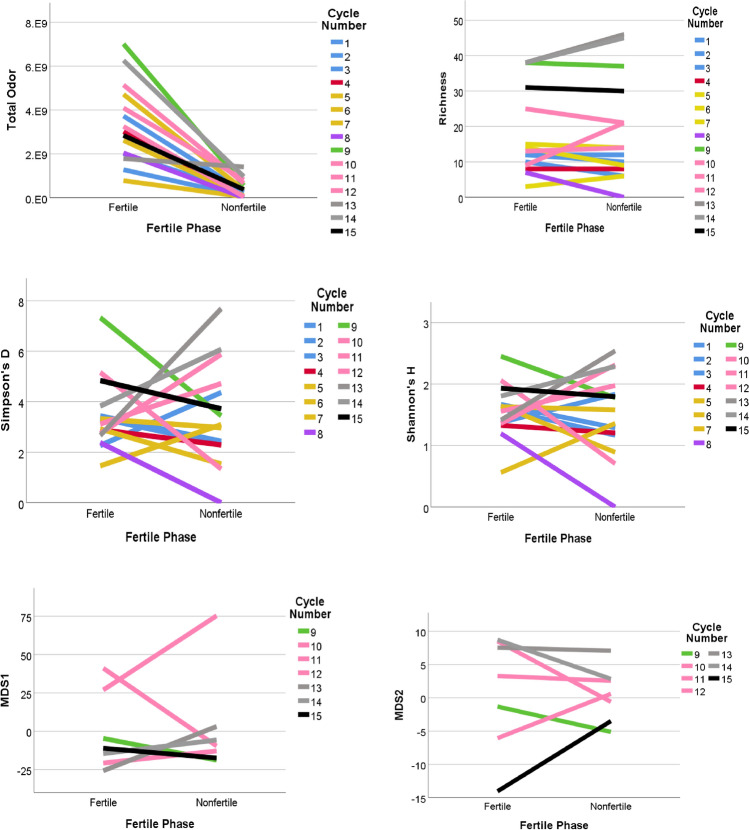
Female primates signal impending ovulation with a suite of sexual signals. Studies of these signals have focussed on visual, and to a lesser extent, acoustic signals, neglecting olfactory signals. We aimed to investigate the information content of female olfactory signals in captive olive baboons (Papio anubis) and relate these to the female fertile period. We studied eight adult females living in four groups at the CNRS Station de Primatologie, Rousset-sur-Arc, France. We used vaginal cytology to detect ovulation. We investigated the volatile component of odour signals using solid-phase microextraction and gas chromatography-mass spectrometry. We found a total of 74 volatile compounds, of which we tentatively identified 25, including several ketones, alcohols, aldehydes, terpenes, volatile fatty acids and hydrocarbons that have been identified in odour profiles of other primates. Our results show that vaginal odour intensity differs with sexual cycle stage suggesting that odour might play a role in signalling female baboon fertility. We found differences in vaginal odour between females living in all-female and in mixed sex groups but we could not distinguish the effects of group composition, female age and identity. This study of olfactory signalling improves our understanding of how female primates advertise their sexual receptivity.
雌性灵长类动物通过一系列性信号来预示即将排卵。这些信号的研究集中在视觉上,在较小程度上也集中在听觉上,而忽略了嗅觉信号。我们旨在研究圈养的奥氏橄榄狒狒(Papio anubis)雌性的嗅觉信号中的信息含量,并将其与雌性的可育期联系起来。我们研究了生活在法国 Rousset-sur-Arc 的 CNRS 灵长类动物站的四个群体中的八只成年雌性。我们使用阴道细胞学来检测排卵。我们使用固相微萃取和气相色谱-质谱法研究了气味信号的挥发性成分。我们发现了总共 74 种挥发性化合物,其中我们暂定鉴定了 25 种,包括几种酮类、醇类、醛类、萜类、挥发性脂肪酸和碳氢化合物,这些化合物在其他灵长类动物的气味图谱中都有发现。我们的结果表明,阴道气味强度随性周期阶段而变化,这表明气味可能在信号雌性狒狒生育能力方面发挥作用。我们发现生活在全雌性和混合性别群体中的雌性的阴道气味存在差异,但我们无法区分群体组成、雌性年龄和身份的影响。这项关于嗅觉信号的研究增进了我们对雌性灵长类动物如何宣传其性接受能力的理解。