Department of Surgery, Leiden University Medical Center, Leiden, The Netherlands.
Center for Proteomics and Metabolomics, Leiden University Medical Center, P.O. Box 9600, 2300 RC, Leiden, The Netherlands.
Glycoconj J. 2021 Jun;38(3):387-395. doi: 10.1007/s10719-021-10001-3. Epub 2021 Apr 20.
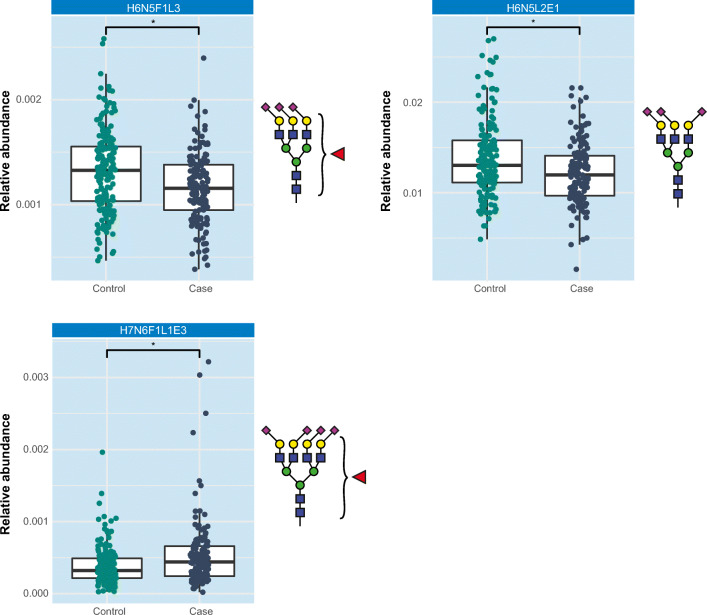
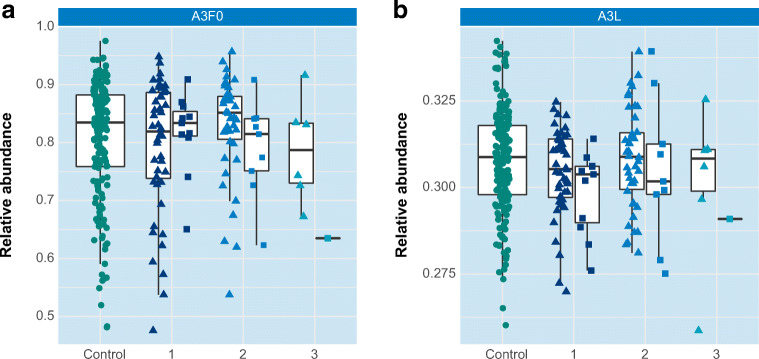
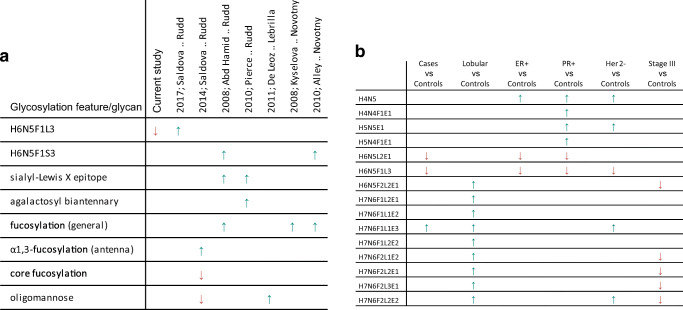
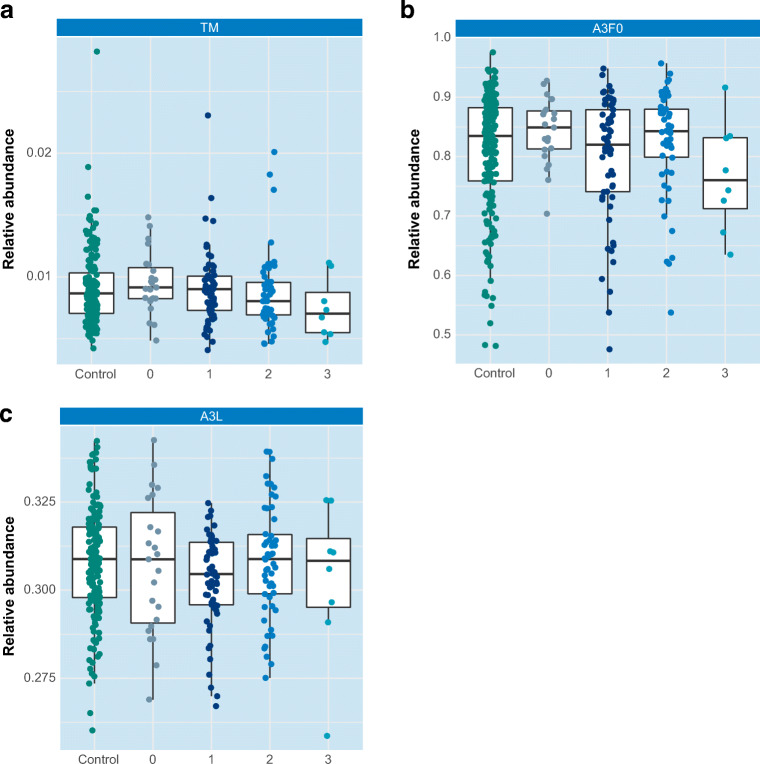
Breast cancer is the most prevalent cancer in women. Early detection of this disease improves survival and therefore population screenings, based on mammography, are performed. However, the sensitivity of this screening modality is not optimal and new screening methods, such as blood tests, are being explored. Most of the analyses that aim for early detection focus on proteins in the bloodstream. In this study, the biomarker potential of total serum N-glycosylation analysis was explored with regard to detection of breast cancer. In an age-matched case-control setup serum protein N-glycan profiles from 145 breast cancer patients were compared to those from 171 healthy individuals. N-glycans were enzymatically released, chemically derivatized to preserve linkage-specificity of sialic acids and characterized by high resolution mass spectrometry. Logistic regression analysis was used to evaluate associations of specific N-glycan structures as well as N-glycosylation traits with breast cancer. In a case-control comparison three associations were found, namely a lower level of a two triantennary glycans and a higher level of one tetraantennary glycan in cancer patients. Of note, various other N-glycomic signatures that had previously been reported were not replicated in the current cohort. It was further evaluated whether the lack of replication of breast cancer N-glycomic signatures could be partly explained by the heterogenous character of the disease since the studies performed so far were based on cohorts that included diverging subtypes in different numbers. It was found that serum N-glycan profiles differed for the various cancer subtypes that were analyzed in this study.
乳腺癌是女性最常见的癌症。这种疾病的早期发现可以提高生存率,因此进行了基于乳房 X 光摄影的人群筛查。然而,这种筛查方式的灵敏度并不理想,因此正在探索新的筛查方法,如血液检测。大多数旨在早期发现的分析都集中在血液中的蛋白质上。在这项研究中,我们探讨了总血清 N-糖基化分析作为乳腺癌检测的生物标志物潜力。在年龄匹配的病例对照研究中,我们比较了 145 名乳腺癌患者和 171 名健康个体的血清蛋白 N-聚糖谱。通过酶解释放 N-糖链,化学衍生化以保留唾液酸的连接特异性,并通过高分辨率质谱进行表征。逻辑回归分析用于评估特定 N-聚糖结构以及 N-糖基化特征与乳腺癌之间的关联。在病例对照比较中,发现了三个关联,即癌症患者中两种三天线聚糖的水平较低,一种四天线聚糖的水平较高。值得注意的是,目前队列中没有复制以前报道的各种其他 N-聚糖特征。进一步评估了乳腺癌 N-聚糖特征缺乏复制是否部分可以由疾病的异质性来解释,因为迄今为止进行的研究基于包含不同数量不同亚型的队列。结果发现,在本研究中分析的各种癌症亚型的血清 N-聚糖谱存在差异。