Department of Life Science, College of Natural Sciences, Chung-Ang University, Seoul, 06974, Republic of Korea.
Department of Convergence Medicine, University of Ulsan College of Medicine and Asan Institute for Life Sciences, Asan Medical Center, Seoul, 05505, Republic of Korea.
Parasit Vectors. 2021 Apr 20;14(1):213. doi: 10.1186/s13071-021-04717-2.
Biliary tract infection with the carcinogenic human liver fluke, Clonorchis sinensis, provokes chronic inflammation, epithelial hyperplasia, periductal fibrosis, and even cholangiocarcinoma. Complications are proportional to the intensity and duration of the infection. In addition to mechanical irritation of the biliary epithelia from worms, their excretory-secretory products (ESPs) cause chemical irritation, which leads to inflammation, proliferation, and free radical generation.
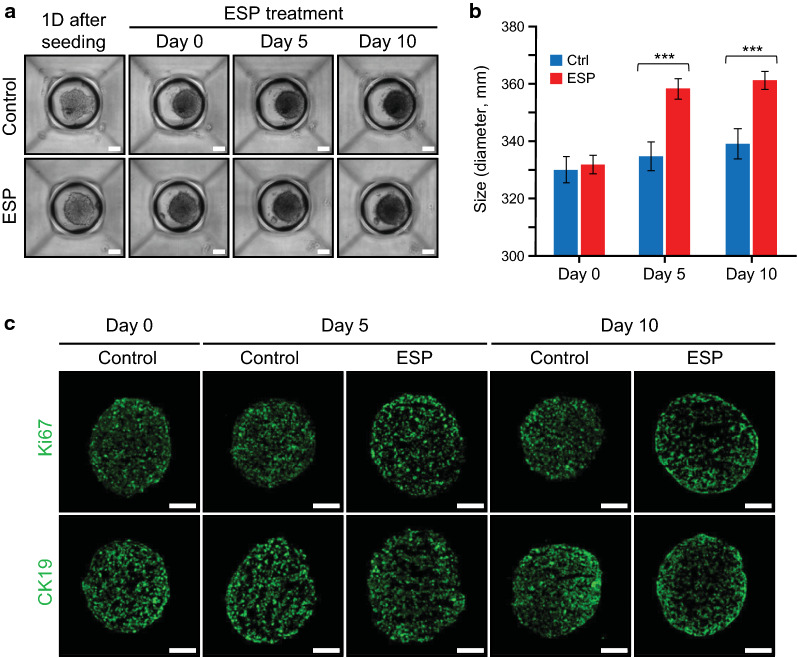
A three-dimensional in vitro cholangiocyte spheroid culture model was established, followed by ESP treatment. This allowed us to examine the intrinsic pathological mechanisms of clonorchiasis via the imitation of prolonged and repetitive in vivo infection.
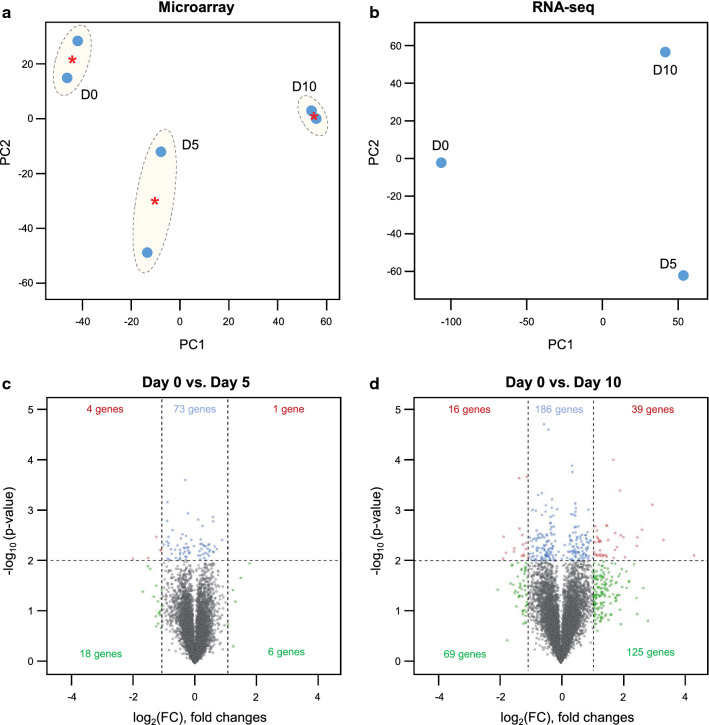
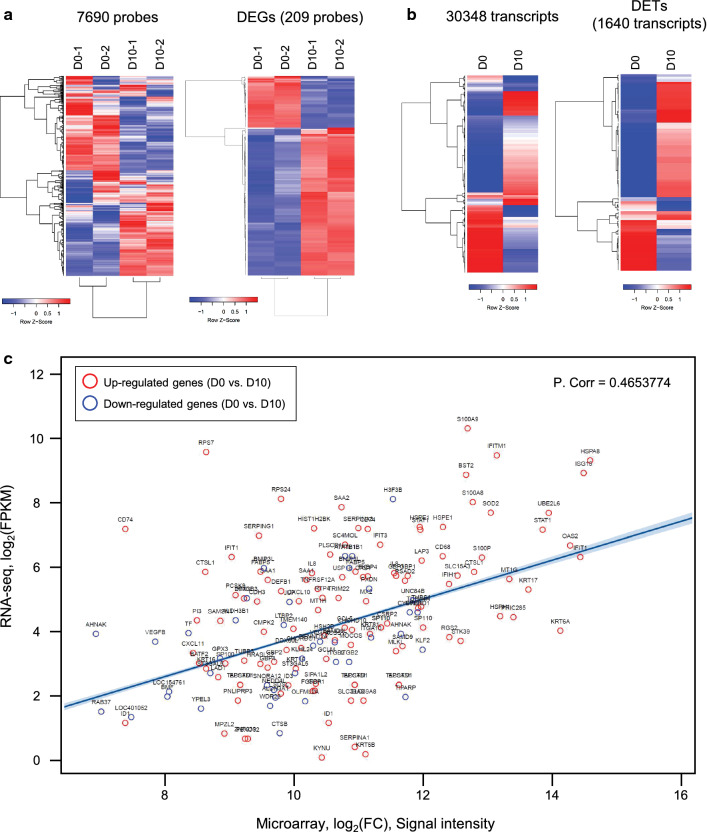
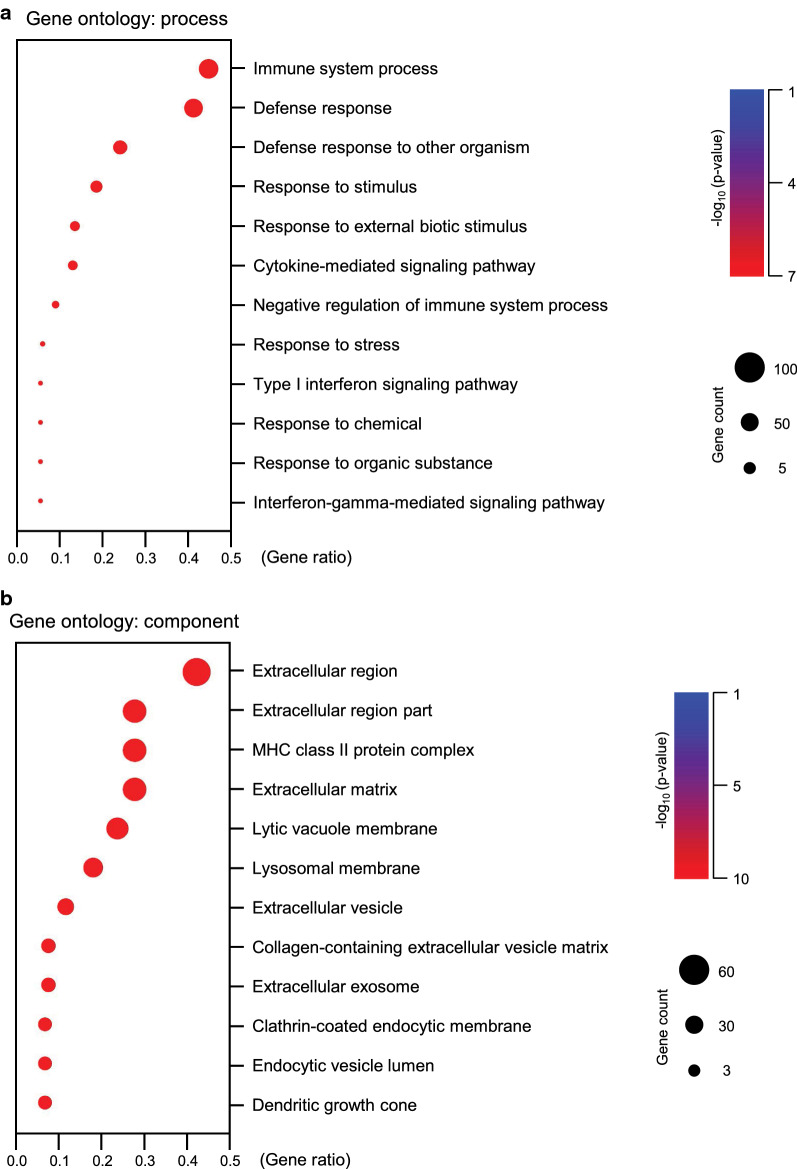
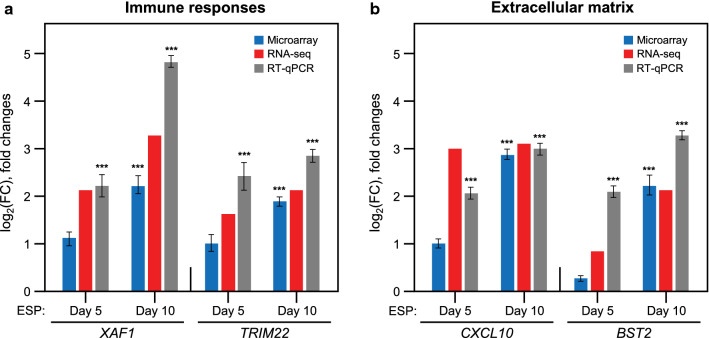
Microarray and RNA-Seq analysis revealed that ESP-treated cholangiocyte H69 spheroids displayed global changes in gene expression compared to untreated spheroids. In ESP-treated H69 spheroids, 185 and 63 probes were found to be significantly upregulated and downregulated, respectively, corresponding to 209 genes (p < 0.01, fold change > 2). RNA-Seq was performed for the validation of the microarray results, and the gene expression patterns in both transcriptome platforms were well matched for 209 significant genes. Gene ontology analysis demonstrated that differentially expressed genes were mainly classified into immune system processes, the extracellular region, and the extracellular matrix. Among the upregulated genes, four genes (XAF1, TRIM22, CXCL10, and BST2) were selected for confirmation using quantitative RT-PCR, resulting in 100% similar expression patterns in microarray and RNA-Seq.
These findings broaden our understanding of the pathological pathways of liver fluke-associated hepatobiliary disorders and suggest a novel therapeutic strategy for this infectious cancer.
华支睾吸虫(Clonorchis sinensis)感染胆道可引起慢性炎症、上皮增生、胆管周围纤维化,甚至胆管癌。其并发症与感染的强度和持续时间成正比。除了虫体对胆管上皮的机械性刺激外,其排泄分泌产物(ESP)还可引起化学性刺激,导致炎症、增殖和自由基生成。
建立了三维胆管细胞球体培养模型,并进行 ESP 处理。这使我们能够通过模拟体内长期反复感染来研究华支睾吸虫病的内在病理机制。
微阵列和 RNA-Seq 分析显示,与未处理的球体相比,ESP 处理的胆管细胞 H69 球体的基因表达发生了全局性变化。在 ESP 处理的 H69 球体中,分别有 185 个和 63 个探针被发现显著上调和下调,分别对应 209 个基因(p<0.01,倍数变化>2)。进行了 RNA-Seq 验证微阵列结果,两种转录组平台的基因表达模式对于 209 个显著基因非常匹配。基因本体论分析表明,差异表达基因主要分为免疫系统过程、细胞外区域和细胞外基质。在上调基因中,选择了四个基因(XAF1、TRIM22、CXCL10 和 BST2)进行定量 RT-PCR 验证,微阵列和 RNA-Seq 的表达模式完全一致。
这些发现拓宽了我们对华支睾吸虫相关肝胆疾病病理途径的理解,并为这种传染性癌症提供了一种新的治疗策略。