Williams Kevin A, Thier Zachary T, Mathews Candler G, Locke Mark D
Orthopaedic Surgery, University of Alabama at Birmingham School of Medicine, Birmingham, USA.
Medical Education, Lincoln Memorial University DeBusk College of Osteopathic Medicine, Knoxville, USA.
Cureus. 2021 Mar 15;13(3):e13893. doi: 10.7759/cureus.13893.
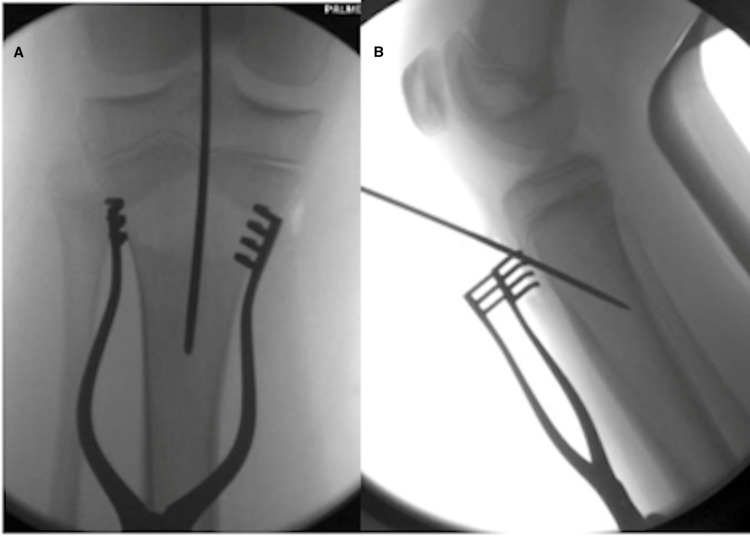
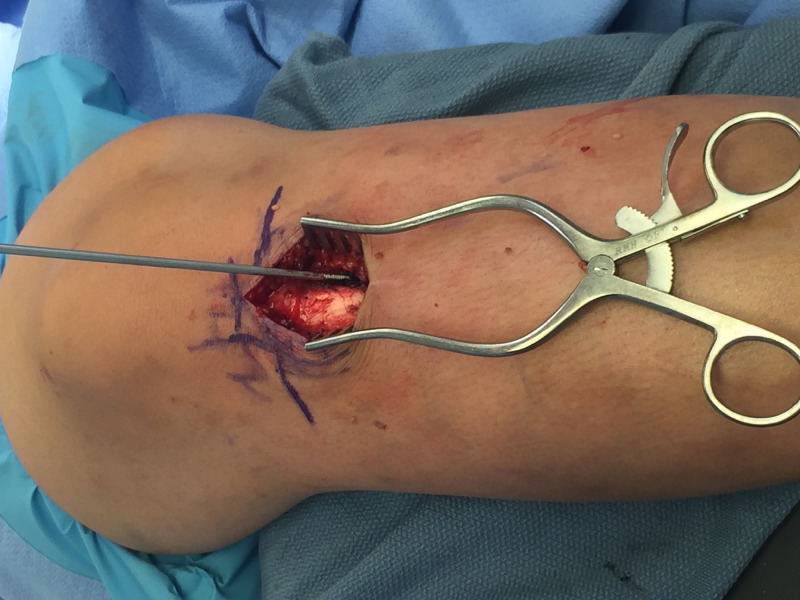
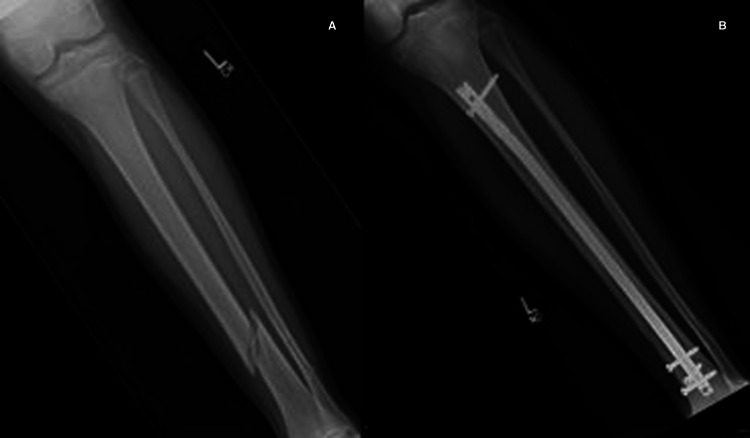
Elastic stable intramedullary nailing (ESIN) and open reduction internal fixation (ORIF) are literature-supported operative treatments for displaced tibial shaft fractures in skeletally immature patients. Very little is written about rigid intramedullary nails (RIMNs) in adolescents. Our purpose is to describe a physeal-sparing, reamed, locked RIMN technique for adolescent tibial shaft fractures and report its safety.
Adolescent patients with tibial shaft fractures indicated for operative intervention at one institution were retrospectively identified from 2011-2018. Patients were classified based on method of fracture fixation. Primary outcomes included fracture union, reoperation, and complication rates.
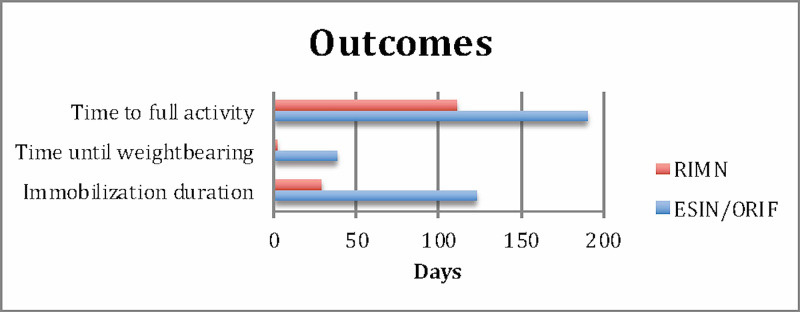
Thirteen patients were included in the RIMN arm, with an average age of 13.8 years. Two patients in the observational group underwent ESIN and seven patients underwent ORIF, with an average age of 11.5 years. Significant differences were found between time of immobilization (28 days vs 121 days), time to touch down weight bearing release (1 day vs 34 days), and hardware pain (2/13 vs 7/9). The RIMN group sustained fewer reoperations (2/13 vs 5/9). No differences were found in rates of complications or fixation failure between groups.
Based on our small pilot study, RIMNs in adolescents should be considered as a potential treatment option when a physeal-sparing distal start point is utilized. Additionally, short-term follow-up suggests safety. Patients who underwent the RIMN procedure required fewer reoperations compared with the observational group. Overall, fracture healing was similar across the two groups. The benefits of RIMN include early immobilization and improved weight-bearing profile.
IV.
弹性稳定髓内钉固定术(ESIN)和切开复位内固定术(ORIF)是文献支持的治疗骨骼未成熟患者胫骨干骨折移位的手术方法。关于青少年使用刚性髓内钉(RIMN)的文献报道很少。我们的目的是描述一种用于青少年胫骨干骨折的保留骨骺、扩髓、锁定RIMN技术,并报告其安全性。
回顾性分析2011年至2018年在一家机构接受手术干预的青少年胫骨干骨折患者。根据骨折固定方法对患者进行分类。主要结局包括骨折愈合、再次手术和并发症发生率。
RIMN组纳入13例患者,平均年龄13.8岁。观察组2例患者接受ESIN,7例患者接受ORIF,平均年龄11.5岁。在固定时间(28天对121天)、开始负重触地时间(1天对34天)和内固定疼痛(2/13对7/9)方面发现有显著差异。RIMN组再次手术较少(2/13对5/9)。两组之间的并发症或固定失败率没有差异。
基于我们的小型初步研究,当采用保留骨骺的远端起始点时,青少年RIMN应被视为一种潜在的治疗选择。此外,短期随访表明其安全性。与观察组相比,接受RIMN手术的患者再次手术较少。总体而言,两组骨折愈合情况相似。RIMN的优点包括早期固定和改善负重情况。
IV级。