Department of Pathology, University of Texas Medical Branch, Galveston, Texas, USA.
BiomedProtection, LLC, Galveston, Texas, USA.
mSphere. 2021 Apr 21;6(2):e00216-21. doi: 10.1128/mSphere.00216-21.
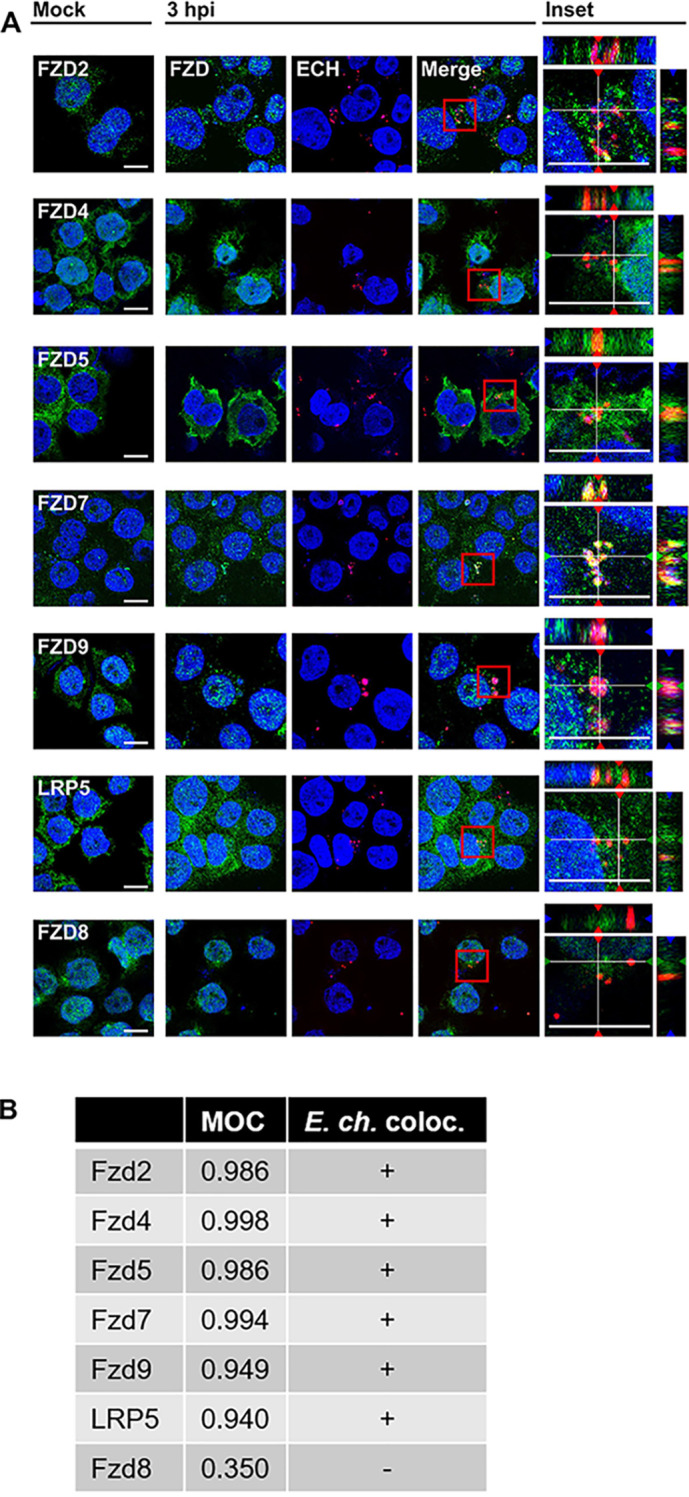
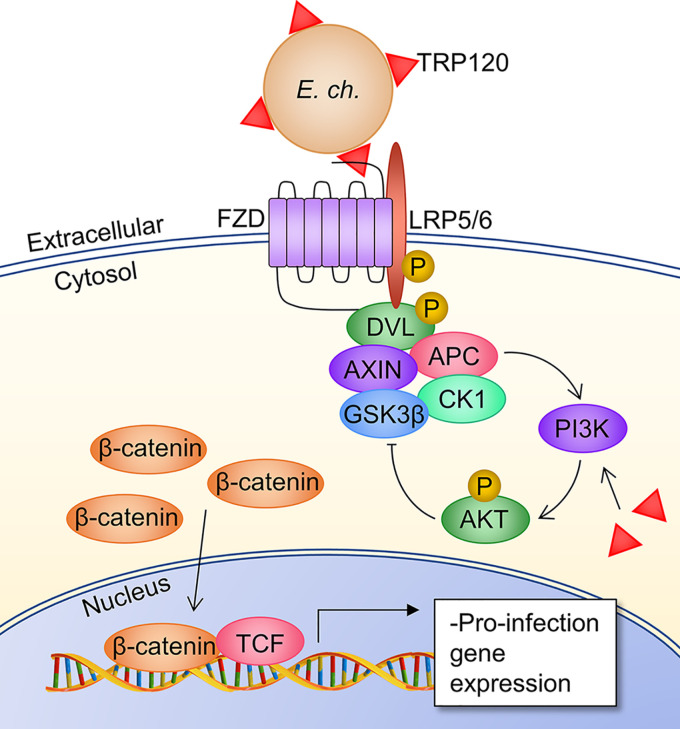
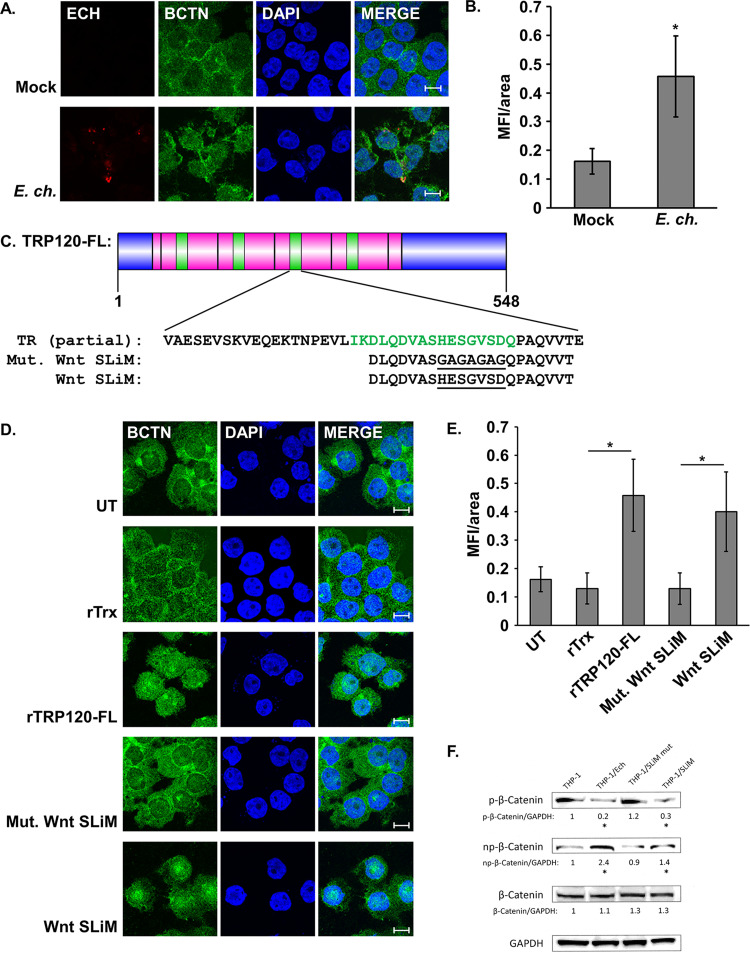
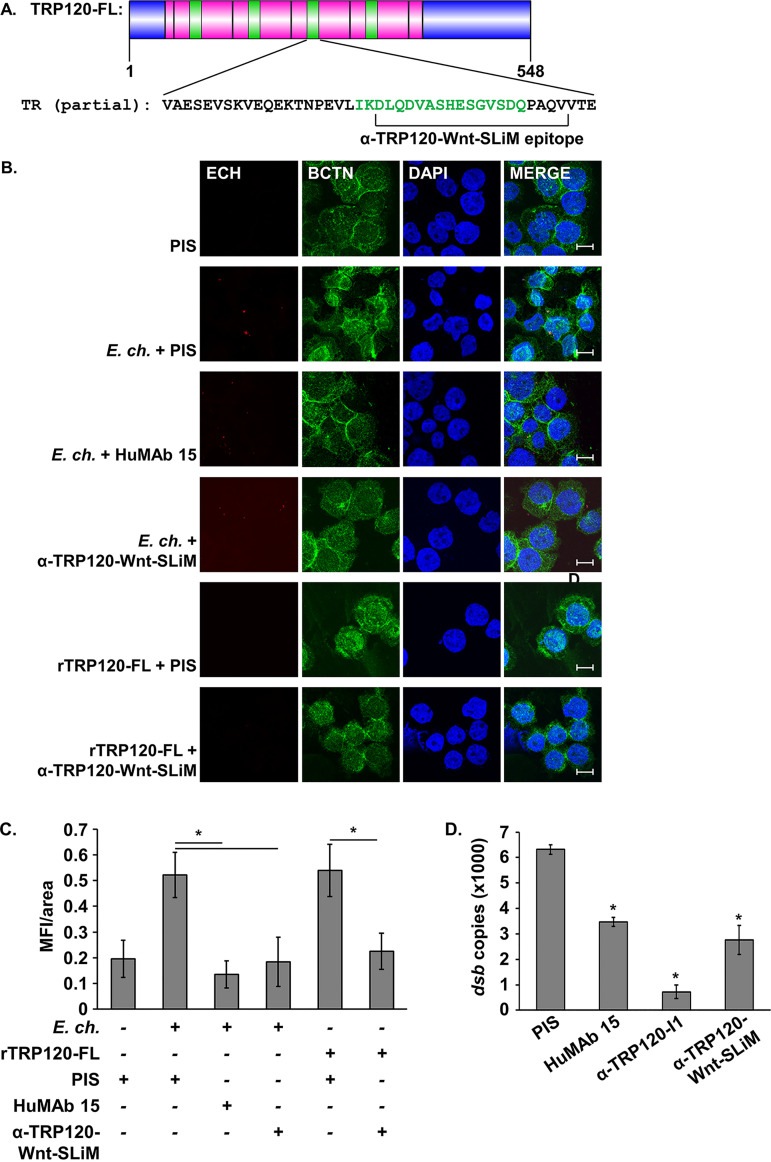
expresses the TRP120 multifunctional effector, which is known to play a role in phagocytic entry, on the surface of infectious dense-cored ehrlichiae, but a cognate host receptor has not been identified. We recently reported that activates canonical Wnt signaling in monocytes to promote bacterial uptake and intracellular survival and that TRP120 was involved in this activation event. To identify the specific mechanism of pathway activation, we hypothesized that TRP120 is a Wnt signaling ligand mimetic that initiates Wnt pathway activity through direct interaction with the Wnt pathway Frizzled family of receptors. In this study, we used confocal immunofluorescence microscopy to demonstrate very strong colocalization between and Fzd2, 4, 5, 7, and 9 as well as coreceptor LRP5 at 1 to 3 h postinfection. Direct binding between TRP120 and multiple Fzd receptors was further confirmed by enzyme-linked immunosorbent assay (ELISA) and surface plasmon resonance (SPR). Interfering RNA knockdown of Wnt receptors, coreceptors, and signaling pathway components significantly reduced infection, demonstrating that complex and redundant interactions are involved in Wnt pathway exploitation. We utilized approaches to identify a repetitive short linear motif (SLiM) in TRP120 that is homologous to Wnt ligands and used mutant SLiM peptides and an α-TRP120-Wnt-SLiM antibody to demonstrate that the TRP120 Wnt SLiM activates the canonical Wnt pathway and promotes infection. This study reports the first example of bacterial mimicry of Wnt pathway ligands and highlights a pathogenic mechanism with potential for targeting by antimicrobial therapeutics. Upon infecting mammalian hosts, establishes a replicative niche in microbe-eating immune system cells where it expertly orchestrates infection and spread. One of the ways survives within these phagocytes is by activating evolutionarily conserved signaling pathways including the Wnt pathway; however, the molecular details of pathway hijacking have not been defined. This study is significant because it identifies an ehrlichial protein that directly interacts with components of the Wnt receptor complex, influencing pathway activity and promoting infection. Consequentially, serves as a unique tool to investigate the intricacies of how pathogens repurpose human immune cell signaling and provides an opportunity to better understand many cellular processes in health and disease. Furthermore, understanding how this bacterium utilizes its small genome to survive within cells that evolved to destroy pathogens will facilitate the development of antibacterial therapeutics that could target as well as other intracellular agents of human disease.
表达 TRP120 多功能效应物,已知其在吞噬进入过程中发挥作用,但尚未鉴定出同源宿主受体。我们最近报道,在单核细胞中激活经典 Wnt 信号通路,以促进细菌摄取和细胞内存活,并且 TRP120 参与了这种激活事件。为了确定途径激活的具体机制,我们假设 TRP120 是 Wnt 信号配体模拟物,通过与 Wnt 途径卷曲家族受体的直接相互作用启动 Wnt 途径活性。在这项研究中,我们使用共聚焦免疫荧光显微镜在感染后 1 至 3 小时证明 与 Fzd2、4、5、7 和 9 以及核心受体 LRP5 之间存在非常强的共定位。通过酶联免疫吸附测定 (ELISA) 和表面等离子体共振 (SPR) 进一步证实了 TRP120 与多种 Fzd 受体之间的直接结合。Wnt 受体、共受体和信号通路成分的干扰 RNA 敲低显著降低了 的感染,表明复杂和冗余的相互作用参与了 Wnt 途径的利用。我们利用 CRISPR 方法鉴定了 TRP120 中的一个重复短线性基序 (SLiM),该基序与 Wnt 配体同源,并使用突变 SLiM 肽和 α-TRP120-Wnt-SLiM 抗体证明 TRP120 Wnt SLiM 激活经典 Wnt 途径并促进 感染。这项研究报告了细菌模拟 Wnt 途径配体的第一个例子,并强调了具有通过抗菌治疗靶向潜力的致病机制。在感染哺乳动物宿主后, 在吞噬微生物的免疫系统细胞中建立复制生态位,在那里它巧妙地协调感染和传播。 在这些吞噬细胞中存活的一种方式是通过激活进化保守的信号通路,包括 Wnt 通路;然而,途径劫持的分子细节尚未确定。这项研究意义重大,因为它鉴定了一种与 Wnt 受体复合物的成分直接相互作用的立克次氏体蛋白,影响途径活性并促进感染。因此, 作为一种独特的工具,可以研究病原体如何重新利用人类免疫细胞信号的复杂性,并为更好地理解健康和疾病中的许多细胞过程提供机会。此外,了解这种细菌如何利用其小基因组在进化为破坏病原体的细胞内生存将有助于开发可以靶向 的抗菌治疗药物以及其他人类疾病的细胞内制剂。