Pediatric Intensive Care Unit, Emma Children's Hospital, Amsterdam University Medical Centers, location AMC, Meibergdreef 9, 1105, Amsterdam, AZ, the Netherlands.
Department of Pediatric Infectious Diseases and Immunology, Wilhelmina Children's Hospital, University Medical Center Utrecht, Utrecht, the Netherlands.
Eur J Pediatr. 2021 Oct;180(10):3141-3149. doi: 10.1007/s00431-021-04079-y. Epub 2021 Apr 23.
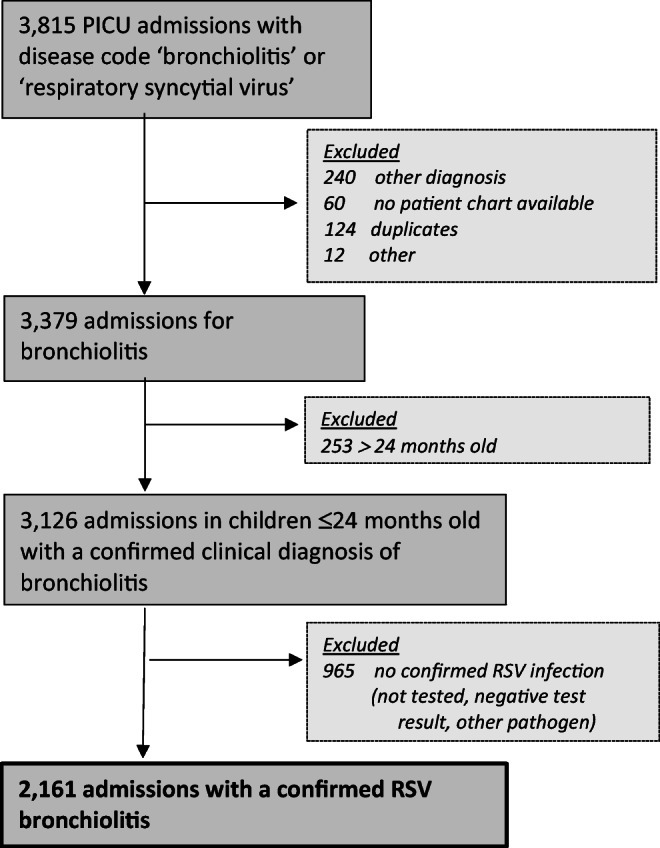
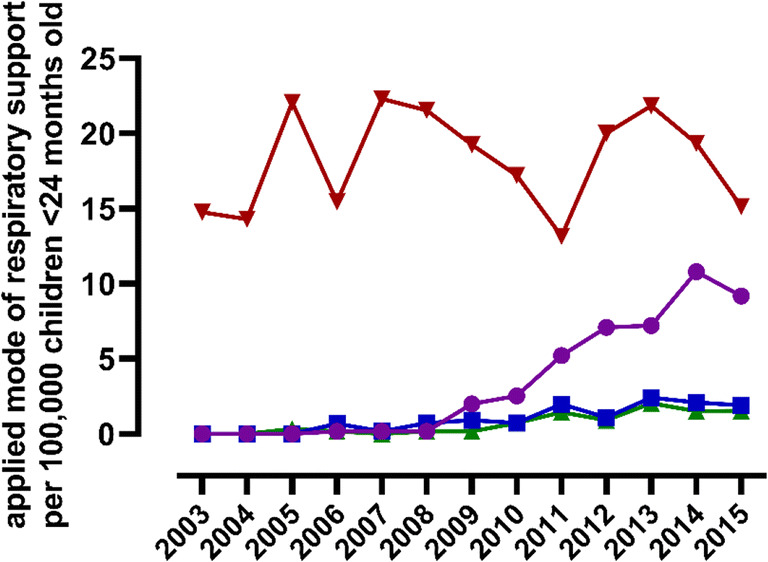
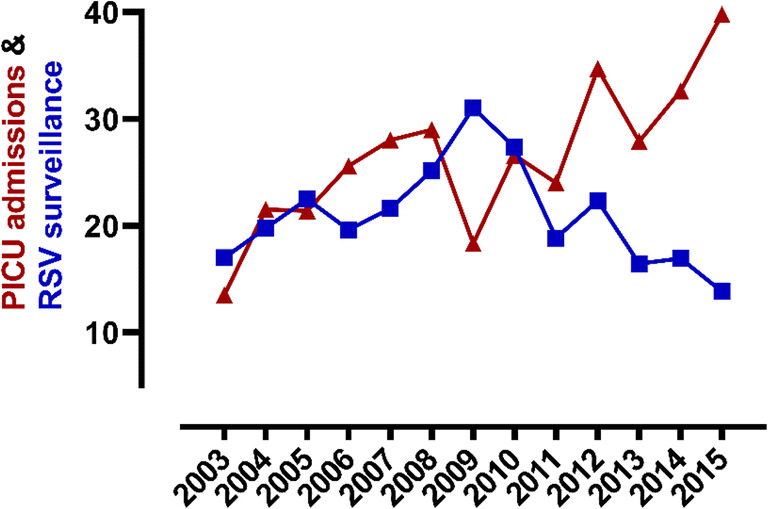
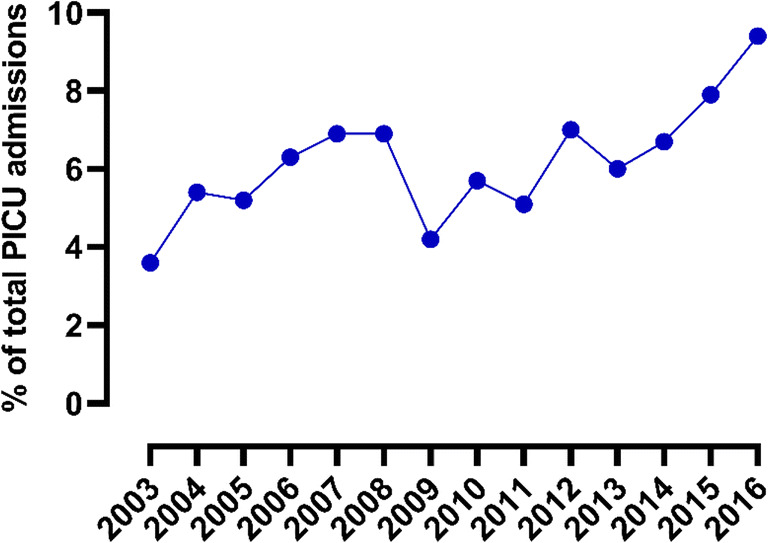
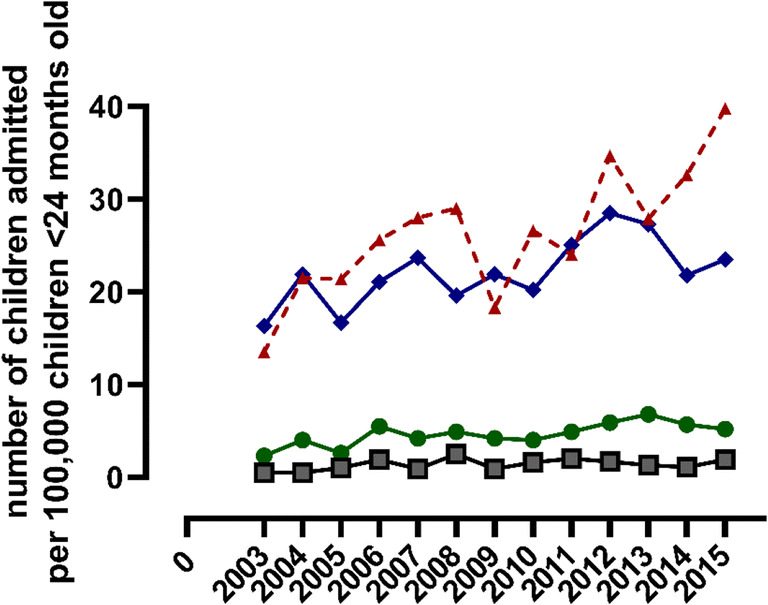
Respiratory syncytial virus (RSV) bronchiolitis causes substantial morbidity and mortality in young children, but insight into the burden of RSV bronchiolitis on pediatric intensive care units (PICUs) is limited. We aimed to determine the burden of RSV bronchiolitis on the PICUs in the Netherlands. Therefore, we identified all children ≤ 24 months of age with RSV bronchiolitis between 2003 and 2016 from a nationwide PICU registry. Subsequently we manually checked their patient records for correct diagnosis and collected patient characteristics, additional clinical data, respiratory support modes, and outcome. In total, 2161 children were admitted to the PICU for RSV bronchiolitis. The annual number of admissions increased significantly during the study period (β 4.05, SE 1.27, p = 0.01), and this increase was mostly driven by increased admissions in children up to 3 months old. Concomitantly, non-invasive respiratory support significantly increased (β 7.71, SE 0.92, p < 0.01), in particular the use of high flow nasal cannula (HFNC) (β 6.69, SE 0.96, p < 0.01), whereas the use of invasive ventilation remained stable.Conclusion: The burden of severe RSV bronchiolitis on PICUs has increased in the Netherlands. Concomitantly, the use of non-invasive respiratory support, especially HFNC, has increased. What is Known: • RSV bronchiolitis is a major cause of childhood morbidity and mortality and may require pediatric intensive care unit admission. • The field of pediatric critical care for severe bronchiolitis has changed due to increased non-invasive respiratory support options. What is New: • The burden of RSV bronchiolitis for the Dutch PICUs has increased. These data inform future strategic PICU resource planning and implementation of RSV preventive strategies. • There was a significant increase in the use of high flow nasal cannula at the PICU, but the use of invasive mechanical ventilation did not decrease.
呼吸道合胞病毒(RSV)毛细支气管炎会给幼儿带来大量的发病率和死亡率,但对儿科重症监护病房(PICU)中 RSV 毛细支气管炎负担的了解有限。我们旨在确定荷兰 PICU 中 RSV 毛细支气管炎的负担。因此,我们从全国性 PICU 登记处确定了 2003 年至 2016 年间所有≤24 个月龄患有 RSV 毛细支气管炎的儿童。随后,我们手动检查了他们的病历以确认正确的诊断,并收集了患者特征、其他临床数据、呼吸支持模式和结局。共有 2161 名儿童因 RSV 毛细支气管炎被收入 PICU。在研究期间,入院人数呈显著上升趋势(β 4.05,SE 1.27,p = 0.01),这种增加主要是由于 3 个月以下儿童的入院人数增加所致。同时,非侵入性呼吸支持显著增加(β 7.71,SE 0.92,p < 0.01),特别是高流量鼻导管(HFNC)的使用(β 6.69,SE 0.96,p < 0.01),而侵入性通气的使用保持稳定。结论:荷兰 PICU 中严重 RSV 毛细支气管炎的负担有所增加。同时,非侵入性呼吸支持的使用,特别是 HFNC,有所增加。已知:·RSV 毛细支气管炎是儿童发病率和死亡率的主要原因,可能需要儿科重症监护病房入院。·由于非侵入性呼吸支持选择的增加,小儿重症监护领域的严重毛细支气管炎发生了变化。新发现:·荷兰 PICU 中 RSV 毛细支气管炎的负担有所增加。这些数据为未来的战略 PICU 资源规划和 RSV 预防策略的实施提供了信息。·PICU 中高流量鼻导管的使用显著增加,但侵入性机械通气的使用并未减少。