Wang Xiaoyan, Yang Qian, Zhou Xiaofeng, Chen Ting, Dou Liwen, Wang Furong, Wang Wei
College of Traditional Chinese Medicine, Shandong University of Traditional Chinese Medicine, Jinan, China.
Rizhao Hospital of Traditional Chinese Medicine, Rizhao, China.
Front Pharmacol. 2021 Apr 9;12:642685. doi: 10.3389/fphar.2021.642685. eCollection 2021.
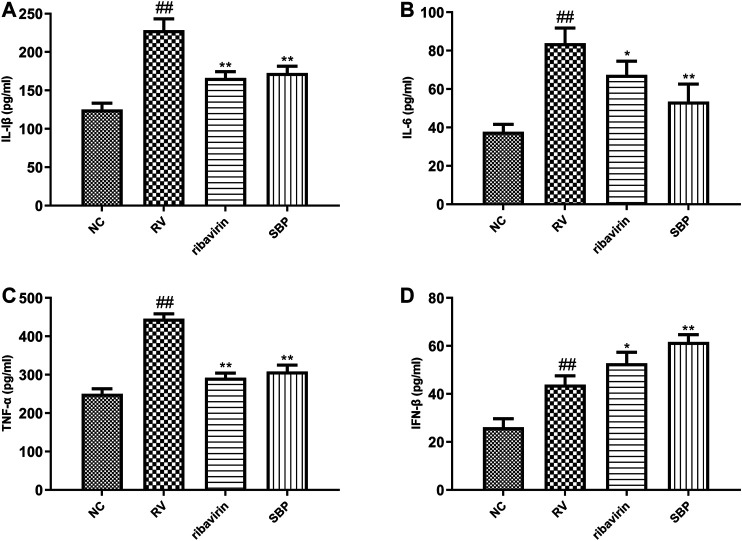
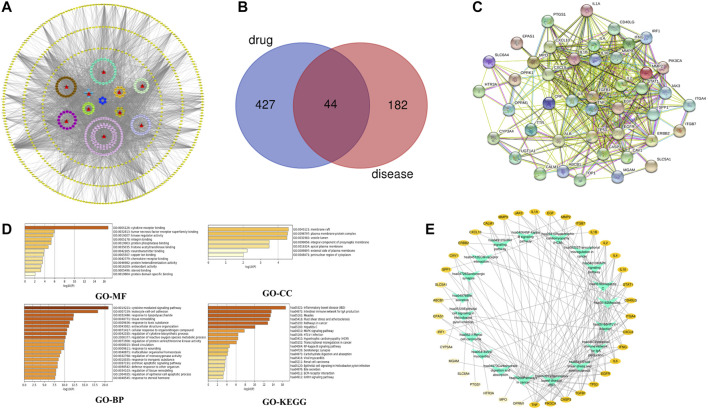
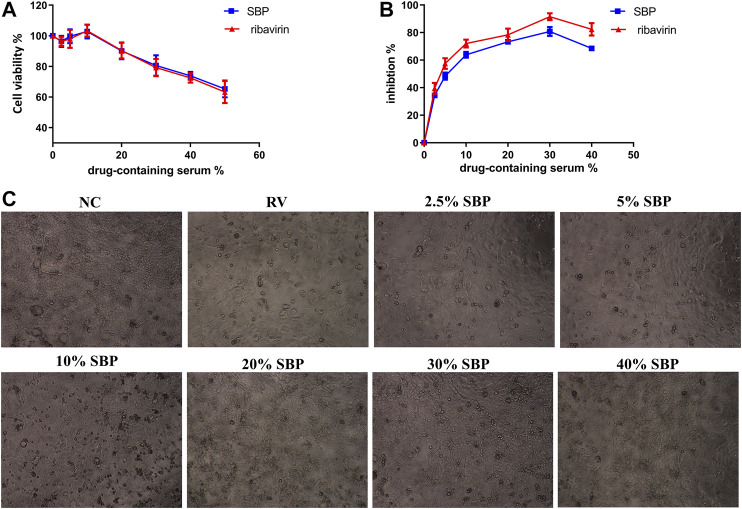
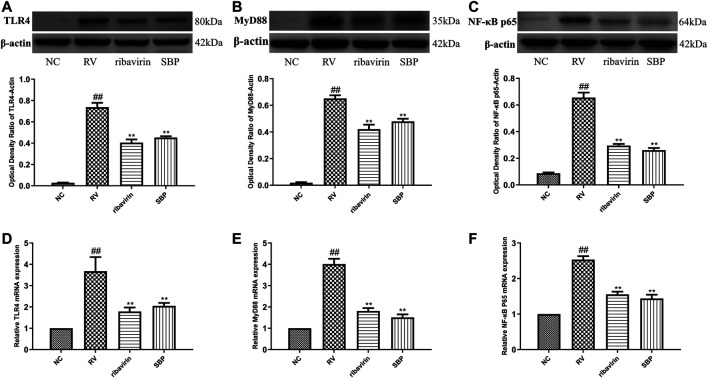
Rotavirus enteritis (RVE) is a common acute intestinal infectious disease caused by rotavirus infection. It is an important cause of death in children younger than 5 years worldwide. Shenling baizhu powder (SBP), a classic traditional Chinese formulation, is one of the most popularly prescribed medicines for digestive diseases. Clinical studies have revealed the protective effects of SBP on RVE. However, the potential mechanism is still unclear. In this study, we aimed to evaluate the anti-rotavirus effect of SBP and its mechanism, focusing on the TLR4/MyD88/NF-κB signaling pathway. Our results demonstrated that, based on the inhibition of the virus-induced cytopathic effect in Caco-2 cells, the concentration for 50% of maximal effect (EC) and selectivity index (SI) of SBP for RV-SA11 in the serum were 5.911% and 11.63, respectively. A total of 219 active compounds with oral bioavailability ≥30% and drug-likeness ≥ 0.18 were selected from the 10 ingredients present in the formulation of SBP, which acted on 471 potential targets. A total of 226 target genes of RVE were obtained from the GeneCards database. The protein-protein interaction (PPI) network showed that there was a close interaction between 44 common targets of SBP and RVE. The results of Gene Ontology (GO) and Kyoto Encyclopedia of Genes and Genomes (KEGG) enrichment analysis showed that SBP acted on RVE through various inflammatory pathways and the intestinal immune network. Subsequently, we investigated the effect of SBP on TLR4/MyD88/NF-κB signaling pathway . After infection with RV- SA11, the expression of TLR4, MyD88, and NF-κB mRNA and protein increased significantly, which could be abolished by SBP treatment. In addition, the IL-1β, TNF-α, IL-6, and IFN-β levels increased markedly in Caco-2 cells infected with RV-SV11. Treatment with SBP partly reversed the changes of IL-1β, TNF-α, and IL-6, while further increased the level of IFN-β. In conclusion, our study revealed that SBP can significantly inhibit rotavirus replication and proliferation . The antiviral effect may be related to the regulation of the TLR4/MyD88/NF-κB signaling pathway, followed by the down regulation of inflammatory cytokines and up regulation of IFN-β induced by rotavirus.
轮状病毒肠炎(RVE)是由轮状病毒感染引起的常见急性肠道传染病。它是全球5岁以下儿童死亡的重要原因。参苓白术散(SBP)是一种经典的中药配方,是治疗消化系统疾病最常用的处方药之一。临床研究已经揭示了SBP对RVE的保护作用。然而,其潜在机制仍不清楚。在本研究中,我们旨在评估SBP的抗轮状病毒作用及其机制,重点关注TLR4/MyD88/NF-κB信号通路。我们的结果表明,基于对Caco-2细胞中病毒诱导的细胞病变效应的抑制作用,SBP对血清中RV-SA11的半数最大效应浓度(EC)和选择性指数(SI)分别为5.911%和11.63。从SBP配方中的10种成分中筛选出219种口服生物利用度≥30%且类药性≥0.18的活性化合物,它们作用于471个潜在靶点。从GeneCards数据库中获得了226个RVE的靶基因。蛋白质-蛋白质相互作用(PPI)网络显示,SBP和RVE的44个共同靶点之间存在密切相互作用。基因本体论(GO)和京都基因与基因组百科全书(KEGG)富集分析结果表明,SBP通过多种炎症途径和肠道免疫网络作用于RVE。随后,我们研究了SBP对TLR4/MyD88/NF-κB信号通路的影响。用RV-SA11感染后,TLR4、MyD88和NF-κB mRNA及蛋白的表达显著增加,而SBP处理可消除这种增加。此外,在感染RV-SV11的Caco-2细胞中,IL-1β、TNF-α、IL-6和IFN-β水平显著升高。SBP处理部分逆转了IL-1β、TNF-α和IL-6的变化,同时进一步提高了IFN-β水平。总之,我们的研究表明SBP可显著抑制轮状病毒的复制和增殖。其抗病毒作用可能与调节TLR4/MyD88/NF-κB信号通路有关,进而下调炎症细胞因子并上调轮状病毒诱导的IFN-β。