Center for Research on Men's Health, Vanderbilt University.
Department of Medicine Health & Society, Vanderbilt University.
Health Commun. 2022 Aug;37(9):1147-1156. doi: 10.1080/10410236.2021.1913837. Epub 2021 Apr 25.
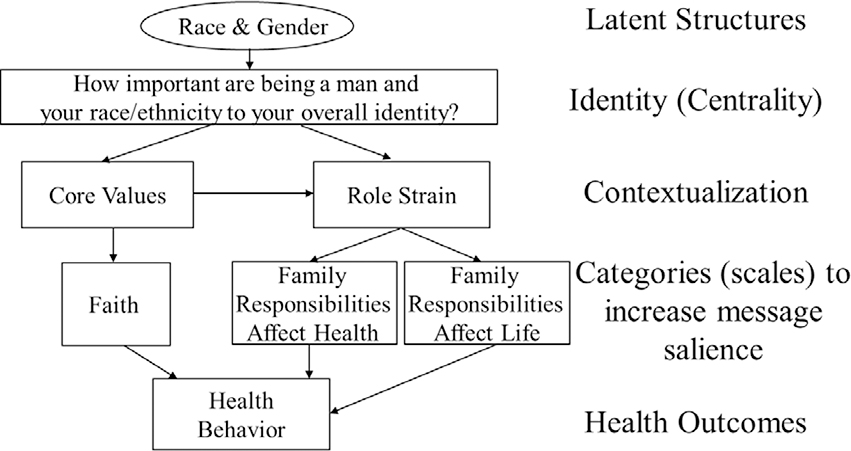
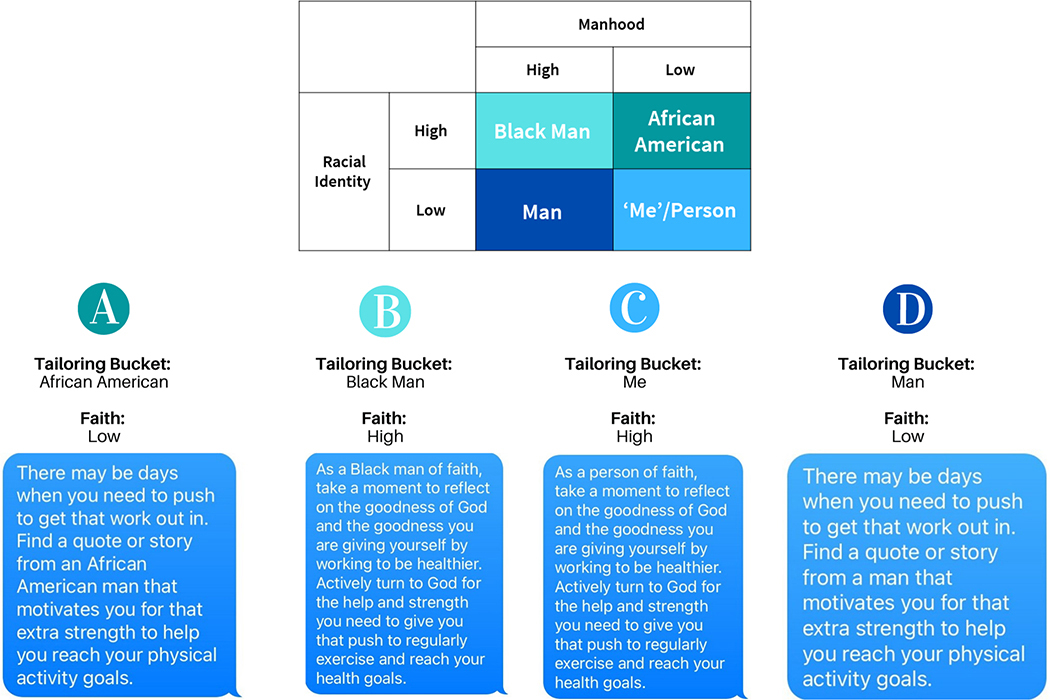
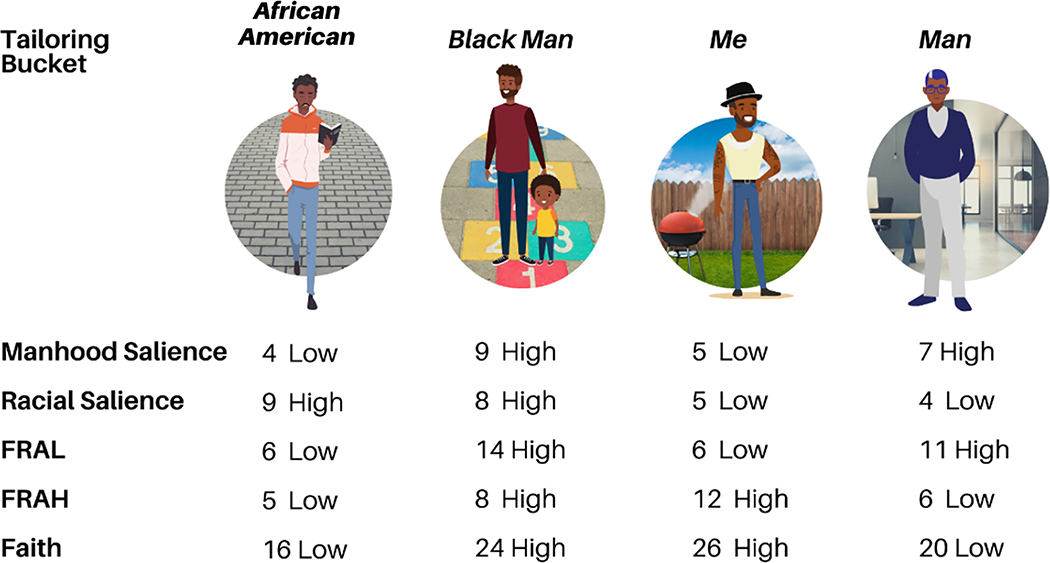
In this paper, we describe our approach to individualizing messages to promote the health of middle-aged and older heterosexual, cisgender African American men. After arguing the importance of being population specific, we describe the process we use to increase the salience of health messages for this population by operationalizing the identity concepts of centrality and contextualization. We also present a measure of African American manhood and discuss how manhood is congruent with qualitative research that describes how African American men view their values, identities, goals, and aspirations in ways that can be utilized to create more meaningful and impactful messages to promote and maintain health behaviors. Our tailoring strategy uses an intersectional approach that considers how the centrality of racial identity and manhood and the salience of religiosity, spirituality, and role strains may help to increase the impact of health messages. We highlight the need to consider how the context of health behavior and the meaning ascribed to certain behaviors are gendered, not only from a man's perspective, but also how his social networks, behavioral context, and the dynamic sociopolitical climate may consider gendered ideals in ways that shape behavior. We close by discussing the need to apply this approach to other populations of men, women, and those who are non-gender binary because this strategy builds from the population of interest and incorporates factors that they deem central and salient to their identities and behaviors. These factors are important to consider in interventions using health messages to pursue health equity.
本文介绍了我们针对中年和老年异性恋、顺性别非裔美国男性的健康促进信息进行个性化定制的方法。在论证了针对特定人群进行定制的重要性之后,我们描述了通过操作核心和情境化这两个身份概念来提高该人群健康信息显著性的过程。我们还提出了一个非裔美国男性气概的衡量标准,并讨论了男性气概如何与定性研究相契合,这些研究描述了非裔美国男性如何看待自己的价值观、身份、目标和愿望,这些都可以被用来创建更有意义和更有影响力的信息,以促进和维持健康行为。我们的定制策略采用了一种交叉方法,考虑了种族身份和男性气概的核心地位,以及宗教信仰、精神信仰和角色紧张的显著性,这些因素可能有助于提高健康信息的影响力。我们强调需要考虑健康行为的背景以及某些行为的意义是如何具有性别特征的,不仅要从男性的角度考虑,还要考虑他的社交网络、行为背景和动态社会政治气候如何以塑造行为的方式考虑性别理想。最后,我们讨论了将这种方法应用于其他男性、女性和非二元性别的人群的必要性,因为这种策略是基于目标人群构建的,并纳入了他们认为与自己的身份和行为相关且显著的因素。在使用健康信息来追求健康公平的干预措施中,这些因素是需要考虑的重要因素。