Division of Biomedical Ethics, Institute of Experimental Medicine, ChristianAlbrechts-University of Kiel, Kiel, Germany.
Department of Health, Medicine and Caring Sciences, Unit of Health Care Analysis, Linköping University, Linköping, Sweden.
Int J Health Policy Manag. 2022 Jul 1;11(7):1148-1157. doi: 10.34172/ijhpm.2021.16. Epub 2021 Mar 15.
Priority setting in healthcare that aims to achieve a fair and efficient allocation of limited resources is a worldwide challenge. Sweden has developed a sophisticated approach. Still, there is a need for a more detailed insight on how measures permeate clinical life. This study aimed to assess physicians' views regarding (1) impact of scarce resources on patient care, (2) clinical decision-making, and (3) the ethical platform and national guidelines for healthcare by the National Board of Health and Welfare (NBHW).
An online cross-sectional questionnaire was sent to two groups in Sweden, 2016 and 2017. Group 1 represented 331 physicians from different departments at one University hospital and group 2 consisted of 923 members of the Society of Cardiology.
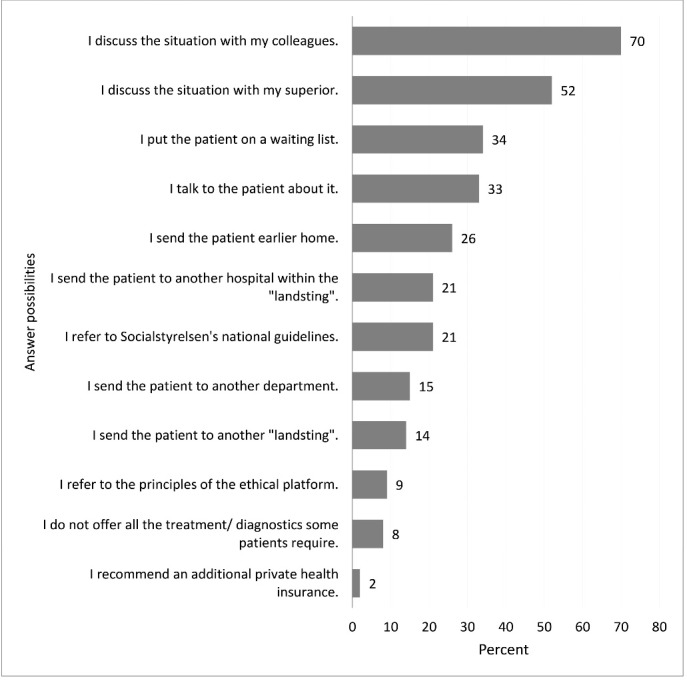
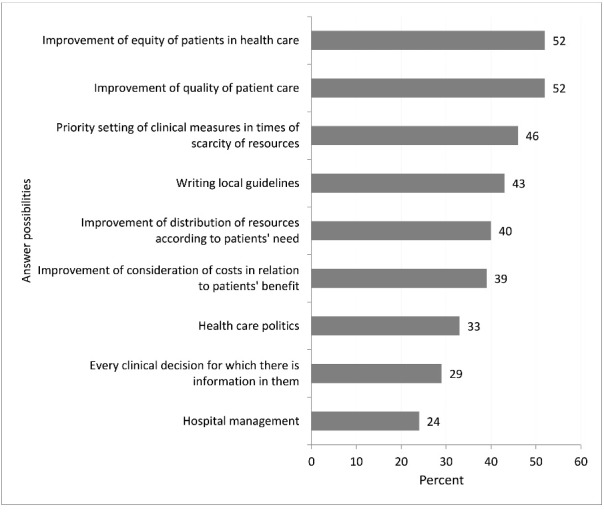
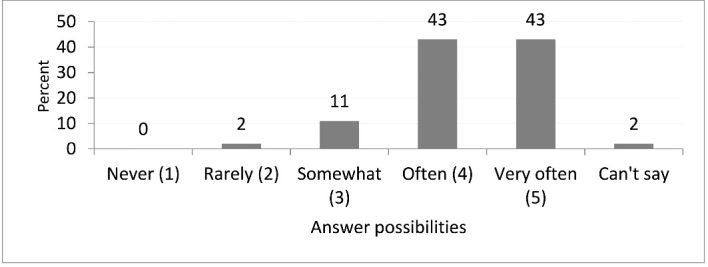
Overall, a 26% (328/1254) response rate was achieved, 49% in group 1 (162/331), 18% in group 2 (166/923). Scarcity of resources was perceived by 59% more often than 'at least once per month,' whilst 60% felt less than 'well-prepared' to address this issue. Guidelines in general had a lot of influence and 19% perceived them as limiting decision-making. 86% professed to be mostly independent in decision-making. 36% knew the ethical platform 'well' and 'very well' and 64% NBHW's national guidelines. 57% expressed a wish for further knowledge and training regarding the ethical platform and 51% for support in applying NBHW's national guidelines.
There was a need for more support to deal with scarcity of resources and for increased knowledge about the ethical platform and NBHW's national guidelines. Independence in clinical decision-making was perceived as high and guidelines in general as important. Priority setting as one potential pathway to fair and transparent decision-making should be highlighted more in Swedish clinical settings, with special emphasis on the ethical platform.
旨在实现有限资源公平有效分配的医疗保健优先排序是一个全球性挑战。瑞典已经开发出一种复杂的方法。然而,仍需要更详细地了解这些措施如何渗透到临床生活中。本研究旨在评估医生对以下方面的看法:(1)稀缺资源对患者护理的影响,(2)临床决策,以及(3)国家卫生福利局(NBHW)的伦理平台和国家医疗保健指南。
2016 年和 2017 年,向瑞典的两个小组发送了一份在线横断面问卷。第 1 组由一家大学医院不同科室的 331 名医生组成,第 2 组由心脏病学会的 923 名成员组成。
总体而言,回复率为 26%(328/1254),第 1 组为 49%(162/331),第 2 组为 18%(166/923)。59%的人认为资源稀缺的情况比“每月至少一次”更常见,而 60%的人认为自己在解决这个问题方面准备不足。一般来说,指南有很大的影响力,19%的人认为它们限制了决策。86%的人表示在决策方面大多是独立的。36%的人对伦理平台“非常熟悉”和“非常了解”,64%的人对 NBHW 的国家指南也很熟悉。57%的人表示希望进一步了解伦理平台的知识和培训,51%的人希望在应用 NBHW 的国家指南方面得到支持。
需要更多的支持来应对资源短缺的问题,需要增加对伦理平台和 NBHW 国家指南的了解。临床决策的独立性被认为很高,一般来说指南也很重要。作为公平透明决策的潜在途径之一的优先排序应该在瑞典的临床环境中更加突出,特别强调伦理平台。