Attending Physician, Department of Pediatrics, Division of Pediatric Infectious Diseases, NYU Langone Long Island Hospital; Assistant Professor, Department of Pediatrics, NYU Long Island School of Medicine.
Chief, Department of Pediatrics, Division of Pediatric Infectious Diseases, NYU Langone Long Island Hospital; Professor, Department of Pediatrics, NYU Long Island School of Medicine; Chair, Department of Pediatrics, NYU Langone Long Island Hospital.
MedEdPORTAL. 2021 Apr 23;17:11150. doi: 10.15766/mep_2374-8265.11150.
Human papillomavirus (HPV) infection and related cancers are a major cause of morbidity and mortality worldwide. Routine vaccination against HPV is recommended for patients starting at age 9-12 years. Discussing this vaccine with parents of young children can be challenging for clinicians. Barriers include parental beliefs, strength and quality of clinician recommendations, physician knowledge of HPV disease and vaccines, and provider comfort levels with discussing sexuality.
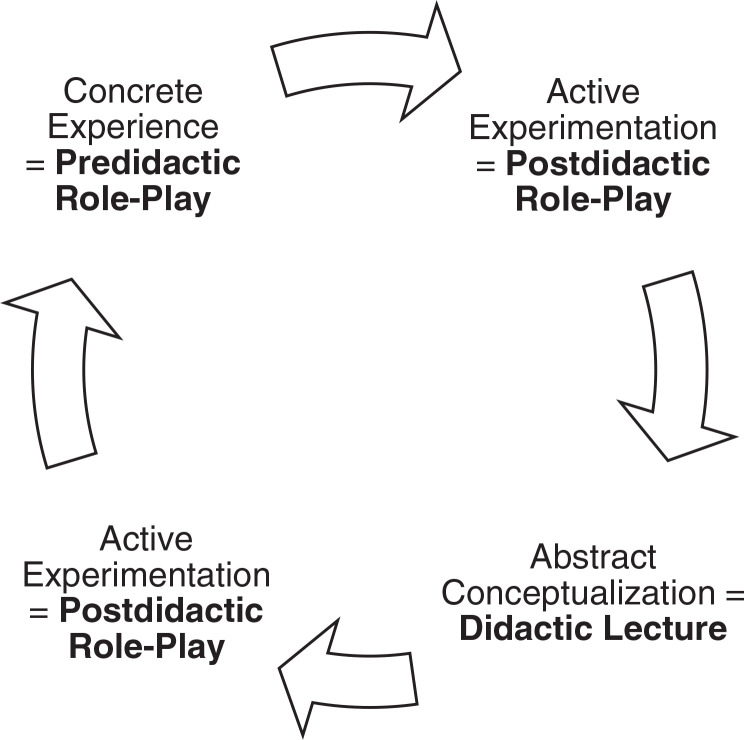
Our interactive workshop began with a predidactic role-play session addressing common concerns about the HPV vaccine where participants took turns playing a concerned parent or provider. We then gave a 30-minute didactic lecture and conducted a postdidactic role-play session to practice communication skills in promoting the HPV vaccine. All participants completed pre- and postintervention knowledge and skill self-assessments.
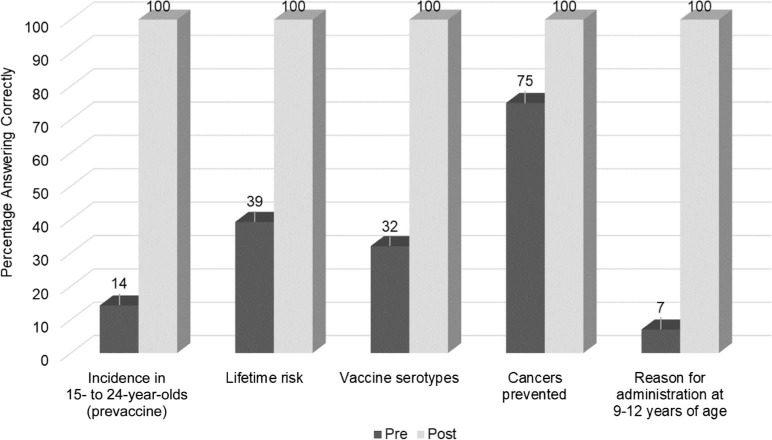
Twenty-eight pediatric residents and medical students participated. We observed significant improvement in their ability to appropriately recommend the HPV vaccine in the postdidactic role-play (all s < .02). Learner knowledge improved from pre- to postintervention (from 34% to 100%, < .0025, based on average score), as did self-perceived comfort and confidence levels (from 3.6 to 4.3, < .0001, average score based on a 5-point Likert scale).
An interactive workshop utilizing role-play supplemented by a didactic lecture was effective in improving participants' knowledge, communication skills, comfort levels, and confidence levels regarding HPV disease and vaccines. The workshop offers a practical and interpersonal approach to improving learners' skills in discussing the HPV vaccine with parents.
人乳头瘤病毒(HPV)感染和相关癌症是全球发病率和死亡率的主要原因。建议从 9-12 岁开始为患者常规接种 HPV 疫苗。与幼儿的父母讨论这种疫苗对临床医生来说具有挑战性。障碍包括父母的信念、临床医生建议的强度和质量、医生对 HPV 疾病和疫苗的了解,以及提供者对讨论性行为的舒适度。
我们的互动研讨会从一个预演讲角色扮演课程开始,该课程针对 HPV 疫苗的常见问题,参与者轮流扮演关心的父母或提供者。然后,我们进行了 30 分钟的演讲,并进行了演讲后的角色扮演,以练习促进 HPV 疫苗接种的沟通技巧。所有参与者都完成了干预前后的知识和技能自我评估。
28 名儿科住院医师和医学生参加了研讨会。我们观察到,他们在演讲后的角色扮演中能够适当地推荐 HPV 疫苗的能力有了显著提高(均<0.02)。学习者的知识从干预前到干预后有所提高(从 34%提高到 100%,<0.0025,基于平均分数),自我感知的舒适度和信心水平也有所提高(从 3.6 提高到 4.3,<0.0001,基于 5 分制的平均分数)。
利用角色扮演辅以演讲的互动研讨会在提高参与者对 HPV 疾病和疫苗的知识、沟通技巧、舒适度和信心水平方面非常有效。该研讨会提供了一种实用且注重人际的方法,可提高学习者与父母讨论 HPV 疫苗的技能。