Department of Clinical Laboratory, Sir Run Run Shaw Hospital, School of Medicine, Zhejiang University, Hangzhou, Zhejiang 310016, P.R. China.
Oncol Rep. 2021 Jun;45(6). doi: 10.3892/or.2021.8061. Epub 2021 Apr 28.
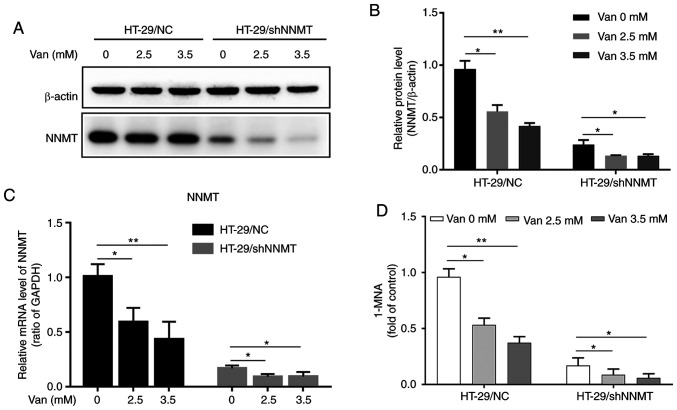
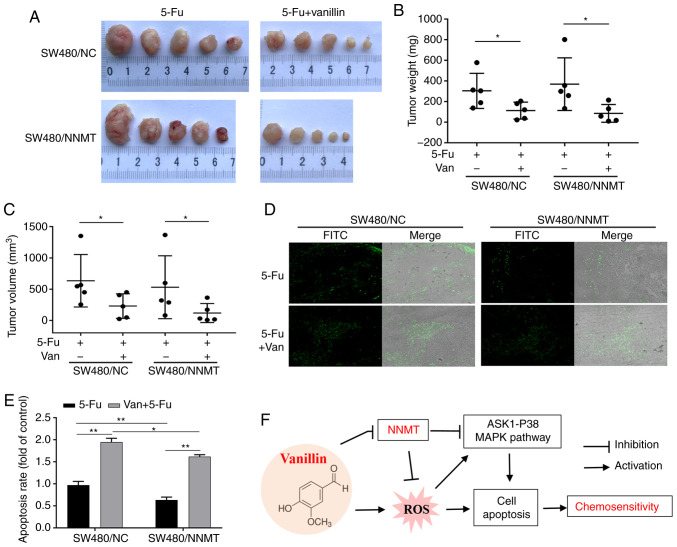
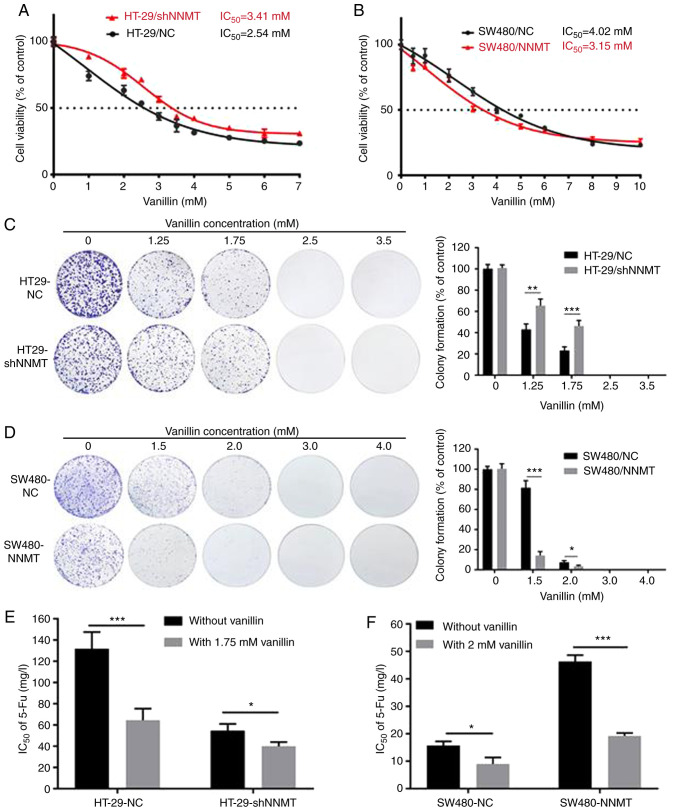
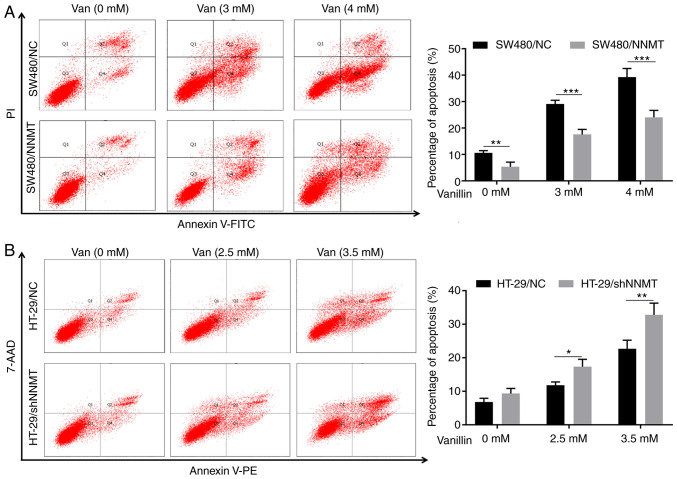
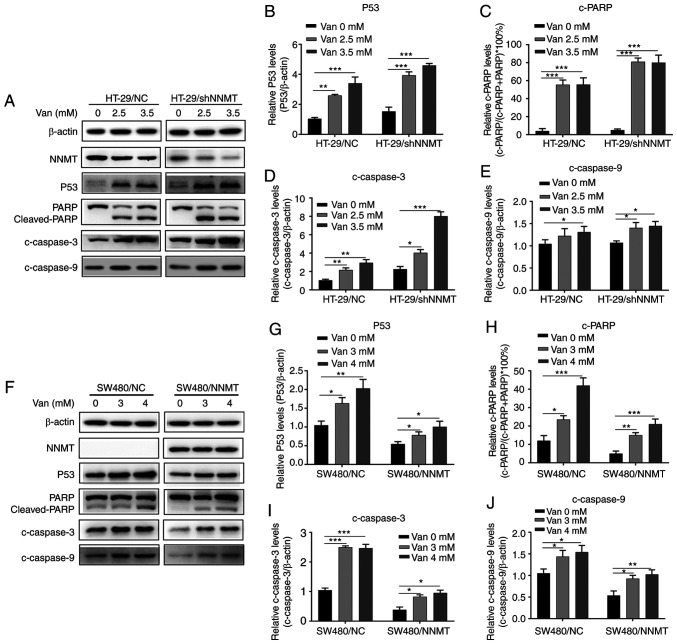
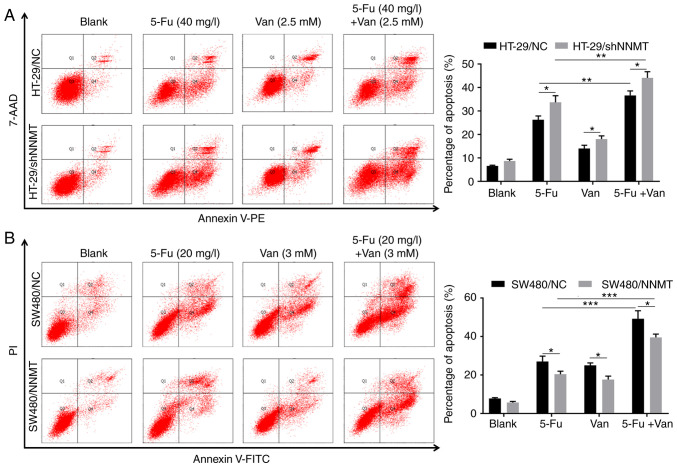
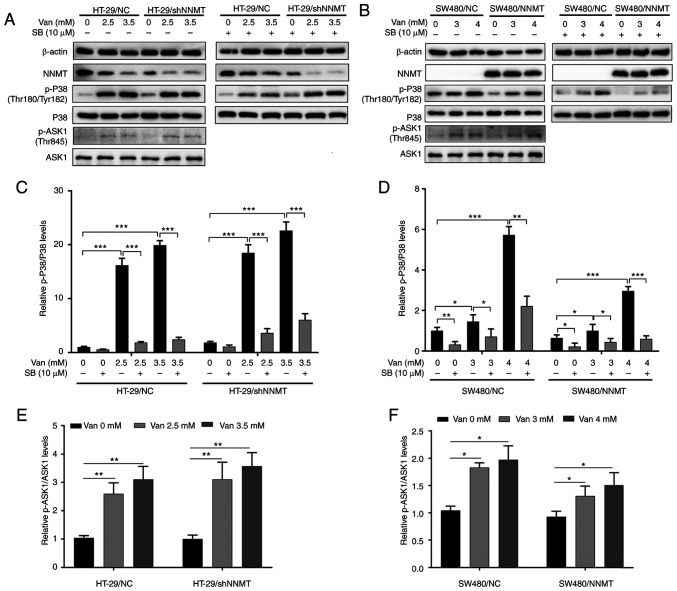
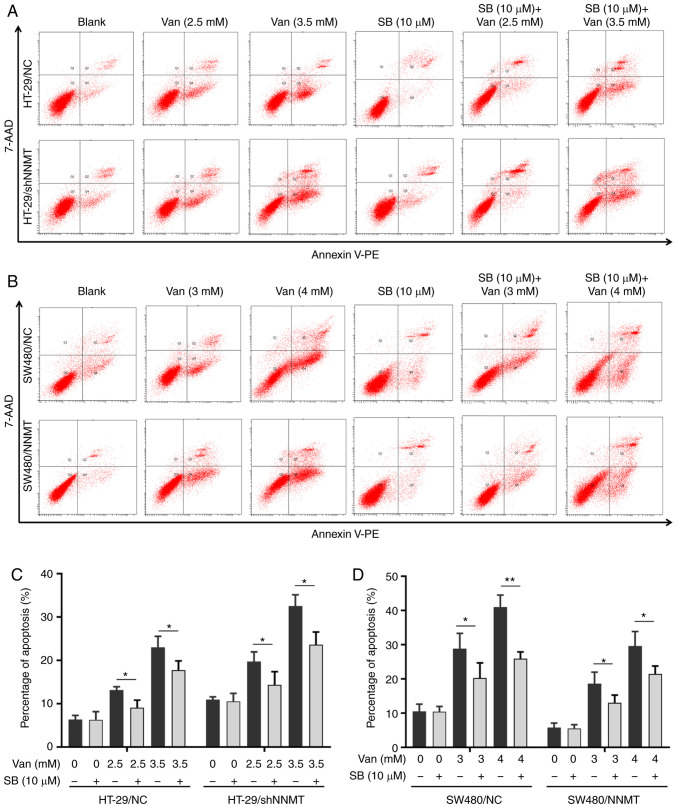
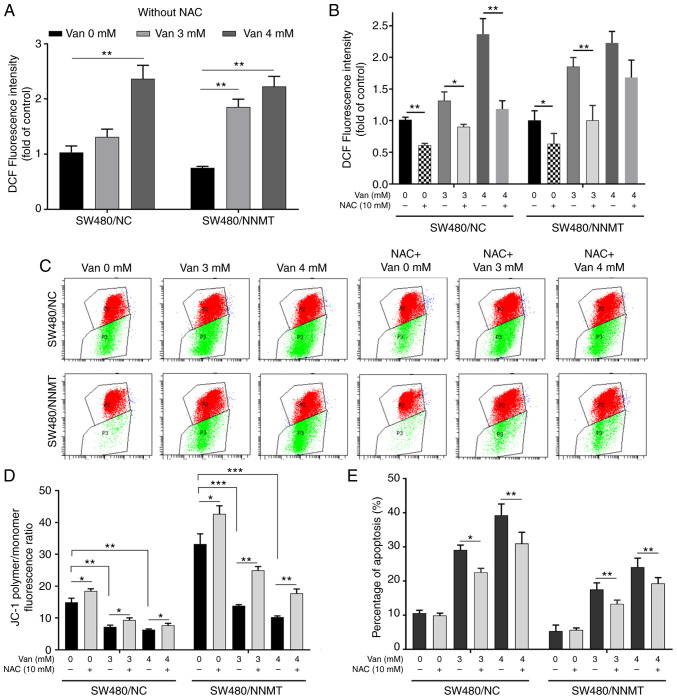
Chemoresistance is the main cause of poor prognosis in colorectal cancer (CRC). Nicotinamide N‑methyltransferase (NNMT) is a metabolic enzyme that is upregulated in various tumor types. It has been reported that NNMT inhibits apoptosis and enhances resistance to 5‑fluorouracil (5‑Fu) via inhibition of the apoptosis signal regulating kinase 1 (ASK1)‑p38 MAPK pathway in CRC cells. A natural product library was screened, and it was found that vanillin, also known as 4‑hydroxy‑3‑methoxybenzaldehyde, a plant secondary metabolite found in several essential plant oils, mainly , , and , may be a promising anticancer compound targeted to NNMT. The aim of the present study was to explore the effect of vanillin on promoting apoptosis and attenuating NNMT‑induced resistance to 5‑Fu in CRC. Lentiviral vectors of short hairpin RNA and small interfering RNA were transfected into HT‑29 cells to construct NNMT‑knockdown HT‑29 cell lines. Vectors containing an open reading frame of NNMT were stably transfected into SW480 cells to induce NNMT overexpression in SW480 cell lines. Vanillin was found to inhibit the mRNA and protein expression levels of NNMT following the inhibition of NNMT activity in HT‑29 cell lines. Vanillin was able to reverse NNMT‑induced increased cell proliferation, decreased cell apoptosis and resistance to 5‑Fu by inhibiting NNMT expression. Furthermore, it increased cell apoptosis by activating the ASK1‑p38 MAPK pathway, which could be inhibited by NNMT. In addition, vanillin increased cell apoptosis by promoting mitochondrial damage and reactive oxygen species. , the combination of vanillin with 5‑Fu yielded a notable synergy in inhibiting tumor growth and inducing apoptosis. Considering that vanillin is an important flavor and aromatic component used in foods worldwide, vanillin is deemed to be a promising anticancer candidate by inhibiting NNMT and may attenuate NNMT‑induced resistance to 5‑Fu in human CRC therapy with few side effects.
化疗耐药是结直肠癌(CRC)预后不良的主要原因。烟酰胺 N-甲基转移酶(NNMT)是一种在各种肿瘤类型中上调的代谢酶。据报道,NNMT 通过抑制凋亡信号调节激酶 1(ASK1)-p38MAPK 通路抑制 CRC 细胞中的凋亡,从而增强对 5-氟尿嘧啶(5-Fu)的耐药性。筛选天然产物文库发现,香草醛又称 4-羟基-3-甲氧基苯甲醛,是几种必需植物油中发现的植物次生代谢产物,主要存在于、、和中,可能是一种有前途的针对 NNMT 的抗癌化合物。本研究旨在探讨香草醛对促进 CRC 细胞凋亡和减轻 NNMT 诱导的 5-Fu 耐药性的影响。通过慢病毒载体转染短发夹 RNA 和小干扰 RNA 构建 NNMT 敲低 HT-29 细胞系,将含有 NNMT 开放阅读框的载体稳定转染至 SW480 细胞中,诱导 SW480 细胞系中 NNMT 过表达。香草醛抑制 NNMT 活性后,HT-29 细胞系中 NNMT 的 mRNA 和蛋白表达水平降低。香草醛通过抑制 NNMT 表达,逆转 NNMT 诱导的细胞增殖增加、细胞凋亡减少和对 5-Fu 的耐药性。此外,通过激活 ASK1-p38MAPK 通路促进细胞凋亡,而 NNMT 可抑制该通路。另外,香草醛通过促进线粒体损伤和活性氧产生增加细胞凋亡。研究表明,香草醛与 5-Fu 联合应用在抑制肿瘤生长和诱导细胞凋亡方面具有显著协同作用。考虑到香草醛是全球食品中重要的风味和芳香成分,香草醛通过抑制 NNMT 被认为是一种有前途的抗癌候选物,在人类 CRC 治疗中可能减轻 NNMT 诱导的对 5-Fu 的耐药性,且副作用较少。